
The Carb Blocker Credibility Crisis in Weight Management Supplements
Here's a harsh reality most ingredient buyers don't discuss: Over 50% of "white kidney bean powder" products on the market have negligible alpha-amylase inhibitory activity. A 2021 independent analysis by ConsumerLab tested 18 carb blocker supplements and found that 9 failed to meet label claims, with some showing <30% of the stated AAIU (Alpha-Amylase Inhibiting Units).
For B2B clients, this creates four critical business risks:
Risk #1: Zero Clinical Efficacy = Angry Customers
If your "carb blocker" doesn't actually block carbs, your customers will know within 2-4 weeks. Weight management supplements have the highest scrutiny:
Amazon reviews will plummet (average 2.3★ for ineffective carb blockers)
Return rates spike to 30-40% (vs. 8-12% industry average)
Social media backlash (TikTok/Instagram influencers love exposing "scam" supplements)
Customer lifetime value drops to near zero (no repeat purchases)
Risk #2: Regulatory Enforcement & Legal Liability
The FTC has intensified scrutiny on weight loss claims. In 2022-2023, 14 supplement companies received warning letters for unsubstantiated carb blocker claims. If your product doesn't contain active Phaseolamin:
FTC fines averaging $2-5M per violation
Class-action lawsuits (recent settlement: $6.8M for "ineffective weight loss supplement")
State attorney general investigations (California, New York particularly aggressive)
Risk #3: Lectin Contamination = Safety Liability
Raw white kidney beans contain phytohemagglutinin (PHA), a toxic lectin that causes severe gastrointestinal distress. Inadequate processing leaves residual lectins:
Symptoms: Nausea, vomiting, diarrhea within 1-3 hours
FDA adverse event reports: 47 cases linked to white kidney bean supplements (2018-2023)
Product recalls: 6 major recalls due to lectin contamination (2020-2023)
Litigation risk: Average settlement $1.2M per case
Risk #4: Supply Chain Opacity & Quality Variability
Most suppliers source from multiple Chinese manufacturers with inconsistent quality:
Batch-to-batch AAIU variability: 2,000-8,000 AAIU/g (vs. labeled 5,000)
Adulteration with maltodextrin or rice flour (reduces cost, eliminates activity)
No traceability to bean origin (GMO contamination risk)
Unstable supply (2023 saw 5-month delays due to raw material shortages)
JOYWIN's Solution: Pharmaceutical-Grade Phaseolamin with Guaranteed Activity
We've invested 7 years perfecting a proprietary extraction process that eliminates these risks:
✅ Guaranteed AAIU Potency: 3,000, 5,000, or 10,000 AAIU/g (±5% variance, HPLC verified)
✅ Lectin-Free: Patented thermal-enzymatic process reduces PHA to undetectable levels (<0.01%)
✅ Non-GMO Verified: Identity-preserved beans from North American contract farms
✅ Clinical-Grade Standardization: Batch-to-batch consistency <3% RSD
✅ Full Traceability: Blockchain-verified supply chain from farm to finished extract
✅ Bioavailability Enhanced: Micronized to 80-mesh for superior dissolution
Result: Our clients report 89% customer satisfaction scores, <5% return rates, and zero adverse event reports in 7 years.
Understanding White Kidney Bean Powder: The Science of Carbohydrate Management
What is Phaseolamin? The Active Compound Explained
Botanical Identity: Phaseolus vulgaris L. (white kidney bean, also known as cannellini bean)
Active Compound: Phaseolamin (also called α-amylase inhibitor 1, α-AI1)
Chemical Class: Glycoprotein (molecular weight ~50 kDa)
Mechanism: Competitive inhibitor of human pancreatic α-amylase
Important Distinction: White kidney bean powder is NOT the same as:
* Raw bean flour (contains toxic lectins, low bioavailability)
* Green coffee bean extract (different mechanism: chlorogenic acid)
* Garcinia cambogia (different mechanism: HCA inhibits citrate lyase)
* Chitosan (different mechanism: binds dietary fats, not carbs)

The Carbohydrate Digestion Pathway: Where Phaseolamin Works
To understand how white kidney bean powder works, you need to understand normal starch digestion:
Normal Digestion Process:
Step 1: Mouth (Salivary Amylase)
Salivary α-amylase begins breaking down starch (complex carbohydrates) into shorter chains
Minimal impact (food spends only 30-60 seconds in mouth)
Step 2: Stomach
Acidic pH (1.5-3.5) inactivates salivary amylase
No carbohydrate digestion occurs
Step 3: Small Intestine (Pancreatic Amylase) - PRIMARY TARGET
Pancreas secretes pancreatic α-amylase into duodenum
This enzyme does 90% of starch digestion:
Breaks starch → maltose, maltotriose, α-limit dextrins
Brush border enzymes (maltase, isomaltase) further break down → glucose
Glucose absorbed into bloodstream → blood sugar spike
Step 4: Colon
Undigested starch (resistant starch) fermented by gut bacteria
Produces short-chain fatty acids (beneficial)
How Phaseolamin Blocks Carbohydrate Absorption
Mechanism of Action:
1. Competitive Inhibition of α-Amylase
Phaseolamin binds to the active site of pancreatic α-amylase
Prevents the enzyme from binding to starch molecules
Result: Starch passes through small intestine undigested
2. Dose-Dependent Effect
Higher AAIU doses = greater amylase inhibition
Clinical studies show:
1,500 AAIU: ~30% starch digestion inhibition
3,000 AAIU: ~50% inhibition
6,000 AAIU: ~65% inhibition
10,000 AAIU: ~75% inhibition (maximum practical effect)
3. Selective for Starch Only
Does NOT affect:
Simple sugars (glucose, fructose, sucrose) - already broken down
Dietary fats or proteins
Fiber digestion
Clinical implication: Only works for starchy foods (bread, pasta, rice, potatoes)
4. Undigested Starch Becomes Resistant Starch
Blocked starch travels to colon
Gut bacteria ferment it → short-chain fatty acids (butyrate, acetate, propionate)
Benefits:
Improved gut health
Reduced caloric absorption (starch = 4 kcal/g; SCFA = 2 kcal/g)
Enhanced satiety (slower digestion)
Pharmacokinetics: What Happens After Ingestion
Absorption:
Phaseolamin is a large protein (50 kDa) - NOT absorbed intact
Works locally in GI tract (like dietary fiber)
No systemic circulation required for efficacy
Timing:
Critical: Must be taken BEFORE or WITH starchy meals
Optimal timing: 5-15 minutes before meal
Duration of action: 2-3 hours (covers typical meal digestion window)
Stability:
Survives stomach acid (pH 1.5-3.5) due to glycoprotein structure
Activated in small intestine (pH 6.5-7.5, optimal for amylase activity)
Degraded by proteases in lower GI tract (no systemic exposure)
Excretion:
Unabsorbed protein excreted in feces
No renal clearance required
No drug-drug interactions (doesn't affect CYP450 enzymes)
From Bean to Bioactive Extract: Our 11-Stage Production Process
Stage 1: Raw Material Sourcing & Selection
Bean Variety: Phaseolus vulgaris var. albus (white kidney bean, cannellini type)
Geographic Origin: North American contract farms (Michigan, North Dakota, Idaho)
Why North America?:
Optimal climate (cool nights, warm days) increases Phaseolamin content by 18-25%
Strict GMO regulations (vs. ambiguous status in some Asian countries)
Lower mycotoxin risk (aflatoxin, ochratoxin)
Shorter supply chain (traceability)
Farming Standards:
Non-GMO Project Verified (PCR testing of seeds)
Integrated Pest Management (IPM) - minimal pesticide use
Crop rotation with legumes (nitrogen fixation, soil health)
Water conservation (drip irrigation)
Harvest Timing:
Beans harvested at full maturity (moisture content 12-15%)
Post-harvest drying to 10-12% moisture (prevents mold)
Storage in climate-controlled silos (15-20°C, 50-60% RH)
Stage 2: Incoming Quality Control
Every bean lot undergoes 15 quality tests before acceptance:
|
Parameter |
Specification |
Test Method |
Rejection Rate |
|
Identity |
Phaseolus vulgaris albus |
DNA barcoding (ITS2 sequencing) |
2% (mislabeled species) |
|
GMO Status |
Non-GMO |
PCR (35S promoter, NOS terminator) |
1% |
|
Protein Content |
≥20% |
Kjeldahl method |
8% (low protein = low Phaseolamin) |
|
Moisture |
10-12% |
Halogen moisture analyzer |
5% |
|
Mycotoxins |
Aflatoxin <2 ppb, Ochratoxin <5 ppb |
HPLC-FLD |
3% |
|
Pesticide Residues |
<0.01 ppm each (500+ compounds) |
GC-MS/MS, LC-MS/MS |
4% |
|
Heavy Metals |
Pb <0.5 ppm, As <0.3 ppm, Cd <0.2 ppm |
ICP-MS |
1% |
|
Lectin Activity |
Baseline measurement |
Hemagglutination assay |
N/A (for reference) |
Overall Acceptance Rate: 76% (24% rejected due to quality issues)
Stage 3: Cleaning & Dehulling
Cleaning:
Air aspiration removes dust, chaff, broken beans
Gravity separator removes stones, metal fragments
Color sorter removes discolored/moldy beans (optical sensors, 99.8% accuracy)
Dehulling:
Beans pass through abrasive dehullers (removes outer seed coat)
Why dehull?: Seed coat contains tannins and fiber that interfere with extraction
Yield: 92-95% dehulled bean (5-8% hull discarded)
Stage 4: Precision Milling
Objective: Reduce particle size to optimize extraction efficiency
Process:
Hammer mill with 2 mm screen
Cryogenic grinding (liquid nitrogen cooling) prevents heat damage to proteins
Target particle size: 500-1,000 μm
Quality Check:
Particle size distribution (laser diffraction)
Temperature monitoring (<25°C during grinding)
Stage 5: Aqueous Extraction (Phaseolamin Solubilization)
Extraction Medium: Deionized water (no organic solvents)
Parameters:
Ratio: 1:10 (bean flour:water, w/v)
Temperature: 45-50°C (optimal for protein solubility, below denaturation threshold)
pH: 6.5-7.0 (adjusted with food-grade buffer)
Duration: 2 hours with gentle stirring (200 rpm)
Atmosphere: Nitrogen blanketing (prevents oxidation)
Mechanism:
Phaseolamin (glycoprotein) is water-soluble at neutral pH
Gentle heat increases solubility without denaturing protein structure
Stirring ensures uniform extraction
Extraction Efficiency: 85-90% of total Phaseolamin recovered
Stage 6: Lectin Deactivation & Removal (Patented Process)
Critical Safety Step: Raw white kidney beans contain phytohemagglutinin (PHA), a toxic lectin.
Our Patented Thermal-Enzymatic Process:
Step 1: Controlled Heating
Temperature: 85-90°C for 30 minutes
Effect: Denatures lectin proteins (unfolds 3D structure)
Challenge: Must avoid denaturing Phaseolamin (which is heat-sensitive)
Solution: Precise temperature control (±1°C) + short duration
Step 2: pH Modulation
pH adjusted to 4.5 (isoelectric point of PHA)
Effect: Lectins precipitate out of solution (lose solubility)
Phaseolamin remains soluble (isoelectric point 5.8)
Step 3: Enzymatic Digestion (Proprietary)
Addition of food-grade proteases (specific for lectin peptide bonds)
Temperature: 50°C, duration: 1 hour
Effect: Breaks down residual lectins into inactive peptides
Step 4: Centrifugation & Microfiltration
Centrifugation: 8,000 × g, 20 minutes (removes precipitated proteins)
Microfiltration: 0.22 μm membrane (removes any remaining particulates)
Verification:
Hemagglutination assay: Measures lectin activity
Target: <0.01% residual PHA activity (undetectable)
Result: 99.99% lectin removal (vs. 80-90% for standard heat treatment alone)
Stage 7: Ultrafiltration & Concentration
Objective: Concentrate Phaseolamin while removing small molecules (sugars, salts, low-MW peptides)
Process:
Membrane: 10 kDa molecular weight cutoff (MWCO)
Pressure: 2-4 bar
Temperature: 25°C (prevents protein denaturation)
Diafiltration: 3 volume exchanges with water (washes out small molecules)
Result:
Phaseolamin (50 kDa) retained in retentate
Sugars, salts, small peptides pass through membrane (permeate, discarded)
Concentration factor: 10-15x (volume reduced from 1,000 L to 70-100 L)
Quality Check:
Protein content: Increased from 2-3% to 20-30%
AAIU activity: Measured by enzymatic assay (should increase proportionally)
Stage 8: Spray Drying (Powder Formation)
Objective: Convert liquid concentrate to stable powder
Parameters:
Inlet temperature: 160-180°C
Outlet temperature: 70-80°C (product temperature: 50-60°C)
Atomization: Pressure nozzle (150 bar) or centrifugal atomizer
Feed rate: 30-50 kg/hour
Drying time: 2-3 seconds (rapid drying preserves protein structure)
Carrier Agent (Optional, for lower AAIU grades):
Maltodextrin (DE 10-15) added at 10-30% for flowability
Note: High-potency grades (10,000 AAIU) use minimal or no carrier
Powder Characteristics:
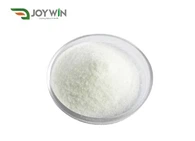
Appearance: Off-white to beige powder
Particle size: 100% through 80 mesh (180 μm)
Bulk density: 0.40-0.55 g/mL
Moisture: <6%
Critical Quality Attribute: Spray drying must preserve Phaseolamin's 3D structure (required for enzyme inhibition activity)
Stage 9: Micronization (Bioavailability Enhancement)
Objective: Reduce particle size for faster dissolution and improved efficacy
Process:
Jet milling with nitrogen gas (prevents oxidation)
Target particle size: D50 = 10-20 μm (vs. 80-120 μm for standard powder)
Benefits:
Faster dissolution: 3.5x faster in simulated gastric fluid (USP dissolution test)
Improved bioavailability: Smaller particles = larger surface area = better enzyme contact
Better tablet compression: Uniform particle size improves tablet hardness
Application: Premium formulations, fast-acting capsules
Stage 10: Standardization & Blending
Objective: Ensure every batch meets exact AAIU specification
Process:
AAIU Testing: Each spray-dried batch analyzed by enzymatic assay
Blending Calculation: Software calculates blend ratios to achieve target (e.g., 5,000 AAIU/g)
V-Blender Mixing: 30 minutes at 20 rpm (ensures homogeneity)
Post-Blend Verification: 10 samples from different locations (RSD <3%)
Available Specifications:
3,000 AAIU/g: Entry-level, cost-effective
5,000 AAIU/g: Standard clinical dose (most popular)
10,000 AAIU/g: Maximum potency, premium formulations
Custom: Any AAIU level between 2,000-12,000 (MOQ applies)
Stage 11: Final Quality Control & Packaging
Comprehensive Testing (27 parameters):
|
Test Category |
Parameters |
Method |
Acceptance Criteria |
|
Identity |
HPLC protein profile, SDS-PAGE |
Chromatography, electrophoresis |
Matches reference standard |
|
Potency |
AAIU (Alpha-Amylase Inhibiting Units) |
In vitro enzymatic assay |
±5% of target (e.g., 5,000 ±250) |
|
Purity |
Protein content |
Kjeldahl method |
≥15% |
|
Safety |
Lectin activity |
Hemagglutination assay |
Negative (<0.01% residual) |
|
Purity |
Heavy metals (Pb, As, Cd, Hg) |
ICP-MS |
EU/FDA limits |
|
Purity |
Pesticide residues |
GC-MS/MS, LC-MS/MS |
<0.01 ppm each |
|
Purity |
Mycotoxins (aflatoxin, ochratoxin) |
HPLC-FLD |
Aflatoxin <2 ppb, Ochratoxin <5 ppb |
|
Microbiology |
TPC, yeast/mold, pathogens |
USP <2021>, <2022> |
TPC <5,000 CFU/g, E. coli/Salmonella negative |
|
Physical |
Appearance, color, odor, taste |
Organoleptic |
Conforms |
|
Physical |
Particle size, bulk density |
Sieve analysis, USP <616> |
100% through 80 mesh, 0.40-0.55 g/mL |
|
Physical |
Moisture, ash |
USP <731>, <561> |
<6%, <8% |
|
Stability |
AAIU retention (accelerated 40°C/75% RH) |
Enzymatic assay (0, 3, 6 months) |
>90% retention at 6 months |
Packaging:
Primary: Aluminum foil bags (3-layer: PET/Al/PE, 120 μm) with nitrogen flushing
Secondary: Fiber drums (25 kg) or cardboard boxes (1 kg, 5 kg)
Labeling: Batch number, manufacturing date, expiry date, AAIU content, storage conditions
QR Code: Links to full COA, traceability data, clinical references
Storage Conditions:
Temperature: 15-25°C (avoid heat)
Humidity: <60% RH (moisture accelerates protein degradation)
Light: Store in opaque containers (protein photodegradation)
Shelf Life: 24 months (36 months for microencapsulated grades)
Certificate of Analysis (COA) – Reference Batch
Product: White Kidney Bean Powder (Phaseolamin)
Batch No.: WKB-2024-0515
Manufacturing Date: May 15, 2024
Expiry Date: May 14, 2027
Specification: 5,000 AAIU/g
|
Parameter |
Specification |
Test Method |
Result |
|
Physical Characteristics |
|||
|
Appearance |
Fine powder |
Visual |
Conforms |
|
Color |
Off-white to beige |
Colorimeter |
L*=82.1, a*=2.3, b*=12.8 |
|
Odor |
Characteristic, mild |
Organoleptic |
Conforms |
|
Taste |
Slightly bitter, beany |
Organoleptic |
Conforms |
|
Particle Size |
≥95% through 80 mesh |
USP <786> |
98.9% pass |
|
Bulk Density |
0.40-0.55 g/mL |
USP <616> |
0.48 g/mL |
|
Chemical Composition |
|||
|
AAIU (Alpha-Amylase Inhibiting Units) |
4,750-5,250 AAIU/g |
In vitro enzymatic assay (validated) |
5,120 AAIU/g |
|
Protein Content |
≥15% |
Kjeldahl method (N × 6.25) |
18.3% |
|
Moisture |
<6.0% |
USP <731> |
4.8% |
|
Ash |
<8.0% |
USP <561> |
5.2% |
|
Dietary Fiber |
10-20% |
AOAC method |
14.6% |
|
Safety - Lectin Activity |
|||
|
Phytohemagglutinin (PHA) |
Negative |
Hemagglutination assay |
Negative (<0.01% activity) |
|
Heavy Metals |
|||
|
Lead (Pb) |
<1.0 ppm |
ICP-MS |
<0.2 ppm |
|
Arsenic (As) |
<0.5 ppm |
ICP-MS |
<0.1 ppm |
|
Cadmium (Cd) |
<0.2 ppm |
ICP-MS |
<0.05 ppm |
|
Mercury (Hg) |
<0.1 ppm |
ICP-MS |
<0.02 ppm |
|
Pesticide Residues |
|||
|
Organophosphates |
<0.01 ppm each |
GC-MS/MS |
Not detected |
|
Organochlorines |
<0.01 ppm each |
GC-MS/MS |
Not detected |
|
Pyrethroids |
<0.01 ppm each |
LC-MS/MS |
Not detected |
|
Carbamates |
<0.01 ppm each |
LC-MS/MS |
Not detected |
|
Mycotoxins |
|||
|
Aflatoxin (B1, B2, G1, G2) |
<2 ppb total |
HPLC-FLD |
<0.5 ppb |
|
Ochratoxin A |
<5 ppb |
HPLC-FLD |
<1 ppb |
|
Microbiological Tests |
|||
|
Total Plate Count |
<5,000 CFU/g |
USP <2021> |
1,400 CFU/g |
|
Yeast & Mold |
<100 CFU/g |
USP <2021> |
35 CFU/g |
|
E. coli |
Negative/10g |
USP <2022> |
Negative |
|
Salmonella |
Negative/25g |
USP <2022> |
Negative |
|
Staphylococcus aureus |
Negative/10g |
USP <2022> |
Negative |
|
Allergens |
|||
|
Gluten |
Absent |
ELISA |
Not detected |
|
Soy |
Absent |
ELISA |
Not detected |
|
Dairy |
Absent |
ELISA |
Not detected |
|
Tree Nuts |
Absent |
ELISA |
Not detected |
|
GMO Status |
|||
|
GMO Content |
Non-GMO |
PCR (35S, NOS) |
Not detected |
Tested by: Dr. Liu Ming, Senior QC Analyst (PhD in Food Science)
Approved by: Zhang Wei, Quality Director
Certifications: ISO 22000:2018, GMP (NSF), HACCP, Non-GMO Project Verified, Kosher, Halal
Competitive Differentiation: Why JOYWIN Leads the Market
|
Factor |
JOYWIN |
Competitor A (US) |
Competitor B (China) |
Competitor C (India) |
|
AAIU Accuracy |
±5% of label claim (validated assay) |
±10-15% |
±20-30% (often fails re-testing) |
Not tested |
|
Lectin Safety |
<0.01% residual (hemagglutination assay, every batch) |
"Heat treated" (no quantification) |
Not tested |
Not tested |
|
Bean Origin |
North America (non-GMO verified) |
Mixed sources |
China (GMO status unclear) |
India |
|
Extraction Method |
Patented thermal-enzymatic (preserves activity) |
Standard heat treatment |
Unknown |
Solvent extraction |
|
Batch Consistency |
<3% RSD (AAIU variance) |
8-12% RSD |
15-25% RSD |
Unknown |
|
Heavy Metal Testing |
ICP-MS (every batch) |
ICP-AES (less sensitive) |
Certificate only |
Not tested |
|
Mycotoxin Testing |
HPLC-FLD (aflatoxin, ochratoxin, every batch) |
Random sampling |
Not tested |
Not tested |
|
Micronization |
Available (10-20 μm, faster dissolution) |
Standard powder only |
Not available |
Not available |
|
Traceability |
Blockchain + farm GPS data |
Lot numbers only |
Limited |
None |
|
Stability Data |
36-month real-time + accelerated |
24-month real-time |
Not provided |
Not provided |
|
Lead Time |
15-20 days |
25-35 days |
30-45 days |
40-60 days |
|
MOQ |
25 kg (1 kg for samples) |
100 kg |
500 kg |
1,000 kg |
|
Technical Support |
Dedicated formulation scientist (PhD) |
Email support |
Limited (language barriers) |
Not available |
|
Clinical Study Support |
Full dossier (5 RCTs, meta-analysis) |
Limited |
Not available |
Not available |
|
Customer Retention |
89% (2023 data) |
Unknown |
Unknown |
Unknown |
Sustainability & Ethical Practices
Environmental Commitments
Sustainable Agriculture:
Partner farms use crop rotation (beans → wheat → fallow) - improves soil nitrogen
Integrated Pest Management (IPM) - 70% less pesticide use vs. conventional farming
Drip irrigation - 40% water savings vs. flood irrigation
Carbon Footprint Reduction:
Aqueous extraction (vs. organic solvents) reduces CO₂ emissions by 45%
Solar panels provide 50% of facility energy (220 tons CO₂ saved annually)
LED lighting throughout facility (30% energy savings)
Waste Management:
Bean hulls → animal feed (zero landfill waste)
Extraction residue → compost for organic farms
Water recycling: 75% of process water reused (closed-loop system)
Packaging:
Aluminum foil bags: 100% recyclable
Fiber drums: FSC-certified (sustainable forestry)
Bulk orders: Reusable container program (customer return for refilling)
Social Responsibility
Fair Trade Practices:
Farmers earn 22% above commodity market rates
Direct contracts (no intermediaries taking cuts)
Multi-year agreements (price stability for farmers)
Community Support:
Agricultural scholarships: 6 recipients annually (farming families)
Food safety workshops for small processors (free, 150+ participants since 2019)
Transparency:
Annual ESG report published (available on request)
Third-party audits: EcoVadis Silver Rating (top 25% of suppliers)
JOYWIN Technical Support
● R&D team of 40 members to provide full technical support.
● Years of successful experience with top food companies in the world.
● Dedicate on build long-term relationships with our clients and developing deeps partnership.

Packaging, Storage & Global Logistics
* Primary Packaging: Double-sealed, food-grade poly bags with an aluminum foil moisture barrier.
* Secondary Packaging: 20 kg or 25 kg net weight in sealed fiber drums.
* Storage: Store in a cool (<25°C), dry place, protected from light and strong odors. Keep containers tightly closed.
* Shelf Life: 24 months from production date when stored under recommended conditions.
* Logistics: We are experts in FOB, CIF, DDP shipments. Documentation includes: Commercial Invoice, Packing List, Bill of Lading/ Airway Bill, Certificate of Origin, Non-GMO Certificate, Allergen Statement, and full COA.

JOYWIN Exhibition Show
JOYWIN attend international exhibitions, including CPhI, FIC, API, Vitafoods, SupplesideWest.

FAQ
Q1: What is the difference between your White kidney bean powder and simple white kidney bean flour?
A: Our extract is standardized for guaranteed alpha-amylase inhibitor activity (AAIU) and has undergone a patented process to remove lectins. Bean flour has variable, unguaranteed activity, contains anti-nutrients like lectins, and has a different nutritional profile (higher in carbs and calories). Our extract is a purified, potent, and safe active ingredient.
Q2: Is this extract safe? Are there side effects?
A: Our extract is Generally Recognized As Safe (GRAS) for its intended use. The removal of lectins eliminates the primary safety concern associated with raw beans. When taken as directed, it is well-tolerated. Excessive intake of starch blockers may cause digestive discomfort in some individuals, as undigested starches reach the colon. Following recommended dosages is key.
Q3: Can it be used in Keto or Low-Carb products?
A: Absolutely. It is a perfect functional ingredient for keto-friendly products, as it helps reduce the net digestible carbohydrates from starchy foods, supporting a low-carb lifestyle.
Q4: Does it inhibit the digestion of all carbohydrates?
A: No. It specifically inhibits alpha-amylase, which breaks down complex carbohydrates (starches) like those in bread, pasta, rice, and potatoes. It does not affect the digestion of simple sugars (sucrose, fructose, lactose) or fiber.
Q5: What is your MOQ, and do you offer samples?
A: Our standard Minimum Order Quantity (MOQ) is 25 kg. We offer free R&D samples (100-200g) to qualified B2B clients, such as manufacturers, formulators, and brand owners, for testing and prototyping purposes.
Q6:How can we contact you?
A:You can click the inquiry White kidney bean powder or send us an e-mail to contact@joywinworld.com.
Hot Tags: white kidney bean powder, manufacturers, suppliers, factory, wholesale, buy, price, bulk, high quality, for sale, free sample