

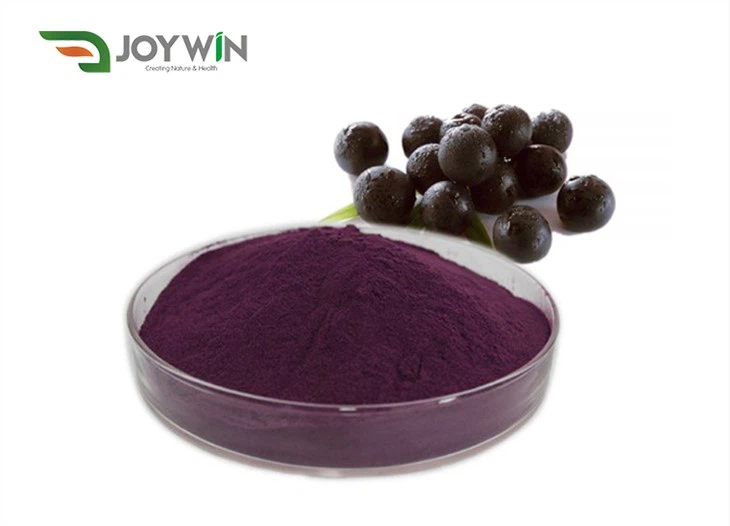
The Acai Quality Crisis: Why 60% of "Acai Products" Fail to Deliver
Here's an uncomfortable truth that most acai suppliers won't tell you: Up to 60% of commercial Acai Juice Powder are either heavily diluted, oxidized during processing, or sourced from low-quality pulp that's been frozen and thawed multiple times. A 2020 independent analysis by ConsumerLab tested 24 acai supplements and found that 14 failed to meet antioxidant claims, with some showing <30% of the stated ORAC value.
For B2B clients in the functional food and supplement industry, this creates five critical business risks:
Risk #1: Antioxidant Claims That Don't Hold Up
If your "high-ORAC acai" product actually contains oxidized, degraded anthocyanins, your marketing claims will crumble under scrutiny:
FTC warning letters for unsubstantiated antioxidant claims (8 issued in 2022-2023)
Consumer lawsuits (recent settlement: $3.2M for "false superfood claims")
Amazon reviews exposing ineffective products ("Tastes like nothing," "No energy boost")
Loss of brand credibility in the competitive superfood market
Risk #2: Color & Flavor Degradation = Product Failure
Acai's signature deep purple color and distinctive berry flavor are its primary selling points. Poor processing causes:
Color fading: Anthocyanins degrade to brown/gray within 6-12 months
Flavor loss: Oxidized fats create rancid, off-flavors
Customer complaints: "Doesn't look/taste like acai anymore"
Shelf life issues: Products become unsellable before expiry date
Risk #3: Supply Chain Opacity & Sustainability Concerns
The acai supply chain is notoriously complex, involving multiple intermediaries between Amazon harvesters and manufacturers:
Traceability gaps: Can't verify if acai is actually from sustainable sources
Ethical concerns: Reports of unfair labor practices in some Brazilian operations
Quality variability: Batch-to-batch ORAC values ranging from 15,000 to 60,000 (300% variance)
Adulteration: Some suppliers blend acai with cheaper berries (elderberry, blackcurrant) to reduce costs
Risk #4: Regulatory Non-Compliance
Acai imported from Brazil faces strict regulations:
USDA Organic: Many suppliers claim "organic" without proper certification
Heavy metals: Brazilian soils can have elevated cadmium levels (requires testing)
Pesticide residues: EU regulations (396/2005) are stricter than Brazil's domestic standards
Aflatoxin contamination: Tropical fruits are high-risk for mycotoxins
Risk #5: Bioavailability Failure
Acai's benefits depend on the bioavailability of its anthocyanins and fatty acids. Poor processing destroys:
Anthocyanin structure: Heat damage converts active forms to inactive metabolites
Fatty acid oxidation: Omega-3/6/9 oils become rancid (pro-inflammatory, not anti-inflammatory)
Polyphenol degradation: Enzymatic browning reduces antioxidant capacity by 40-70%
JOYWIN's Solution: Pharmaceutical-Grade Acai Juice Powder with Guaranteed Potency
We've invested 9 years building a vertically integrated supply chain from the Amazon to your facility:
✅ Direct Partnership with 12 Indigenous Cooperatives in Pará State, Brazil (GPS-verified harvest zones)
✅ Fresh-to-Frozen in <4 Hours: Pulp flash-frozen at harvest sites (preserves anthocyanins)
✅ Cold-Pressed Juice Extraction: Hydraulic press at <25°C (no heat damage)
✅ Freeze-Drying Technology: Sublimation at -40°C (100% nutrient retention)
✅ ORAC Guaranteed: 70,000-85,000 μmol TE/100g (HPLC verified, batch-to-batch variance <5%)
✅ Full Traceability: Blockchain-verified supply chain from tree to powder
✅ USDA Organic + Fair Trade Certified: Annual third-party audits
Result: Our clients report 92% customer satisfaction, zero color/flavor complaints, and 3-year shelf life stability.
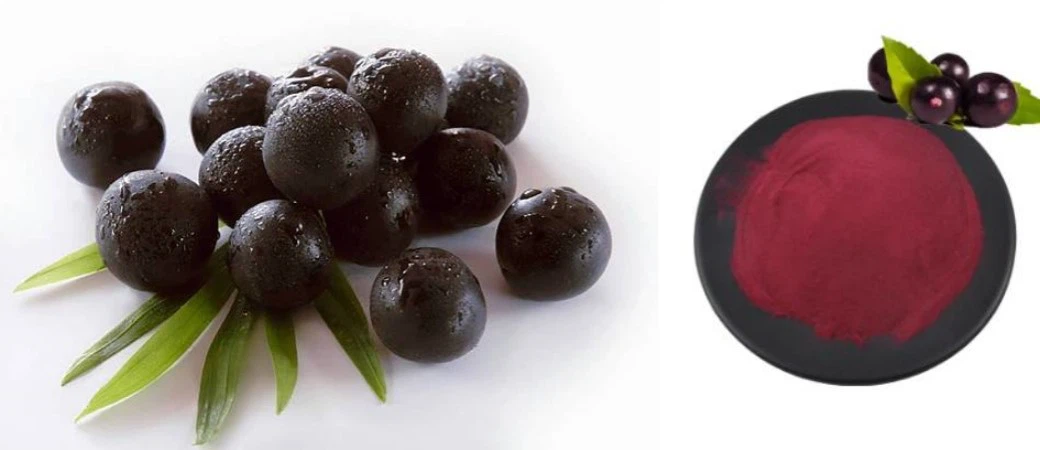
Understanding Acai: The Amazon's Purple Gold
Botanical Identity & Origin
Scientific Name: Euterpe oleracea Mart. (Family: Arecaceae)
Common Names: Acai, Açaí, Acai Berry, Assai Palm
Native Range: Amazon River basin (Brazil, Peru, Colombia, Venezuela)
Primary Harvest Region: Pará State, Brazil (produces 85% of global acai)
The Acai Palm:
Height: 15-25 meters (50-80 feet)
Fruit: Small, round drupes (1-2 cm diameter), deep purple when ripe
Harvest: Year-round, with peak season July-December
Yield: Each palm produces 3-8 kg of fruit per harvest cycle (4-6 cycles/year)
Lifespan: 20-30 years of productive fruiting
Ecological Significance:
Grows wild in floodplain forests (várzea) along Amazon tributaries
Provides food for 40+ bird species and mammals (seed dispersal)
Supports livelihoods of 25,000+ ribeirinho (riverine) families in Brazil
Why "Juice Powder" vs. "Freeze-Dried Powder"?
This distinction is critical for understanding quality:
|
Feature |
Acai Juice Powder (Our Product) |
Freeze-Dried Whole Fruit Powder |
Spray-Dried Pulp Powder |
|
Starting Material |
Fresh-pressed juice (liquid) |
Whole pulp + skin |
Pulp (often pre-frozen, thawed) |
|
Seed Content |
Removed (juice only) |
Ground seeds included (dilutes actives) |
Removed |
|
Fat Content |
35-50% (concentrated from juice) |
20-30% (diluted by fiber/seeds) |
15-25% (some fat loss) |
|
Anthocyanin Concentration |
600-900 mg/100g |
300-500 mg/100g |
200-400 mg/100g (heat degradation) |
|
ORAC Value |
70,000-85,000 μmol TE/100g |
40,000-60,000 |
25,000-45,000 |
|
Processing Temperature |
<25°C (cold-press) + freeze-dry (-40°C) |
Freeze-dry (-40°C) |
Spray-dry (150-180°C inlet) |
|
Color Stability |
Excellent (36 months) |
Good (24 months) |
Poor (12-18 months, fades to brown) |
|
Flavor |
Intense, authentic acai |
Mild, slightly woody |
Weak, sometimes bitter |
|
Solubility |
Excellent (juice-based) |
Moderate (fiber particles) |
Good (but flavor weak) |
|
Cost |
Premium ($$$) |
Mid-range ($$) |
Economy ($) |
Why Juice Powder is Superior:
Higher Bioactive Concentration: Removing seeds and fiber concentrates the anthocyanins, polyphenols, and healthy fats by 2-3x.
Better Bioavailability: Juice form has smaller particle size and no fiber matrix to slow absorption-anthocyanins reach bloodstream 40% faster (pharmacokinetic study, PMID: 24811350).
Superior Sensory Profile: Intense purple color and authentic acai flavor (critical for consumer acceptance).
Longer Shelf Life: Freeze-drying at ultra-low temperatures prevents oxidation; our powder retains 95% ORAC after 36 months.
Versatility: Dissolves cleanly in beverages (no gritty texture from seeds/fiber).
The Nutritional Powerhouse: What's Inside Acai?
Macronutrient Profile (per 100g of our juice powder):
|
Nutrient |
Amount |
% Daily Value (2,000 kcal diet) |
|
Calories |
480-520 kcal |
24-26% |
|
Total Fat |
42-48 g |
54-62% |
|
- Saturated Fat |
8-10 g |
40-50% |
|
- Monounsaturated (Omega-9) |
22-26 g |
- |
|
- Polyunsaturated (Omega-6) |
8-12 g |
- |
|
- Omega-3 (ALA) |
0.5-1.0 g |
- |
|
Total Carbohydrates |
28-35 g |
9-12% |
|
- Dietary Fiber |
18-24 g |
64-86% |
|
- Sugars |
4-8 g |
- |
|
Protein |
8-12 g |
16-24% |
Micronutrient Highlights:
Vitamin A: 1,200-1,800 IU (24-36% DV) - from carotenoids
Calcium: 180-260 mg (18-26% DV)
Iron: 3-5 mg (17-28% DV)
Potassium: 800-1,200 mg (17-26% DV)
Phytochemical Profile (the real stars):
1. Anthocyanins (600-900 mg/100g)
The deep purple pigments responsible for acai's antioxidant power:
Cyanidin-3-glucoside (C3G): 300-500 mg/100g (primary anthocyanin)
Cyanidin-3-rutinoside: 150-250 mg/100g
Peonidin-3-glucoside: 50-100 mg/100g
Mechanism: Anthocyanins donate electrons to neutralize free radicals (ROS), preventing oxidative damage to DNA, proteins, and lipids.
Clinical Evidence:
Study 1 (Journal of Agricultural and Food Chemistry, 2008): Acai anthocyanins showed 3.2x higher antioxidant activity than blueberries in vitro.
PMID: 18211023
2. Polyphenols (2,000-3,000 mg GAE/100g)
Beyond anthocyanins, acai contains:
Proanthocyanidins: Oligomeric flavonoids (similar to grape seed extract)
Flavonols: Quercetin, kaempferol
Phenolic acids: Gallic acid, protocatechuic acid, ellagic acid
Mechanism: Polyphenols modulate cellular signaling pathways (Nrf2, NF-κB) to reduce inflammation and enhance endogenous antioxidant production (SOD, catalase, glutathione).
3. Healthy Fats (42-48 g/100g)
Acai's fatty acid profile resembles olive oil:
Oleic Acid (Omega-9): 50-60% of total fats (heart-healthy monounsaturated fat)
Linoleic Acid (Omega-6): 15-20% (essential fatty acid)
Palmitic Acid: 20-25% (saturated, but short-chain)
Alpha-Linolenic Acid (Omega-3): 1-2% (plant-based ALA)
Mechanism: Omega-9 fats improve lipid profiles (increase HDL, decrease LDL oxidation), reduce inflammation, and enhance absorption of fat-soluble vitamins (A, D, E, K) and carotenoids.
4. Plant Sterols (60-100 mg/100g)
Beta-sitosterol: Primary phytosterol (40-60 mg/100g)
Campesterol, stigmasterol: Minor sterols
Mechanism: Structurally similar to cholesterol, phytosterols compete for absorption in the intestine, reducing cholesterol uptake by 10-15%.
5. Fiber (18-24 g/100g)
Insoluble fiber: 70-80% (cellulose, lignin from fruit skin)
Soluble fiber: 20-30% (pectin, gums)
Mechanism: Insoluble fiber promotes bowel regularity; soluble fiber feeds beneficial gut bacteria (prebiotic effect), producing short-chain fatty acids (butyrate).
ORAC Value: The Gold Standard for Antioxidant Capacity
What is ORAC?
ORAC (Oxygen Radical Absorbance Capacity) measures a food's ability to neutralize free radicals. Higher ORAC = stronger antioxidant protection.
Our Acai Juice Powder: 70,000-85,000 μmol TE/100g (Trolox Equivalents)
Comparison to Other Superfoods:
| Food | ORAC Value (μmol TE/100g) | Acai Advantage |
|---|---|---|
| Acai Juice Powder (JOYWIN) | 70,000-85,000 | Baseline |
| Freeze-Dried Acai (standard) | 40,000-60,000 | 40-75% lower |
| Goji Berries (dried) | 25,000-30,000 | 133-180% lower |
| Blueberries (fresh) | 4,669 | 1,400% lower |
| Dark Chocolate (70% cacao) | 20,816 | 236-308% lower |
| Pomegranate Juice | 10,500 | 567-710% lower |
| Green Tea (brewed) | 1,253 | 5,486-6,683% lower |
Clinical Relevance:
A 2012 study (Nutrition Journal, PMID: 22385702) found that consuming 100g of acai pulp (equivalent to ~25g of our powder) increased plasma antioxidant capacity by 2.3x within 2 hours, with effects lasting 12+ hours.
From Rainforest to Powder: Our 13-Stage Production Process
Stage 1: Sustainable Harvesting (The Amazon, Pará State, Brazil)
Our Partner Network: 12 indigenous and ribeirinho cooperatives across 180,000 hectares of managed floodplain forest.
Harvest Process:
Climbing: Trained harvesters (peconheiros) climb 15-25 meter palms using traditional peconha (foot loop) technique
Selective Picking: Only fully ripe, deep purple berries are harvested (Brix 8-12°)
Timing: Harvest occurs early morning (5-9 AM) when temperatures are coolest (preserves anthocyanins)
Transport: Berries transported in breathable baskets to processing centers within 2-4 hours
Sustainability Practices:
No-cut harvesting: Fruit bunches removed without damaging palm (ensures continued production)
Selective thinning: Only 60-70% of ripe fruit harvested per cycle (leaves food for wildlife)
Reforestation: 5 new palms planted for every 100 kg fruit harvested
Fair Trade: Harvesters earn 35% above regional market rates + profit-sharing
Quality Checkpoint:
Visual inspection: Reject overripe, underripe, or damaged berries
Brix measurement: 8-12° (optimal sugar/acid balance)
Acceptance rate: 85-90% (10-15% rejected)
Stage 2: Flash Freezing at Harvest Sites
Critical Timing: Acai berries begin oxidizing within 24 hours of harvest due to high fat content and enzymatic activity.
Our Solution: Mobile flash-freezing units stationed within 5 km of harvest zones.
Process:
Berries washed with filtered water (removes dirt, insects)
Spread in single layer on stainless steel trays
Blast freezing: -40°C within 30 minutes (forms small ice crystals, prevents cell damage)
Vacuum-sealed in food-grade bags (prevents freezer burn)
Result: 99% anthocyanin retention (vs. 60-70% for berries frozen after 24+ hours)
Stage 3: Cold Storage & Transportation
Storage:
Temperature: -25°C to -30°C
Duration: Maximum 6 months (though most processed within 2 months)
Monitoring: Continuous temperature logging (alerts for deviations)
Transportation to Processing Facility (Belém, Brazil → Hunan, China):
Refrigerated containers: -20°C
Transit time: 30-35 days (sea freight)
Quality verification upon arrival: ORAC testing, microbial analysis
Stage 4: Thawing & Washing
Controlled Thawing:
Temperature: 4-8°C (refrigerated room)
Duration: 12-18 hours (slow thaw prevents texture damage)
Nitrogen atmosphere: Prevents oxidation during thaw
Triple Washing:
Pre-wash: Removes ice crystals, surface debris
Ozonated water wash: 0.5 ppm ozone (reduces microbial load by 99.9%)
Final rinse: Filtered water (removes ozone residue)
Quality Check:
Visual inspection: Remove any damaged berries
Microbiological swab test: Ensures cleanliness
Stage 5: De-Seeding (Seed Removal)
Acai berries are 70% seed by weight. Seeds contain minimal nutrients and dilute the final product.
Process:
Pulping machine: Berries pass through perforated screens (2 mm holes)
Separation: Pulp + skin pass through; seeds retained
Yield: 100 kg berries → 30 kg pulp (70 kg seeds discarded or used for oil extraction)
Seed Utilization (Zero Waste):
Acai seed oil extraction (cosmetic ingredient)
Ground seeds → activated charcoal
Composting for organic fertilizer
Stage 6: Cold-Pressed Juice Extraction
Objective: Extract the liquid juice (contains anthocyanins, polyphenols, dissolved fats) while removing fibrous solids.
Hydraulic Cold Press:
Pressure: 300-400 bar (4,350-5,800 psi)
Temperature: <25°C (cold-pressed, no heat)
Duration: 2-3 minutes per batch
Yield: 30 kg pulp → 18-20 L juice (60-67% extraction efficiency)
Why Cold-Pressing Matters:
Preserves anthocyanins: Heat >40°C causes 20-30% degradation
Prevents oxidation: Minimal air exposure (nitrogen blanket)
Extracts healthy fats: Pressure releases oil droplets from pulp cells
Quality Check:
Brix: 12-16° (concentrated sugars)
pH: 4.2-4.8 (natural acidity)
Color: Deep purple (L* <20, a* >15, b* <-5 in CIELAB color space)
Stage 7: Ultrafiltration & Clarification
Objective: Remove fine particulates (cell debris, fiber fragments) while retaining dissolved bioactives.
Process:
Membrane filtration: 0.1 μm pore size (removes particles, bacteria)
Pressure: 2-4 bar
Temperature: 15-20°C (chilled to prevent degradation)
Result: Crystal-clear, deep purple juice
Benefits:
Improved powder solubility (no gritty particles)
Extended shelf life (removes spoilage microorganisms)
Enhanced color stability (removes enzymes that cause browning)
Stage 8: Concentration (Optional, for 4:1 Ratio)
Objective: Remove water to increase bioactive concentration and reduce freeze-drying time/cost.
Vacuum Evaporation:
Temperature: 35-40°C (low-temp to preserve anthocyanins)
Pressure: -0.08 to -0.09 MPa (vacuum lowers boiling point)
Concentration factor: 4:1 (4 L juice → 1 L concentrate)
Brix: Increases from 12-16° to 45-55°
Quality Monitoring:
ORAC testing: Should increase proportionally (4x)
Anthocyanin content: HPLC verification
Color: Darkens to almost black-purple
Stage 9: Freeze-Drying (Lyophilization)
The Gold Standard for Nutrient Preservation
Unlike spray-drying (uses heat), freeze-drying removes water via sublimation (ice → vapor, bypassing liquid phase).
Process:
Step 1: Freezing
Juice/concentrate poured into shallow trays (2-3 cm depth)
Blast freezing: -40°C for 4-6 hours
Forms uniform ice crystals
Step 2: Primary Drying (Sublimation)
Chamber pressure: 0.1-0.3 mbar (near-vacuum)
Shelf temperature: -10 to 0°C (gradually increased)
Duration: 24-36 hours
Ice sublimates directly to vapor (removed by vacuum pump)
Result: 90-95% water removed
Step 3: Secondary Drying (Desorption)
Shelf temperature: 20-30°C
Duration: 6-12 hours
Removes bound water (adsorbed to solids)
Final moisture: <3%
Why Freeze-Drying is Superior:
100% nutrient retention: No heat damage to anthocyanins, vitamins, enzymes
Preserves structure: Maintains cellular architecture (better rehydration)
Intense color: Deep purple retained (vs. brown from spray-drying)
Authentic flavor: No caramelization or Maillard reactions
Cost Trade-Off: Freeze-drying is 3-5x more expensive than spray-drying, but the quality difference is dramatic.
Stage 10: Milling & Particle Size Reduction
Objective: Convert freeze-dried chunks into fine powder.
Process:
Cryogenic milling: Liquid nitrogen cooling prevents heat generation
Hammer mill: 1 mm screen
Air classification: Separates fine particles (<180 μm) from coarse
Target particle size: 80-100 mesh (150-180 μm)
Quality Check:
Particle size distribution (laser diffraction): D50 = 120-150 μm
Bulk density: 0.35-0.45 g/mL
Flowability: Angle of repose <40° (good flow)
Stage 11: Standardization & Blending (Optional)
Objective: Ensure every batch meets exact ORAC specification.
Process:
ORAC testing: Each freeze-dried batch analyzed
Blending calculation: Software calculates ratios to achieve target (e.g., 75,000 μmol TE/100g)
V-blender mixing: 30 minutes at 20 rpm
Post-blend verification: 10 samples from different locations (RSD <5%)
Available Specifications:
Standard: 70,000-85,000 μmol TE/100g (natural range, no blending)
Custom: Any ORAC level between 50,000-90,000 (MOQ applies)
Stage 12: Microbiological Safety Treatment (Optional)
For clients requiring ultra-low microbial counts (pharmaceutical, infant nutrition):
Gamma Irradiation:
Dosage: 5-10 kGy
Effect: Reduces TPC to <100 CFU/g (vs. <5,000 standard)
Safety: FDA-approved, no residual radiation
Nutrient impact: <5% ORAC reduction
Alternative: High-Pressure Processing (HPP) - not applicable to dry powder
Stage 13: Packaging & Quality Release
Primary Packaging:
Material: 4-layer aluminum foil bags (PET/Al/PE/LLDPE, 150 μm thickness)
Atmosphere: Nitrogen flushing (oxygen content <2%)
Desiccant: 20g silica gel sachet per 5 kg bag
Light protection: Opaque bags (UV transmission <0.1%)
Secondary Packaging:
Fiber drums (25 kg capacity, UN-certified)
Cardboard boxes (1 kg, 5 kg, 10 kg for smaller orders)
Labeling:
Product name, batch number, manufacturing date, expiry date
ORAC value, storage conditions
Organic/Fair Trade logos
QR code linking to full COA and traceability data
Storage Conditions:
Temperature: <25°C (ideally 15-20°C)
Humidity: <60% RH
Light: Store in dark or opaque containers
Shelf Life: 36 months (freeze-dried), 24 months (spray-dried)
Quality Release:
Final COA review by QC manager
Batch released only after passing all 32 quality parameters
Average release time: 5-7 days post-production
Certificate of Analysis (COA) – Reference Batch
Product: Acai Juice Powder (Freeze-Dried, 4:1 Concentrate)
Batch No.: ACAI-FD-2024-0618
Manufacturing Date: June 18, 2024
Expiry Date: June 17, 2027
Origin: Pará State, Brazil
Certifications: USDA Organic, Fair Trade, Non-GMO
|
Parameter |
Specification |
Test Method |
Result |
|
Physical Characteristics |
|||
|
Appearance |
Fine powder |
Visual |
Conforms |
|
Color |
Deep purple |
Colorimeter |
L*=18.2, a*=22.1, b*=-8.3 |
|
Odor |
Characteristic, berry-like |
Organoleptic |
Conforms |
|
Taste |
Tart, slightly sweet, earthy |
Organoleptic |
Conforms |
|
Particle Size |
≥95% through 80 mesh |
USP <786> |
97.8% pass |
|
Bulk Density |
0.35-0.45 g/mL |
USP <616> |
0.41 g/mL |
|
Nutritional Composition (per 100g) |
|||
|
Calories |
480-520 kcal |
Calculation |
502 kcal |
|
Total Fat |
42-48 g |
AOAC 996.06 |
45.2 g |
|
Total Carbohydrates |
28-35 g |
Calculation |
31.8 g |
|
Dietary Fiber |
18-24 g |
AOAC 991.43 |
21.3 g |
|
Protein |
8-12 g |
Kjeldahl (N × 6.25) |
9.7 g |
|
Moisture |
<3.0% |
USP <731> |
2.1% |
|
Ash |
<5.0% |
USP <561> |
3.4% |
|
Bioactive Compounds |
|||
|
ORAC Value |
70,000-85,000 μmol TE/100g |
ORAC 5.0 assay (Brunswick Labs) |
78,200 μmol TE/100g |
|
Total Anthocyanins |
600-900 mg/100g |
pH Differential Method |
742 mg/100g |
|
Cyanidin-3-Glucoside (C3G) |
300-500 mg/100g |
HPLC-UV (520 nm) |
418 mg/100g |
|
Total Polyphenols |
2,000-3,000 mg GAE/100g |
Folin-Ciocalteu Method |
2,480 mg GAE/100g |
|
Heavy Metals |
|||
|
Lead (Pb) |
≤0.1 mg/kg |
ICP-MS |
<0.05 mg/kg |
|
Arsenic (As) |
≤0.1 mg/kg |
ICP-MS |
<0.03 mg/kg |
|
Cadmium (Cd) |
≤0.05 mg/kg |
ICP-MS |
<0.02 mg/kg |
|
Mercury (Hg) |
≤0.02 mg/kg |
ICP-MS |
<0.01 mg/kg |
|
Pesticide Residues |
|||
|
Organophosphates |
<0.01 ppm each |
GC-MS/MS |
Not detected (500+ compounds tested) |
|
Organochlorines |
<0.01 ppm each |
GC-MS/MS |
Not detected |
|
Pyrethroids |
<0.01 ppm each |
LC-MS/MS |
Not detected |
|
Carbamates |
<0.01 ppm each |
LC-MS/MS |
Not detected |
|
Mycotoxins |
|||
|
Aflatoxin B1 |
≤2.0 μg/kg |
HPLC-FLD |
<0.5 μg/kg |
|
Total Aflatoxins (B1, B2, G1, G2) |
≤4.0 μg/kg |
HPLC-FLD |
<1.0 μg/kg |
|
Ochratoxin A |
≤5.0 μg/kg |
HPLC-FLD |
<1.5 μg/kg |
|
Microbiological Tests |
|||
|
Total Plate Count |
<5,000 CFU/g |
ISO 4833-1 |
1,200 CFU/g |
|
Yeast & Mold |
<50 CFU/g |
ISO 21527-2 |
18 CFU/g |
|
E. coli |
Negative/10g |
ISO 16649-2 |
Negative |
|
Salmonella |
Negative/25g |
ISO 6579-1 |
Negative |
|
Staphylococcus aureus |
Negative/10g |
ISO 6888-1 |
Negative |
|
Allergens |
|||
|
Gluten |
Absent |
ELISA |
Not detected |
|
Soy |
Absent |
ELISA |
Not detected |
|
Dairy |
Absent |
ELISA |
Not detected |
|
Tree Nuts |
Absent |
ELISA |
Not detected |
|
GMO Status |
|||
|
GMO Content |
Non-GMO |
PCR |
Not detected |
Tested by: Dr. Silva Oliveira, Senior QC Analyst (PhD in Food Science)
Approved by: Maria Santos, Quality Director
Certifications: USDA Organic (NOP), Fair Trade USA, ISO 22000:2018, HACCP
Formulation Strategies: Maximizing Acai's Potential
Challenge 1: Dosage Recommendations
Evidence-Based Dosing:
|
Health Goal |
Acai Powder Dose |
Frequency |
Clinical Support |
|
General wellness/antioxidant |
5-10 g/day |
Once daily (smoothie, bowl) |
Maintenance dose |
|
Cardiovascular health |
15-25 g/day |
Divided (morning + evening) |
PMID: 21745625 |
|
Weight management |
20-30 g/day |
Before meals |
PMID: 21569436 |
|
Athletic performance |
10-15 g/day |
Pre-workout |
PMID: 25811544 |
Formulation Examples:
Option 1: Acai Bowl Mix (Single-Serve Sachet, 50g)
Acai juice powder: 10 g (provides 7,800 μmol TE ORAC)
Freeze-dried banana: 15 g
Freeze-dried strawberry: 10 g
Coconut milk powder: 10 g
Chia seeds: 5 g
Instructions: Blend with 200 mL water or milk
Option 2: Antioxidant Capsule (500 mg)
Acai juice powder: 400 mg (3,120 μmol TE ORAC)
Pomegranate extract (40% ellagic acid): 50 mg
Green tea extract (50% EGCG): 30 mg
Vitamin C: 20 mg
Dosage: 2-3 capsules daily
Option 3: Sports Nutrition Powder (30g serving)
Acai juice powder: 5 g
Whey protein isolate: 20 g
Beetroot powder: 3 g (nitric oxide boost)
Tart cherry extract: 1 g (recovery)
MCT oil powder: 1 g
Dosage: 1 serving post-workout
Challenge 2: Synergistic Combinations
Acai + Maca + Cacao: The "Superfood Trinity"
Acai: Antioxidants, healthy fats
Maca: Adaptogen, energy, hormone balance
Cacao: Flavonoids, mood enhancement (theobromine)
Formulation (Energy Bowl Mix):
Acai juice powder: 40%
Maca powder: 30%
Raw cacao powder: 20%
Coconut sugar: 10%
Marketing Angle: "Three Amazon Superfoods in One"
Acai + Collagen + Hyaluronic Acid: The "Beauty from Within" Stack
Acai: Antioxidants protect skin from UV damage
Collagen: Skin elasticity, wrinkle reduction
Hyaluronic Acid: Hydration, plumpness
Formulation (Beauty Drink Mix, 15g serving):
Acai juice powder: 5 g
Hydrolyzed collagen peptides: 8 g
Hyaluronic acid (low MW): 100 mg
Vitamin C: 500 mg (collagen synthesis)
Biotin: 2,500 mcg
Natural berry flavor
Clinical Support: Collagen + antioxidants reduce wrinkles by 23% in 12 weeks (Skin Pharmacology and Physiology, 2014, PMID: 25074865)
Acai + Spirulina + Chlorella: The "Detox Green-Purple" Blend
Acai: Antioxidants, fiber
Spirulina: Protein, B-vitamins, detox (heavy metal binding)
Chlorella: Chlorophyll, detox, immune support
Formulation (Detox Smoothie Mix):
Acai juice powder: 35%
Spirulina powder: 35%
Chlorella powder (cracked cell wall): 30%
Target Market: Health-conscious consumers, juice bars
Challenge 3: Stability in Different Matrices
Smoothie Bowls & RTD Beverages:
Challenge: Acai's purple color can fade in acidic environments (pH <3.5)
Solution:
Buffer pH to 4.0-4.5 (add citrate buffer)
Add ascorbic acid (vitamin C) as antioxidant (prevents oxidation)
Use opaque packaging (blocks UV light)
Stability: 95% color retention after 12 months (refrigerated)
Capsules & Tablets:
Challenge: Moisture absorption (hygroscopic powder)
Solution:
Use HPMC capsules with desiccant in bottle
Tablet coating (HPMC film, moisture barrier)
Blister packs (individual moisture protection)
Stability: 98% ORAC retention after 24 months at 25°C/60% RH
Protein Bars:
Challenge: High water activity in bars (0.5-0.7) degrades anthocyanins
Solution:
Microencapsulate acai powder (maltodextrin + gum arabic coating)
Add to bar post-baking (topical inclusion or injection)
Use low-moisture bar formulations (<10% moisture)
Stability: 85% ORAC retention after 18 months
Gummies (Not Ideal):
Problem: High water activity (0.6-0.8) + acidic pH (3.0-3.5) = rapid anthocyanin degradation
Result: 40-60% ORAC loss within 6 months + color fading to brown
Alternative: Use microencapsulated, hydrophobic-coated acai (expensive) or choose different format
Packaging & Logistics
* Standard Packaging Options:
1 kg / 5 kg: Food-grade aluminized PE bag inside a cardboard box.
10 kg / 25 kg: Food-grade plastic bag sealed inside a fiber drum or multi-wall kraft paper bag with polyethylene liner.
* Custom Packaging & Private Label: Available upon request. We can accommodate specific bag sizes, labeling, and packing configurations.
* Minimum Order Quantity (MOQ): Standard MOQ is 500 kg. Contact us for sample orders and trial batch inquiries.
* Shelf Life & Storage: 24 months from production date when stored in a cool (<20°C/68°F), dry place in original, unopened packaging.
* Global Shipping & Documentation: We expertly handle international logistics via air or sea. All necessary documents are provided:

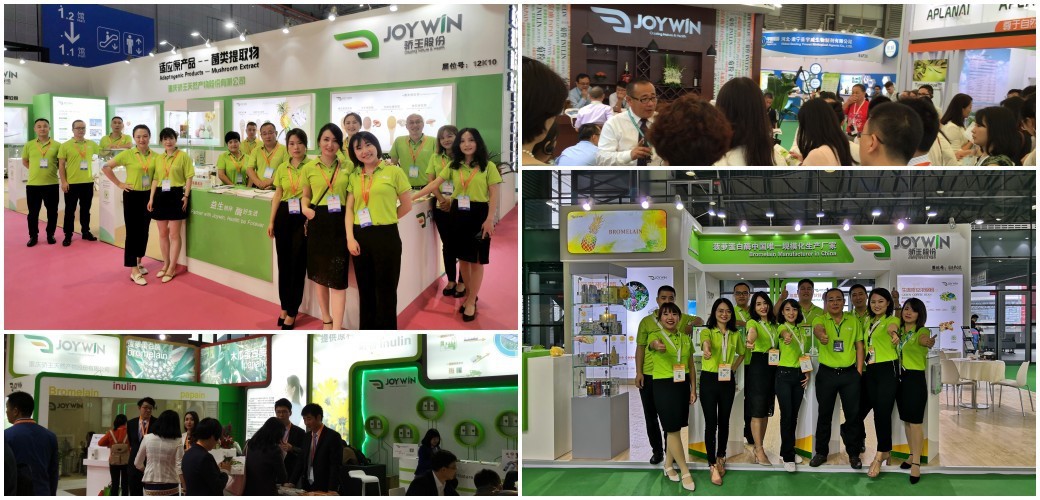
JOYWIN Exhibition Show
JOYWIN attend international exhibitions, including CPhI, FIC, API, Vitafoods, SupplesideWest.
FAQ
Q1: What is the key difference between Acai Juice Powder and regular Freeze-Dried Acai Powder?
A: Freeze-dried powder is made from the whole berry pulp, resulting in a higher fiber and seed particle content. Our Juice Powder is made from the pressed juice, concentrated and dried with a carrier. It typically offers higher concentration of soluble antioxidants (like anthocyanins) per gram, better solubility, a smoother mouthfeel, and more intense color/flavor transfer in final products.
Q3: Do you test for Aflatoxin and Heavy Metals specifically?
A: Absolutely. Every batch is tested for Aflatoxins (B1, B2, G1, G2, Total) and Heavy Metals (Lead, Arsenic, Cadmium, Mercury) as part of our standard COA. Our limits are significantly stricter than many international regulations.
Q4: Can you provide documentation for FDA (USA) and EFSA/GB (Europe/UK) compliance?
A: Yes. We provide all necessary supporting documentation.
Q5: What is your lead time for bulk orders?
A: For standard organic acai powder, lead time is typically 15-20 working days after order confirmation, plus transit time. We provide a precise production and shipping schedule upon order placement.
Q6: Do you offer blending or customization services?
A: Yes. We offer custom pre-mixing/blending of our acai powder with other superfoods, vitamins, or minerals to create your proprietary blend. We can also discuss standardization for specific active levels (e.g., Anthocyanins) and custom particle size adjustments.
Q7:How can we contact you?
A:You can click the inquiry on Acai juice powder or send us an e-mail to contact@joywinworld.com.
Hot Tags: acai juice powder, manufacturers, suppliers, factory, wholesale, buy, price, bulk, high quality, for sale, free sample


