

If you've ever tasted bitter melon, you know it earns its name. That sharp, intensely bitter flavor is not a flaw - it's a feature. For thousands of years across Asia, Africa, and the Caribbean, traditional medicine practitioners have recognized that this remarkable fruit's bitterness signals the presence of potent bioactive compounds with profound effects on the body's most vital metabolic organ: the liver.
Today, Bitter Melon Powder has moved from the realm of traditional herbal medicine into the spotlight of modern nutritional science. Researchers are actively investigating its hepatoprotective (liver-protecting) properties, and the findings are genuinely compelling. But the question on many people's minds remains: does bitter melon extract actually "clean" the liver?
The honest, science-based answer is nuanced - and far more interesting than a simple yes or no. Bitter melon extract does not "clean" the liver in the way a household detergent cleans a surface. What it does is considerably more sophisticated: it supports the liver's own natural detoxification machinery, protects liver cells from oxidative damage, reduces fat accumulation in liver tissue, modulates inflammatory pathways, and helps restore healthy liver enzyme levels. In short, it works with the liver rather than acting as an external cleaning agent.
This comprehensive guide explores the full science behind Bitter Melon Powder and liver health. We'll examine the key bioactive compounds responsible for its effects, review the clinical and preclinical research, explain the mechanisms in plain language, and provide practical guidance for consumers and supplement formulators alike. By the end, you'll have a clear, evidence-based understanding of what bitter melon extract can - and cannot - do for your liver.
Part 1: Understanding the Liver - Why Liver Health Matters So Much
Before exploring bitter melon's effects, it's worth appreciating just how central the liver is to overall health. Weighing approximately 1.5 kilograms, the liver performs over 500 distinct physiological functions, making it the body's most metabolically complex organ.
Key Liver Functions Include:
* Detoxification - filtering blood from the digestive tract before it circulates to the rest of the body; metabolizing drugs, alcohol, and environmental toxins
* Metabolism - processing carbohydrates, fats, and proteins; regulating blood glucose through glycogen storage and gluconeogenesis
* Bile production - synthesizing bile acids essential for fat digestion and absorption
* Protein synthesis - producing albumin, clotting factors, and immune proteins
* Lipid regulation - controlling cholesterol synthesis and lipoprotein metabolism
* Antioxidant defense - producing glutathione, the body's master antioxidant
When the liver is overwhelmed - by excess dietary fat, alcohol, environmental toxins, oxidative stress, or metabolic dysfunction - it can develop conditions ranging from non-alcoholic fatty liver disease (NAFLD) and non-alcoholic steatohepatitis (NASH) to cirrhosis and liver failure.
NAFLD alone affects an estimated 25–30% of the global adult population, making it the most prevalent chronic liver condition worldwide. This staggering prevalence has driven intense research interest in natural compounds that can support liver health - and bitter melon has emerged as one of the most promising candidates.
Part 2: What Is Bitter Melon Powder? Bioactive Compounds and How It's Made
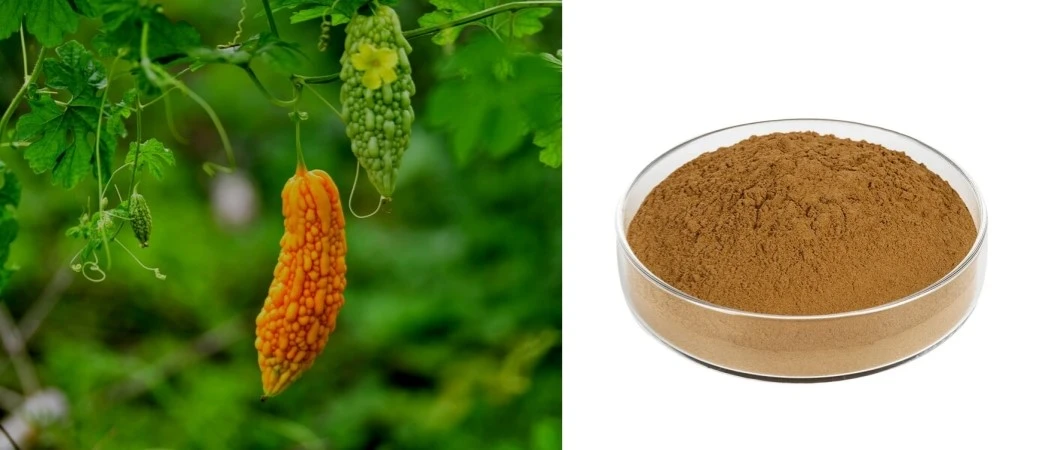
Bitter melon (Momordica charantia L.) is a tropical and subtropical vine belonging to the Cucurbitaceae family. Its fruit, leaves, seeds, and roots have all been used medicinally, but the fruit is the primary source of commercial Bitter Melon Powder used in dietary supplements.
2.1 How Bitter Melon Powder Is Made
High-quality Bitter Melon Powder is produced by:
1.Harvesting mature bitter melon fruit at peak bioactive content
2.Washing, slicing, and removing seeds (seeds contain different compound profiles)
3.Drying - either by freeze-drying (best for bioactive preservation), spray-drying, or low-temperature air-drying
4.Grinding to a fine powder (typically 80–100 mesh)
5.Optional: standardization to specific bioactive markers (charantin content, polypeptide-p levels)
The resulting powder retains the fruit's characteristic green color and bitter taste, along with its full spectrum of bioactive compounds.
2.2 Key Bioactive Compounds Relevant to Liver Health
The liver-protective effects of bitter melon are attributed to a rich and complex phytochemical profile:
Charantin A mixture of steroidal saponins (sitosterol glucoside and stigmasterol glucoside) unique to bitter melon. Charantin is one of the most studied bioactive compounds in the fruit and is associated with glucose metabolism regulation and hepatoprotective effects.
Momordicine I and Related Triterpenes A class of cucurbitane-type triterpenoids that give bitter melon its characteristic bitterness. Recent research published in RSC Food & Function (2026) specifically investigated Momordicine I's ability to ameliorate alcohol-associated liver disease, identifying it as a key hepatoprotective compound.
Polypeptide-p (Plant Insulin) A unique insulin-like polypeptide that influences glucose metabolism and reduces metabolic stress on the liver - particularly relevant in the context of metabolic-dysfunction-associated fatty liver disease.
Vicine and Momordicin Alkaloids with antioxidant and anti-inflammatory properties that contribute to bitter melon's hepatoprotective activity.
Flavonoids and Phenolic Compounds Including quercetin, catechin, and caffeic acid - potent antioxidants that protect liver cells from oxidative damage and support Phase II detoxification enzyme activity.
Cucurbitacins Highly oxygenated tetracyclic triterpenoids with demonstrated anti-inflammatory and anticancer properties, including hepatoprotective effects in preclinical models.
Dietary Fiber, Vitamins, and Minerals Bitter melon is rich in Vitamin C, Vitamin B complex, zinc, iron, and potassium - all of which support liver metabolic function and antioxidant defense.
Part 3: Does Bitter Melon Extract Clean the Liver? The Mechanisms Explained
The term "liver cleanse" is popular in wellness culture but scientifically imprecise. The liver does not need to be "cleaned" in the conventional sense - it is a self-regulating detoxification organ. What it does need, particularly under conditions of metabolic stress, is protection, support, and restoration of its natural functional capacity.
Here is how Bitter Melon Powder supports liver health through well-characterized biological mechanisms:
3.1 Reducing Hepatic Fat Accumulation (Anti-Steatotic Effect)
One of the most clinically significant ways bitter melon supports liver health is by reducing fat accumulation in liver cells - the hallmark of fatty liver disease.
A landmark study published in Food & Nutrition Research demonstrated that bitter melon extract (BME) has protective effects against endoplasmic reticulum (ER) stress-mediated apoptosis in HepG2 liver cells, as well as in high-fat/high-fructose diet-induced fatty liver in mouse models. The researchers found that BME significantly reduced hepatic lipid accumulation, improved liver cell viability, and reduced markers of liver cell death.
A more recent study published in PMC (2025) specifically investigated how Bitter Melon Powder protects against obesity-associated fatty liver disease by improving the colonic microenvironment in rats with high-fat diet-induced obesity. The findings revealed that bitter melon powder reduced hepatic fat deposition, improved liver histology, and modulated gut microbiota composition - highlighting a novel gut-liver axis mechanism.
The primary mechanisms behind bitter melon's anti-steatotic effects include:
* Inhibition of lipogenesis (fat synthesis) in liver cells via downregulation of SREBP-1c and FAS enzymes
* Activation of AMPK (AMP-activated protein kinase) - the body's master metabolic switch that promotes fat oxidation and reduces fat storage
* Reduction of free fatty acid influx into the liver through improved peripheral insulin sensitivity
* Enhancement of hepatic β-oxidation - the process by which the liver burns fatty acids for energy
3.2 Antioxidant Protection of Liver Cells
Oxidative stress - an imbalance between free radical production and the body's antioxidant defenses - is a central driver of liver damage in virtually all forms of liver disease, from NAFLD to alcohol-induced hepatitis to drug-induced liver injury.
Bitter melon extract exerts powerful antioxidant effects in liver tissue through multiple pathways:
* Direct free radical scavenging by flavonoids and phenolic compounds
* Upregulation of endogenous antioxidant enzymes - including superoxide dismutase (SOD), catalase (CAT), and glutathione peroxidase (GPx)
* Preservation of hepatic glutathione levels - the liver's primary antioxidant defense molecule
* Inhibition of lipid peroxidation - preventing oxidative damage to liver cell membranes
The biochemical role of bitter melon compounds in protecting liver cells from oxidative damage is well-documented in the peer-reviewed literature. Research published in PMC on the biochemical role of Momordica charantia confirmed its significant antioxidant activity in hepatic tissue, with measurable improvements in liver antioxidant enzyme profiles following supplementation.
3.3 Anti-Inflammatory Effects in Liver Tissue
Chronic inflammation is the bridge between simple fatty liver (steatosis) and the more serious condition of non-alcoholic steatohepatitis (NASH) - and ultimately to fibrosis and cirrhosis. Bitter melon extract has demonstrated significant anti-inflammatory activity in liver tissue through:
* Suppression of NF-κB signaling - the master inflammatory transcription factor
* Reduction of pro-inflammatory cytokines including TNF-α, IL-6, and IL-1β
* Inhibition of COX-2 - the enzyme responsible for prostaglandin-mediated inflammation
* Modulation of TLR4 signaling - a key pathway linking gut-derived endotoxins to liver inflammation
These anti-inflammatory mechanisms are particularly relevant for individuals with NAFLD/NASH, alcohol-related liver disease, and metabolic syndrome-associated liver dysfunction. ,
3.4 Supporting Liver Detoxification Pathways
The liver detoxifies harmful substances through a two-phase enzymatic process:
* Phase I detoxification (cytochrome P450 enzymes): Converts fat-soluble toxins into intermediate metabolites
* Phase II detoxification (conjugation reactions): Converts intermediate metabolites into water-soluble compounds that can be safely excreted
Bitter melon's flavonoids and phenolic compounds have been shown to modulate Phase I and Phase II detoxification enzyme activity, supporting the liver's natural capacity to process and eliminate environmental toxins, metabolic waste products, and xenobiotics. This is the scientific basis for the traditional use of bitter melon as a "liver cleanser" - it genuinely does enhance the liver's own detoxification machinery.
3.5 Protection Against Alcohol-Induced Liver Damage
A compelling 2026 study published in RSC Food & Function specifically investigated Momordicine I - a key triterpene from bitter melon - for its ability to ameliorate alcohol-associated liver disease. The researchers found that Momordicine I:
* Significantly reduced alcohol-induced hepatic steatosis (fat accumulation)
* Lowered elevated liver enzyme levels (ALT and AST) - key markers of liver cell damage
* Reduced oxidative stress markers in liver tissue
* Suppressed alcohol-induced inflammatory signaling
This study provides direct evidence that bitter melon's bioactive compounds can protect the liver specifically from alcohol-related damage - one of the most common and serious forms of liver disease globally.
3.6 Improving Liver Enzyme Profiles
Elevated liver enzymes - particularly alanine aminotransferase (ALT) and aspartate aminotransferase (AST) - are the primary clinical markers of liver cell damage and inflammation. Multiple studies have documented that bitter melon supplementation produces measurable reductions in ALT and AST levels, indicating genuine liver cell protection and reduced hepatic inflammation. ,
Part 4: Clinical and Preclinical Evidence - What the Research Shows
Let's take a structured look at the key research findings supporting Bitter Melon Powder's liver health benefits:
4.1 Fatty Liver Disease (NAFLD/NASH)
|
Study Type |
Key Finding |
Source |
|
Animal model (high-fat diet) |
Bitter melon powder reduced hepatic fat, improved liver histology, modulated gut microbiota |
PMC 2025 |
|
Cell study (HepG2 cells + high-fat/fructose) |
BME protected against ER stress-mediated liver cell apoptosis and reduced lipid accumulation |
Food & Nutrition Research |
|
Animal model (obesity-associated) |
Bitter melon improved colonic microenvironment and reduced liver fat via gut-liver axis |
PMC 2025 |
4.2 Alcohol-Related Liver Disease
|
Study Type |
Key Finding |
Source |
|
Preclinical (Momordicine I) |
Ameliorated alcohol-induced steatosis, reduced ALT/AST, suppressed oxidative stress and inflammation |
RSC Food & Function 2026 |
4.3 Liver Enzyme Normalization
Multiple preclinical studies have consistently shown that bitter melon extract supplementation reduces elevated ALT and AST levels in models of diet-induced and chemically-induced liver damage, providing biochemical evidence of hepatocyte protection. ,
4.4 Antioxidant and Anti-inflammatory Liver Protection
Research on Momordica charantia bioactive compounds consistently demonstrates significant improvements in hepatic antioxidant enzyme activity (SOD, CAT, GPx) and reductions in pro-inflammatory cytokine expression in liver tissue following bitter melon supplementation. ,
4.5 The Gut-Liver Axis: An Emerging Frontier
One of the most exciting recent findings involves bitter melon's effects on the gut-liver axis - the bidirectional communication pathway between the gut microbiome and liver function. The 2025 PMC study found that Bitter Melon Powder improved the colonic microenvironment in obese rats, reducing gut permeability and the translocation of bacterial endotoxins (LPS) to the liver - a key driver of hepatic inflammation and NAFLD progression. This gut-mediated mechanism represents a novel and increasingly important dimension of bitter melon's liver-protective effects.
Part 5: Bitter Melon Powder vs. Other Liver Health Ingredients
How does Bitter Melon Powder compare to other well-known liver health ingredients? Here's a structured comparison:
|
Ingredient |
Primary Mechanism |
Key Strength |
Bitter Melon Advantage |
|
Milk Thistle (Silymarin) |
Antioxidant, anti-fibrotic |
Most studied hepatoprotective herb |
Broader metabolic effects (glucose, lipids) |
|
Turmeric (Curcumin) |
Anti-inflammatory, antioxidant |
Potent NF-κB inhibition |
Unique anti-steatotic and gut-liver axis effects |
|
Artichoke Extract |
Bile production, antioxidant |
Cholesterol and bile support |
Superior blood sugar modulation |
|
Dandelion Root |
Bile flow, mild antioxidant |
Traditional detox support |
Stronger clinical evidence base |
|
Bitter Melon Powder |
Multi-mechanism: antioxidant, anti-inflammatory, anti-steatotic, AMPK activation, gut-liver axis |
Unique combination of liver + metabolic benefits |
Addresses fatty liver via multiple pathways simultaneously |
Bitter melon's key competitive advantage is its multi-target approach - simultaneously addressing oxidative stress, inflammation, fat accumulation, glucose metabolism, and gut microbiome health. This makes it particularly valuable for individuals with metabolic syndrome, type 2 diabetes, or obesity-associated fatty liver disease - conditions where liver dysfunction and metabolic dysfunction are deeply intertwined. ,
Part 6: Beyond the Liver - Additional Health Benefits of Bitter Melon Powder
While liver health is our focus, Bitter Melon Powder's bioactive compounds exert beneficial effects across multiple body systems - making it a genuinely versatile functional ingredient:
6.1 Blood Sugar Regulation ⭐ Strongest Additional Evidence
Bitter melon is perhaps best known for its hypoglycemic (blood sugar-lowering) effects. Charantin, polypeptide-p, and vicine all contribute to improved insulin sensitivity and glucose uptake. This is directly relevant to liver health, as chronic hyperglycemia and insulin resistance are primary drivers of NAFLD.
6.2 Lipid Profile Improvement
Multiple studies have documented that bitter melon supplementation reduces total cholesterol, LDL cholesterol, and triglycerides while increasing HDL cholesterol - effects that directly reduce the metabolic burden on the liver.
6.3 Anti-Obesity Effects
By activating AMPK, reducing lipogenesis, and improving gut microbiota composition, bitter melon powder supports weight management - particularly the reduction of visceral (abdominal) fat, which is most closely associated with fatty liver disease.
6.4 Anti-Inflammatory and Immune Support
Bitter melon's broad anti-inflammatory activity - mediated through multiple signaling pathways - supports systemic immune regulation and may reduce chronic low-grade inflammation associated with metabolic disease.
6.5 Antimicrobial and Antiviral Properties
Research published in MDPI International Journal of Molecular Sciences on the therapeutic potential of Momordicine I documented antimicrobial and antiviral properties of bitter melon triterpenes, adding another dimension to its health-supporting profile.
6.6 Digestive Health
Bitter melon's characteristic bitterness stimulates bile production and digestive enzyme secretion, supporting fat digestion, nutrient absorption, and overall gastrointestinal function - all of which reduce the digestive burden on the liver.
Part 7: How to Choose a High-Quality Bitter Melon Powder
Given the variability in commercial Bitter Melon Powder products, quality selection is critical for both consumers and supplement manufacturers. Here are the key parameters to evaluate:
7.1 Standardization
The most clinically relevant Bitter Melon Powder products are standardized to specific bioactive markers:
* Charantin content (typically 1–10%) - the primary marker for metabolic and liver health activity
* Total bitter principles - a measure of overall bioactive potency
* Polypeptide-p content - relevant for blood sugar applications
Unstandardized bitter melon powder may contain highly variable levels of active compounds, making it difficult to ensure consistent efficacy.
7.2 Plant Part Used
* Whole fruit powder - most common; good all-round bioactive profile
* Fruit extract - concentrated; higher bioactive content per gram
* Seed extract - different compound profile; used for specific applications
* Leaf extract - higher in some flavonoids; used in traditional medicine
For liver health applications, whole fruit powder or standardized fruit extract is the most evidence-supported choice.
7.3 Processing Method
* Freeze-drying - gold standard; best preservation of heat-sensitive bioactives including polypeptide-p and flavonoids
* Spray-drying - widely used; good balance of cost and bioactive preservation
* Low-temperature air-drying - acceptable for non-heat-sensitive compounds
* High-temperature processing - should be avoided; degrades key bioactives
7.4 Quality Certifications
For supplement-grade Bitter Melon Powder, look for:
✅ cGMP (Current Good Manufacturing Practice)
✅ ISO 22000 (Food Safety Management)
✅ FSSC 22000 (Comprehensive Food Safety Certification)
✅ Organic Certification (USDA NOP, EU Organic, JAS)
✅ Kosher and Halal certification
✅ Third-party heavy metal and pesticide residue testing
✅ Non-GMO verification
7.5 Traceability and Raw Material Origin
Bitter melon quality varies significantly by growing region, variety, and agricultural practices. Reputable suppliers maintain full farm-to-powder traceability and can provide documentation of raw material origin, growing conditions, and harvest timing. ,
Part 8: Dosage, Safety, and Practical Guidance
8.1 Evidence-Based Dosage
Based on the available clinical and preclinical literature, the following dosage ranges are commonly used for Bitter Melon Powder:
* General liver health support: 500 mg – 2,000 mg/day of whole fruit powder
* Standardized extract (charantin-standardized): 200 mg – 600 mg/day
* Blood sugar support: 1,000 mg – 3,000 mg/day of whole fruit powder (divided doses)
* Typical supplement capsule: 500 mg per capsule, 1–3 capsules daily with meals
Effects on liver enzyme levels and metabolic markers are typically observed after 4–12 weeks of consistent supplementation.
8.2 Safety Profile
Bitter melon powder has a well-established safety profile when used at recommended doses. It has been consumed as a food across Asia, Africa, and the Caribbean for centuries. Reported side effects are generally mild and include:
* Gastrointestinal discomfort (nausea, diarrhea, stomach cramping) - most common, particularly at high doses
* Hypoglycemia - blood sugar lowering effects can be significant; monitor carefully in diabetic patients
* Headache - occasional, particularly at the start of supplementation
8.3 Important Contraindications and Precautions
|
Population |
Precaution |
|
Diabetic patients on medication |
Monitor blood glucose closely; bitter melon may enhance hypoglycemic drug effects |
|
Pregnant women |
Contraindicated - bitter melon has uterotonic properties and may stimulate contractions |
|
Breastfeeding women |
Insufficient safety data; avoid use |
|
G6PD deficiency |
Vicine in bitter melon seeds may trigger hemolytic anemia; avoid seed-containing products |
|
Pre-surgical patients |
Discontinue 2 weeks before surgery due to potential blood sugar effects |
|
Children |
Not recommended without medical supervision |
8.4 Practical Tips for Maximum Liver Health Benefit
1.Take with meals - reduces gastrointestinal side effects and improves absorption of fat-soluble bioactives
2.Be consistent - liver health benefits accumulate over weeks; daily supplementation is more effective than occasional use
3.Combine with a liver-supportive diet - reduce alcohol, processed foods, and refined sugars while increasing vegetables, fiber, and healthy fats
4.Stay hydrated - supports the liver's water-soluble excretion pathways
5.Consider synergistic combinations - bitter melon pairs well with milk thistle, turmeric, and artichoke extract for comprehensive liver support
6.Monitor liver enzymes - if you have known liver disease, track ALT/AST levels with your healthcare provider to assess response
Part 9: Bitter Melon Powder in Supplement Formulations - A Guide for B2B Buyers
For dietary supplement manufacturers and brands sourcing Bitter Melon Powder as a functional ingredient, here is a practical formulation overview:
9.1 Best-Fit Product Categories
* Liver health and detox supplements - the primary application; pairs with milk thistle, NAC, artichoke, and turmeric
* Blood sugar and metabolic health formulas - combines with berberine, chromium, cinnamon extract, and alpha-lipoic acid
* Weight management supplements - synergistic with green tea extract, garcinia cambogia, and conjugated linoleic acid (CLA)
* Digestive health blends - complements digestive enzymes, probiotics, and prebiotic fibers
* Greens and superfood powders - adds functional value and distinctive color
9.2 Formulation Formats
Bitter Melon Powder is compatible with:
* Capsules and tablets - most common; excellent for standardized extract delivery
* Stick packs and sachets - for direct-dissolve applications; note the characteristic bitter taste
* Functional beverages - water-soluble grades available; taste masking may be required
* Gummies - requires careful flavor masking; the bitterness can be challenging
* Softgels - oil-based suspension; less common but feasible
9.3 Taste Considerations
Bitter melon's intense bitterness is its most significant formulation challenge. Strategies for managing bitterness in supplement products include:
* Encapsulation (capsules/tablets) - eliminates taste entirely
* Microencapsulation of the powder - reduces bitterness in powder blends
* Flavor masking agents - citrus, mint, or stevia-based masking systems
* Enteric coating - delays dissolution until the small intestine
Part 10: Frequently Asked Questions About Bitter Melon Powder and Liver Health
Q: Can bitter melon powder reverse fatty liver disease? Current evidence - primarily from preclinical studies - shows that bitter melon powder can significantly reduce hepatic fat accumulation, improve liver enzyme levels, and reduce liver inflammation in models of fatty liver disease. Human clinical trials specifically targeting NAFLD reversal are still limited, but the mechanistic and preclinical evidence is compelling. Bitter melon should be viewed as a supportive intervention alongside dietary and lifestyle changes, not a standalone cure. ,
Q: How long does it take for bitter melon to improve liver health? Based on available research, measurable improvements in liver enzyme levels (ALT, AST) and metabolic markers are typically observed after 4–12 weeks of consistent daily supplementation. Structural improvements in liver histology (fat content, inflammation) may take longer - 3–6 months in some studies.
Q: Can I take bitter melon powder if I have liver disease? People with diagnosed liver disease should consult their hepatologist or gastroenterologist before starting any new supplement, including bitter melon. While the evidence suggests liver-protective effects, individual circumstances - including the type and severity of liver disease and concurrent medications - must be considered.
Q: Is bitter melon powder safe to take daily? For most healthy adults, bitter melon powder is safe for daily use at recommended doses. The most important safety considerations are its blood sugar-lowering effects (relevant for diabetics on medication) and its contraindication in pregnancy.
Q: Does bitter melon powder interact with medications? Yes - bitter melon's hypoglycemic effects can interact with antidiabetic medications (metformin, insulin, sulfonylureas), potentially causing hypoglycemia. It may also interact with anticoagulants and immunosuppressants. Always consult a healthcare provider before combining bitter melon with prescription medications. ,
Q: What is the difference between bitter melon powder and bitter melon extract? Bitter melon powder is made from dried, ground whole fruit and contains the full spectrum of compounds at natural concentrations. Bitter melon extract is a concentrated, often standardized product with higher levels of specific bioactives (such as charantin). For liver health applications, standardized extract typically delivers more consistent and potent effects per serving.
Conclusion: Bitter Melon Powder - A Scientifically Validated Ally for Liver Health
So, does bitter melon extract clean the liver? The answer is a resounding yes - but not in the simplistic "detox cleanse" sense that wellness marketing often implies. What Bitter Melon Powder does is far more sophisticated and genuinely impressive:
It reduces fat accumulation in liver cells through AMPK activation and lipogenesis inhibition. It protects liver cells from oxidative damage through potent antioxidant activity. It suppresses liver inflammation through multiple anti-inflammatory pathways. It supports the liver's own detoxification enzymes in Phase I and Phase II pathways. It improves liver enzyme profiles - measurable markers of liver cell health. And through the emerging gut-liver axis mechanism, it improves the intestinal environment to reduce the flow of inflammatory signals to the liver.
This is not a single-mechanism, single-compound effect. It is a multi-target, systems-level support of the liver's natural capacity to protect, repair, and regenerate itself. And that is precisely what makes Bitter Melon Powder one of the most exciting and scientifically credible functional ingredients in the liver health category today.
For consumers, the message is clear: Bitter Melon Powder, used consistently at evidence-based doses as part of a liver-supportive lifestyle, offers genuine and meaningful support for liver health - particularly for those dealing with fatty liver, metabolic syndrome, or elevated liver enzymes.
For supplement brands and formulators, Bitter Melon Powder represents a compelling, differentiated ingredient with a strong and growing evidence base, broad consumer appeal, and excellent formulation versatility.
At Joywin Natural, we supply premium-quality Bitter Melon Powder and standardized Bitter Melon Extract for the global dietary supplement and functional food industry. Our products are produced under strict cGMP conditions, standardized to verified charantin content, and backed by comprehensive third-party testing for heavy metals, pesticide residues, and microbiological safety. With certifications including ISO 22000, FSSC 22000, Kosher, Halal, Organic (NOP/JAS), and more, we are the trusted ingredient partner for brands that demand quality without compromise. If you want to know more about Bitter Melon Powder or are interested in purchasing it, you can send an email to contact@joywinworld.com. We will reply to you as soon as possible after we see the message.