


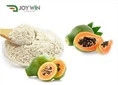
In the competitive landscape of dietary supplements, papain-the powerful proteolytic enzyme from the papaya plant-is frequently linked to claims of fat-burning and weight loss. For ingredient suppliers and product developers, the question is direct and commercially significant: Does papain powder break down fat?
The short, biochemical answer is no. Papain is a cysteine protease, an enzyme specialized in breaking the peptide bonds of proteins, not lipids (fats). It is the active component in meat tenderizers, where it selectively degrades protein fibers . This fundamental action, however, is only the beginning of the story.
Emerging scientific research reveals a more nuanced and compelling narrative. While papain does not digest fat molecules in the way it digests protein, it exhibits significant anti-obesity and lipid-modulating effects through indirect, systemic mechanisms. A pivotal 2021 study published in the International Journal of Molecular Sciences provided the first direct evidence that papain supplementation can reduce body weight, shrink fat cells, lower blood lipids, and combat obesity-related inflammation in experimental models .
This article will dissect the science behind papain's relationship with fat metabolism, separating biochemical fact from market fiction. We will explore its proven mechanisms of action, review the latest clinical evidence, and provide practical insights for formulators looking to leverage this versatile, natural enzyme in next-generation metabolic and digestive health supplements.
Part 1: What Papain Is and What It Actually Does
The Proteolytic Powerhouse
Papain powder is extracted from the fruit, leaves, and latex of the Carica papaya plant. As a proteolytic enzyme, its sole biochemical function is to catalyze the hydrolysis (breakdown) of proteins into smaller peptides and amino acids . Its mechanism involves a catalytic dyad of cysteine and histidine residues that cleaves peptide bonds, particularly those following amino acids like arginine or lysine .
This specific protein-digesting activity is the basis for its wide-ranging industrial and traditional uses:
* Food Industry: As a natural meat tenderizer and clarifier in brewing.
* Digestive Aid: To support the breakdown of dietary proteins, potentially alleviating symptoms of bloating and discomfort .
* Therapeutic Applications: In topical formulations for wound debridement, where it selectively breaks down necrotic tissue .
The Fat Digestion Myth
The misconception that papain powder "breaks down fat" likely arises from a fundamental confusion between different enzyme classes. Digestion requires specific enzymes for specific nutrients:
* Lipases break down fats (lipids).
* Amylases break down carbohydrates.
* Proteases (like papain) break down proteins.
Papain has no lipase activity. It cannot directly cleave the ester bonds of triglycerides (dietary fats). Therefore, a supplement containing only papain will not "digest" fat in the stomach or intestine in a direct, mechanistic way.
Part 2: The Indirect Path: How Papain Influences Fat Metabolism and Obesity
If papain doesn't digest fat, what explains the compelling anti-obesity findings from recent research? The answer lies in its ability to modulate key biological pathways involved in fat cell development, lipid storage, and systemic inflammation.
Key Findings from Groundbreaking Research
The 2021 study, "Papain Ameliorates Lipid Accumulation and Inflammation in High-Fat Diet-Induced Obesity Mice," serves as a cornerstone for understanding these effects. Key results from this in vivo and in vitro research include :
* Reduced Body & Fat Mass: Obese mice fed a high-fat diet (HFD) and given oral papain (2.5 or 5 mg/kg) showed significant reductions in total body weight gain, liver weight, and adipose (fat) tissue weight compared to control mice.
* Lower Blood Lipids: papain powder treatment markedly decreased serum levels of total cholesterol and triglycerides.
* Smaller Fat Cells: It inhibited the accumulation of lipid droplets in the liver and reduced the size of adipocytes (fat-storing cells).
* Inhibited Fat Cell Formation: In laboratory tests on preadipocyte cells (fat cell precursors), papain blocked their differentiation into mature, lipid-storing adipocytes.

The Mechanistic Pathways: AMPK Activation and Beyond
The study identified several interconnected mechanisms through which papain powder exerts these anti-obesity effects:
1. Activation of AMPK (Adenosine Monophosphate-Activated Protein Kinase)
This is considered the central mechanism. AMPK is a master cellular energy sensor often called the "metabolic switch." When activated, it promotes catabolic processes (like fat burning for energy) and inhibits anabolic processes (like fat synthesis) .
* Papain's Role: The research demonstrated that papain significantly enhanced the activation of AMPK in both obese mice and fat cell models. This activation sets off a cascade of beneficial metabolic events .
2. Inhibition of Adipogenesis (Fat Cell Creation)
Activated AMPK downregulates the expression of key transcription factors that drive the creation of new fat cells, including:
* PPARγ (Peroxisome proliferator-activated receptor gamma)
* C/EBPα (CCAAT/enhancer-binding protein alpha)
* SREBP-1 (Sterol regulatory element-binding protein 1)
By suppressing these regulators, papain powder helps halt the expansion of fat tissue at the cellular level.
3. Reduction of Chronic Inflammation
Obesity is characterized by a state of chronic, low-grade inflammation in adipose tissue, driven by pro-inflammatory cytokines. Papain administration reversed this trend, lowering the expression of key inflammatory markers like TNF-α, IL-6, and MCP-1 in the studied models . This anti-inflammatory action is crucial, as inflammation both contributes to and exacerbates metabolic dysfunction.
Table: Papain's Effects on Fat: Myth vs. Evidence-Based Mechanisms
|
Claim |
Biochemical Reality |
Supported by Evidence? |
|
Directly digests/breaks down dietary fat |
Papain is a protease, not a lipase. It cannot hydrolyze fat molecules. |
No. This is a fundamental misunderstanding of enzyme specificity. |
|
Reduces body fat and body weight |
Acts indirectly by modulating cellular metabolic pathways (AMPK activation). |
Yes. Demonstrated in high-fat diet-induced obese mouse models . |
|
Inhibits the formation of new fat cells |
Downregulates master regulators of adipogenesis (PPARγ, C/EBPα) . |
Yes. Confirmed in studies on 3T3-L1 preadipocyte cell lines. |
|
Lowers blood cholesterol & triglycerides |
Improves overall lipid metabolism, likely through systemic AMPK activation. |
Yes. Serum lipid levels were significantly reduced in papain-treated animal models . |
|
Reduces obesity-related inflammation |
Suppresses the expression of pro-inflammatory cytokines (TNF-α, IL-6) in adipose tissue . |
Yes. A key finding of the 2021 mechanistic study. |
Part 3: Commercial Applications and Formulation Strategies for papain powder
For supplement brands, the value of papain extends beyond simple digestive support. Its evidence-based role in metabolic regulation opens doors for sophisticated product positioning.
Target Formulations
* Metabolic Health & Weight Management Complexes: Papain can be combined with other AMPK-activating ingredients (e.g., berberine, green tea extract) and lipid-metabolism supporters (e.g., citrus flavonoids) for synergistic effects.
* Advanced Digestive Enzymes: While it aids protein digestion, its inclusion in broad-spectrum enzyme formulas can be marketed for supporting overall metabolic wellness, not just digestive comfort.
* Anti-Inflammatory & Wellness Blends: Leverage its anti-cytokine activity to position papain within formulas targeting systemic inflammation and overall cellular health.
Sourcing and Quality Considerations
* Standardization: Ensure a consistent and relevant measure of activity. While proteolytic activity (e.g., in USP units) is standard for digestive claims, formulators should partner with suppliers who can provide high-purity papain suitable for systemic effects.
* Safety Profile: Papain is generally recognized as safe (GRAS) for use in food and has a long history of use . The cited research found no signs of toxicity in liver enzymes (AST/ALT) in animals at effective doses . An older toxicological study also found it to be non-cytotoxic and non-mutagenic in bacterial models .
* Allergen Note: A small percentage of individuals, particularly those with latex or papaya allergy, may be sensitive to papain. This must be clearly stated on labels .
Part 4: Important Safety and Regulatory Context
While the research is promising, responsible formulation and marketing require a clear understanding of the boundaries.
* Research Status: The groundbreaking findings on obesity come primarily from a single, high-quality preclinical study (animal and cell models) . These results are essential for establishing mechanism and potential but must be followed by human clinical trials to confirm efficacy and dosage in people. Healthline notes that human research on papain for weight loss is lacking .
* Regulatory Claims: In jurisdictions like the United States and the European Union, direct "fat-burning" or "weight loss" claims would be considered disease treatment claims for a dietary ingredient and are not permissible without robust clinical evidence and specific drug approval. Marketing should focus on structure/function claims related to supporting healthy metabolism, digestion of proteins, or cellular energy pathways.
* Drug Interactions: As with many bioactive compounds, papain powder may interact with certain medications. It has been noted to have potential blood-thinning effects, so caution is advised for users on anticoagulant therapy . Consultation with a healthcare professional is always recommended.
Conclusion: A Nuanced Answer for Strategic Formulators
So, does papain break down fat? Not directly. Its biochemical function is unequivocally that of a protein-digesting protease.
However, does papain influence body fat, lipid metabolism, and obesity-related pathways through sophisticated, indirect biological mechanisms? Emerging, high-quality scientific evidence strongly suggests yes.
For the forward-thinking supplement supplier and formulator, papain represents an opportunity to move beyond commoditized digestive enzymes. It is an ingredient whose story is evolving from "digests protein" to "modulates metabolic and inflammatory pathways." By grounding product development in the credible science of AMPK activation and adipogenesis inhibition-and communicating these benefits within the appropriate regulatory framework-brands can develop innovative, evidence-informed formulations for the metabolic health market.
The future of papain in supplements lies not in perpetuating the oversimplified "fat-buster" myth, but in harnessing its genuine, multi-targeted potential to support healthy metabolism from the cellular level up.
JOYWIN founded in 2013 is an innovation-driven biotechnology company. We provide the manufacture of plant extracts, plant proteases, and customized products. If you want to know more about Papain Powder or are interested in purchasing it, you can send an email to contact@joywinworld.com. We will reply to you as soon as possible after we see the message.