


In the dynamic landscape of dietary supplements, few questions generate as much interest among formulators and consumers alike as the search for natural, evidence-based ingredients that support healthy hormone balance. The query "Does pomegranate extract powder increase testosterone?"
Pomegranate (Punica granatum L.), a fruit revered since antiquity for its medicinal properties, is now the subject of modern scientific investigation for its potential endocrine benefits. Its extract, rich in potent polyphenols like punicalagins and ellagic acid, has demonstrated significant antioxidant, anti-inflammatory, and cardiometabolic effects in clinical research. But does this translate directly to increased testosterone levels?
This comprehensive analysis moves beyond simplistic "yes or no" answers. We will dissect the mechanistic pathways, critically evaluate the existing human and animal studies, identify crucial gaps in the research, and provide practical, evidence-based insights for product developers. Our goal is to equip you with the knowledge needed to make informed formulation decisions, create responsible marketing narratives, and develop supplements that truly deliver on their promises.
1. The Science of Testosterone: More Than Just a "Male Hormone"
To assess pomegranate's potential role, we must first understand the complex physiology of testosterone.
1.1 Biosynthesis and Regulation
Testosterone is a primary androgen steroid hormone synthesized primarily in the Leydig cells of the testes in men and, to a lesser extent, in the ovaries and adrenal glands in women. Its production is governed by the hypothalamic-pituitary-gonadal (HPG) axis:
1.The hypothalamus releases gonadotropin-releasing hormone (GnRH).
2.GnRH stimulates the pituitary gland to secrete luteinizing hormone (LH).
3.LH travels via the bloodstream to the testes, signaling Leydig cells to convert cholesterol into testosterone.
Any natural compound proposed to support testosterone must interface with this axis, influence cholesterol availability, or affect enzymes like aromatase (which converts testosterone to estrogen) and 5-alpha-reductase (which converts it to dihydrotestosterone, DHT).
1.2 The Modern Challenge of "Low T"
Aging is associated with a gradual, natural decline in testosterone levels-about 1% per year after age 30. However, contemporary lifestyle factors like chronic stress (elevating cortisol), obesity (increasing aromatase activity), oxidative stress, and systemic inflammation can accelerate this decline. The market for testosterone support supplements is vast, but effective, safe, and well-researched natural ingredients remain a gold standard for formulators.
2. Pomegranate Extract: A Phytochemical Powerhouse
The proposed endocrine effects of pomegranate are not attributed to a single "magic bullet" molecule but to the synergistic action of its unique phytochemical profile.
* Punicalagins: These large, tannin-like molecules are unique to pomegranate and are the most abundant antioxidants in the fruit's peel and pulp. Upon ingestion, they are hydrolyzed into ellagic acid.
* Ellagic Acid: A polyphenol with well-documented anti-inflammatory and antioxidant properties. It is further metabolized by gut microbiota into urolithins, which have systemic bioactive effects.
* Anthocyanins: Pigments (e.g., delphinidin, cyanidin) responsible for the fruit's deep red color, contributing to its antioxidant capacity.
The potency of a pomegranate extract powder is typically standardized by its content of punicalagins (e.g., 30-40%) or its total polyphenol content, measured as gallic acid equivalents. This standardization is critical for ensuring consistent biological activity in finished supplements-a core aspect of Joywin Natural's commitment to ingredient quality and reliability.
3. Mechanistic Pathways: How Pomegranate Could Influence Androgen Status
While direct, large-scale human trials are limited, robust preclinical research points to several plausible mechanisms by which pomegranate extract may create a favorable environment for healthy testosterone levels.
3.1 Antioxidant and Anti-Inflammatory Actions
Oxidative stress and inflammation are known adversaries of Leydig cell function and steroidogenesis. Studies show that reactive oxygen species (ROS) can directly damage Leydig cells and inhibit the enzymes involved in testosterone production.
* Research Insight: A 2014 study in The Journal of Applied Physiology found that pomegranate extract supplementation in weightlifters significantly reduced markers of oxidative stress and muscle soreness. By creating a less oxidative, inflammatory internal environment, pomegranate may indirectly support the optimal function of testosterone-producing cells.
3.2 Inhibition of Aromatase and Reductase Enzymes
One of the most direct theoretical pathways is the modulation of testosterone metabolism.
* Aromatase Inhibition: In vitro (test-tube) studies, such as one published in The Journal of Nutritional Biochemistry (2015), have shown that pomegranate extract powder and its compounds can act as natural aromatase inhibitors. By potentially slowing the conversion of testosterone to estradiol, more circulating testosterone could be preserved.
* 5-Alpha-Reductase Modulation: Some preclinical data suggests pomegranate may also mildly influence this enzyme, which converts testosterone to the more potent DHT. This dual-pathway modulation is an area of significant interest.
3.3 Nitric Oxide (NO) Boost and Blood Flow Enhancement
Testosterone synthesis and male reproductive health are dependent on healthy blood flow. Pomegranate is a renowned nitric oxide (NO) booster. NO is a vasodilator that improves circulation.
* Clinical Connection: Multiple human studies, including a 2007 randomized controlled trial in Clinical Nutrition, have demonstrated pomegranate juice's ability to improve blood flow and endothelial function. Enhanced circulation to the gonads could theoretically support nutrient delivery and optimize the endocrine microenvironment.
3.4 Stress and Cortisol Modulation
Chronic psychological and physical stress elevates cortisol, a hormone that can antagonize testosterone production. The adaptogenic and anti-stress properties of pomegranate polyphenols, observed in animal models, suggest a potential role in supporting the HPA (stress) axis, thereby creating a more favorable hormonal milieu.
4. The Critical Examination: What Do Human Studies Actually Say?
This is where we separate compelling mechanism from conclusive clinical evidence. The human data is promising but preliminary and specific.
4.1 The Foundational Human Study
The most frequently cited direct evidence comes from a 2012 randomized, placebo-controlled, double-blind study published in the International Journal of Impotence Research.
* Protocol: 58 male participants with mild erectile dysfunction consumed 8 oz of pomegranate juice daily for 4 weeks.
* Findings: The study reported a significant increase in salivary testosterone levels (by 16-30%) alongside improvements in mood and blood pressure. Salivary testosterone is considered a reasonable proxy for free, bioavailable testosterone.
* Limitations & Context: The sample was specific (men with ED, not healthy athletes), the intervention was juice (not a standardized extract), and the duration was relatively short. While groundbreaking, this study is a starting point, not definitive proof.
4.2 Supporting Evidence from Related Outcomes
Other human trials, while not measuring testosterone directly, show benefits in domains closely linked to androgen activity:
* Exercise Performance & Recovery: The 2014 study on weightlifters mentioned earlier noted reduced soreness and strength recovery, outcomes often associated with healthy hormonal responses to training.
* Cardiometabolic Health: Improved blood pressure, lipid profiles, and insulin sensitivity-as shown in meta-analyses like the 2017 review in Pharmacological Research-are foundational for overall metabolic health, which is intrinsically linked to healthy testosterone levels.
4.3 The Gap in Direct, Large-Scale RCTs
It is crucial to acknowledge that there is a lack of large-scale, long-term randomized controlled trials (RCTs) specifically designed to measure the impact of standardized pomegranate extract on serum testosterone levels in diverse, healthy populations. This gap represents both a limitation of the current evidence base and an opportunity for future research.
5. Pomegranate extract powder in the Formulator's Toolkit: Synergy and Application
For the supplement developer, pomegranate extract shines not as a standalone testosterone "booster," but as a powerful synergistic component in comprehensive hormone and vitality formulas.
5.1 Ideal Formulation Partners
Pomegranate extract combines logically with other evidence-based ingredients, creating multi-target formulas:
* With Fenugreek (Trigonella foenum-graecum): Fenugreek, via compounds like furostanolic saponins, may support free testosterone levels by inhibiting its conversion and promoting its release from sex hormone-binding globulin (SHBG). Together, they offer a complementary mechanism.
* With Ashwagandha (Withania somnifera): This adaptogen has clinical evidence (e.g., a 2019 study in The American Journal of Men's Health) for improving testosterone, sperm parameters, and stress resilience. Pomegranate's antioxidant support pairs perfectly with ashwagandha's adaptogenic action.
* With Zinc and Magnesium: These essential minerals are critical cofactors in testosterone synthesis. Pomegranate supports the healthy metabolic environment in which these minerals operate.
* With Boron: This trace mineral has been shown in some studies to increase free testosterone and reduce estrogen. Its mild effects can be well-supported by pomegranate's foundational actions.
5.2 Recommended Dosage and Standardization
Based on the existing clinical literature and typical extract potencies:
* Standardized Extract: Look for extracts standardized to 30-40% punicalagins.
* Effective Daily Dose: A daily dosage providing 500 mg to 1,000 mg of this standardized extract is commonly used in studies and commercial formulations. This typically delivers 150-400 mg of punicalagins.
* Delivery Formats: It is well-suited for capsules, tablets, powdered drink mixes, and liquid tinctures. Its stability requires protection from heat, light, and moisture.
6. Addressing Limitations and Market Realities Responsibly
A trustworthy supplier must provide a balanced view. Key considerations include:
* Not a Direct Substitute: Pomegranate extract should not be marketed as a direct substitute for testosterone replacement therapy (TRT) in cases of clinical hypogonadism.
* Managing Expectations: Marketing claims should focus on "supporting healthy testosterone levels," "promoting antioxidant defense for hormonal health," or "aiding nitric oxide production and blood flow," all of which are grounded in the science.
* Quality is Non-Negotiable: The efficacy of the finished product is entirely dependent on the quality of the raw extract. Variations in sourcing, extraction methods (e.g., water vs. ethanol), and standardization can lead to dramatically different biological outcomes.
Conclusion: A Verdict for Informed Formulators
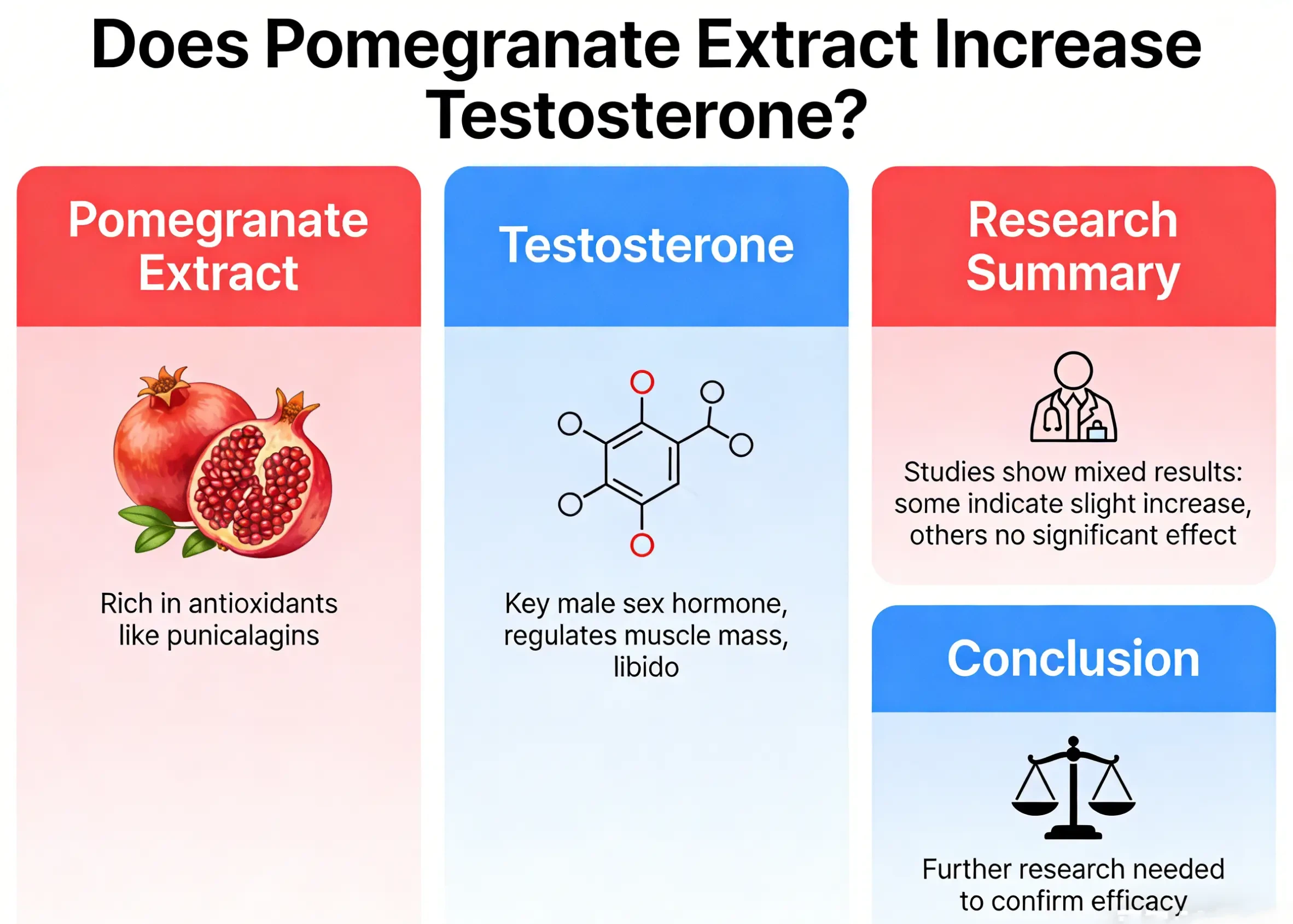
So, does pomegranate extract powder increase testosterone? The most accurate, science-based answer is: Pomegranate extract, through its potent antioxidant, anti-inflammatory, and nitric oxide-enhancing properties, creates a highly favorable physiological environment that can support healthy testosterone biosynthesis, metabolism, and function. While promising human evidence exists, it should be viewed as a powerful supportive component within a holistic nutritional and lifestyle strategy, not a miraculous standalone solution.
For the forward-thinking supplement brand, this represents a significant opportunity. By formulating pomegranate extract intelligently-in synergistic blends, at clinically relevant dosages, and with unwavering quality standards-you can create advanced products that genuinely address the multifaceted drivers of hormonal health. In an era where consumers demand transparency and efficacy, such nuanced, science-first approaches are the key to building lasting trust and brand authority.
JOYWIN founded in 2013 is an innovation-driven biotechnology company. We provide the manufacture of plant extracts, plant proteases, and customized products. If you want to know more about pomegranate extract powder or are interested in purchasing it, you can send an email to contact@joywinworld.com. We will reply to you as soon as possible after we see the message.