

Siberian ginseng extract powder, scientifically known as *Eleutherococcus senticosus*, has become a cornerstone ingredient in the dietary supplement industry. As a powerful adaptogen with documented stress-reducing and immune-supporting properties, this botanical extract represents a significant investment for manufacturers, formulators, and consumers alike. But one critical question often arises: how long does Siberian ginseng extract last?
Understanding the shelf life of Siberian ginseng extract powder is essential for multiple reasons: ensuring product efficacy, maintaining safety standards, optimizing inventory management, complying with regulatory requirements, and ultimately delivering value to end consumers. Whether you're a supplement manufacturer managing raw material inventory, a formulator developing new products, a retailer storing finished goods, or a consumer wanting to maximize the benefits of your supplements, knowing how to properly store and assess the longevity of Siberian ginseng extract is crucial.
This comprehensive guide examines the factors affecting Siberian ginseng extract's shelf life, proper storage techniques, signs of degradation, and best practices for maintaining potency and quality over time. We'll explore the science behind extract stability, provide evidence-based recommendations, and help you make informed decisions about storage, usage, and quality control.
Understanding Siberian Ginseng Extract Powder
What Is Siberian Ginseng?
Siberian ginseng, also known as eleuthero, is not a true ginseng (Panax species) but belongs to the same Araliaceae family. Native to northeastern Asia, including Siberia, northern China, Korea, and Japan, this woody shrub has been used in traditional medicine for over 2,000 years. Despite the name similarity, Siberian ginseng is botanically distinct from Korean or American ginseng, though it shares similar adaptogenic properties.
Siberian ginseng has been used traditionally as an adaptogen, performance enhancer, and immunostimulant, with active components that provide various health benefits [1]. The root and rhizome are the primary parts used for medicinal purposes, containing a complex array of bioactive compounds.
The Extraction Process
Understanding how Siberian ginseng extract powder is produced helps explain its stability characteristics:
Harvesting and Preparation:
- Roots are typically harvested after 3-5 years of growth
- Cleaned and prepared for extraction
- May be dried or used fresh depending on the process
Extraction Methods:
- Water extraction: Uses hot water to extract water-soluble compounds
- Alcohol extraction: Extracts both water and alcohol-soluble compounds
- Dual extraction: Combines both methods for full-spectrum benefits
- Supercritical CO2 extraction: Advanced method preserving heat-sensitive compounds
Concentration and Drying:
- Extract is concentrated to increase potency
- Spray-drying or freeze-drying converts liquid extract to powder
- Standardization ensures consistent active compound levels
Final Processing:
- Milling to achieve desired particle size
- Quality testing for purity and potency
- Packaging in moisture-resistant containers
Active Compounds in Siberian Ginseng
The shelf life and stability of Siberian ginseng extract are directly related to its chemical composition. The primary bioactive compounds include:
Eleutherosides:
The signature compounds of Siberian ginseng, eleutherosides are glycosides labeled A through M. Eleutherosides B, E, and isofraxidin are active constituents of Siberian ginseng that have shown protective effects in various studies [2]. These compounds are considered the primary markers for quality and potency.
Key Eleutherosides:
- Eleutheroside B: A syringin derivative with adaptogenic properties
- Eleutheroside E: A lignan compound with antioxidant effects
- Eleutheroside B1: Related to syringin
- Eleutheroside D: A glucoside compound
- Eleutheroside E1: Another lignan derivative
Other Active Compounds:
The chemical constituents include glycosides called eleutherosides A–M, saponins (ciwujianosides), eleutherans, β-sitosterol, isofraxidin, and syringin. Additionally, triterpenoid saponins called acanthopanaxosides including sessiloside, tauroside, ciwujianosides, and chiisanoside contribute to the extract's biological activity.
Additional Components:
- Polysaccharides: Immune-modulating compounds
- Phenolic compounds: Antioxidants including caffeic acid and chlorogenic acid
- Coumarins: Including isofraxidin
- Lignans: Including sesamin
- Essential oils: Volatile compounds
- Sterols: Including β-sitosterol
Understanding these compounds is crucial because their stability varies, and degradation of these active constituents determines the extract's effective shelf life.
Typical Shelf Life of Siberian Ginseng Extract Powder
General Shelf Life Expectations
The shelf life of Siberian ginseng extract powder varies based on multiple factors, but general guidelines can be established:
Standard Shelf Life:
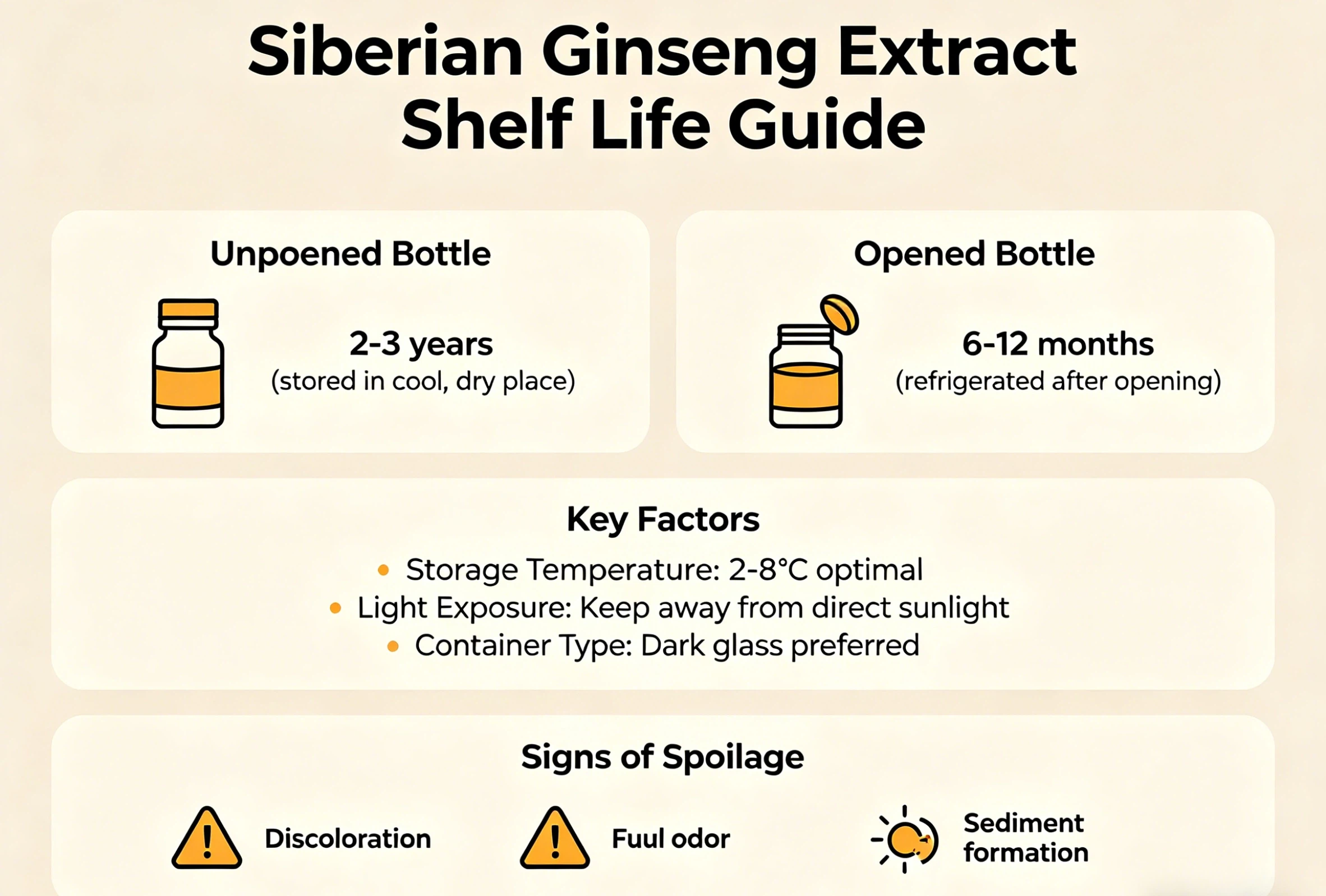
When properly stored, dried ginseng products can last anywhere from three to five years, though optimal storage conditions are essential to achieve this longevity [5]. For Siberian ginseng extract specifically, the typical shelf life ranges from:
- Optimal conditions: 2-3 years from manufacturing date
- Good conditions: 18-24 months
- Suboptimal conditions: 12-18 months
- Poor storage: 6-12 months or less
Factors Influencing Duration:
- Quality of raw material
- Extraction and processing methods
- Initial moisture content
- Packaging quality
- Storage conditions
- Exposure to environmental stressors
Comparison with Other Forms
Fresh Siberian Ginseng Root:
- Shelf life: 1-2 weeks refrigerated
- Requires immediate processing or preservation
- Highly perishable due to moisture content
Dried Siberian Ginseng Root:
- Shelf life: 3-5 years when properly stored
- More stable than fresh but less concentrated than extract
- Requires protection from moisture and pests
Liquid Extracts (Tinctures):
- Shelf life: 2-5 years depending on alcohol content
- Alcohol acts as preservative
- More stable than aqueous solutions
Capsules/Tablets:
- Shelf life: 2-3 years
- Protection from external environment
- Stability depends on encapsulation quality
Extract Powder (Bulk):
- Shelf life: 2-3 years with proper storage
- Most vulnerable to environmental factors
- Requires careful handling and storage
Standardization and Shelf Life
Standardized extracts typically have more predictable shelf lives because:
- Consistent active compound concentrations
- Quality control measures during production
- Established stability testing data
- Predictable degradation patterns
Common standardization levels for Siberian ginseng extract:
- 0.8% eleutherosides (minimum standard)
- 1.0% eleutherosides (common commercial standard)
- 1.5-2.0% eleutherosides (high-potency extracts)
Higher concentrations don't necessarily mean longer shelf life, but they do provide a buffer for some degradation while maintaining therapeutic levels.
Critical Factors Affecting Shelf Life
Understanding what affects the longevity of Siberian ginseng extract powder helps optimize storage and handling practices.
1. Temperature
Temperature is one of the most critical factors affecting extract stability.
Optimal Storage Temperature:
Most plant extracts should be stored at a cool temperature, preferably between 2-8°C (36-46°F), though room temperature storage is acceptable for many extracts with proper protection from other factors [6].
Temperature Effects:
Cold Storage (2-8°C / 36-46°F):
- Significantly extends shelf life
- Slows chemical degradation
- Reduces microbial growth
- May extend shelf life by 50-100%
Room Temperature (15-25°C / 59-77°F):
- Acceptable for properly packaged extracts
- Standard shelf life expectations apply
- Requires protection from heat sources
- Most common storage condition
Elevated Temperature (>25°C / >77°F):
- Accelerates degradation of active compounds
- Increases oxidation rates
- May reduce shelf life by 30-50%
- Promotes microbial growth if moisture present
Temperature Fluctuations:
- Cause condensation inside containers
- Lead to moisture accumulation
- Accelerate degradation
- Should be minimized
Practical Recommendations:
- Store in climate-controlled environments
- Avoid storage near heat sources (ovens, radiators, windows)
- Consider refrigeration for long-term storage
- Allow refrigerated products to reach room temperature before opening to prevent condensation
2. Moisture and Humidity
Moisture is perhaps the most destructive factor for powder stability.
Optimal Humidity Levels:
Low humidity is crucial for maintaining extract powder stability, with ideal conditions being below 60% relative humidity. The moisture content parameter indicates the degradability of herbal products, as moisture can be one of the factors that could significantly affect their stability.
Moisture-Related Degradation:
Hydrolysis:
- Water breaks chemical bonds in active compounds
- Eleutherosides are particularly susceptible
- Leads to loss of potency
Microbial Growth:
- Bacteria, mold, and yeast require moisture
- Can produce toxins
- Renders product unsafe
Clumping and Caking:
- Reduces flowability
- Indicates moisture absorption
- May signal beginning of degradation
Chemical Reactions:
- Water facilitates oxidation
- Enables enzymatic activity
- Accelerates degradation pathways
Moisture Content Guidelines:
- Optimal: <5% moisture content
- Acceptable: 5-8% moisture content
- Concerning: 8-10% moisture content
- Unacceptable: >10% moisture content
Protection Strategies:
- Use moisture-barrier packaging (foil-lined bags, HDPE containers)
- Include desiccant packets (silica gel)
- Seal containers immediately after use
- Store in low-humidity environments
- Use dehumidifiers in storage areas
- Avoid opening containers in humid conditions
3. Light Exposure
Light, particularly ultraviolet (UV) light, degrades many bioactive compounds in herbal extracts.
Photodegradation Effects:
UV Light Damage:
- Breaks down phenolic compounds
- Degrades eleutherosides
- Causes color changes
- Reduces antioxidant activity
Visible Light:
- Less damaging than UV but still problematic
- Long-term exposure causes gradual degradation
- Affects color stability
Heat from Light:
- Light sources generate heat
- Compounds temperature-related degradation
- Particularly problematic with direct sunlight
Protection Methods:
- Store in opaque containers (amber glass, opaque HDPE)
- Keep in dark storage areas
- Use UV-protective packaging
- Avoid clear glass or transparent containers
- Store away from windows and light sources
- Use light-blocking outer packaging
4. Oxygen Exposure
Oxidation is a major degradation pathway for herbal extracts.
Oxidative Degradation:
Mechanisms:
- Free radical formation
- Breakdown of unsaturated compounds
- Degradation of phenolic compounds
- Loss of antioxidant activity
Factors Accelerating Oxidation:
- Increased surface area (fine powders more vulnerable)
- Presence of metal contaminants
- Higher temperatures
- Light exposure
- Moisture presence
Signs of Oxidation:
- Color darkening or changes
- Off odors (rancid smell)
- Loss of characteristic aroma
- Reduced potency
Oxygen Protection:
- Nitrogen flushing during packaging
- Vacuum sealing
- Oxygen absorber packets
- Minimal headspace in containers
- Airtight seals
- Limiting exposure during handling
5. Packaging Quality
The packaging serves as the first line of defense against environmental stressors.
Ideal Packaging Characteristics:
Material Selection:
- Foil-lined bags: Excellent moisture and light barrier
- HDPE containers: Good moisture resistance, opaque options available
- Amber glass: Superior protection but fragile
- Multi-layer packaging: Combines benefits of different materials
Sealing Quality:
- Hermetic seals prevent moisture and oxygen ingress
- Resealable closures for opened containers
- Tamper-evident features ensure integrity
- Quality control testing of seal integrity
Size Considerations:
- Smaller containers reduce exposure during use
- Bulk packaging requires careful handling
- Single-use packets maximize protection
Additional Features:
- Desiccant packets for moisture control
- Oxygen absorbers for oxidation prevention
- Nitrogen flushing for oxygen displacement
- UV-protective layers
6. Initial Product Quality
The shelf life journey begins before storage-initial quality determines maximum potential longevity.
Quality Factors:
Raw Material Quality:
- Age and condition of roots at harvest
- Growing conditions and cultivation practices
- Post-harvest handling
- Initial active compound content
Processing Quality:
- Extraction efficiency and method
- Drying technique and conditions
- Contamination control
- Manufacturing environment
Microbial Load:
- Initial bacterial and fungal counts
- Proper sterilization or pasteurization
- Clean manufacturing practices
- Quality control testing
Moisture Content at Packaging:
- Proper drying before packaging
- Moisture testing and control
- Equilibration before sealing
Active Compound Stability:
- Baseline potency testing
- Stability indicating compounds
- Quality certificates of analysis
Signs That Siberian Ginseng Extract Has Degraded
Recognizing when extract powder has deteriorated is essential for safety and efficacy.
Visual Changes
Color Alterations:
- Normal: Light tan to brown color
- Degraded: Significant darkening, uneven coloration, or fading
- Severe: Black spots, discoloration patches
Physical Changes:
- Clumping: Indicates moisture absorption
- Caking: Hard masses that don't break apart easily
- Texture changes: From fine powder to gritty or sticky
- Visible mold: White, green, or black growth (discard immediately)
Odor Changes
Normal Characteristics:
- Earthy, woody aroma
- Slightly bitter or herbal scent
- Characteristic plant smell
Degradation Indicators:
- Musty or moldy odor
- Rancid or sour smell
- Loss of characteristic aroma
- Chemical or off-putting odors
- Ammonia-like smell (bacterial growth)
Taste Changes (If Applicable)
Normal Profile:
- Slightly bitter
- Earthy flavor
- Characteristic herbal taste
Degradation Signs:
- Extremely bitter or unpleasant taste
- Sour or fermented flavor
- Metallic taste
- Complete loss of flavor
Functional Changes
Reduced Efficacy:
- Lack of expected effects
- Diminished adaptogenic benefits
- Reduced energy support
- Loss of immune-supporting properties
Laboratory Testing:
- Decreased eleutheroside content
- Reduced total phenolic content
- Lower antioxidant activity (ORAC, DPPH assays)
- Increased microbial counts
When to Discard
Immediate Disposal Indicators:
- Visible mold growth
- Strong off-odors
- Extreme clumping or caking
- Past expiration date by more than 6 months
- Evidence of pest infestation
- Compromised packaging integrity
- Any signs of contamination
Caution Indicators:
- Approaching or past expiration date
- Noticeable color changes
- Mild odor changes
- Storage condition violations
- Uncertain storage history
Optimal Storage Practices for Maximum Shelf Life
Implementing proper storage techniques can significantly extend the usable life of Siberian ginseng extract powder.
Storage Environment
Temperature Control:
- Maintain 15-25°C (59-77°F) for room temperature storage
- Consider 2-8°C (36-46°F) for extended storage
- Avoid temperature fluctuations
- Keep away from heat sources
- Use climate-controlled storage facilities
Humidity Control:
- Maintain <60% relative humidity
- Use dehumidifiers in storage areas
- Monitor humidity levels with hygrometers
- Avoid storage in bathrooms, kitchens, or damp basements
- Ensure adequate ventilation
Light Protection:
- Store in dark areas or cabinets
- Use opaque containers
- Avoid direct sunlight
- Minimize exposure to artificial light
- Use UV-protective packaging
Air Quality:
- Clean, dust-free environment
- Good ventilation without excessive air movement
- Avoid storage near chemicals or strong odors
- Prevent pest access
Container Management
Primary Container:
- Use original packaging when possible
- Transfer to appropriate containers if needed
- Ensure airtight seals
- Choose opaque or amber containers
- Verify food-grade materials
Secondary Protection:
- Place containers in sealed bags for extra protection
- Use outer boxes to block light
- Add desiccant packets
- Consider vacuum sealing for long-term storage
Handling Practices:
- Open containers only when necessary
- Use clean, dry utensils for measuring
- Minimize exposure time to air
- Reseal immediately after use
- Avoid introducing moisture (wet hands, humid environments)
- Don't return unused powder to container
Labeling and Tracking
Essential Information:
- Manufacturing date or lot number
- Expiration date
- Storage requirements
- Date opened (add this when first opened)
- Quantity remaining
Inventory Management:
- First-in, first-out (FIFO) rotation
- Regular inventory checks
- Track storage conditions
- Document any issues
- Monitor for approaching expiration dates
For Different User Types
Consumers (Home Storage):
- Store in cool, dry pantry or cabinet
- Keep in original container when possible
- Mark opening date on container
- Use within 12-18 months of opening
- Consider refrigeration for infrequent use
- Purchase quantities you'll use within reasonable timeframe
Retailers:
- Climate-controlled storage areas
- Regular stock rotation (FIFO)
- Monitor storage conditions
- Proper inventory management systems
- Quality checks before selling
- Clear communication of storage requirements to customers
Manufacturers and Formulators:
- Temperature and humidity-controlled warehouses
- Comprehensive inventory management systems
- Regular quality testing
- Stability studies on stored materials
- Documentation of storage conditions
- Quarantine systems for questionable materials
- Supplier certificates of analysis retention
Extending Shelf Life: Advanced Strategies
For those seeking to maximize the longevity of Siberian ginseng extract powder, advanced preservation techniques can help.
Refrigeration and Freezing
Refrigeration (2-8°C / 36-46°F):
Benefits:
- Can extend shelf life by 50-100%
- Slows all degradation processes
- Reduces microbial growth risk
- Particularly beneficial for opened containers
Considerations:
- Allow container to reach room temperature before opening
- Prevents condensation inside container
- Use airtight containers to prevent moisture absorption
- Dedicated refrigerator space away from foods
Freezing (-18°C / 0°F or below):
Benefits:
- Maximum shelf life extension possible
- Virtually stops degradation processes
- Suitable for long-term storage (2-5 years)
Considerations:
- Must be in completely airtight, moisture-proof containers
- Freeze in small portions for single use
- Never refreeze after thawing
- Allow complete thawing before opening
- Risk of condensation if not properly managed
Best Practices:
- Divide into smaller portions before freezing
- Use vacuum-sealed bags
- Label with freeze date
- Thaw in refrigerator, not at room temperature
- Use immediately after thawing
Vacuum Sealing
Benefits:
- Removes oxygen, preventing oxidation
- Creates moisture barrier
- Extends shelf life significantly
- Ideal for long-term storage
Method:
- Use food-grade vacuum sealing bags
- Portion into usable quantities
- Remove all air before sealing
- Store vacuum-sealed packages in cool, dark place
- Consider double-sealing for extra protection
Nitrogen Flushing
Professional Technique:
- Displaces oxygen with inert nitrogen gas
- Used in commercial packaging
- Prevents oxidative degradation
- Maintains quality during storage
Application:
- Primarily for manufacturers and large-scale users
- Requires specialized equipment
- Effective for bulk storage
- Combines well with other preservation methods
Desiccant Use
Types of Desiccants:
- **Silica gel**: Most common, reusable
- **Molecular sieves**: Very effective, more expensive
- **Clay desiccants**: Natural option
- **Calcium oxide**: Powerful but requires careful handling
Proper Use:
- Choose appropriate size for container volume
- Replace regularly (every 3-6 months)
- Don't allow direct contact with powder
- Monitor indicator desiccants for saturation
- Store desiccants properly when not in use
Oxygen Absorbers
Function:
- Chemically absorb oxygen from sealed containers
- More effective than nitrogen flushing for small containers
- Single-use products
Application:
- Use appropriate size for container volume
- Activate immediately before sealing
- Ensure airtight seal for effectiveness
- Combine with desiccants for maximum protection
Stability Testing and Quality Assurance
For manufacturers and serious users, understanding stability testing provides confidence in shelf life claims.
Stability Study Protocols
Real-Time Stability Testing:
- Storage under recommended conditions
- Testing at regular intervals (0, 3, 6, 12, 18, 24, 36 months)
- Measures actual degradation over time
- Establishes true shelf life
Accelerated Stability Testing:
- Storage at elevated temperature and humidity
- Predicts long-term stability in shorter time
- Common conditions: 40°C/75% RH for 6 months
- Results extrapolated to normal conditions
Parameters Monitored:
- Eleutheroside content (primary marker)
- Total phenolic content
- Moisture content
- Microbial counts
- Physical appearance
- Organoleptic properties (color, odor, taste)
- pH (if applicable)
Quality Control Testing
Initial Testing (Upon Receipt/Production):
- Identity verification
- Potency testing (eleutheroside content)
- Moisture content
- Microbial testing
- Heavy metals
- Pesticide residues
- Particle size distribution
Periodic Testing (During Storage):
- Potency verification
- Moisture content monitoring
- Visual inspection
- Microbial testing (if concerns arise)
- Comparison to retention samples
Certificate of Analysis (COA):
- Request from suppliers
- Verify specifications
- Check testing dates
- Confirm batch numbers
- Review all parameters
Establishing Expiration Dates
Factors Considered:
- Stability study data
- Degradation rate of active compounds
- Safety margins
- Regulatory requirements
- Storage condition assumptions
Conservative Approach:
- Set expiration at 80-90% of predicted stability
- Accounts for variable storage conditions
- Ensures safety and efficacy
- Builds consumer confidence
Regulatory Considerations and Compliance
Understanding regulatory requirements helps ensure proper shelf life management.
Labeling Requirements
Required Information (Varies by Region):
- Manufacturing date or lot number
- Expiration date or "Best By" date
- Storage instructions
- Net quantity
- Manufacturer information
Good Manufacturing Practices (GMP):
- Documented stability studies
- Proper storage conditions
- Quality control testing
- Batch record keeping
- Traceability systems
Different Regional Requirements
United States (FDA):
- Dietary Supplement Health and Education Act (DSHEA)
- Current Good Manufacturing Practices (cGMP)
- Expiration dating not required but recommended
- Stability data should support shelf life claims
European Union:
- Traditional Herbal Medicinal Products Directive
- Stricter stability requirements
- Mandatory expiration dating
- Comprehensive quality documentation
Other Markets:
- Varying requirements by country
- International standards (ISO, WHO)
- Export considerations
- Local registration requirements
Economic Considerations
Proper shelf life management has significant economic implications.
For Manufacturers and Suppliers
Inventory Management:
- Balance between stock levels and expiration risk
- Just-in-time vs. bulk purchasing
- Storage costs vs. ordering frequency
- Risk of obsolescence
Pricing Strategies:
- Longer shelf life commands premium prices
- Stability data adds value
- Quality certifications justify higher costs
Waste Reduction:
- Proper storage reduces losses
- FIFO rotation minimizes expiration
- Quality control prevents costly recalls
For Retailers
Stock Rotation:
- FIFO system implementation
- Regular inventory audits
- Clearance strategies for approaching expiration
- Supplier relationships for returns/exchanges
Customer Education:
- Proper storage instructions
- Realistic usage timeframes
- Quality indicators
For Consumers
Cost-Effectiveness:
- Buying quantities you'll use within timeframe
- Proper storage extends value
- Avoiding waste from expired products
- Balancing bulk savings vs. expiration risk
Value Assessment:
- Higher quality products may last longer
- Proper packaging worth premium price
- Storage investment (containers, refrigeration) pays off
Frequently Asked Questions
How can I tell if my Siberian ginseng extract has expired?
Look for visual changes (darkening, clumping), odor changes (musty, rancid), or loss of characteristic aroma. If past the expiration date, showing signs of degradation, or stored improperly, it's best to replace it.
Can I use Siberian ginseng extract past its expiration date?
While it may not be harmful immediately after expiration if stored properly, potency decreases over time. For optimal benefits, use within the stated shelf life. If significantly past expiration or showing degradation signs, replace it.
Does Siberian ginseng extract need to be refrigerated?
Refrigeration is not required but can extend shelf life significantly. Room temperature storage in a cool, dry, dark place is acceptable for normal shelf life expectations. Refrigerate for long-term storage or after opening.
What's the best container for storing Siberian ginseng extract powder?
Opaque, airtight containers made of HDPE plastic or amber glass are ideal. Foil-lined bags also work well. The container should protect against moisture, light, and oxygen exposure.
How long does Siberian ginseng extract last after opening?
Once opened, use within 12-18 months if stored properly in an airtight container in a cool, dry place. Refrigeration can extend this to 18-24 months. Always reseal immediately after use.
Can freezing damage Siberian ginseng extract powder?
Freezing can extend shelf life significantly if done properly. Use airtight, moisture-proof containers, freeze in small portions, and allow complete thawing before opening to prevent condensation damage.
How do I know if moisture has compromised my extract?
Signs include clumping, caking, texture changes, or difficulty pouring. If the powder doesn't flow freely or has formed hard masses, moisture has likely compromised it.
Does higher potency extract last longer?
Not necessarily. Higher potency means more concentrated active compounds, but shelf life depends primarily on storage conditions and initial quality. However, higher potency provides a buffer as some degradation can occur while maintaining therapeutic levels.
Conclusion: Maximizing the Longevity of Your Siberian Ginseng Extract
Understanding how long Siberian ginseng extract powder lasts and how to maximize its shelf life is essential for maintaining product quality, efficacy, and value. Based on comprehensive research and industry best practices, here are the key takeaways:
Shelf Life Summary
Expected Duration:
- **Optimal storage**: 2-3 years from manufacturing
- **Good storage**: 18-24 months
- **After opening**: 12-18 months with proper handling
- **Refrigerated storage**: Can extend by 50-100%
Properly stored dried ginseng products can last three to five years, though Siberian ginseng extract powder typically maintains optimal potency for 2-3 years under ideal conditions [9].
Critical Success Factors
The Four Pillars of Extract Preservation:
1. **Temperature Control**: Store in cool conditions (15-25°C or cooler)
2. **Moisture Protection**: Keep humidity low (<60% RH) and containers sealed
3. **Light Exclusion**: Use opaque containers and dark storage areas
4. **Oxygen Limitation**: Minimize air exposure through proper sealing
Best Practices Checklist
For Optimal Shelf Life:
- ✓ Store in original or appropriate airtight container
- ✓ Keep in cool, dry, dark location
- ✓ Include desiccant packets
- ✓ Minimize opening frequency
- ✓ Use clean, dry utensils
- ✓ Reseal immediately after use
- ✓ Label with opening date
- ✓ Monitor for degradation signs
- ✓ Implement FIFO rotation
- ✓ Consider refrigeration for long-term storage
Quality Indicators
Signs of Good Quality:
- Consistent light tan to brown color
- Characteristic earthy, woody aroma
- Free-flowing powder texture
- Within expiration date
- Proper storage history
Red Flags:
- Significant color changes
- Off odors (musty, rancid, sour)
- Clumping or caking
- Past expiration date
- Unknown or poor storage conditions
Recommendations by User Type
Consumers:
Purchase quantities you'll use within 12-18 months, store properly in original containers, mark opening dates, and consider refrigeration for infrequent use.
Retailers:
Implement robust FIFO systems, maintain climate-controlled storage, conduct regular quality checks, and educate customers on proper storage.
Manufacturers/Formulators:
Conduct stability studies, maintain comprehensive quality control, use appropriate packaging, document storage conditions, and establish conservative expiration dates based on data.
The Bottom Line
Siberian ginseng extract powder, when properly stored, maintains its beneficial properties for 2-3 years, making it a stable and reliable ingredient for dietary supplements. The extract's adaptogenic compounds, particularly eleutherosides, remain potent when protected from moisture, heat, light, and oxygen.
Success in maintaining extract quality comes down to three principles:
1. **Start with quality**: Choose reputable suppliers with proper testing and documentation
2. **Store properly**: Implement the four pillars of preservation
3. **Monitor actively**: Regular checks catch problems early
Whether you're a consumer seeking maximum benefit from your supplements, a retailer managing inventory, or a manufacturer ensuring product quality, understanding and implementing proper storage practices for Siberian ginseng extract protects your investment and ensures that this valuable adaptogen delivers its full potential throughout its shelf life.
The science is clear: with proper storage and handling, Siberian ginseng extract remains a stable, effective ingredient that maintains its health-supporting properties well beyond the typical supplement shelf life. By following the evidence-based guidelines in this comprehensive guide, you can confidently maximize the longevity, potency, and value of your Siberian ginseng extract powder.
JOYWIN founded in 2013 is an innovation-driven biotechnology company. We provide the manufacture of plant extracts, plant proteases, and customized products. If you want to know more about Siberian Ginseng Extract Powder or are interested in purchasing it, you can send an email to contact@joywinworld.com. We will reply to you as soon as possible after we see the message.