





Ginger (Zingiber officinale) has been treasured for thousands of years, both as a culinary spice and a medicinal remedy. Today, consumers face an important question: Is ginger powder as effective as fresh ginger? This comprehensive guide examines the scientific evidence, nutritional differences, and practical applications of both forms to help you make informed decisions about incorporating ginger root powder into your health regimen or product formulations.
As a dietary supplement ingredient supplier, understanding the efficacy and applications of different ginger forms is crucial for product development, customer education, and market positioning. This article explores the biochemical composition, therapeutic potential, and real-world effectiveness of ginger powder compared to its fresh counterpart.
Understanding Ginger: A Nutritional Powerhouse
The Bioactive Compounds in Ginger
Ginger's therapeutic properties stem from its rich array of bioactive compounds. The rhizome contains over 400 different chemical constituents, but several key compounds are responsible for its health benefits.
Primary Active Compounds:
Gingerols: The most abundant bioactive compounds in fresh ginger, particularly 6-gingerol, 8-gingerol, and 10-gingerol. These phenolic compounds are responsible for ginger's characteristic pungent taste and many of its anti-inflammatory and antioxidant properties. Research using high-profile liquid chromatography has identified significant concentrations of these gingerols in fresh ginger.
Shogaols: When ginger is dried or heated, gingerols undergo dehydration and convert into shogaols. These compounds are actually more concentrated in dried ginger powder and exhibit potent antioxidant, anti-inflammatory, and antibacterial properties.
Zingerone: This compound forms during cooking or drying processes and demonstrates significant antioxidant, anti-inflammatory, and antibacterial effects .
Paradols: Another group of phenolic compounds with antioxidant and anti-cancer properties.
Nutritional Profile Comparison
Ginger contains a diverse array of nutrients including carbohydrates, amino acids and proteins, vitamins and minerals, fatty acids and lipids, as well as various phytochemical compounds [2]. However, the concentration and bioavailability of these nutrients differ between fresh and powdered forms.
Fresh Ginger (100g):
Water content: 78-80%
Calories: 80 kcal
Carbohydrates: 18g
Fiber: 2g
Protein: 1.8g
Vitamin C: 5mg
Potassium: 415mg
Magnesium: 43mg
Higher gingerol content
Ginger Root Powder (100g):
Water content: 9-12%
Calories: 335 kcal
Carbohydrates: 72g
Fiber: 14g
Protein: 9g
Concentrated minerals
Higher shogaol content
More stable for storage
The dehydration process concentrates nutrients by weight, meaning you need less ginger powder to achieve similar nutritional intake compared to fresh ginger.
The Science Behind Ginger's Health Benefits
Anti-Inflammatory and Antioxidant Properties
Scientific research demonstrates that ginger possesses remarkable anti-inflammatory and antioxidant capabilities. The natural components of ginger effectively inhibit inflammation, oxidative stress, and insulin resistance, and may reduce fasting blood glucose levels [1].
Both in vitro and in vivo research demonstrate that ginger crude extract has biological activities such as antioxidant, anti-inflammatory, antibacterial, antiviral, and other therapeutic properties [2]. These benefits are attributed to the synergistic effects of multiple bioactive compounds working together.
The anti-inflammatory mechanism involves:
* Inhibition of cyclooxygenase (COX) enzymes
* Suppression of pro-inflammatory cytokines
* Reduction of oxidative stress markers
* Modulation of inflammatory signaling pathways
Digestive Health and Nausea Relief
Ginger has been extensively studied for its effects on digestive health. It may aid digestion, reduce nausea, and provide relief from various gastrointestinal discomforts [3]. The mechanisms include:
* Accelerating gastric emptying
* Stimulating digestive enzyme production
* Reducing intestinal cramping
* Blocking serotonin receptors that trigger nausea
Clinical studies have shown particular effectiveness for:
* Morning sickness during pregnancy
* Chemotherapy-induced nausea
* Post-operative nausea
* Motion sickness
Cardiovascular and Metabolic Health
Researchers are investigating whether therapeutic doses of ginger may have protective effects on the heart and blood vessels [4]. Preliminary evidence suggests ginger may:
* Support healthy blood pressure levels
* Improve lipid profiles
* Enhance insulin sensitivity
* Reduce platelet aggregation
* Support healthy blood sugar regulation
Antimicrobial Properties
Studies have indicated that ginger rhizome exhibits antiviral, anti-inflammatory, and antibacterial effects. Ginger phytoconstituents exhibit direct antimicrobial activity against various pathogens. The gingerol and shogaol compounds are identified as the most active antimicrobial agents.
This makes ginger particularly valuable for:
* Supporting immune function
* Respiratory health applications
* Food preservation
* Natural antimicrobial formulations
Recognition as Medicinal Plant of 2026
Ginger's therapeutic significance has been officially recognized, being named the medicinal plant of 2026. This designation highlights newly recognized applications for joint pain and colds, with updated information on effects and dosage recommendations.
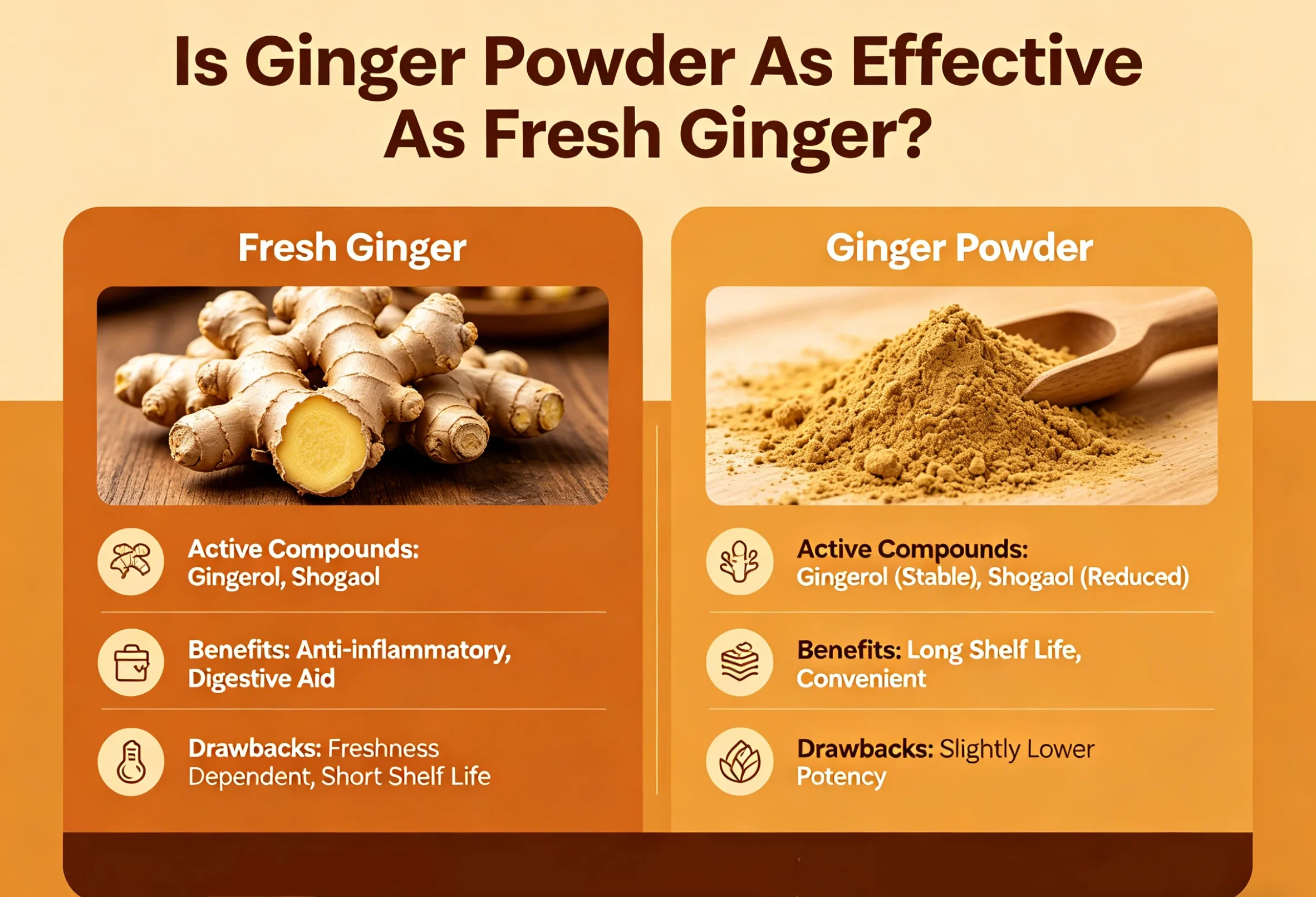
Fresh Ginger vs. Ginger Root Powder: A Detailed Comparison
Chemical Composition Differences
The choice between fresh and powdered ginger isn't about which one is universally "better," but which is specifically better for your goal. The processing method significantly impacts the chemical profile:
Fresh Ginger Advantages:
* Higher gingerol content (6-gingerol is most abundant)
* Contains volatile oils that may be reduced during drying
* Natural enzyme activity intact
* Higher water content aids in certain extraction methods
* Fresh, pungent flavor profile
Ginger Root Powder Advantages:
* Higher shogaol concentration (3-4 times more than fresh)
* More concentrated bioactive compounds by weight
* Enhanced stability and shelf life
* Standardized potency easier to achieve
* More convenient for encapsulation and formulation
* Consistent year-round availability
Bioavailability and Absorption
Bioavailability refers to how much of a compound is absorbed and utilized by the body. Research suggests:
Shogaols vs. Gingerols: Some studies indicate that shogaols (predominant in dried ginger) may have superior bioavailability and more potent anti-inflammatory effects compared to gingerols. The dehydration process that converts gingerols to shogaols may actually enhance certain therapeutic properties.
Particle Size Matters: Finely ground ginger powder may offer better absorption due to increased surface area, allowing digestive enzymes and gastric fluids to access more bioactive compounds.
Fat Solubility: Many of ginger's active compounds are lipophilic (fat-soluble), meaning they're better absorbed when consumed with dietary fats. This applies equally to both fresh and powdered forms.
Therapeutic Efficacy: What Research Shows
Multiple clinical trials have examined both forms of ginger:
Nausea and Vomiting: Studies using ginger powder (typically 1-2 grams daily) have shown significant effectiveness for various types of nausea. Fresh ginger tea has also demonstrated benefits, though standardization is more challenging.
Pain and Inflammation: Research on osteoarthritis and muscle pain has primarily used standardized ginger extracts or powder, showing measurable improvements in pain scores and inflammatory markers. The higher shogaol content in dried ginger may contribute to enhanced anti-inflammatory effects.
Metabolic Health: Studies investigating ginger's effects on blood sugar, cholesterol, and weight management have used both forms with positive results. Ginger powder supplements allow for precise dosing and better compliance in clinical trials.
Cardiovascular Support: Research examining ginger's cardiovascular benefits has utilized various forms, with ginger powder supplements showing promise for blood pressure and lipid management.
Practical Considerations
Dosage Equivalency:
* 1 tablespoon fresh grated ginger ≈ 1 teaspoon ginger powder
* 1 inch fresh ginger root ≈ 1/4 teaspoon ginger powder
* Clinical studies typically use 1-3 grams of ginger powder daily
Shelf Life:
* Fresh ginger: 2-3 weeks refrigerated, 6 months frozen
* Ginger root powder: 2-3 years when properly stored in airtight containers away from light and moisture
Cost Efficiency:
Ginger powder is generally more cost-effective, especially when considering:
* No waste from peeling or trimming
* Concentrated form requires less volume
* Longer shelf life reduces spoilage
* Easier transportation and storage
Applications in Dietary Supplements and Functional Foods
Formulation Advantages of Ginger Root Powder
For dietary supplement manufacturers and ingredient suppliers, ginger powder offers several distinct advantages:
Standardization: Quality ginger powder can be standardized to specific gingerol or shogaol content, ensuring consistent potency across batches. This is crucial for:
* Meeting label claims
* Regulatory compliance
* Reproducible therapeutic effects
* Consumer trust and satisfaction
Versatility in Product Development:
* Capsules and tablets
* Powder blends and drink mixes
* Functional food fortification
* Topical applications
* Extract production base material
Quality Control: Reputable suppliers like Joywin Natural Products provide ginger powder with comprehensive testing for:
* Active compound content
* Microbial contamination
* Heavy metals
* Pesticide residues
* Authenticity verification
Synergistic Combinations
Ginger root powder works exceptionally well in combination formulas:
With Turmeric: Both belong to the Zingiberaceae family and share complementary anti-inflammatory mechanisms. Adding black pepper extract (piperine) enhances bioavailability of both compounds.
With Probiotics: Ginger's prebiotic properties and digestive benefits complement probiotic formulations for comprehensive gut health support.
With Other Botanicals: Combines well with cinnamon for metabolic support, with echinacea for immune function, and with chamomile for digestive comfort.
Target Market Applications
Sports Nutrition: Ginger's anti-inflammatory properties support muscle recovery and may reduce exercise-induced muscle soreness.
Women's Health: Particularly valuable for menstrual discomfort and pregnancy-related nausea (though pregnant women should consult healthcare providers regarding dosage).
Digestive Health: Core ingredient in digestive enzyme formulas, gut health supplements, and anti-nausea products.
Immune Support: Seasonal wellness formulas benefit from ginger's antimicrobial and immune-modulating properties.
Healthy Aging: Antioxidant and anti-inflammatory properties support overall wellness and may help manage age-related inflammation.
Quality Considerations for Ginger Root Powder
Sourcing and Processing
The effectiveness of ginger powder depends heavily on quality factors:
Origin: Ginger quality varies by growing region. Premium sources include:
* Indian ginger (high gingerol content)
* Chinese ginger (robust flavor)
* Nigerian ginger (high essential oil content)
* Peruvian ginger (organic cultivation)
Harvesting Time: Ginger harvested at optimal maturity (8-10 months) contains peak concentrations of bioactive compounds.
Drying Method:
* Low-temperature drying preserves more volatile compounds
* Freeze-drying retains maximum bioactive content but increases cost
* Traditional sun-drying is economical but may reduce some heat-sensitive compounds
Grinding Process: Fine powder (through 80-mesh screen) offers better bioavailability and mixability in formulations.
Certifications and Testing
When sourcing ginger powder for commercial applications, look for:
Organic Certifications: USDA Organic, EU Organic, or equivalent standards ensure cultivation without synthetic pesticides or fertilizers.
Quality Management Systems:
* ISO 22000 (Food Safety Management)
* ISO 9001 (Quality Management)
* GMP (Good Manufacturing Practices)
* HACCP (Hazard Analysis Critical Control Points)
Religious and Dietary Certifications:
* Kosher
* Halal
* Vegan/Vegetarian verified
Third-Party Testing: Independent laboratory verification of:
* Active compound content (HPLC analysis)
* Microbial limits (total plate count, yeast, mold, pathogens)
* Heavy metals (lead, arsenic, cadmium, mercury)
* Pesticide residue screening
* Irradiation status
* GMO testing
Companies like Joywin Natural Products maintain comprehensive certification portfolios including NOP/JAS, BRC, FSSC, cGMP, Kosher, HALAL, and ISO certifications, ensuring products meet international quality and safety standards.
Practical Usage Guidelines
Culinary Applications
Fresh Ginger Best For:
* Fresh ginger tea and infusions
* Stir-fries and sautéed dishes
* Marinades and dressings
* Juicing and smoothies
* Garnishes and fresh flavor
Ginger Root Powder Best For:
* Baking (cookies, cakes, breads)
* Spice blends and rubs
* Soups and stews (added during cooking)
* Golden milk and latte mixes
* Supplement formulations
* Long-term storage needs
Therapeutic Dosing
Based on clinical research and traditional use:
General Health Maintenance:
* 1-2 grams ginger powder daily
* Or 2-4 grams fresh ginger daily
Nausea Relief:
* 1 gram ginger powder in divided doses
* Or 1-2 grams fresh ginger as tea
Anti-Inflammatory Support:
* 2-3 grams ginger powder daily
* Standardized to 5% gingerols when possible
Important Considerations:
* Start with lower doses and increase gradually
* Take with food to minimize digestive discomfort
* Consult healthcare providers before high-dose supplementation
* Pregnant women should limit intake to 1 gram daily
* Those on blood-thinning medications should exercise caution
Storage and Preservation
Fresh Ginger:
* Refrigerate unpeeled in produce drawer
* Freeze peeled, chopped ginger in ice cube trays
* Store in paper towel to absorb excess moisture
Ginger Root Powder:
* Keep in airtight containers
* Store in cool, dark, dry location
* Avoid exposure to moisture and direct sunlight
* Use within 2-3 years for optimal potency
* Consider vacuum-sealed packaging for extended storage
The Verdict: Which Form Is More Effective?
After examining the scientific evidence, nutritional profiles, and practical applications, the answer is nuanced: both fresh ginger and ginger root powder are highly effective, but for different purposes and contexts.
When Fresh Ginger Excels
Choose fresh ginger when:
* You want maximum gingerol content
* Fresh flavor is important for culinary applications
* Making fresh juices or immediate-use preparations
* You have reliable access to high-quality fresh rhizomes
* Preparing traditional remedies that specify fresh ginger
When Ginger Root Powder Excels
Choose ginger powder when:
* You need standardized, consistent potency
* Formulating dietary supplements or functional foods
* Long-term storage is necessary
* Convenience and shelf stability are priorities
* Higher shogaol content is desired for anti-inflammatory effects
* Cost-effectiveness is important
* Year-round availability is essential
* Precise dosing is required
The Synergistic Approach
For optimal benefits, consider using both forms strategically:
* Fresh ginger for culinary enjoyment and immediate therapeutic use
* Ginger powder for consistent daily supplementation and product formulations
* Combining both in wellness protocols for comprehensive bioactive compound exposure
Future Research and Emerging Applications
The scientific community continues to explore ginger's therapeutic potential:
Ongoing Research Areas:
* Cancer prevention and adjuvant therapy applications
* Neurodegenerative disease protection
* Metabolic syndrome management
* Antimicrobial resistance solutions
* Enhanced extraction and bioavailability technologies
Emerging Applications:
* Functional beverages and ready-to-drink formats
* Topical formulations for pain management
* Veterinary and animal health applications
* Agricultural and food preservation uses
* Cosmetic and personal care products
Conclusion: Making Informed Choices About Ginger Root Powder
The question "Is ginger powder as effective as fresh ginger?" doesn't have a simple yes or no answer. Scientific evidence demonstrates that both forms offer significant health benefits, with each having distinct advantages depending on the intended application.
Ginger root powder provides concentrated bioactive compounds, superior stability, standardized potency, and exceptional convenience for dietary supplement formulations and consistent therapeutic use. The conversion of gingerols to shogaols during the drying process may actually enhance certain anti-inflammatory and antioxidant properties.
Fresh ginger offers higher gingerol content, intact volatile oils, and unmatched culinary versatility, making it ideal for immediate use and traditional preparations.
For dietary supplement manufacturers, ingredient suppliers, and health-conscious consumers, high-quality ginger root powder from reputable sources represents an effective, reliable, and practical choice for harnessing ginger's remarkable therapeutic potential.
Key Takeaways
* Both forms are effective – Fresh ginger and ginger powder offer proven health benefits backed by scientific research
* Chemical profiles differ – Fresh ginger is higher in gingerols; dried powder is higher in shogaols
* Quality matters – Source ginger powder from certified suppliers with comprehensive testing protocols
* Standardization is crucial – For therapeutic applications, standardized ginger powder ensures consistent results
* Context determines choice – Select the form that best matches your specific needs, applications, and goals
Partner With Quality Suppliers
When sourcing ginger root powder for commercial applications, partner with established suppliers who prioritize quality, transparency, and scientific validation. Companies like Joywin Natural Products offer comprehensive certifications, rigorous testing protocols, and consistent supply of premium botanical ingredients to support your product development goals.
Whether you're formulating the next innovative dietary supplement, developing functional food products, or seeking reliable ingredients for your wellness brand, understanding the science behind ginger's effectiveness empowers you to make informed decisions that benefit both your business and your customers' health. If you want to know more about ginger root powder or are interested in purchasing it, you can send an email to contact@joywinworld.com. We will reply to you as soon as possible after we see the message.