





For suppliers in the nutraceutical industry, navigating the omega-3 landscape is more critical than ever. With growing consumer awareness and demand for effective supplements, the choice between Pure Krill Oil, salmon oil, and conventional fish oil is a fundamental one. This comprehensive guide delves into the scientific and market distinctions between these three major omega-3 sources, providing you with the knowledge to make informed decisions and lead in the competitive supplement market.
The Essential Omega-3s: Why They Matter
Omega-3 fatty acids, primarily EPA (eicosapentaenoic acid) and DHA (docosahexaenoic acid), are essential fats that the human body cannot produce on its own. They must be obtained through diet or supplementation. These powerful nutrients are the cornerstone of numerous health benefits, which is what drives the robust market for supplements.
Extensive research, including reports from institutions like the Mayo Clinic, confirms that omega-3s are crucial for:
* Heart Health: Supporting reduced blood triglyceride levels and modest blood pressure reduction.
* Brain Function: DHA is a fundamental building block of the brain, vital for cognitive function and memory.
* Anti-Inflammation: Helping to reduce chronic inflammation, which is linked to conditions like rheumatoid arthritis.
* Overall Wellness: Playing roles in joint health, skin hydration, and liver function.
As a supplier, understanding the sources of these omega-3s is the first step in providing superior raw materials to your clients.
Pure Krill Oil: The Superior Bioavailable Powerhouse
Krill oil is derived from tiny, shrimp-like crustaceans called Antarctic krill (Euphausia superba). It has gained significant traction in the premium supplement sector due to its unique composition and enhanced bioavailability.
Key Characteristics:
* Source: Antarctic krill, a species sustainably harvested from the pristine waters of the Southern Ocean.
* Omega-3 Form: Primarily bound to phospholipids.
* Distinguishing Components: Naturally contains the potent antioxidant astaxanthin and is a source of choline.
The Absorption Advantage of Krill Oil
The most significant advantage of krill oil lies in its bioavailability. A major review published in Food Chemistry: X that analyzed 26 clinical trials concluded that krill oil raised omega-3 levels in the blood more efficiently at lower doses compared to fish oil.
Why is this? The phospholipid structure of krill oil's omega-3s allows them to integrate seamlessly into cell membranes. This efficient absorption means that consumers can often take a lower dose of krill oil to achieve a similar effect on their omega-3 index (a measure of EPA and DHA in red blood cells) as they would with a higher dose of standard fish oil.
Health Benefits and Sustainability
* Cardiovascular and Joint Health: Clinical trials show krill oil's effectiveness in reducing triglycerides, improving HDL ("good") cholesterol, and alleviating symptoms of knee osteoarthritis.
* Powerful Antioxidant Protection: The naturally occurring astaxanthin in krill oil prevents the oil from rancidity and protects cells from oxidative damage.
* A Sustainable Choice: Krill fishing in the Antarctic is strictly regulated by the Commission for the Conservation of Antarctic Marine Living Resources (CCAMLR), with catch limits set at a very conservative 1% of the total biomass, making it a highly sustainable source.
Salmon Oil: The Nutrient-Rich Whole Food Option
Salmon oil is extracted directly from the tissues of salmon, a fatty fish renowned for its health benefits. It is often marketed as a more "whole food" based omega-3 supplement.
Key Characteristics:
* Source: Wild-caught or farmed salmon.
* Omega-3 Form: Predominantly in the triglyceride form, which is the natural form found in fish.
* Distinguishing Components: Contains a full spectrum of nutrients as found in the salmon itself.
Salmon oil is a rich source of both DHA and EPA. DHA is known as "brain gold" for its role in supporting brain cell function and retinal health, while EPA acts as a "vascular scavenger," promoting cardiovascular health. As a supplement, it offers a less processed alternative to concentrated fish oils.
Conventional Fish Oil: The Market Staple
Fish oil is a broad term for oil derived from the tissues of oily fish, such as mackerel, herring, tuna, and cod liver. It is the most common and widely researched omega-3 supplement on the market.
Key Characteristics:
* Source: A variety of deep-sea fatty fish.
* Omega-3 Form: Available in several forms, which significantly impact its efficacy:
Triglyceride (TG) Form: The natural form, with good absorption but lower omega-3 concentration.
Ethyl Ester (EE) Form: A concentrated form created through molecular distillation. It has a higher EPA/DHA concentration but is harder for the body to absorb without dietary fat.
Re-esterified Triglyceride (rTG) Form: EE that has been converted back to the triglyceride form, offering both high concentration and high absorption.
Proven Benefits and Considerations
The Mayo Clinic notes that fish oil is "generally safe" and has strong evidence for significantly lowering triglycerides. It may also offer modest benefits for blood pressure and rheumatoid arthritis symptoms. However, some large studies have questioned its ability to prevent heart disease in high-risk populations, and its susceptibility to oxidation can lead to a fishy aftertaste and rancidity if not properly processed and stored.
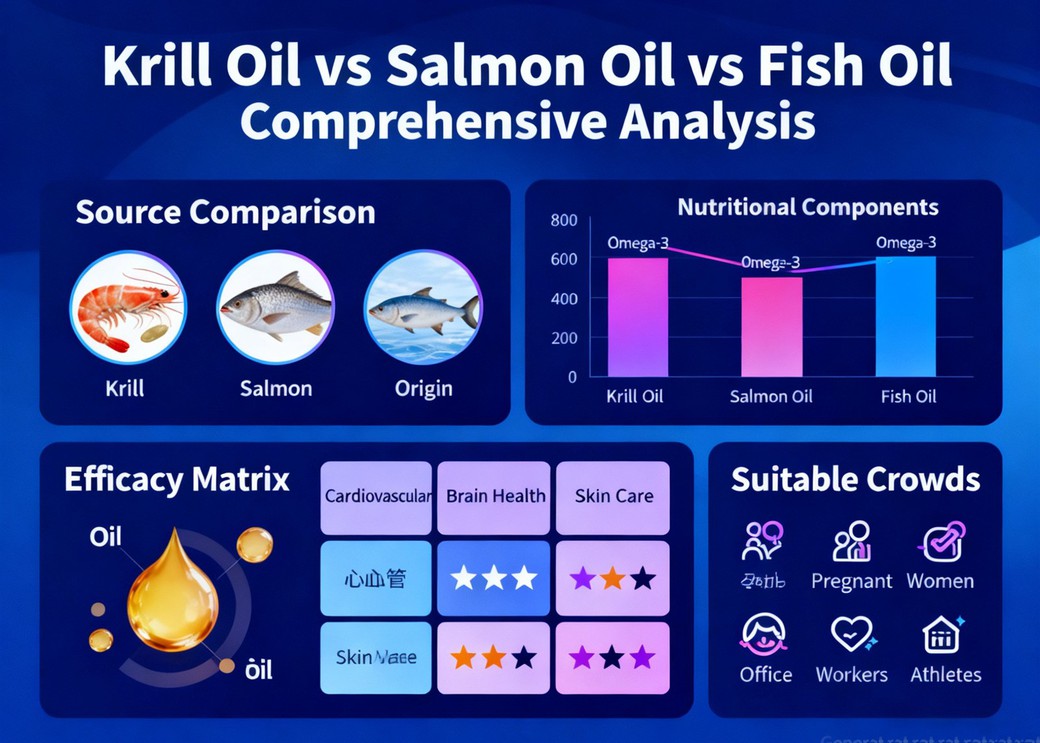
Head-to-Head Comparison: Pure Krill Oil vs. Salmon Oil vs. Fish Oil
To help clarify the differences, the following table provides a direct comparison of these three omega-3 sources.
|
Feature |
Krill Oil |
Salmon Oil |
Fish Oil |
|
Source |
Antarctic krill |
Salmon |
Various fatty fish (e.g., mackerel, tuna) |
|
Omega-3 Form |
Phospholipids |
Triglycerides |
Triglycerides, Ethyl Esters, or rTG |
|
Bioavailability |
High (efficient absorption at lower doses) |
Good (natural TG form) |
Varies (Lower for EE, higher for TG/rTG) |
|
Key Components |
EPA, DHA, Phospholipids, Astaxanthin, Choline |
EPA, DHA (in natural ratio) |
EPA & DHA (concentration varies by type) |
|
Sustainability |
High (strictly regulated Antarctic fishery) |
Variable (depends on salmon source) |
Variable (depends on fish species and source) |
|
Stability |
High (naturally stabilized by Astaxanthin) |
Moderate |
Lower (prone to oxidation without added antioxidants) |
|
Common Use Cases |
Premium cognitive, heart, and joint support; general wellness |
Whole-food based omega-3 supplementation |
Mass-market heart health and triglyceride support |
The PL High-Phospholipid Krill Oil Revolution
A significant innovation in the krill oil space is the development of PL High-Phospholipid Krill Oil. Through advanced, low-temperature processing, manufacturers can concentrate the phospholipid content, further boosting the levels and absorption of EPA and DHA. Research indicates that this enhanced krill oil can even improve the absorption of other fat-soluble nutrients. For instance, when combined with EE-type fish oil, it can increase the blood concentration of omega-3s by 12.4 times, and it can boost the absorption of CoQ10 by 25 times and esterified lutein by 8 times. This makes it an incredibly powerful ingredient for advanced supplement formulations.
Market Trends and Consumer Considerations
The global shift towards natural, effective, and sustainable health products is unmistakable. Pure Krill Oil, with its compelling story of superior absorption, natural antioxidant protection, and certified sustainability, is perfectly positioned to meet these consumer demands.
When formulating products, it's crucial to consider your target audience:
* For a premium, highly-absorbable general wellness product: Krill oil is an excellent choice.
* For a whole-food, clean-label oriented product: High-quality salmon oil holds strong appeal.
* For a high-dose, triglyceride-focused product at a competitive price point: Concentrated rTG fish oil remains a viable option.
Conclusion: The Verdict for Suppliers
In the competitive landscape of omega-3 supplements, the evidence points to a clear leader for efficacy and consumer appeal. While salmon oil offers a strong whole-food profile and conventional fish oil has a established market presence, krill oil stands out as the superior raw material choice for forward-thinking suppliers.
Its unique phospholipid structure ensures superior bioavailability, meaning more of the beneficial EPA and DHA actually reaches the consumer's cells. The built-in stability provided by astaxanthin enhances product shelf-life and integrity. Furthermore, the strong, sustainable narrative of the Antarctic krill fishery is a powerful marketing advantage that resonates with today's environmentally conscious consumers.
By choosing krill oil as a core raw material, you are not just supplying an omega-3 source; you are providing a scientifically-backed, highly efficient, and sustainable solution that delivers tangible value and meets the evolving needs of the modern supplement market.
JOYWIN founded in 2013 is an innovation-driven biotechnology company. We provide the manufacture of plant extracts, plant proteases, and customized products. If you want to know more about Pure Krill Oil or are interested in purchasing it, you can send an email to contact@joywinworld.com. We will reply to you as soon as possible after we see the message.