





Inulin, a naturally occurring polysaccharide and prebiotic fiber, has become one of the most sought-after functional ingredients in the dietary supplement and food industries. As consumer demand for gut health solutions and clean-label products continues to surge, manufacturers face an important decision: should they formulate with liquid inulin or inulin powder?
This comprehensive guide examines the scientific evidence, functional properties, and practical applications of both forms to help ingredient suppliers, product developers, and health professionals make informed decisions. Whether you're formulating beverages, supplements, or functional foods, understanding the distinctions between liquid inulin and inulin powder is crucial for product success.
As a dietary supplement ingredient supplier, staying informed about the latest research and applications of different inulin forms enables you to better serve your clients and develop innovative products that meet market demands while delivering genuine health benefits.
What Is Inulin? The Science Behind This Prebiotic Powerhouse
Chemical Structure and Classification
Inulin is a linear heterogeneous fructose polymer of β-2,1 fructan, typically terminating with a glucose unit. This unique structure makes inulin resistant to digestion by human enzymes in the upper gastrointestinal tract, allowing it to reach the colon intact where it serves as food for beneficial gut bacteria.
Key Structural Characteristics:
Degree of Polymerization (DP): Inulin molecules vary in chain length, typically ranging from 2 to 60 fructose units. The DP significantly influences solubility, sweetness, and prebiotic activity:
* Short-chain inulin (DP 2-10): More soluble, slightly sweet, faster fermentation
* Long-chain inulin (DP 10-60): Less soluble, neutral taste, slower fermentation
* Native inulin: Mixed chain lengths with average DP of 10-12
Fructan Family: Inulin belongs to the fructan family of carbohydrates, which includes oligofructose and fructooligosaccharides (FOS). These compounds share similar prebiotic properties but differ in chain length and functional characteristics.
Natural Sources and Production
Inulin is used by plants as a means of storing energy and is typically found in roots or rhizomes. Commercial inulin is primarily extracted from:
Chicory Root (Cichorium intybus): The most common commercial source, containing 15-20% inulin by fresh weight. Chicory-derived inulin offers excellent purity and consistent quality.
Jerusalem Artichoke (Helianthus tuberosus): Contains 14-19% inulin and has been used for producing both inulin and high-fructose syrup. This source provides a versatile option for various applications.
Agave Plants: Agave inulin offers modest thickening properties and unique functional characteristics that differ from chicory-based inulin.
Other Sources: Blue agave, dahlia tubers, yacon root, and certain grasses also contain inulin, though they're less commonly used commercially.
The Health Benefits of Inulin: Evidence-Based Research
Gut Microbiome Enhancement
Recent scientific research has demonstrated that inulin supplementation significantly promotes gut bacterial diversity and improves gut microbiota dysbiosis [2]. The prebiotic effects of inulin are well-documented across multiple studies:
Microbiome Diversity: A 2.5% inulin-enhanced diet altered gut microbiome α and β diversity, composition, and butyrate production in both adult and aged mice [4]. This suggests that inulin consumption can beneficially modify the gut ecosystem across different life stages.
Selective Bacterial Growth: Inulin preferentially stimulates the growth of beneficial bacteria including:
* Bifidobacteria species
* Lactobacillus species
* Faecalibacterium prausnitzii
* Other butyrate-producing bacteria
Short-Chain Fatty Acid Production: When gut bacteria ferment inulin, they produce short-chain fatty acids (SCFAs), particularly butyrate, acetate, and propionate. These metabolites provide energy for colonocytes, reduce inflammation, and support overall gut health.
Metabolic Health Benefits
Extensive research demonstrates that inulin supplementation contributes to multiple aspects of metabolic health. Inulin supplementation contributes to body weight and BMI control, reduces blood glucose levels, improves insulin sensitivity, and reduces inflammation markers.
Weight Management: Both purified inulin and natural inulin sources reduced food intake in research studies, suggesting potential applications for appetite regulation and weight management strategies.
Glycemic Control: Inulin's ability to slow glucose absorption and improve insulin sensitivity makes it particularly valuable for:
* Blood sugar management formulations
* Diabetic-friendly products
* Metabolic syndrome support
* Weight management supplements
Lipid Profile Improvement: Research indicates that regular inulin consumption may support healthy cholesterol levels and overall cardiovascular health markers.
Immune System Modulation
Several studies have found that dietary supplementation of inulin can improve metabolic function and regulate intestinal immunity. The immunomodulatory effects occur through multiple mechanisms:
Anti-Inflammatory Action: Studies working with animal models and adults have shown that inulin, like other fibers, has an anti-inflammatory effect in the gut [3]. This anti-inflammatory property distinguishes inulin from many other dietary fibers.
Gut Barrier Function: Inulin supports the integrity of the intestinal barrier, reducing permeability and preventing the translocation of harmful substances into systemic circulation.
Immune Cell Regulation: Inulin and its intestinal metabolites influence immune cell function, helping to maintain appropriate immune responses and reducing excessive inflammation.
Digestive Health and Regularity
Due to its chemical composition, when inulin is mixed with liquid it forms a creamy gel that's ideal for relieving constipation [3]. This gel-forming property contributes to:
Improved Bowel Regularity: Inulin increases stool frequency and improves consistency, making it valuable for constipation management.
Enhanced Nutrient Absorption: The prebiotic effects of inulin may improve the absorption of certain minerals, particularly calcium and magnesium.
Digestive Comfort: When introduced gradually, inulin supports comfortable digestion and reduces symptoms associated with dysbiosis.
Liquid Inulin: Properties, Production, and Applications
What Is Liquid Inulin?
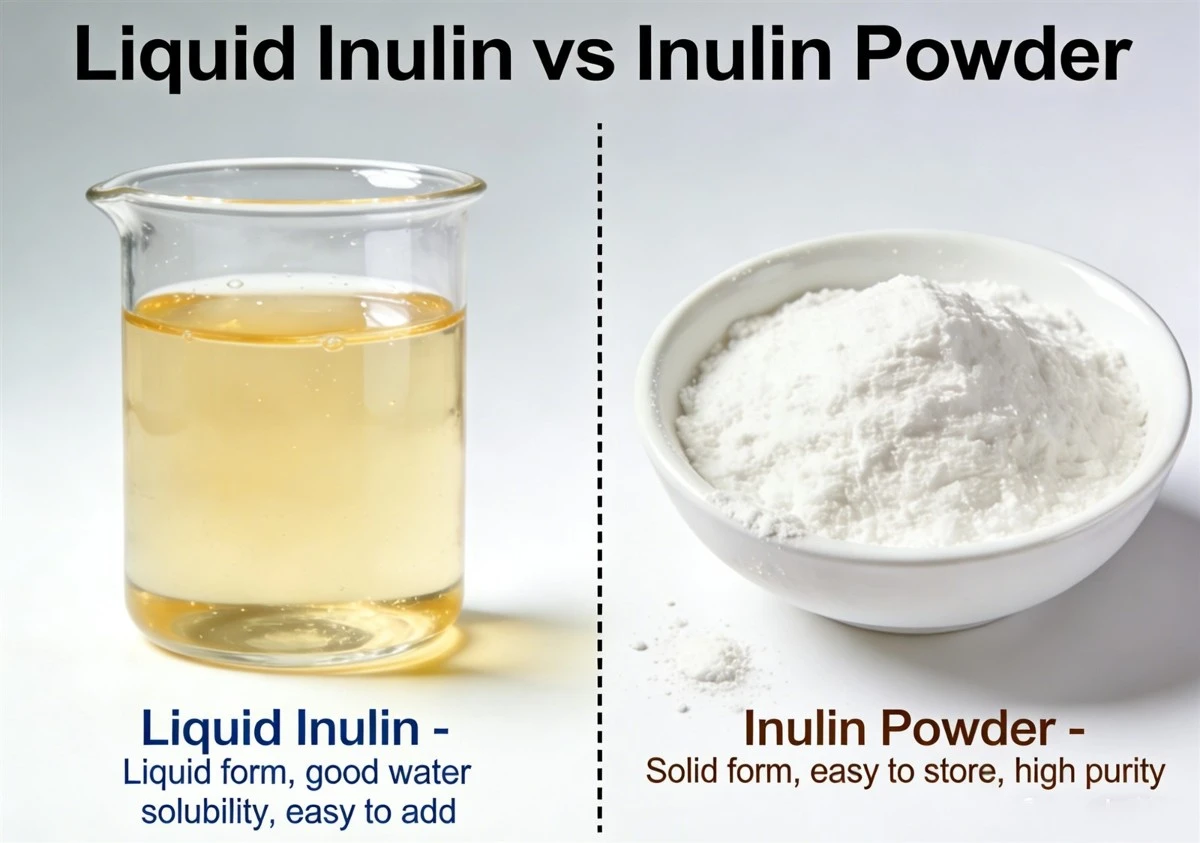
Liquid inulin, also known as inulin syrup, is a concentrated aqueous solution of inulin that maintains the prebiotic properties of the polysaccharide while offering unique functional advantages for specific applications. The liquid form typically contains 70-75% inulin solids with the remainder being water.
Manufacturing Process
The production of liquid inulin involves several sophisticated steps:
Extraction: Inulin is extracted from plant sources (typically chicory root) using hot water extraction methods. The raw material is cleaned, sliced, and subjected to diffusion processes that release inulin into solution.
Purification: The extracted solution undergoes purification to remove proteins, minerals, and other non-inulin compounds. This may involve:
* Filtration processes
* Ion exchange treatments
* Activated carbon treatment
* Membrane separation technologies
Concentration: The purified inulin solution is concentrated through evaporation under controlled temperature and pressure conditions to achieve the desired solids content while preserving the inulin structure.
Stabilization: The concentrated liquid inulin may undergo additional processing to ensure microbiological stability and prevent crystallization during storage.
Functional Properties of Liquid Inulin
Immediate Solubility: Liquid inulin is already in solution, eliminating the dissolution step required for powder forms. This provides significant advantages in:
* Beverage manufacturing
* Liquid supplement formulations
* Syrup-based products
* Ready-to-drink applications
Texture Enhancement: When gelled, liquid inulin creates a creamy, smooth texture that can replace fat in certain applications, providing mouthfeel without added calories.
Ease of Handling: Liquid inulin can be pumped and metered precisely, simplifying manufacturing processes and reducing dust exposure in production facilities.
Homogeneous Mixing: The liquid form ensures even distribution throughout products without the risk of clumping or incomplete dissolution.
Applications of Liquid Inulin
Beverage Industry:
* Functional drinks and wellness shots
* Protein shakes and meal replacements
* Probiotic beverages
* Sports nutrition drinks
* Kombucha and fermented beverages
Liquid Supplements:
* Liquid multivitamins with prebiotic support
* Digestive health tonics
* Children's liquid supplements
* Eldercare nutrition products
Food Manufacturing:
* Yogurt and dairy alternatives
* Salad dressings and sauces
* Ice cream and frozen desserts
* Bakery glazes and fillings
Pharmaceutical Applications:
* Liquid medication vehicles
* Pediatric formulations
* Syrup-based remedies
Advantages of Liquid Inulin
1.No Dissolution Required: Saves processing time and equipment costs
2.Reduced Dust: Improves workplace safety and reduces product loss
3.Precise Dosing: Easier to measure and incorporate exact amounts
4.Faster Production: Streamlines manufacturing workflows
5.Excellent Stability in Liquids: Prevents settling or separation
6.Clean Label Appeal: Simple ingredient declaration
Limitations of Liquid Inulin
1.Higher Shipping Costs: Water content increases weight and transportation expenses
2.Storage Requirements: May require temperature-controlled storage
3.Shorter Shelf Life: Generally 12-18 months compared to powder forms
4.Limited Applications: Not suitable for dry products or capsule formulations
5.Higher Per-Unit Cost: More expensive per unit of actual inulin content
6.Storage Space: Requires more warehouse space due to water content
Inulin Powder: Properties, Production, and Applications
What Is Inulin Powder?
Inulin powder is the dehydrated form of inulin, typically containing 90-95% inulin content with minimal moisture (3-5%). This concentrated form offers maximum versatility and is the most widely used format in the dietary supplement industry.
Manufacturing Process
Extraction and Purification: Similar to liquid inulin, the process begins with extraction from plant sources and purification to remove impurities.
Spray Drying: The most common method for producing inulin powder involves spray drying, where the purified inulin solution is atomized into a hot air stream, rapidly evaporating water and producing fine powder particles.
Alternative Drying Methods:
* Freeze drying (lyophilization): Preserves maximum activity but increases cost
* Vacuum drying: Gentle process suitable for heat-sensitive applications
* Drum drying: Less common but economical for certain applications
Milling and Standardization: The dried inulin may be milled to achieve specific particle sizes and standardized to meet customer specifications for DP distribution and purity.
Functional Properties of Inulin Powder
High Solubility: Inulin and oligofructose are soluble in water and not digested by human digestive enzymes in the small intestine [2]. Inulin exhibits high solubility, particularly in warm liquids, making it versatile for various applications [3].
Fat Replacement: Inulin powder can replace fat in formulations, providing creamy texture and mouthfeel while reducing calories.
Bulking Agent: Adds volume and body to products without contributing significant calories or affecting blood sugar.
Binding Properties: Helps bind ingredients together in tablets, bars, and baked goods.
Neutral Taste: High-quality inulin powder has minimal flavor impact, allowing product flavors to shine through.
Prebiotic Stability: The powder form maintains prebiotic activity throughout processing and shelf life.
Applications of Inulin Powder
Dietary Supplements:
* Capsules and tablets
* Powder blends and drink mixes
* Probiotic + prebiotic combinations
* Fiber supplement formulations
* Protein powders
* Greens powders
Functional Foods:
* Nutrition bars and energy bars
* Breakfast cereals and granola
* Baked goods (bread, cookies, muffins)
* Snack foods
* Confectionery products
Clinical Nutrition:
* Medical foods
* Enteral nutrition formulas
* Specialized dietary products
* Infant formula (where approved)
Sports Nutrition:
* Pre-workout formulas
* Post-workout recovery products
* Endurance nutrition
* Meal replacement powders
Pet Nutrition:
* Pet supplements
* Functional pet foods
* Veterinary diets
Advantages of Inulin Powder
1.Versatility: Suitable for virtually any product format
2.Long Shelf Life: Typically 2-3 years when properly stored
3.Cost-Effective Shipping: Lower transportation costs due to reduced weight
4.Concentrated Form: Maximum inulin content per unit weight
5.Easy Storage: Requires minimal storage space and no refrigeration
6.Standardization: Can be precisely standardized for DP and purity
7.Global Availability: Widely available from multiple suppliers
8.Regulatory Acceptance: Well-established regulatory status worldwide
Limitations of Inulin Powder
1.Dissolution Time: Requires mixing time to fully dissolve
2.Dust Generation: Can create dust during handling (requires proper ventilation)
3.Clumping Risk: May clump in humid conditions if not properly stored
4.Hydration Required: Needs adequate liquid for optimal dissolution
5.Processing Equipment: May require specialized mixing equipment for some applications
Liquid Inulin vs. Inulin Powder: Direct Comparison
Solubility and Dissolution
Liquid Inulin: Already in solution, providing instant incorporation into formulations. Soluble fiber inulin consumption has been shown to limit alterations of the gut microbiota and hepatic fatty acid metabolism caused by high-fat diet, and this benefit applies regardless of the physical form.
Inulin Powder: Requires dissolution but offers high solubility in water. The powder form dissolves readily in warm water (above 25°C/77°F) and can be incorporated into cold liquids with adequate mixing time.
Winner: Liquid inulin for immediate-use liquid applications; powder for versatility across all product types.
Bioavailability and Efficacy
Both forms deliver identical prebiotic benefits once consumed, as the inulin molecule remains unchanged. Research demonstrating that inulin supplementation contributes to body weight and BMI control, reduces blood glucose levels, improves insulin sensitivity, and reduces inflammation markers applies to both liquid and powder forms.
Absorption Characteristics: Inulin exhibits high solubility in the gastrointestinal tract regardless of the form consumed. The body cannot distinguish between inulin consumed as liquid or powder once it's dissolved in the digestive system.
Prebiotic Activity: Studies showing that inulin supplementation significantly promoted gut bacterial diversity and improved gut microbiota dysbiosis demonstrate benefits achievable with either form.
Winner: Tie – both forms are equally effective for health benefits.
Cost Considerations
Liquid Inulin Costs:
* Higher per-unit cost for actual inulin content (paying for water weight)
* Increased shipping and storage costs
* May reduce processing costs in liquid applications
* Potential savings in labor and equipment for beverage manufacturers
Inulin Powder Costs:
* Lower per-unit cost for inulin content
* Economical shipping and storage
* May require additional processing equipment
* Bulk purchasing offers significant savings
Winner: Inulin powder for overall cost-effectiveness; liquid inulin may offer savings in specific liquid manufacturing scenarios.
Shelf Life and Stability
Liquid Inulin:
Shelf life: 12-18 months typically
May require temperature-controlled storage
Risk of microbial growth if not properly preserved
Can undergo some degree of hydrolysis over time
Inulin Powder:
Shelf life: 2-3 years when properly stored
Stable at room temperature
Minimal degradation in dry conditions
Resistant to microbial growth due to low moisture content
Winner: Inulin powder for long-term stability and storage flexibility.
Manufacturing and Processing
Liquid Inulin Processing:
Pumped directly into formulations
Requires liquid storage tanks
Precise metering through flow meters
Minimal dust or particle concerns
Ideal for continuous processing systems
Limited to liquid or semi-liquid products
Inulin Powder Processing:
Requires weighing and mixing equipment
Needs dust control measures
Versatile for any product format
Can be encapsulated, tableted, or added to dry blends
Suitable for batch or continuous processing
May require pre-mixing or hydration steps
Winner: Depends on application – liquid inulin for beverage manufacturing; powder for supplement and diverse food applications.
Regulatory and Labeling
Both forms are generally recognized as safe (GRAS) and widely accepted in food and supplement applications globally. Labeling is straightforward for both:
Liquid Inulin: Listed as "inulin" or "chicory root fiber" (depending on source and regulations)
Inulin Powder: Listed as "inulin," "chicory root fiber," or "inulin powder"
Winner: Tie – both have excellent regulatory status and clean label appeal.
Environmental Considerations
Liquid Inulin:
Higher carbon footprint due to water weight transportation
Requires more packaging materials
May need refrigerated transport
Higher energy for storage
Inulin Powder:
Lower transportation emissions
More efficient packaging
No refrigeration required
Reduced overall environmental impact
Winner: Inulin powder for sustainability and environmental responsibility.
Quality Considerations for Both Forms
Sourcing and Raw Materials
Regardless of form, quality begins with source material:
Organic Certification: Look for certified organic sources to ensure cultivation without synthetic pesticides or fertilizers.
Geographic Origin: Different regions produce inulin with varying characteristics:
* European chicory (Belgium, France, Netherlands): Traditional sources with established quality
* North American sources: Growing production with modern processing
* South American sources: Emerging suppliers with competitive pricing
Harvest Timing: Inulin content peaks in plant roots during specific seasons, affecting quality and yield.
Purity and Standardization
Inulin Content: Premium products contain 90-95% inulin (powder) or 70-75% inulin solids (liquid).
Degree of Polymerization: Standardized DP profiles ensure consistent prebiotic activity and functional properties:
* Standard inulin: Average DP 10-12
* Long-chain inulin: Average DP >23
* Oligofructose: DP 2-10
Contaminant Testing: Both forms require comprehensive testing for:
* Heavy metals (lead, arsenic, cadmium, mercury)
* Microbial contamination (total plate count, yeast, mold, pathogens)
* Pesticide residues
* Allergens
* GMO status
Certifications and Compliance
When sourcing inulin for commercial applications, prioritize suppliers with:
Quality Management Systems:
* ISO 9001 (Quality Management)
* ISO 22000 (Food Safety Management)
* FSSC 22000 (Food Safety System Certification)
* GMP (Good Manufacturing Practices)
* HACCP (Hazard Analysis Critical Control Points)
Product Certifications:
* Organic (USDA, EU, or equivalent)
* Non-GMO Project Verified
* Kosher
* Halal
* Vegan/Vegetarian
* Gluten-free
Regulatory Compliance:
* FDA compliance (US market)
* EU Novel Food regulations
* Health Canada Natural Health Products
* China CFDA registration
* Other regional requirements
Companies like Joywin Natural Products maintain comprehensive certification portfolios including NOP/JAS, BRC, FSSC, cGMP, Kosher, HALAL, and ISO certifications, ensuring products meet international quality and safety standards for both liquid and powder inulin forms.
Formulation Guidelines and Best Practices
Recommended Dosages
Based on clinical research and regulatory guidelines:
General Prebiotic Support:
* 5-10 grams daily for adults
* 2-5 grams daily for children (consult healthcare provider)
Digestive Health:
* 10-15 grams daily, divided into 2-3 doses
* Start with lower doses and increase gradually
Metabolic Support:
* 10-20 grams daily based on research protocols
Important Considerations:
* Begin with low doses (2-3 grams) to assess tolerance
* Increase gradually over 1-2 weeks
* Consume with adequate water
* Divide daily intake across meals for best tolerance
Formulation Tips for Liquid Inulin
Beverage Applications:
* Add during the mixing phase for even distribution
* Maintain pH between 3.5-7.0 for optimal stability
* Consider synergistic ingredients (probiotics, vitamins, minerals)
* Test for compatibility with other ingredients
* Ensure proper preservation if required
Texture Optimization:
* Use liquid inulin to create creamy mouthfeel
* Combine with other hydrocolloids for enhanced texture
* Temperature control during processing affects viscosity
* Allow adequate hydration time for full functionality
Stability Considerations:
* Protect from extreme temperatures
* Monitor for crystallization in concentrated solutions
* Consider buffering systems for pH-sensitive applications
* Test shelf life under intended storage conditions
Formulation Tips for Inulin Powder
Dry Blending:
* Ensure thorough mixing to prevent segregation
* Consider particle size compatibility with other ingredients
* Use appropriate mixing equipment (ribbon blender, V-blender)
* Add flow agents if necessary for manufacturing
Capsule and Tablet Formulations:
* Inulin powder serves as both active ingredient and excipient
* Good compressibility for direct compression tablets
* Compatible with most encapsulation systems
* Consider moisture protection in final packaging
Reconstitutable Products:
* Pre-blend with other soluble ingredients for faster dissolution
* Provide clear mixing instructions for consumers
* Consider instantizing for improved dispersibility
* Test dissolution time under various conditions
Baking Applications:
* Inulin can replace up to 30% of fat in baked goods
* Adjust liquid content to compensate for water binding
* May affect browning and texture
* Test extensively for optimal results
Market Trends and Future Outlook
Growing Demand for Prebiotic Ingredients
The global prebiotic ingredients market continues to expand rapidly, driven by:
Consumer Awareness: Increased understanding of gut health's importance to overall wellness
Scientific Validation: Continued research demonstrating inulin's benefits, including studies showing that dietary supplementation of inulin can improve metabolic function and regulate intestinal immunity
Clean Label Movement: Inulin's natural origin and simple processing appeal to clean-label consumers
Functional Food Growth: Expanding applications beyond supplements into mainstream food products
Innovation in Inulin Applications
Personalized Nutrition: Tailored prebiotic formulations based on individual microbiome profiles
Synbiotic Products: Combining inulin with specific probiotic strains for targeted benefits
Novel Delivery Systems: Advanced encapsulation and sustained-release technologies
Plant-Based Products: Inulin as a functional ingredient in dairy alternatives and plant-based foods
Sports Nutrition: Recognition of gut health's role in athletic performance and recovery
Sustainability and Ethical Sourcing
Regenerative Agriculture: Growing interest in inulin from sustainably farmed sources
Local Sourcing: Regional production to reduce transportation impacts
Waste Reduction: Utilizing by-products from inulin production
Transparency: Blockchain and traceability systems for supply chain verification
Making the Right Choice: Decision Framework
Choose Liquid Inulin When:
1.Manufacturing liquid products exclusively (beverages, syrups, liquid supplements)
2.Processing equipment is optimized for liquids (pumps, flow meters, liquid tanks)
3.Immediate dissolution is critical for production efficiency
4.Production volume justifies storage infrastructure for liquid ingredients
5.Dust control is a significant concern in your facility
6.Texture and mouthfeel are primary considerations
7.Short-term storage aligns with your inventory management
Choose Inulin Powder When:
1.Manufacturing diverse product formats (capsules, tablets, powders, bars, foods)
2.Long shelf life is important for inventory management
3.Cost efficiency is a priority (lower per-unit inulin cost)
4.Storage space is limited (concentrated form)
5.Shipping costs are significant (lighter weight)
6.Standardization is critical (precise DP control)
7.Global sourcing and availability are important
8.Versatility across product lines is needed
Consider Using Both When:
1.Manufacturing multiple product categories with different requirements
2.Optimizing each formulation for specific functional needs
3.Offering diverse product portfolios to different market segments
4.Balancing cost and functionality across your product line
Conclusion: Both Forms Deliver Proven Benefits
The question "liquid inulin vs. inulin powder" doesn't have a universal answer – the optimal choice depends on your specific manufacturing requirements, product applications, and business considerations. Both forms deliver the same proven health benefits, including enhanced gut microbiome diversity, metabolic support, immune modulation, and digestive health improvements.
Key Takeaways
1.Equivalent Health Benefits: Both liquid inulin and inulin powder provide identical prebiotic and health benefits once consumed, as confirmed by extensive research showing that inulin supplementation contributes to body weight and BMI control, reduces blood glucose levels, improves insulin sensitivity, and reduces inflammation markers.
2.Application-Specific Advantages: Liquid inulin excels in beverage and liquid supplement manufacturing, while inulin powder offers unmatched versatility across all product formats.
3.Cost Considerations: Inulin powder generally provides better cost-efficiency for the actual inulin content, though liquid inulin may reduce processing costs in specific applications.
4.Quality is Paramount: Regardless of form, source from certified suppliers with comprehensive testing protocols and quality management systems.
5.Formulation Flexibility: Many manufacturers benefit from having both forms available to optimize different product lines.
6.Scientific Support: Both forms are backed by robust scientific evidence demonstrating prebiotic effects, including research showing that inulin significantly promoted gut bacterial diversity and improved gut microbiota dysbiosis, and that inulin has anti-inflammatory effects in the gut.
Partner With Quality Suppliers
When sourcing liquid inulin or inulin powder for commercial applications, partner with established suppliers who prioritize quality, transparency, and scientific validation. Companies like Joywin Natural Products offer comprehensive certifications, rigorous testing protocols, and consistent supply of premium prebiotic ingredients to support your product development goals.
Whether you're formulating innovative beverages, developing next-generation dietary supplements, creating functional foods, or expanding your wellness product portfolio, understanding the distinctions between liquid inulin and inulin powder empowers you to make informed decisions that benefit both your business objectives and your customers' health outcomes.
The prebiotic revolution continues to gain momentum, with inulin at the forefront of gut health innovation. By selecting the appropriate form for your specific applications and maintaining uncompromising quality standards, you can create products that deliver genuine health benefits while meeting consumer demands for effective, science-backed, and clean-label solutions.
Visit our website at https://www.joywinnatural.com to explore our full range of certified inulin solutions and connect with our technical specialists . If you want to know more about Liquid Inulin or are interested in purchasing it, you can send an email to contact@joywinworld.com.