

For decades, salt was the undisputed king of the food industry - cheap, effective, and universally loved by consumers. But the conversation around sodium has shifted dramatically. With cardiovascular disease remaining the world's leading cause of death, and global health authorities issuing increasingly firm guidance on sodium reduction, food manufacturers are under mounting pressure to rethink their formulation strategies.
Enter low-sodium seasoning salt - a category of functional flavor ingredients that delivers the taste satisfaction consumers expect, while meaningfully reducing the sodium load in finished food products. For food manufacturers, understanding the difference between low-sodium seasoning salt and regular table salt isn't just a health trend to follow. It's a strategic business decision that affects product labeling, regulatory compliance, consumer trust, and long-term market positioning.
This guide breaks down everything food manufacturers need to know: what low-sodium seasoning salt actually is, how it compares to regular salt at a molecular and functional level, the regulatory landscape, formulation challenges, and why the global market is moving decisively in this direction.
1. The Global Sodium Problem: Why Manufacturers Must Act Now
To understand why low-sodium seasoning salt matters, you first need to appreciate the scale of the sodium problem facing the food industry.
The World Health Organization (WHO) recommends that adults consume less than 5 grams of table salt per day (approximately 2,000 mg of sodium). Yet the global average intake significantly exceeds this threshold, with many populations consuming nearly double the recommended amount. The consequences are severe: excess sodium intake is directly linked to hypertension, stroke, heart failure, and kidney disease .
The WHO has identified sodium reduction as one of its most cost-effective "best buy" interventions for preventing cardiovascular disease globally. It recommends a suite of policies - including mandatory front-of-pack labeling, reformulation targets for processed foods, and public awareness campaigns - all of which put direct pressure on food manufacturers to reduce sodium in their products .
In the United States, the Food and Drug Administration (FDA) issued updated voluntary sodium reduction targets in August 2024, establishing new benchmarks for sodium levels across more than 160 categories of processed, packaged, and restaurant foods. The FDA's guidance is designed to help Americans reduce average sodium intake from approximately 6.1 grams per day to 4.9 grams per day - a reduction that research from the American Heart Association suggests could yield significant population-level cardiovascular benefits .
The market is responding accordingly. The global low-sodium salt market was valued at USD 1.25 billion in 2025 and is projected to reach USD 2.14 billion in the coming years, reflecting a compound annual growth rate that signals this is not a niche trend but a mainstream market transformation (FactMR, 2025).
For food manufacturers, the message is clear: reformulation is no longer optional. It is a competitive necessity.
2. Regular Salt vs. Low-Sodium Seasoning Salt: A Head-to-Head Comparison
Before diving into formulation strategy, it's essential to understand exactly what distinguishes these two categories of ingredients.
2.1 What Is Regular Salt?
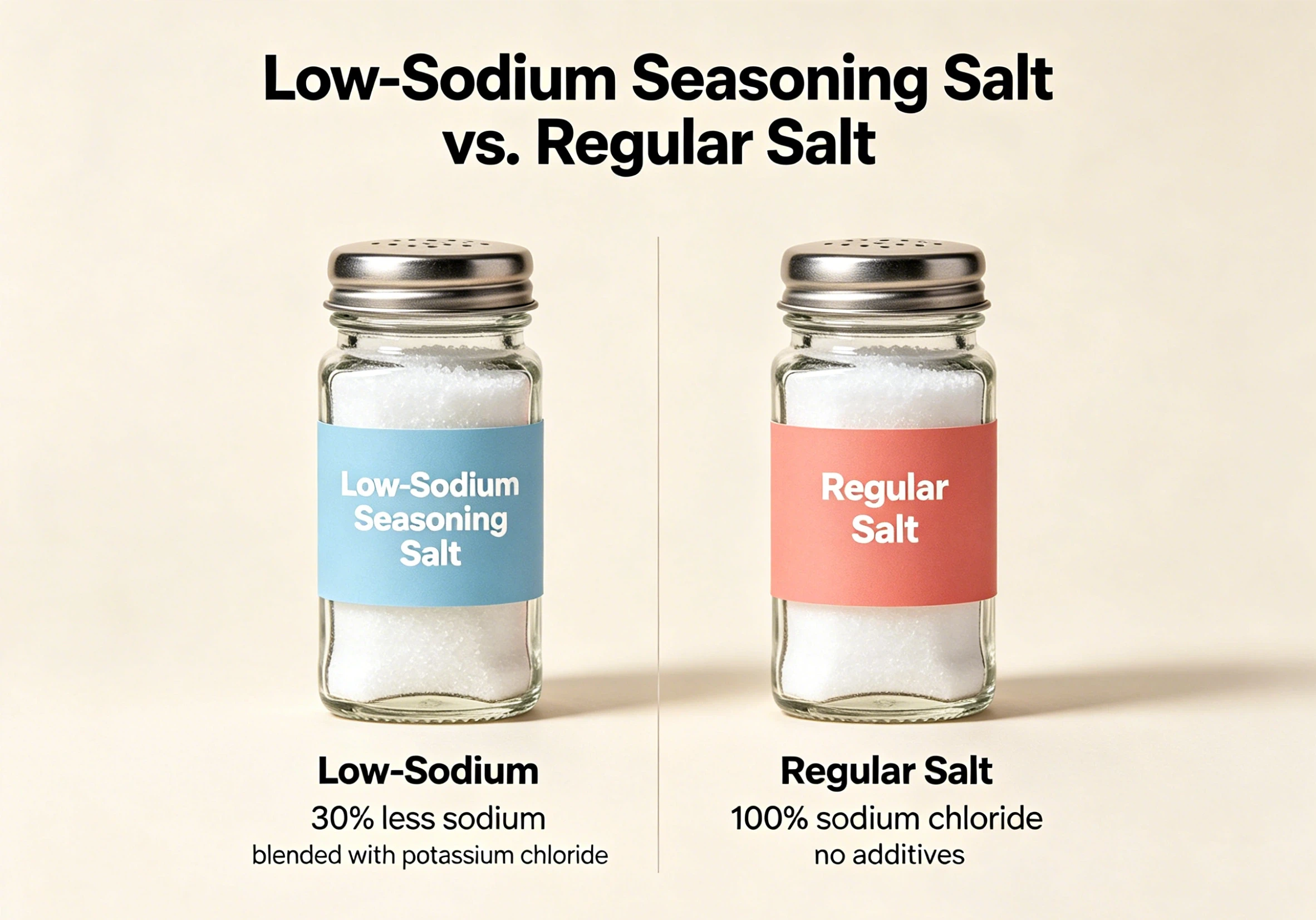
Regular table salt is sodium chloride (NaCl) in its purest commercial form - typically 97–99% NaCl by weight, with anti-caking agents added for flow properties. It contains approximately 2,300 mg of sodium per teaspoon (6 grams). In food manufacturing, regular salt serves multiple critical functions:
* Flavor enhancement: Sodium ions directly stimulate taste receptors, amplifying savory, sweet, and umami notes while suppressing bitterness.
* Preservation: Salt draws moisture out of food through osmosis, inhibiting microbial growth and extending shelf life.
* Texture modification: In meat products, salt solubilizes myofibrillar proteins, improving water-holding capacity and binding. In bread dough, it strengthens gluten structure.
* Fermentation control: In fermented products like cheese and pickles, salt regulates microbial activity.
* Color development: Salt influences Maillard reaction rates, affecting browning in baked goods and processed meats.
These multifunctional roles make regular salt extraordinarily difficult to replace on a 1:1 basis - which is precisely why low-sodium seasoning salt formulations require sophisticated ingredient science.
2.2 What Is Low-Sodium Seasoning Salt?
Low-sodium seasoning salt is a broad category of blended seasoning ingredients designed to replicate or enhance the sensory and functional properties of regular salt while delivering substantially less sodium. These products are not a single ingredient but rather multi-component systems that may include:
* Potassium chloride (KCl): The most widely used sodium substitute, providing ionic saltiness similar to NaCl. Potassium chloride typically replaces 25–50% of sodium chloride in commercial formulations. At higher concentrations, it can introduce a metallic or bitter off-note, which is why it is rarely used as a complete replacement .
* Herbs and spices: Dried herbs such as rosemary, basil, thyme, oregano, and bay leaves contribute aromatic complexity that compensates for reduced sodium perception. Spices like garlic powder, onion powder, black pepper, and cumin add depth and umami-adjacent flavor notes .
* Flavor enhancers: Ingredients such as yeast extract, hydrolyzed vegetable protein, monosodium glutamate (MSG) at reduced levels, and nucleotides (IMP, GMP) amplify umami perception, allowing manufacturers to use less total sodium while maintaining flavor intensity.
* Mineral salts: Magnesium sulfate, calcium chloride, and other mineral salts can contribute to ionic mouthfeel without adding sodium.
* Acidulants: Citric acid, lactic acid, and vinegar powder can enhance perceived saltiness and brightness, effectively "tricking" the palate into perceiving more salt than is present.
* Natural flavor masking agents: Certain plant extracts - including those derived from Jerusalem artichoke (a specialty of Joywin Natural) - can help mask the bitter off-notes associated with potassium chloride, making higher substitution rates more palatable.
The net result is a seasoning system that can achieve 25–50% sodium reduction compared to regular salt, while maintaining consumer-acceptable flavor profiles - a critical benchmark for commercial viability.
|
Property |
Regular Salt (NaCl) |
Low-Sodium Seasoning Salt |
|
Primary Ingredient |
Sodium chloride (97–99%) |
KCl + NaCl blend + herbs/spices |
|
Sodium Content |
~2,300 mg/tsp |
~600–1,500 mg/tsp (varies) |
|
Flavor Profile |
Clean, direct saltiness |
Complex, layered, savory |
|
Preservation Function |
High |
Moderate (formulation-dependent) |
|
Texture Function |
High |
Moderate to high |
|
Label Appeal |
Neutral |
"Low sodium," "reduced sodium" claims |
|
Cost |
Low |
Moderate to higher |
|
Regulatory Complexity |
Minimal |
Moderate (claim thresholds apply) |
3. The Regulatory Landscape: What "Low-Sodium" Actually Means on a Label
For food manufacturers, the term "low-sodium" is not just a marketing claim - it is a legally defined designation with specific thresholds that must be met for compliant labeling.
3.1 FDA Definitions (United States)
Under FDA regulations (21 CFR 101.61), sodium content claims on food labels are defined as follows:
* Sodium-free: Less than 5 mg of sodium per serving
* Very low sodium: 35 mg or less per serving
* Low sodium: 140 mg or less per serving
* Reduced sodium: At least 25% less sodium than the reference food
* Light in sodium: At least 50% less sodium than the reference food
These definitions directly govern how a food manufacturer can position a product containing low-sodium seasoning salt. A product reformulated with a 30% sodium reduction, for example, can carry a "reduced sodium" claim - a powerful marketing tool in today's health-conscious retail environment .
In April 2023, the FDA also proposed amendments to its Standard of Identity (SOI) regulations to formally allow the use of salt substitutes (including potassium chloride) in standardized foods - a significant regulatory development that opens the door for broader reformulation across categories including canned vegetables, cheese, bread, and cured meats .
3.2 WHO and International Standards
Internationally, the WHO's sodium reduction framework encourages member states to set mandatory or voluntary reformulation targets. The European Union, the United Kingdom, Australia, and several Asian markets have established their own sodium reduction programs, each with slightly different thresholds and timelines. Food manufacturers operating in multiple markets must navigate this patchwork of regulations carefully, ensuring that their low-sodium seasoning salt formulations meet the most stringent applicable standard .
3.3 Potassium Labeling Considerations
Because potassium chloride is the primary functional substitute for sodium chloride, manufacturers using KCl-based low-sodium seasoning salts must also consider potassium labeling requirements. In the U.S., potassium is now a mandatory nutrient on the Nutrition Facts Panel (since 2020). Products with significant KCl content may need to carry advisory statements for consumers with kidney disease or those on potassium-restricted diets - an important consideration for target market segmentation .
4. Formulation Challenges and Solutions for Food Manufacturers
Replacing regular salt with low-sodium seasoning salt is rarely a simple swap. The multifunctional nature of sodium chloride means that reformulation requires a systems-thinking approach, addressing flavor, texture, preservation, and processing simultaneously.
4.1 The Flavor Gap
The most immediate challenge is flavor perception. Sodium ions activate specific taste receptors (particularly the ENaC - epithelial sodium channel) in a way that potassium and other ions do not fully replicate. Consumers trained on high-sodium products often perceive reduced-sodium versions as "flat," "bland," or "missing something."
Effective strategies to bridge the flavor gap include:
* Umami amplification: Incorporating yeast extracts, mushroom powders, or nucleotide flavor enhancers can dramatically improve flavor fullness without adding sodium. Umami compounds activate glutamate receptors that synergize with saltiness perception, effectively allowing manufacturers to use less sodium while maintaining perceived flavor intensity.
* Aromatic complexity: A well-designed herb and spice blend in a low-sodium seasoning salt creates multi-sensory stimulation - aroma, heat, color - that distracts the palate from reduced saltiness and creates a more satisfying overall eating experience .
Gradual sodium reduction: Consumer research consistently shows that gradual, incremental sodium reduction (reducing sodium by 5–10% at a time over multiple reformulation cycles) is more successful than abrupt large reductions. Consumers adapt to lower sodium levels over time without noticing the change.
* Bitterness masking: The metallic/bitter off-note of potassium chloride at higher concentrations is a known formulation challenge. Natural masking agents - including certain plant extracts and inulin-based ingredients - can suppress this off-note, enabling higher KCl substitution rates without consumer rejection.
4.2 Texture and Functional Properties
In meat processing, bread baking, and dairy manufacturing, salt plays critical structural roles that must be addressed during reformulation:
* Meat products: Reduced sodium can compromise water-holding capacity, texture, and binding in processed meats. Manufacturers may need to adjust phosphate levels, modify processing parameters, or incorporate hydrocolloids (such as inulin or modified starches) to compensate for lost functionality.
* Bread and baked goods: Salt strengthens gluten networks and controls yeast fermentation rates. Low-sodium reformulations may require adjustments to mixing time, fermentation temperature, and the addition of gluten-strengthening agents.
* Cheese and fermented products: Salt controls moisture, texture, and microbial ecology in cheese. Partial KCl substitution is well-established in cheese manufacturing, but ratios must be carefully calibrated to avoid textural defects or undesirable flavor development.
4.3 Shelf Life and Food Safety
Sodium chloride's preservative function cannot be overlooked. Reducing sodium in a product without compensating for its antimicrobial effect can create food safety risks - particularly for products with water activity levels that support pathogen growth.
Manufacturers reformulating with low-sodium seasoning salt should conduct thorough challenge studies and shelf-life testing to ensure that reduced-sodium products remain microbiologically safe throughout their intended shelf life. Compensating strategies may include:
* Adjusting water activity through other means (e.g., increased sugar, glycerol)
* Incorporating natural antimicrobial ingredients (rosemary extract, vinegar, nisin)
* Modifying packaging (modified atmosphere packaging, vacuum sealing)
* Adjusting pH through acidulants
5. Market Opportunities: Why Low-Sodium Seasoning Salt Is a Growth Category
Beyond compliance and risk management, low-sodium seasoning salt represents a genuine commercial opportunity for forward-thinking food manufacturers.
5.1 Consumer Demand Is Accelerating
Health-conscious consumers are actively seeking lower-sodium options across all food categories. The global low-sodium sea salt market alone was valued at USD 132.9 million in 2025 and is projected to reach USD 265.4 million within the next decade - nearly doubling in size . This growth is driven by:
* Rising prevalence of hypertension and cardiovascular disease globally
* Increasing consumer health literacy and label reading
* Growth of the "better-for-you" food segment across retail and foodservice
* Expanding elderly populations with specific low-sodium dietary needs
* Healthcare provider recommendations driving consumer behavior change
5.2 Retail and Private Label Positioning
Products carrying "low sodium," "reduced sodium," or "heart-healthy" claims command premium shelf positioning and often achieve higher price points than their standard counterparts. For private label manufacturers and branded food companies alike, reformulating with low-sodium seasoning salt is a pathway to differentiated positioning in competitive categories.
5.3 Foodservice and Institutional Markets
Hospitals, nursing homes, school cafeterias, and corporate dining programs are under increasing pressure to serve lower-sodium meals. These institutional buyers are actively seeking food manufacturers who can supply compliant, great-tasting low-sodium products at scale - a significant B2B opportunity for manufacturers who invest in low-sodium formulation capabilities.
5.4 Export Market Advantages
Many export markets - particularly in Europe, Japan, South Korea, and Australia - have more stringent sodium reduction targets than the United States. Food manufacturers who develop low-sodium seasoning salt formulations that meet the most demanding international standards will have a competitive advantage in accessing these high-value export markets .
6. Ingredient Sourcing: What to Look for in a Low-Sodium Seasoning Salt Supplier
For food manufacturers, the quality and consistency of low-sodium seasoning salt ingredients are critical to product success. Here's what to evaluate when selecting an ingredient supplier:
6.1 Certifications and Quality Standards
A credible supplier should hold internationally recognized certifications including:
* ISO 22000 / FSSC 22000 (food safety management)
* cGMP (current Good Manufacturing Practice)
* Kosher and Halal certifications (for global market access)
* Organic NOP/JAS certifications (for organic product lines)
* BRC Global Standard (for retail supply chain compliance)
These certifications provide food manufacturers with the assurance that ingredients meet rigorous safety, quality, and traceability standards - essential for both regulatory compliance and brand protection.
6.2 Technical Support and Formulation Expertise
The best ingredient suppliers don't just sell raw materials - they provide application support, helping food manufacturers navigate the formulation challenges associated with sodium reduction. Look for suppliers who can offer:
* Application testing and prototype development
* Sensory evaluation support
* Regulatory guidance for target markets
* Custom blending and specification development
6.3 Supply Chain Reliability
Sodium reduction is a long-term strategic commitment. Food manufacturers need ingredient suppliers who can provide consistent supply, stable pricing, and reliable lead times - particularly for specialty ingredients like potassium chloride blends, herb and spice extracts, and natural flavor masking agents.
At Joywin Natural (joywinnatural.com), we specialize in supplying high-quality plant extracts, natural functional ingredients, and dietary supplement-grade raw materials that support food manufacturers in their sodium reduction journeys. Our ingredients - including inulin derived from Jerusalem artichoke - have demonstrated utility in improving texture, mouthfeel, and flavor masking in low-sodium food formulations, backed by our world-leading manufacturing capabilities and comprehensive certification portfolio.
7. Practical Formulation Guidelines: Getting Started with Low-Sodium Seasoning Salt
For food manufacturers ready to begin reformulation, here is a practical framework for approaching low-sodium seasoning salt development:
Step 1: Establish Your Sodium Reduction Target
Define your target based on:
* Regulatory claim thresholds (e.g., "reduced sodium" = 25% reduction)
* Category-specific FDA voluntary targets
* Target market requirements (domestic vs. export)
* Consumer acceptance benchmarks from sensory research
Step 2: Select Your Salt Substitute System
Based on your product category and target reduction level, select an appropriate base system:
|
Reduction Level |
Recommended Approach |
|
10–25% reduction |
Partial NaCl replacement with KCl (25:75 ratio) |
|
25–40% reduction |
KCl + umami enhancers + herb/spice blend |
|
40–50% reduction |
KCl + flavor enhancers + bitterness masking agents + acidulants |
|
>50% reduction |
Complex multi-component system; requires extensive sensory testing |
Step 3: Address Functional Gaps
Audit your product for each functional role that salt plays and identify compensating ingredients or process adjustments for each gap.
Step 4: Conduct Sensory Evaluation
Use trained sensory panels and consumer panels to evaluate reduced-sodium prototypes against the control. Pay particular attention to:
* Overall saltiness perception
* Flavor fullness and complexity
* Off-note detection (metallic, bitter)
* Texture and mouthfeel
* Aftertaste
Step 5: Validate Safety and Shelf Life
Conduct challenge studies and accelerated shelf-life testing before commercial launch. Ensure that reduced-sodium formulations meet all applicable food safety standards.
Step 6: Update Labeling and Claims
Work with your regulatory team to ensure that all sodium content claims are accurate, compliant, and appropriately substantiated. Update your Nutrition Facts Panel to reflect the new sodium and potassium levels .
8. The Future of Low-Sodium Seasoning Salt in Food Manufacturing
The trajectory is clear: sodium reduction is one of the defining formulation challenges of the next decade in food manufacturing. Several emerging trends will shape how low-sodium seasoning salt evolves:
8.1 Advanced Flavor Technologies
Emerging technologies - including encapsulated salt (which delivers sodium more efficiently to taste receptors, allowing less total sodium for equivalent perception), salt crystal engineering (modifying crystal shape and size to optimize surface-area contact with taste buds), and AI-assisted flavor modeling - are expanding the toolkit available to food manufacturers pursuing aggressive sodium reduction targets.
8.2 Clean Label Demands
Consumers increasingly scrutinize ingredient lists. The next generation of low-sodium seasoning salts will need to achieve sodium reduction goals using recognizable, clean-label ingredients - herbs, spices, mineral salts, and natural extracts - rather than synthetic flavor enhancers. This creates significant opportunities for suppliers of high-quality natural plant extracts and functional food ingredients .
8.3 Personalized Nutrition
As personalized nutrition gains traction - driven by consumer genomics, wearable health monitoring, and digital health platforms - food manufacturers will increasingly need to offer sodium-tiered product lines that cater to consumers with specific cardiovascular, renal, or hypertension-related dietary needs. Low-sodium seasoning salt will be a foundational ingredient category in this personalized nutrition landscape.
8.4 Regulatory Tightening
With the FDA's 2024 voluntary targets likely to become more prescriptive over time, and with international markets continuing to tighten sodium standards, food manufacturers who invest in low-sodium reformulation capabilities now will be well-positioned to meet future mandatory requirements without disruptive, costly reformulation under regulatory pressure .
Conclusion: Low-Sodium Seasoning Salt Is a Strategic Imperative
The shift from regular salt to low-sodium seasoning salt in food manufacturing is not a passing trend - it is a fundamental realignment of the industry in response to global health priorities, regulatory evolution, and consumer demand. The evidence is compelling: excess sodium intake drives cardiovascular disease at a population level, and food manufacturers are uniquely positioned to make a meaningful public health impact through reformulation .
The good news is that the ingredient science has matured significantly. With the right combination of potassium chloride, umami enhancers, herbs, spices, and natural functional ingredients, food manufacturers can achieve meaningful sodium reductions - 25% to 50% or more - without sacrificing the flavor, texture, and shelf life that consumers and retail buyers demand.
The market opportunity is equally compelling. A global low-sodium salt market on track to exceed USD 2 billion, combined with premium positioning opportunities and expanding institutional demand, makes investment in low-sodium formulation capabilities a sound commercial strategy .
At Joywin , we are committed to supporting food manufacturers and dietary supplement producers with the highest-quality natural ingredients - from organic inulin and bromelain to a full range of plant extracts - that enable innovative, health-forward product development. Whether you are beginning your sodium reduction journey or optimizing an existing low-sodium product line, our team of technical experts is ready to support your formulation goals. If you want to know more about Low-Sodium Seasoning Salt or are interested in purchasing it, you can send an email to contact@joywinworld.com.