

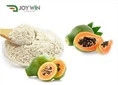
Long before modern biochemistry gave us the vocabulary to describe it, traditional cultures across Central America, Southeast Asia, and Africa were using the milky latex of the papaya plant (Carica papaya) to tenderize meat, heal wounds, and support digestion. What they understood intuitively, science has since confirmed with remarkable precision: the papaya plant produces one of the most biochemically sophisticated and therapeutically versatile proteolytic enzymes known to biology - papain.
Today, papain powder is a globally traded ingredient found in dietary supplements, pharmaceutical preparations, food processing, cosmetics, and industrial applications. Its commercial success is built on a foundation of genuine enzymatic power - a molecular mechanism of action so elegant and effective that it has inspired entire generations of drug discovery research into protease-based therapeutics.
But what exactly is papain's mechanism of action? How does it break down proteins at the molecular level? Why does it work across such a broad range of substrates and conditions? And what does this mean for supplement formulators, brand owners, and health consumers seeking to harness its benefits?
This guide answers all of these questions - comprehensively, accurately, and in a way that connects the deep biochemistry to the practical applications that matter most. Let's begin.
What Is Papain? Origins, Structure, and Classification
Papain (EC 3.4.22.2) is a cysteine protease enzyme extracted primarily from the latex of unripe Carica papaya fruit, leaves, and stems. It belongs to the papain superfamily - the largest and most diverse family of cysteine proteases in biology - and serves as the archetypal reference enzyme for this entire class of proteolytic enzymes.
Biological Source and Extraction
Papain is most concentrated in:
* Unripe papaya latex - the highest-activity source, collected by scoring the green fruit
* Papaya leaves - significant papain content, used in traditional medicine
* Papaya seeds - lower concentration, but bioactive
For commercial papain powder production, the latex is collected from scored unripe fruits, filtered, spray-dried or freeze-dried, and standardized to defined enzyme activity units - typically expressed in TU (Tyrosine Units), USP units, or NF units per gram.
Molecular Structure
Papain is a single-chain polypeptide consisting of 212 amino acid residues with a molecular weight of approximately 23.4 kDa. Its three-dimensional structure - determined by X-ray crystallography - reveals:
* A bilobal architecture: two structural domains forming a cleft between them
* The active site located within this inter-domain cleft
* Three disulfide bridges that stabilize the tertiary structure
* A catalytic triad at the heart of its enzymatic mechanism
This structural elegance is what enables papain's remarkable catalytic efficiency and broad substrate specificity.
The Papain Mechanism of Action: A Step-by-Step Molecular Breakdown
Understanding papain's mechanism of action requires examining the precise molecular events that occur when the enzyme encounters a protein substrate. This is the core of what makes papain scientifically fascinating - and practically powerful.
The Catalytic Triad: The Engine of Papain's Activity
At the heart of papain's mechanism is a catalytic triad consisting of three amino acid residues that work in concert to cleave peptide bonds:
* Cysteine-25 (Cys25) - the primary nucleophilic residue; contains the thiol (-SH) group that performs the actual chemical attack
* Histidine-159 (His159) - acts as a general acid-base catalyst; modulates the reactivity of Cys25
* Asparagine-175 (Asn175) - stabilizes the orientation of His159 through hydrogen bonding
This catalytic triad is the defining feature of all cysteine proteases - and papain's version is considered the structural and functional prototype for the entire enzyme family.
The Two-Step Catalytic Mechanism: Acylation and Deacylation
Papain cleaves peptide bonds through a two-step ping-pong mechanism that biochemists call acylation followed by deacylation. Here is the complete molecular sequence:
Step 1: Substrate Binding and Active Site Preparation
Before catalysis begins, the active site must be in its activated thiolate-imidazolium ion pair form. His159 acts as a general base, abstracting a proton from Cys25's thiol group (-SH), generating a highly nucleophilic thiolate anion (-S⁻). This thiolate-imidazolium ion pair is the catalytically active form of the enzyme.
The protein substrate enters the active site cleft and positions itself so that the target peptide bond (the bond between two amino acids to be cleaved) is optimally aligned with the catalytic machinery.
Step 2: Acylation - Formation of the Acyl-Enzyme Intermediate
1.This is the first chemical step - and the most mechanistically distinctive:
The thiolate anion of Cys25 performs a nucleophilic attack on the carbonyl carbon of the target peptide bond
2.This forms a tetrahedral transition state - a transient, high-energy intermediate where the carbonyl carbon is bonded to four groups simultaneously
3.The transition state collapses: the C-N bond of the peptide breaks, releasing the amine component (the C-terminal portion of the cleaved protein fragment) as the first product
4.A thioester bond forms between Cys25 and the remaining carbonyl fragment - this is the acyl-enzyme intermediate
At this point, the enzyme is covalently bonded to one half of the cleaved substrate. His159 donates a proton to the departing amine, facilitating its release.
Step 3: Deacylation - Hydrolysis and Enzyme Regeneration
The second chemical step regenerates the free enzyme:
1.A water molecule enters the active site and is activated by His159 (acting now as a general base), generating a hydroxide ion (OH⁻)
2.This hydroxide performs a nucleophilic attack on the thioester carbonyl of the acyl-enzyme intermediate
3.Another tetrahedral transition state forms and collapses
4.The thioester bond breaks, releasing the carboxylic acid component (the N-terminal portion of the cleaved protein) as the second product
5.The free thiol of Cys25 is regenerated - the enzyme is fully restored and ready for another catalytic cycle
The net result: one peptide bond has been cleaved into two protein fragments, and the enzyme emerges chemically unchanged - ready to repeat the process thousands of times per second.
Visual Summary of the Catalytic Cycle
[Inactive Enzyme] → His159 activates Cys25 → [Active Thiolate Form]
↓[Substrate Binding] → Peptide bond aligned in active site cleft
↓[ACYLATION] → Cys25 attacks peptide carbonyl → Tetrahedral intermediate
↓[C-N bond cleavage] → First product released (amine fragment)
↓[Acyl-Enzyme Intermediate] → Thioester bond: Cys25–substrate
↓[DEACYLATION] → Water attacks thioester → Second tetrahedral intermediate
↓[Second product released] → Carboxylic acid fragment exits
↓[Enzyme Regenerated] → Cys25 thiol restored → Ready for next cycle
This elegant two-step mechanism explains why papain is so efficient: each catalytic cycle is fast, clean, and leaves the enzyme fully functional.

Substrate Specificity: What Proteins Does Papain Target?
One of papain's most commercially valuable properties is its broad substrate specificity - it can cleave a wide range of peptide bonds, making it useful across diverse applications.
Preferred Cleavage Sites
Papain preferentially cleaves peptide bonds where:
* The P2 position (two residues N-terminal to the cleavage site) is occupied by a hydrophobic amino acid - particularly phenylalanine, valine, or leucine
* The P1 position (immediately N-terminal to the cleavage site) is occupied by arginine, lysine, or hydrophobic residues
However, papain's active site cleft is large and accommodating enough to cleave a wide variety of sequences - which is why it can digest most dietary proteins, including:
* Meat proteins (myosin, actin, collagen) - hence its use as a meat tenderizer
* Casein and whey proteins - relevant for dairy applications
* Gluten proteins - relevant for digestive enzyme formulas
* Soy proteins - relevant for plant-based food processing
* Fibrin - relevant for anti-inflammatory and wound-healing applications
pH Optimum and Stability
Papain's activity profile across pH is an important formulation consideration:
|
pH Range |
Activity Level |
|
3.0–4.0 |
Moderate activity (relevant for stomach conditions) |
|
5.0–7.0 |
Optimal activity range |
|
7.0–8.0 |
Good activity (relevant for intestinal conditions) |
|
>9.0 |
Declining activity |
This broad pH activity range - spanning from mildly acidic to neutral - means papain remains active across multiple segments of the gastrointestinal tract, making it particularly valuable as a digestive enzyme supplement.
Temperature Stability
Papain is notably thermostable compared to many other proteases:
* Active from 10°C to 80°C
* Optimal activity between 60°C and 70°C
* Retains significant activity at body temperature (37°C)
* Inactivated above 85°C (irreversible denaturation)
This thermal stability makes papain powder suitable for use in food processing applications involving moderate heat, as well as stable in room-temperature supplement products.
Beyond Digestion: The Full Spectrum of Papain's Biological Activities
Understanding papain's mechanism of action reveals why its biological effects extend far beyond simple protein digestion. The same proteolytic machinery that breaks down dietary proteins also mediates a remarkable range of therapeutic activities.
1. Anti-Inflammatory Mechanism
Papain's anti-inflammatory activity operates through multiple proteolytic pathways:
Fibrin degradation: Inflammatory responses generate fibrin deposits at sites of tissue injury. Papain's proteolytic activity degrades fibrin, reducing the fibrinous exudate that contributes to swelling, pain, and impaired circulation at inflammatory sites.
Bradykinin degradation: Bradykinin is a potent pro-inflammatory peptide that causes vasodilation, increased vascular permeability, and pain sensitization. Papain cleaves bradykinin, directly reducing its inflammatory signaling.
Cytokine modulation: Research suggests papain may modulate the production and activity of pro-inflammatory cytokines - including IL-1β and TNF-α - through proteolytic processing of their precursors or receptors.
Immune complex degradation: In conditions involving immune complex deposition (such as autoimmune conditions), papain's ability to cleave immunoglobulins and complement proteins may help reduce the inflammatory burden of immune complex accumulation.
2. Wound Healing and Debridement
Papain's proteolytic specificity for denatured, necrotic, and devitalized tissue while sparing healthy tissue makes it a powerful wound debridement agent. This selectivity arises from:
* Higher substrate accessibility in damaged tissue - denatured proteins expose more cleavage sites than native, folded proteins
* Inhibitor proteins in healthy tissue - α2-macroglobulin and other protease inhibitors in healthy serum protect intact tissue from papain activity
* Optimal activity at wound pH - the slightly acidic pH of wound exudate falls within papain's activity range
This mechanism explains papain's long clinical history in wound care - from traditional poultice applications to modern pharmaceutical debridement preparations.
3. Antimicrobial Activity
Papain exhibits direct antimicrobial activity against a range of pathogenic microorganisms through:
* Degradation of bacterial surface proteins - disrupting adhesion mechanisms and structural integrity
* Biofilm disruption - proteolytic degradation of the protein matrix of bacterial biofilms
* Viral protein cleavage - papain-like proteases are critical in viral replication cycles (notably in coronaviruses), making papain a subject of intense antiviral research
The identification of papain-like proteases (PLpro) in SARS-CoV-2 and other coronaviruses has generated significant scientific interest in papain as a model for antiviral drug design.
4. Systemic Enzyme Therapy
When taken orally on an empty stomach, papain powder is absorbed intact (or as large peptide fragments) into systemic circulation - a phenomenon that underlies systemic enzyme therapy. In this context, papain's proteolytic activity operates systemically to:
* Degrade circulating immune complexes - relevant in autoimmune and inflammatory conditions
* Reduce fibrin deposition in blood vessels and tissues
* Modulate complement activation
* Support tissue repair by removing damaged protein debris
Systemic enzyme therapy combining papain with bromelain, trypsin, and chymotrypsin has been studied in European clinical research for conditions including osteoarthritis, sports injuries, and post-surgical recovery.
5. Collagen Remodeling
Papain's ability to cleave specific collagen peptide sequences makes it relevant in tissue remodeling contexts. In skin care applications, controlled papain activity promotes exfoliation by degrading the desmosomal proteins that hold dead corneocytes to the skin surface - a mechanism that explains its use in enzymatic exfoliant cosmetics and wound care products.
Papain Powder in Supplement Formulations: Applications and Opportunities
For supplement brands and formulators, papain offers a compelling combination of well-understood mechanism, broad application versatility, and strong consumer recognition. Here are the primary commercial applications:
Digestive Enzyme Supplements
The most established application. Papain is a core component of broad-spectrum digestive enzyme formulas, typically combined with:
|
Enzyme |
Primary Substrate |
Synergy with Papain |
|
Bromelain |
Proteins |
Complementary protease activity |
|
Amylase |
Starches/carbohydrates |
Completes macronutrient coverage |
|
Lipase |
Fats/triglycerides |
Full digestive spectrum |
|
Lactase |
Lactose |
Dairy tolerance support |
|
Cellulase |
Plant fiber |
Plant-based diet support |
Papain's broad pH activity range makes it active throughout the GI tract - from the stomach through the small intestine - giving it superior coverage compared to proteases with narrower pH optima.
Sports Nutrition & Recovery
Papain is increasingly featured in sports nutrition formulas for:
* Protein digestion optimization - maximizing amino acid absorption from high-protein diets
* Post-exercise recovery - reducing exercise-induced inflammation through fibrin and bradykinin degradation
* Muscle soreness reduction - anti-inflammatory proteolytic activity
* Joint support - systemic enzyme activity supporting connective tissue health
Anti-Inflammatory & Systemic Enzyme Formulas
Following the European systemic enzyme therapy tradition, papain is used in:
* Multi-enzyme anti-inflammatory formulas (with bromelain, trypsin, rutin)
* Joint health supplements targeting osteoarthritis and sports injuries
* Post-surgical recovery protocols
* Immune modulation formulas
Food Processing Applications
Beyond supplements, papain has major industrial food applications:
* Meat tenderizer - the most widely known food application; degrades myofibrillar and connective tissue proteins
* Beer clarification - prevents chill haze by degrading haze-forming proteins
* Cheese manufacturing - coagulation aid
* Protein hydrolysate production - generating bioactive peptides from food proteins
Cosmetic & Topical Applications
* Enzymatic exfoliants - face masks, peels, and cleansers
* Wound debridement preparations
* Skin brightening formulas - papain degrades melanin-associated proteins
* Hair care - protein hydrolysis for damaged hair treatment
Choosing the Right Papain Powder: Quality Parameters for Formulators
The quality of papain varies significantly between suppliers. Enzyme activity - not just weight - is the critical quality parameter. Here is a comprehensive evaluation framework:
Activity Standardization
Papain activity is measured in multiple unit systems - understanding these is essential for accurate dosing:
|
Unit System |
Definition |
Common Use |
|
TU (Tyrosine Units) |
μmol tyrosine released per minute |
International standard |
|
USP Units |
Based on casein digestion assay |
US pharmaceutical standard |
|
NF Units |
National Formulary standard |
US supplement standard |
|
MCU (Milk Clotting Units) |
Milk protein coagulation |
Food industry |
|
FCC Units |
Food Chemical Codex |
Food-grade applications |
Always request third-party verified activity certificates - enzyme activity degrades over time and with improper storage, making batch-specific testing essential.
Key Quality Parameters
|
Parameter |
What to Look For |
|
Enzyme activity |
Standardized units per gram, third-party verified |
|
Purity |
Protein content, absence of adulterants |
|
Heavy metals |
Pb, Cd, As, Hg within regulatory limits |
|
Microbial testing |
Total plate count, yeast/mold, pathogens |
|
Moisture content |
<8% for powder stability |
|
Residual latex proteins |
Important for allergen declaration |
|
Certifications |
Kosher, Halal, Non-GMO, GMP manufacturing |
|
Stability data |
Activity retention over shelf life |
Allergen Consideration
Papain is derived from papaya latex, which contains proteins that may cause latex-fruit syndrome in sensitive individuals. Proper allergen labeling and disclosure is essential for consumer safety and regulatory compliance.
The Inhibition of Papain: Understanding What Stops It
A complete understanding of papain's mechanism of action includes understanding how its activity is regulated and inhibited - knowledge that is important for both formulation stability and safety.
Natural Inhibitors
* Cystatin superfamily proteins - endogenous protease inhibitors that regulate cysteine protease activity in biological systems
* α2-Macroglobulin - a broad-spectrum protease inhibitor in blood serum that traps papain and other proteases, limiting systemic activity
* E-64 - a research tool inhibitor that irreversibly alkylates the active site Cys25
Chemical Inhibitors Relevant to Formulation
* Heavy metal ions (Hg²⁺, Pb²⁺, Cu²⁺) - coordinate with Cys25 thiol, inactivating the enzyme; avoid metal contamination in formulations
* Oxidizing agents - oxidize Cys25 thiol to sulfenic acid, inactivating the enzyme; use antioxidants (vitamin C, cysteine) to protect activity in formulations
* Iodoacetamide and N-ethylmaleimide - alkylate Cys25; avoid in formulation environments
Understanding these inhibition mechanisms helps formulators design stable, high-activity papain products with appropriate packaging and storage conditions.
JOYWIN Natural: Premium Papain Powder for Global Supplement Brands
At JOYWIN Natural (www.joywinnatural.com), we supply pharmaceutical-grade Papain to dietary supplement brands, food manufacturers, and nutraceutical formulators worldwide.
Our Papain Powder offering includes:
* Multiple activity grades - from standard food-grade to high-potency pharmaceutical-grade specifications
* Standardized activity - TU, USP, NF, and FCC units available with third-party verification
* Full documentation - Certificate of Analysis, MSDS, activity test reports, heavy metals and microbial testing
* Natural source - derived from Carica papaya latex with full traceability
* Global certifications - Kosher, Halal, Non-GMO verified, GMP manufacturing
* Flexible MOQ - supporting both emerging brands and large-scale manufacturers
*Technical formulation support - enzyme activity guidance, combination formula recommendations, stability optimization
JOYWIN's commitment to rigorous quality control, transparent supply chains, and responsive technical partnership means you receive not just an ingredient - but a formulation partnership built on scientific integrity and commercial reliability.
Conclusion: Mechanism Defines Value - And Papain's Mechanism Is Exceptional
The papain mechanism of action - a precisely orchestrated two-step cysteine protease catalytic cycle involving nucleophilic attack, acyl-enzyme intermediate formation, and hydrolytic regeneration - is one of the most elegant examples of enzymatic chemistry in biology.
This mechanism is not merely academically interesting. It directly explains every practical benefit that papain delivers:
* The broad-spectrum protein digestion that makes it indispensable in digestive enzyme formulas
* The anti-inflammatory activity through fibrin and bradykinin degradation
* The wound debridement selectivity that spares healthy tissue while removing necrotic debris
* The systemic enzyme therapy potential when absorbed intact
* The food processing versatility from meat tenderization to beer clarification
For supplement brands, the opportunity is clear: papain powder is a scientifically credible, mechanistically well-understood, and commercially versatile ingredient that delivers genuine, evidence-based benefits across multiple high-growth supplement categories. In a market that increasingly demands both scientific substantiation and consumer-friendly positioning, papain - the enzyme that tropical cultures understood long before modern science caught up - delivers on every dimension.
JOYWIN founded in 2013 is an innovation-driven biotechnology company. We provide the manufacture of plant extracts, plant proteases, and customized products. If you want to know more about Papain Powder or are interested in purchasing it, you can send an email to contact@joywinworld.com. We will reply to you as soon as possible after we see the message.