

This definitive guide compares papain powder and pepsin, two critical proteolytic enzymes with distinct origins, mechanisms, and applications. While both break down proteins, papain (derived from papaya) is a versatile, broad-spectrum enzyme effective across a wide pH range, making it ideal for dietary supplements, meat tenderizing, and beverage processing. Pepsin, a digestive enzyme secreted in the stomach, is highly specific to the acidic environment of the human gut and is primarily used to support protein digestion and in pharmaceutical processing. For suppliers and manufacturers, the choice depends entirely on the target application: papain offers exceptional flexibility for industrial and supplement use, whereas pepsin is specialized for gastric digestion. Key decision factors include pH stability, temperature tolerance, source requirements, and regulatory status.
1 Introduction to Proteolytic Enzymes
Proteolytic enzymes, also known as proteases or peptidases, represent one of the most important classes of industrial and biological catalysts. These remarkable biocatalysts accelerate the breakdown of proteins into smaller peptides and amino acids through hydrolysis of peptide bonds. In nature, they are indispensable for essential life processes-from digestion and immune function to cellular repair and apoptosis (programmed cell death). In industry, their specificity and efficiency under mild conditions make them invaluable across sectors, reducing the need for harsh chemicals, high temperatures, and high pressures.
The global market for industrial enzymes, where proteases hold the largest share, is projected to grow significantly, driven by demand in food, beverage, and dietary supplements. For businesses like Joywin Natural, which specializes in high-quality enzyme products like bromelain, understanding the nuanced differences between popular proteases such as papain and pepsin is critical. It allows for precise product recommendation, targeted application development, and helps customers-whether they are formulators of digestive health supplements or food technologists-make informed, effective choices.
This article provides a detailed, comparative analysis of papain and pepsin, examining their sources, properties, applications, and safety. The goal is to equip you with the knowledge to select the optimal enzyme for your specific project, ensuring efficacy, compliance, and end-user satisfaction.
2 Deep Dive: Papain - The Versatile Plant Protease
2.1 Source and Historical Context
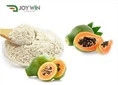
Papain (EC 3.4.22.2) is a cysteine protease extracted from the latex of the green fruit, leaves, and trunk of the papaya plant (Carica papaya). Its use dates back centuries in tropical regions, where indigenous populations applied papaya latex to tenderize tough meats and treat wounds, ulcers, and skin parasites. The enzyme was first isolated and named in the 19th century, marking the beginning of its journey into modern science and industry.
Today, commercial papain powder is produced through a controlled process of scoring unripe papaya fruit to collect the crude latex, which is then refined, dried, and standardized into a stable, potent powder. As a leading manufacturer of plant-based enzymes like bromelain, Joywin Natural understands the meticulous processes required to ensure activity, purity, and consistency in botanical enzyme production-principles that apply directly to high-grade papain.
2.2 Biochemical Properties and Mechanism
* Type and Action: Papain is an endopeptidase, meaning it cleaves peptide bonds within the protein chain, not just at the ends. It belongs to the cysteine protease family, where a cysteine residue in its active site acts as a nucleophile to attack the peptide bond.
* Optimal Conditions: It exhibits broad activity across a wide pH range (3.0 to 9.0), with an optimum around pH 6.0-7.0. It is also relatively heat-stable, retaining activity up to about 70°C (158°F). This robustness is a key advantage over more fragile enzymes.
* Specificity: Papain has a broad specificity, cleaving peptide bonds involving basic amino acids (like arginine and lysine) as well as hydrophobic residues. This lack of extreme specificity makes it a powerful, general-purpose protein-degrading tool.
2.3 Primary Applications
The versatility of papain powder lends itself to diverse industries:
* Food & Beverage Industry:
- Meat Tenderization: The most traditional use. Papain breaks down tough collagen and muscle fibers.
- Brewing (Chill-Proofing): Prevents cloudiness (chill haze) in beer by degrading haze-forming proteins.
- Baking: Modifies gluten to control dough rheology and texture.
- Dairy: Used in cheese flavor development and to reduce allergenic properties of milk proteins.
* Dietary Supplements & Digestive Health:
- Digestive Aid: As a broad-spectrum protease, it helps break down dietary proteins in the stomach and small intestine, supporting overall digestion.
- Systemic Enzymes: Often included in systemic enzyme formulas for its potential to modulate inflammation and support tissue health when absorbed.
* Other Industries:
- Cosmetics: Found in exfoliating facial masks, toothpastes (as a gentle stain remover), and contact lens cleaning solutions.
- Laboratory & Research: A standard tool in molecular biology for cell isolation and protein studies.
- Textiles & Leather: In wool anti-shrink treatments and leather bating.
2.4 Safety and Regulatory Status
Papain is Generally Recognized As Safe (GRAS) by the U.S. Food and Drug Administration (FDA) for its intended uses in food. In supplements, it is considered safe for consumption at recommended dosages. However, as a potent protein, it can pose an inhalation risk to workers in powder form and may trigger allergic reactions in sensitive individuals, particularly those with latex or papaya allergies. Quality manufacturers implement strict controls to minimize these risks.

3 Deep Dive: Pepsin - The Essential Digestive Enzyme
3.1 Source and Physiological Role
Pepsin (EC 3.4.23.1) is an aspartic protease that serves as the primary digestive enzyme in the stomach. It is secreted by gastric chief cells as an inactive precursor called pepsinogen. Upon exposure to the hydrochloric acid (HCl) in gastric juice, pepsinogen auto-cleaves to form active pepsin. This elegant system prevents the enzyme from digesting the cells that produce it.
Historically, pepsin was first extracted from the stomachs of slaughterhouse animals, primarily pigs (porcine pepsin). While this is still a common source, microbial-derived pepsin (from fungal fermentation) and recombinant versions are also available, catering to specific market demands like vegetarian or kosher/halal products.
3.2 Biochemical Properties and Mechanism
* Type and Action: Like papain, pepsin is an endopeptidase. However, it is an aspartic protease, relying on two aspartic acid residues for catalysis.
- Optimal Conditions: Pepsin is uniquely adapted to the harsh acidic environment of the stomach. It has an optimum pH of 2.0-3.0 and becomes irreversibly inactivated at neutral to alkaline pH (above 6.0). Its optimal temperature is around 37°C (98.6°F), reflecting its physiological role.
- Specificity: It preferentially cleaves peptide bonds adjacent to aromatic amino acids (phenylalanine, tryptophan, tyrosine) and leucine. This specificity is more constrained than papain's.
3.3 Primary Applications
Pepsin's applications are more focused due to its pH specificity:
* Pharmaceuticals & Digestive Health:
- Digestive Aid Supplements: Often combined with betaine HCl in supplements designed to support gastric digestion, particularly for those with low stomach acid.
- Therapeutic Agent: Used in certain preparations to dissolve mucus or as a digestant.
- Laboratory Use: Essential in protein digestion for analysis (e.g., antibody fragmentation in research).
* Food Industry:
- Cheese Making: Traditionally used in some cheese varieties (e.g., certain rennet pastes) to promote flavor development and texture.
- Protein Hydrolysates: Production of flavor enhancers and protein supplements.
3.4 Safety and Regulatory Status
Pepsin from animal sources is also considered safe for consumption. Regulatory scrutiny focuses on the source material's health and quality to ensure safety from pathogens or contaminants. For porcine-derived pepsin, religious (halal, kosher) and dietary (vegetarian/vegan) considerations are paramount for end-users. High-quality suppliers provide clear sourcing information and relevant certifications.
4 Head-to-Head Comparison: Papain vs. Pepsin
Choosing between papain and pepsin requires a clear understanding of their contrasting profiles. The following table provides a direct comparison across critical parameters.
Table 1: Comparative Profile of Papain vs. Pepsin
|
Feature |
Papain |
Pepsin |
|
Source |
Plant (Papaya latex) |
Animal (Porcine stomach) or Microbial |
|
Enzyme Type |
Cysteine endopeptidase |
Aspartic endopeptidase |
|
Optimal pH |
Broad (3.0 - 9.0), Optimum ~6-7 |
Narrow, Highly Acidic (2.0 - 3.5) |
|
pH Stability |
Stable over a wide range |
Inactivated at pH > 6.0 |
|
Thermal Stability |
Good (up to ~70°C) |
Moderate (optimal at 37°C) |
|
Specificity |
Broad specificity |
Cleaves at aromatic/leucine residues |
|
Primary Role |
Industrial & general digestive aid |
Essential gastric digestive enzyme |
|
Key Applications |
Meat tenderizing, brewing, baking, supplements, cosmetics |
Digestive supplements, lab research, some cheesemaking |
|
Allergen Potential |
Papaya/latex allergy cross-reactivity |
Animal protein sensitivity |
4.1 Application-Specific Recommendations
The "better" enzyme is entirely context-dependent. Here's a guide based on common use cases:
Table 2: Enzyme Selection Guide by Application
|
Application |
Recommended Enzyme |
Rationale |
|
General Digestive Health Supplement |
Papain |
Works effectively in the stomach's acidic phase and continues into the more neutral small intestine, providing broader digestive support. |
|
Targeted Gastric Digestion Support |
Pepsin |
The native stomach enzyme; ideal in formulas specifically designed to replicate or enhance gastric digestive juice, often paired with HCl. |
|
Food Processing (Brewing, Baking) |
Papain |
Its stability across varying pH and temperature conditions during processing makes it far more practical and effective. |
|
Meat Tenderization |
Papain |
Superior due to its powerful activity on collagen and muscle fiber at or near neutral pH, as found in meat. |
|
Laboratory Protein Digestion |
Depends on Protocol |
Pepsin for specific, acidic digestions (e.g., for epitope mapping). Papain or others for general protein cleavage. |
|
Cosmetic & Topical Formulations |
Papain |
Preferred for its exfoliating action and better stability in cosmetic bases compared to acid-requiring pepsin. |
5 Technical Considerations for Manufacturers and Formulators
5.1 Sourcing and Quality Control
For any ingredient, quality is non-negotiable. When sourcing papain powder or pepsin, key due diligence points include:
* Standardization and Activity Units: Enzymes are sold by activity (e.g., USP units, GDU for papain, PU for pepsin), not just weight. Reputable suppliers provide Certificates of Analysis (CoA) detailing activity, microbial limits, heavy metals, and purity.
* Origin and Traceability: Know the source-geographic origin of papaya, animal husbandry practices for porcine pepsin. Joywin Natural, for instance, leverages its location in a bromelain-rich region (Thailand) to ensure premium raw material quality, a principle that applies to all botanical extracts.
* Certifications: Look for certifications relevant to your market: cGMP, ISO 22000, FSSC 22000, Kosher, Halal, Organic (where applicable). Joywin Natural's portfolio of certifications (BRC, FSSC, cGMP, Kosher, Halal) exemplifies the industry benchmark for quality assurance.
5.2 Formulation Integration
* Compatibility: Assess interactions with other ingredients (e.g., oxidizing agents can inactivate cysteine proteases like papain). For pepsin, the formulation must maintain an acidic environment to prevent inactivation.
* Delivery Systems: For supplements, enteric coating may be used to protect acid-labile enzymes (not pepsin) or to target release to the small intestine. Papain's stability often makes it easier to formulate.
* Dosage: Effective dosage depends on the application and the enzyme's standardized activity. Professional formulation advice is crucial.
5.3 Navigating Regulatory Compliance
Regulations vary by country and application (food ingredient, dietary supplement, cosmetic).
* USA: Adherence to FDA GRAS status or Dietary Supplement Health and Education Act (DSHEA) guidelines.
* European Union: Compliance with EFSA regulations and the Novel Food catalog if applicable.
* Global: Awareness of Codex Alimentarius standards and specific national food safety laws.
Using a supplier with a robust regulatory knowledge base is a significant advantage.
6 Future Trends and Innovations
The enzyme industry is dynamic. Key trends impacting papain and pepsin include:
* Demand for Plant-Based & Sustainable Ingredients: This trend strongly favors papain and other plant-derived enzymes. Joywin Natural's focus on inulin, bromelain, and plant extracts positions it at the forefront of this shift.
* Precision Fermentation: Microbial production of enzymes like pepsin (and potentially papain) offers scalable, animal-free, and highly consistent alternatives.
* Advanced Delivery Technologies: Microencapsulation and targeted release systems will enhance the stability and efficacy of enzyme supplements.
* Synergistic Blends: The future lies in multi-enzyme blends (e.g., papain with bromelain, amylase, lipase) that mimic comprehensive digestive physiology or provide enhanced industrial performance.
Frequently Asked Questions (FAQ)
Q1: Can papain and pepsin be used together in a supplement?
A: Yes, they can be complementary. Pepsin would act in the simulated stomach acid phase, while papain could continue its action as the contents move to the less acidic small intestine, providing a sequential digestive effect.
Q2: Is papain safe for individuals with a latex allergy?
A: Caution is advised. Papain is derived from papaya, and there is known cross-reactivity between latex and certain fruits, including papaya (a condition called latex-fruit syndrome). Individuals with a significant latex allergy should consult a healthcare professional before using papain.
Q3: What is the shelf life of papain powder, and how should it be stored?
A: When stored in a cool, dry place in its original, sealed container, high-quality papain powder typically has a shelf life of 24 months. Exposure to moisture, heat, or direct sunlight will degrade its activity more rapidly.
Q4: Are there vegan sources of pepsin?
A: Traditional pepsin is animal-derived (porcine). However, vegan/vegetarian alternatives exist, typically produced via microbial fermentation (e.g., from fungi like Aspergillus niger). These microbial aspartic proteases are designed to function similarly to pepsin in acidic conditions.
Q5: How does bromelain, another plant protease Joywin produces, compare to papain?
A: Bromelain, sourced from pineapple stems, is also a cysteine protease with a broad pH range and similar applications in digestion, food, and supplements. However, its specificity and cleavage sites differ. Bromelain is also extensively researched for its potential anti-inflammatory properties. They are often used in synergistic blends.
Conclusion: Making an Informed Choice
The debate between papain and pepsin is not about declaring a universal winner. It is about matching the right tool to the right job.
* Choose Papain Powder if: You need a robust, versatile, plant-based protease for applications in food processing (meat, brewing), a broad-spectrum digestive aid supplement, cosmetics, or any process requiring enzyme activity across a range of non-acidic conditions. Its stability, broad specificity, and natural origin are its greatest strengths.
* Choose Pepsin if: Your application specifically requires activity in a highly acidic gastric environment. Its primary role is in formulations designed to directly support or replace natural stomach digestive function.
For businesses seeking a reliable, high-quality source of enzyme ingredients, partnering with an experienced, certified manufacturer is the first step to success. Companies like Joywin Natural, with their deep expertise in manufacturing complex bioactive compounds like inulin and bromelain to the highest international standards, exemplify the level of quality, technical support, and supply chain reliability that formulators and brands require in today's competitive market.
JOYWIN founded in 2013 is an innovation-driven biotechnology company. We provide the manufacture of plant extracts, plant proteases, and customized products. If you want to know more about Papaya powder or are interested in purchasing it, you can send an email to contact@joywinworld.com. We will reply to you as soon as possible after we see the message.