

In the complex world of pet food formulation, few ingredients carry as much scientific weight and practical importance as taurine powder. This sulfur-containing amino acid, once an obscure biochemical component, has emerged as a non-negotiable element in feline nutrition and a valuable supplement for canine health. As pet owners increasingly seek premium, scientifically-backed nutrition for their companions, understanding taurine's multifaceted role has become essential for manufacturers, formulators, and suppliers alike.
Taurine's journey from laboratory curiosity to pet food essential mirrors the evolution of companion animal nutrition science. What began with the discovery of taurine deficiency as the cause of feline central retinal degeneration in the 1970s has expanded into a comprehensive understanding of its vital functions in cardiac health, neurological development, and metabolic processes across multiple species. Today, regulatory bodies worldwide mandate its inclusion in cat foods, while progressive formulators recognize its benefits for specific canine populations and other pets.
For pet food manufacturers and formulators, navigating the complexities of taurine involves more than simply adding a powder to a mix. It requires understanding species-specific requirements, bioavailability factors, processing stability, and regulatory landscapes that vary across global markets. This comprehensive guide explores the science, application, and strategic formulation considerations of taurine in pet foods, providing the expertise needed to create nutritionally complete products that support long-term pet health and vitality.
The Science of Taurine: More Than Just an Amino Acid
Chemical Properties and Biological Significance
Taurine (2-aminoethanesulfonic acid) stands apart from the twenty standard proteinogenic amino acids. Chemically classified as a β-amino acid (with its amino group on the beta-carbon rather than the alpha-carbon), taurine is not incorporated into proteins but exists primarily in free form within tissues or as a component of bile acids . This structural distinction underpins its unique biological roles and metabolic pathways.
The molecular stability of taurine powder-typically appearing as a white, crystalline substance with excellent solubility in water-makes it particularly suitable for pet food applications. With a chemical formula of C₂H₇NO₃S and CAS number 107-35-7, taurine's consistent quality and purity (typically 99% for food-grade applications) ensure predictable performance in formulations .
Species-Specific Metabolism: Why Cats Are Obligate Consumers
The fundamental difference in taurine requirements between species stems from metabolic capability. While dogs and many other mammals can synthesize taurine from the sulfur-containing amino acids cysteine and methionine (using the enzymes cysteine dioxygenase and cysteine sulfinic acid decarboxylase), cats possess limited activity of these enzymes . This evolutionary adaptation reflects the feline ancestral diet rich in animal tissues, which provided ample preformed taurine, eliminating the selective pressure to maintain robust synthesis pathways.
This metabolic distinction makes cats obligate consumers of dietary taurine. Without adequate intake, they cannot maintain sufficient tissue concentrations, leading to progressive deficiencies with serious health consequences. Dogs, while capable of synthesis, may still benefit from supplementation under certain physiological conditions, breed predispositions, or dietary circumstances that limit precursor availability.
Multifunctional Roles in Animal Physiology
Research continues to reveal the extensive physiological roles of taurine in companion animals:
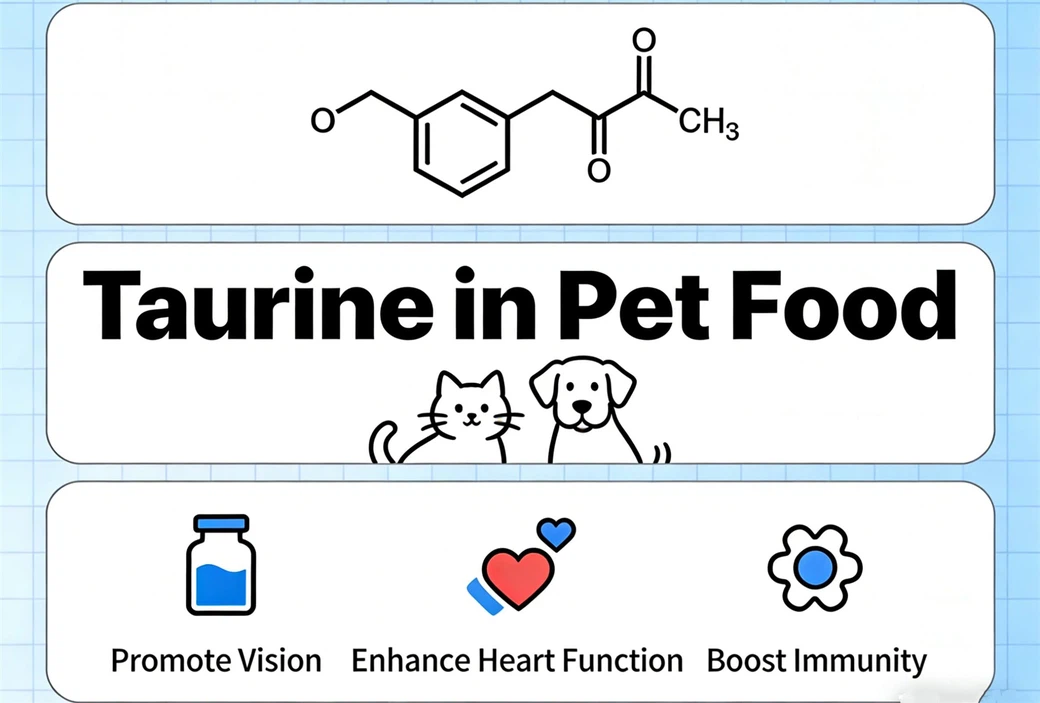
* Ocular Health: Taurine concentrates in the retina, where it protects photoreceptor cells from oxidative damage and light-induced degeneration. Deficiency leads to feline central retinal degeneration, progressing to irreversible blindness .
* Cardiac Function: Myocardial tissue maintains high taurine concentrations, where it regulates calcium handling, stabilizes cell membranes, and exerts antioxidant effects. Deficiency is strongly linked to dilated cardiomyopathy (DCM) in cats and may contribute to cardiac issues in predisposed dog breeds .
* Reproductive Health: Taurine is crucial for fetal development and reproductive success in cats, with deficiencies causing impaired growth, congenital abnormalities, and reduced fertility.
* Immune Modulation: Through its antioxidant properties and membrane-stabilizing effects, taurine supports immune cell function and inflammatory regulation.
* Neurological Development: As a neuromodulator with both excitatory and inhibitory effects, taurine influences neurotransmitter systems crucial for brain development and function .
A comprehensive 2023 review in Animals Breeding and Feed synthesized findings from multiple studies, concluding that taurine supplementation offers benefits including "antioxidant effects, immune enhancement, lipid metabolism regulation, intestinal health maintenance, and brain development promotion" across animal species .
Table 1: Taurine's Primary Physiological Functions in Companion Animals
|
Biological System |
Specific Functions |
Consequences of Deficiency |
|
Visual System |
Photoreceptor protection, antioxidant defense |
Retinal degeneration, blindness |
|
Cardiovascular System |
Calcium regulation, membrane stabilization, antioxidant activity |
Dilated cardiomyopathy, arrhythmias |
|
Reproductive System |
Fetal development, fertility support |
Growth retardation, congenital abnormalities, reduced fertility |
|
Hepatic System |
Bile acid conjugation (taurine-conjugated bile acids) |
Impaired fat digestion, reduced nutrient absorption |
|
Immune System |
Inflammatory modulation, antioxidant protection |
Increased oxidative stress, impaired immune response |
|
Nervous System |
Neurotransmission modulation, osmoregulation |
Developmental abnormalities, neurological dysfunction |
Regulatory Landscape: Compliance and Quality Standards
AAFCO Guidelines and Nutritional Adequacy
In the United States, the Association of American Feed Control Officials (AAFCO) establishes nutrient profiles that serve as the benchmark for pet food nutritional adequacy. For feline nutrition, AAFCO specifies taurine requirements through two primary metrics:
1.Metabolizable Energy Basis: Dry cat foods must contain at least 0.10% taurine on a dry matter basis, while canned foods require at least 0.20% due to differences in bioavailability and potential processing losses .
2.Energy Density Calculation: Alternatively, foods may contain a minimum of 25 mg taurine per 100 kilocalories of metabolizable energy for dry products and 50 mg per 100 kcal for canned products.
These requirements stem from decades of research establishing the minimum levels necessary to prevent deficiency symptoms and maintain long-term health. AAFCO's canine nutrient profiles do not currently include a taurine requirement, reflecting dogs' synthetic capability, though this may evolve with emerging research on breed-specific needs and diet-related DCM .
Global Regulatory Variations
Pet food formulators operating in international markets must navigate diverse regulatory frameworks:
* European Union: The European Pet Food Industry Federation (FEDIAF) provides nutritional guidelines that closely align with AAFCO standards for taurine in cat foods, while also addressing specific needs of other companion animals .
* United Kingdom: Legislation specifies particular nutritional purposes for pet foods, including "support of heart function in case of chronic cardiac insufficiency," which implicitly acknowledges the role of nutrients like taurine in specialized formulations .
* Organic Certification: The USDA's National Organic Program has recently clarified standards for organic pet food, explicitly addressing "the use of certain synthetic substances, including taurine" . This recognition acknowledges that some nutrients essential for pet health may not be available in sufficient quantities from natural sources alone, even in organic production systems.
The safety profile of taurine as a feed additive has been formally assessed by the European Food Safety Authority (EFSA), which concluded that "the use of taurine as a feed additive for all animal species would not raise concerns about consumer safety" . This authoritative safety assessment supports its widespread use across global markets.
Quality Assurance and Supplier Verification
For pet food manufacturers, sourcing high-quality taurine powder requires rigorous supplier qualification. Reputable producers like Hubei Grand Life Science & Technology Co., Ltd.-a subsidiary of Grand Pharma with an annual production capacity of 20,000 metric tons-typically provide comprehensive documentation including certificates of analysis, manufacturing process details, and third-party verification of specifications .
Key quality parameters include:
* Purity percentage (typically 99% for food-grade material)
* Heavy metal limits (lead, arsenic, mercury, cadmium)
* Microbiological standards (total plate count, yeast and mold, pathogens)
* Solubility and physical characteristics
* Storage stability data
Manufacturers should implement incoming material testing protocols to verify these specifications, as taurine quality directly impacts product safety, efficacy, and regulatory compliance.
Formulation Strategies: Incorporating Taurine Powder Effectively
Determining Appropriate Inclusion Levels
Establishing optimal taurine levels in pet food formulations requires consideration of multiple factors beyond minimum requirements:
1.Species and Life Stage: Kittens and reproducing females have higher requirements than adult maintenance. Similarly, large-breed dogs predisposed to DCM (like Golden Retrievers, Newfoundlands, and Cocker Spaniels) may benefit from supplementation despite their synthetic capability .
2.Diet Composition: Ingredients high in fiber or certain minerals may bind taurine or increase its fecal excretion. Plant-based proteins lack taurine entirely, making supplementation essential in vegetarian formulations (though such diets are generally not recommended for cats without veterinary supervision).
3.Processing Conditions: Thermal processing, especially retorting for canned foods, can degrade taurine. Formulators must account for processing losses through overage addition-including additional taurine beyond the target finished product level to compensate for expected degradation.
4.Bioavailability Considerations: While taurine powder is highly bioavailable, its absorption may be influenced by dietary factors. Ensuring adequate levels of precursor amino acids (cysteine and methionine) supports endogenous synthesis in species with that capability.
A practical approach to dosage calculation involves starting with AAFCO's minimums, then applying appropriate safety margins based on processing methods and ingredient interactions. For cats, a common industry practice is to formulate to approximately 150-200% of the minimum requirement to ensure adequacy throughout product shelf life.
Stability Challenges and Technical Solutions
Taurine's water solubility presents both advantages and formulation challenges. While enhancing its bioavailability, this property increases susceptibility to leaching during processing (especially in canned foods with high moisture content) and potential migration within dry kibble during storage.
Technical strategies to enhance taurine stability include:
* Microencapsulation: Coating taurine particles with protective layers that resist moisture and heat degradation
* Granulation: Creating larger, denser particles that resist segregation in dry mixes
* Post-extrusion application: Applying taurine as a coating to kibble after thermal processing to avoid heat exposure
* Antioxidant systems: Incorporating natural antioxidants (like tocopherols) to protect taurine from oxidative degradation
Formulators should conduct stability testing under realistic storage conditions to verify that labeled taurine claims can be met throughout the product's intended shelf life. This is particularly important for products exported to markets with varying climate conditions.
Palatability Considerations
While taurine itself has a slightly bitter taste, at typical inclusion levels it rarely causes palatability issues in pet foods. However, when formulating at higher levels for therapeutic applications or when using certain coating technologies, taste testing with target species is advisable. Companion animal studies evaluating acceptance of taurine-supplemented diets generally report good palatability across the practical inclusion range.
Specialized Applications: Beyond Standard Pet Foods
Therapeutic and Veterinary Diets
The role of taurine extends significantly into veterinary therapeutic nutrition. Specific applications include:
* Cardiac Support Diets: For cats with diagnosed DCM or cardiomyopathy, and for dogs with taurine-responsive cardiac issues. These diets typically contain elevated taurine levels alongside other heart-supportive nutrients like L-carnitine, omega-3 fatty acids, and controlled sodium.
* Growth and Reproduction Formulas: For breeding cats, queens, and kittens, where taurine demands are highest. Deficiencies during development cause irreversible consequences, making adequate provision crucial.
* Senior Pet Nutrition: Aging may reduce synthetic capacity or increase requirements in both cats and dogs. Senior formulations often include taurine as part of comprehensive antioxidant and metabolic support.
* Renal and Hepatic Support: While taurine is not typically restricted in renal disease, its conjugation function in bile acid metabolism makes it relevant in hepatic conditions.
UK legislation specifically recognizes "support of heart function in case of chronic cardiac insufficiency" as a particular nutritional purpose for specialized pet foods, implicitly acknowledging nutrients like taurine in such formulations .
Emerging Applications in Other Companion Animals
While cats and dogs dominate the companion animal nutrition landscape, other species show potential benefits from taurine supplementation:
* Ferrets: As obligate carnivores with metabolism similar to cats, ferrets likely require dietary taurine, though formal requirements are less established.
* Aquatic Pets: Carnivorous fish species have demonstrated taurine requirements, with research indicating safe levels between 2.0% and 2.5% in feed . This has implications for premium aquarium diets.
* Avian Nutrition: While less studied, some bird species may benefit from taurine, particularly those with high metabolic rates or specialized diets.
The EFSA opinion notes efficacy specifically for "cat, dog and carnivorous fish diets," while finding insufficient evidence of benefit for poultry, pigs, and ruminants in standard production scenarios . This species-specific efficacy underscores the importance of targeted application based on physiological need.
Functional Treats and Supplements
Beyond complete diets, taurine finds application in functional treats and direct supplementation. For pet owners managing specific health conditions or seeking additional support, targeted delivery through treats or supplements allows customized dosing without changing the primary diet. Formulators of such products must ensure stability in diverse matrices (chews, soft treats, liquids) and provide clear dosing guidance based on weight and condition.
Quality Control and Analytical Verification
In-Process Monitoring and Finished Product Testing
Robust quality systems for taurine-supplemented products involve multiple verification points:
1.Raw Material Qualification: Certificate of Analysis review and confirmatory testing for key parameters including purity, heavy metals, and microbiology.
2.In-Process Controls: Verification of proper addition through weigh checks, mix uniformity testing, and potential inline monitoring where feasible.
3.Finished Product Analysis: Quantitative taurine determination to verify label claims and ensure compliance with regulatory standards.
Analytical methods for taurine quantification have evolved significantly. While traditional approaches involved amino acid analysis with post-column derivatization, modern HPLC methods with pre-column derivatization or mass spectrometric detection offer improved sensitivity, specificity, and throughput. Laboratories should validate methods for specific matrices (dry kibble, wet food, treats) as extraction efficiency varies considerably.
Stability-Indicating Methods
To properly assess shelf life and processing impacts, stability-indicating methods that can distinguish intact taurine from degradation products are essential. Accelerated stability studies (elevated temperature and humidity) provide preliminary data, but real-time studies under intended storage conditions offer the most reliable prediction of commercial performance.
For manufacturers, maintaining retained samples from each production batch allows retrospective testing if questions arise about stability or label claim verification. This practice supports both quality assurance and regulatory compliance.
Documentation and Traceability
Complete documentation trails from raw material receipt through production and distribution are essential for quality management and regulatory compliance. This includes:
* Supplier certifications and audits
* Incoming material test reports
* Production batch records with addition verification
* Finished product test results
* Stability study data
* Distribution records
Digital quality management systems increasingly facilitate this documentation while enabling data analytics for continuous improvement in taurine delivery consistency.
Future Directions and Research Frontiers
Breed-Specific Canine Requirements
Emerging research continues to refine our understanding of canine taurine metabolism, particularly regarding breed predispositions to deficiency. While AAFCO doesn't currently mandate taurine in dog foods, studies investigating diet-related DCM have identified potential links with certain ingredients (legumes, potatoes) that may affect taurine synthesis, absorption, or excretion. Future guidelines may evolve to address at-risk breeds or specific dietary patterns, potentially creating new formulation requirements for canine nutrition.
Novel Delivery Systems and Enhanced Stability
Advancements in ingredient technology may improve taurine delivery in the coming years. Areas of active development include:
* Enhanced stability systems using novel encapsulation materials or antioxidant combinations
* Controlled-release technologies that modulate taurine bioavailability over time
* Synergistic nutrient combinations that enhance taurine's physiological effects
* Sustainable sourcing including potential fermentation-derived taurine as an alternative to conventional synthesis
Expanded Applications in Pet Health and Wellness
Research continues to explore taurine's potential benefits beyond established functions:
* Cognitive support in aging pets, leveraging taurine's neuromodulatory effects
* Exercise performance in working and athletic dogs
* Stress reduction through taurine's calming neurological effects
* Dental health applications via local effects in oral tissues
As the human-animal bond strengthens and pet owners increasingly seek optimal nutrition for their companions, evidence-based applications of nutrients like taurine will continue to expand. Formulators who stay abreast of this evolving science will be positioned to create next-generation products that genuinely advance pet health and wellbeing.
Conclusion: Taurine as a Cornerstone of Modern Pet Nutrition
From its essential status in feline nutrition to its emerging therapeutic applications in canine health, taurine represents a critical formulation component that demands both scientific understanding and technical expertise. The journey from raw material to finished product involves navigating complex biological requirements, processing challenges, regulatory frameworks, and quality considerations-all while ensuring final products deliver consistent, efficacious nutrition.
For pet food manufacturers, success with taurine begins with quality sourcing from reputable suppliers who provide transparent documentation and consistent material. It continues through science-based formulation that accounts for species needs, life stage requirements, and processing impacts. It requires rigorous quality systems that verify taurine content from raw material through finished product. And it demands ongoing scientific vigilance as research continues to refine our understanding of optimal taurine nutrition across companion animal species.
As regulatory bodies like the USDA recognize taurine's essential role even in organic pet food production , and as global standards increasingly harmonize around evidence-based requirements, taurine's position in pet nutrition continues to strengthen. Manufacturers who master its effective incorporation create products that not only meet regulatory standards but genuinely support the health, vitality, and longevity of the pets they nourish. At JoyWin Natural, we specialize in providing the foundational element: premium, highly bioavailable taurine backed by rigorous quality control and full transparency. If you want to know more about taurine powder or are interested in purchasing it, you can send an email to contact@joywinworld.com. We will reply to you as soon as possible after we see the message.