

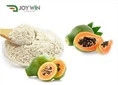
There is something almost miraculous happening inside a ripe papaya. Long before food scientists isolated it in a laboratory, traditional healers across Central America, Southeast Asia, and Africa were wrapping meat in papaya leaves to tenderize it, applying papaya latex to wounds to speed healing, and consuming the fruit to ease digestive discomfort. The secret behind all of these effects is a single, extraordinarily powerful enzyme: papain.
Papain is a cysteine protease - a class of enzyme that uses a cysteine amino acid residue at its active site to catalyze the breakdown of molecular bonds. It is extracted primarily from the latex of Carica papaya (the papaya plant), concentrated, and dried into what the food, supplement, and pharmaceutical industries know as papain powder. And while its reputation is built on protein digestion, the full scope of what papain breaks down is far broader and more impressive than most people realize.
This comprehensive guide answers the central question - what does papain break down? - with scientific precision and practical clarity. We'll explore the molecular mechanisms, the specific substrates papain acts upon (proteins, peptides, fats, carbohydrates, gluten, and more), its applications across industries, and what this means for anyone sourcing or using papain as a functional ingredient.
Whether you are a food manufacturer, a dietary supplement brand, a product developer, or simply a health-conscious consumer, this article delivers the depth of knowledge you need to understand one of nature's most versatile biological catalysts.
Section 1: What Is Papain? Understanding the Science at the Source
1.1 Botanical Origin and Extraction
Papain is found throughout the Carica papaya plant - in the leaves, roots, fruit pulp, and seeds - but it is most concentrated in the latex of unripe green papaya fruit. The latex is collected by making shallow incisions in the skin of the unripe fruit, allowing the milky white sap to flow out. This raw latex is then dried - either by sun drying, spray drying, or freeze drying - to produce papain powder, the commercially traded form of the enzyme .
The enzyme was first isolated and characterized in the late 19th century, and today it is one of the most extensively studied plant-derived enzymes in the world. Its molecular weight is approximately 23.4 kDa, and it belongs to the papain superfamily of cysteine proteases, which also includes related enzymes such as chymopapain, caricain, and glycyl endopeptidase - all found in the same plant .
1.2 The Active Site: How Papain Does Its Work
Understanding how papain breaks things down requires a brief look at its active site. Papain's catalytic mechanism centers on a catalytic triad composed of three amino acid residues: cysteine-25, histidine-159, and asparagine-175. The cysteine residue acts as the nucleophile - it attacks the peptide bond (or other susceptible bond) in the substrate molecule, forming a transient covalent intermediate, which is then resolved by a water molecule to release the cleaved products.
This mechanism makes papain a broad-spectrum hydrolase - an enzyme that breaks down molecules by inserting water across chemical bonds. Crucially, this mechanism is not limited to proteins. Depending on the substrate and conditions, papain can hydrolyze peptide bonds, ester bonds, and amide bonds - which is why its breakdown activity extends across multiple molecular categories .
1.3 Optimal Conditions for Papain Activity
Papain is remarkably robust compared to most enzymes. Key operational parameters:
|
Parameter |
Optimal Range |
Notes |
|
Temperature |
60–70°C |
Active from 10°C to 85°C |
|
pH |
6.0–7.5 |
Active across pH 3.0–9.5 |
|
Activators |
Cysteine, EDTA, reducing agents |
Thiol-activating compounds enhance activity |
|
Inhibitors |
Oxidizing agents, heavy metals |
Irreversibly inactivate the cysteine residue |
|
Stability |
High |
Retains activity across broad temperature/pH ranges |
This broad operational stability is one of the key reasons papain is so commercially valuable - it functions effectively across the diverse conditions found in food processing, digestive environments, and pharmaceutical applications .

Section 2: What Does Papain Break Down? The Complete Molecular Picture
This is the core question - and the answer is richer than most sources acknowledge. Papain breaks down a remarkably diverse range of biological molecules. Here is a systematic breakdown of each substrate category.
2.1 Proteins and Polypeptides - Papain's Primary Target
Papain's most well-known and most powerful activity is proteolysis - the hydrolysis of proteins and polypeptides into smaller peptide fragments and ultimately into free amino acids. This is the foundation of its role in digestion, meat tenderization, and numerous industrial applications.
Papain primarily cleaves peptide bonds on the carboxyl side of basic and hydrophobic amino acid residues, with a particular preference for:
* Arginine
* Lysine
* Phenylalanine
* Leucine
* Glycine
This broad specificity means papain can attack virtually any protein, regardless of its amino acid sequence, making it a far more versatile protease than highly specific enzymes like trypsin (which only cleaves after arginine and lysine) or chymotrypsin (which prefers aromatic residues) .
Specific proteins papain breaks down include:
* Casein and whey proteins (dairy proteins) - highly susceptible to papain hydrolysis
* Myosin and actin (muscle proteins in meat) - responsible for meat tenderization
* Collagen - the structural protein in connective tissue, skin, and bone
* Elastin - the elastic protein in blood vessels and connective tissue
* Actomyosin - the complex formed between actin and myosin in muscle tissue
* Gluten proteins (gliadin and glutenin) - discussed in detail in Section 2.4
* Keratin - the structural protein in hair and skin (relevant to cosmetic applications)
* Fibrin - the protein matrix of blood clots (relevant to anti-inflammatory activity)
The ability to hydrolyze collagen and elastin is particularly significant. These are the tough, fibrous proteins that make meat chewy and difficult to digest. Papain's proteolytic attack on these structural proteins is what makes it the world's most widely used natural meat tenderizer .
Key Insight: Papain can hydrolyze proteins that are both native (folded) and denatured (unfolded), giving it a significant advantage over many other proteases that only act on denatured substrates. This is why it works effectively both during cooking (where heat denatures proteins) and in the raw state.
2.2 Fats and Lipids - A Lesser-Known but Important Activity
While papain is primarily classified as a protease, research has confirmed that it also possesses lipolytic (fat-breaking) activity - the ability to hydrolyze ester bonds in lipid molecules. This activity, while secondary to its proteolytic function, has meaningful implications for digestion and health.
A landmark study published in PMC (National Institutes of Health) examined the anti-obesity effects of papain in both in vivo and in vitro models. The research found that papain ameliorates lipid accumulation - it reduces the buildup of fat in cells and tissues by interfering with lipid metabolism pathways. Specifically, papain was shown to downregulate key lipogenic (fat-synthesizing) enzymes and reduce triglyceride accumulation in liver cells exposed to a high-fat diet model .
This finding has important implications for:
* Digestive enzyme supplements targeting fat digestion
* Weight management formulations where papain is combined with lipase and amylase
* Functional food applications where reducing fat absorption is a design goal
The mechanism appears to involve both direct lipolytic activity (ester bond hydrolysis) and indirect modulation of lipid metabolism signaling pathways - a dual action that makes papain particularly interesting for metabolic health applications .
2.3 Carbohydrates - Supporting Broader Digestive Function
Papain's primary enzymatic classification is as a protease, not a carbohydrase. However, in the context of whole digestive enzyme complex formulations, papain contributes to carbohydrate digestion through two mechanisms:
1.Indirect facilitation: By breaking down the protein matrix surrounding carbohydrate molecules in food (particularly in plant cell walls and glycoproteins), papain makes carbohydrates more accessible to amylase and other carbohydrate-digesting enzymes.
2.Glycoprotein hydrolysis: Papain can cleave the protein backbone of glycoproteins - molecules that have both protein and carbohydrate components - releasing the carbohydrate chains for further digestion.
This is why papain powder is frequently included in broad-spectrum digestive enzyme blends alongside amylase, lipase, cellulase, and lactase. The combination addresses the full spectrum of macronutrient digestion more effectively than any single enzyme alone.
2.4 Gluten - A Breakthrough Finding for Digestive Health
One of the most exciting and clinically relevant discoveries in recent papain research is its ability to break down gluten - the complex mixture of storage proteins (primarily gliadin and glutenin) found in wheat, barley, and rye that causes digestive distress in sensitive individuals.
A rigorous study published in MDPI Processes (2022) specifically investigated the efficacy of bromelain and papain as tools for removing or reducing gluten in food products. The research demonstrated that papain is effective at hydrolyzing gluten proteins, particularly the immunogenic peptide sequences within gliadin that trigger inflammatory responses in gluten-sensitive individuals .
This has profound implications for:
* Gluten-sensitive consumers (non-celiac gluten sensitivity) who may benefit from papain-containing digestive supplements
* Food manufacturers seeking to reduce gluten content in wheat-based products through enzymatic treatment
* Functional food development targeting the growing market of consumers seeking gluten-reduced options
Important Note: While papain shows promising gluten-degrading activity, it is not a treatment for celiac disease - an autoimmune condition requiring strict gluten avoidance. Papain supplementation may support comfort in gluten-sensitive individuals but should not replace medical dietary management for diagnosed celiac patients.
2.5 Fibrin and Inflammatory Proteins - The Anti-Inflammatory Dimension
Beyond macronutrient digestion, papain breaks down fibrin - the protein scaffold of blood clots and inflammatory exudates. This fibrinolytic activity is the biochemical basis for papain's well-documented anti-inflammatory and wound-healing properties.
When tissue is injured or inflamed, fibrin forms a mesh-like matrix that can impede circulation, prolong inflammation, and slow healing. Papain's ability to hydrolyze fibrin helps:
* Reduce localized inflammation by clearing fibrin deposits
* Accelerate wound healing by removing necrotic tissue and inflammatory debris
* Reduce post-surgical swelling and bruising (a well-established clinical application in Europe)
* Support recovery from sports injuries when used in combination with other proteolytic enzymes
The anti-inflammatory mechanism also involves papain's modulation of cytokine signaling - research has shown it can reduce levels of pro-inflammatory cytokines including TNF-α and IL-6, providing a systemic anti-inflammatory effect beyond simple fibrin clearance .
Section 3: Papain Powder in Food Industry Applications
The food industry is the largest commercial consumer of papain globally, and its applications span multiple categories.
3.1 Meat Tenderization - The Classic Application
Meat tenderization remains the flagship industrial application of papain . The mechanism is well understood: papain hydrolyzes the myofibrillar proteins (myosin, actin, actomyosin) and connective tissue proteins (collagen, elastin) that give meat its toughness. By cleaving these structural proteins into shorter peptide chains, papain transforms tough cuts of meat into tender, palatable products.
A comprehensive review published in ResearchGate on papain as a food tenderizing agent confirmed that papain is the most widely used plant-derived protease in meat processing globally, valued for its:
* Broad substrate specificity (attacks both myofibrillar and connective tissue proteins)
* Thermal stability (remains active during early stages of cooking)
* Cost-effectiveness compared to synthetic tenderizers
* Clean label credentials as a natural, plant-derived ingredient
Commercial applications include:
* Dry rubs and marinades containing papain
* Injection tenderization for large cuts (roasts, hams)
* Processed meat products (burger patties, sausages, deli meats)
* Instant noodle and ready-meal protein components
Dosage in meat tenderization: Typically 0.1–0.5% papain (based on meat weight), applied as a surface treatment or marinade for 30 minutes to 24 hours at refrigeration temperature.
3.2 Brewing and Beverage Clarification
Papain powder plays a critical role in the brewing industry, where it is used to prevent chill haze - the cloudiness that forms in beer when it is cooled. Chill haze is caused by complexes between haze-active proteins (primarily proline-rich proteins from barley) and polyphenols (tannins from hops and malt). Papain hydrolyzes these haze-active proteins before they can form complexes, resulting in a brilliantly clear beer even at low temperatures.
This application is particularly valuable for:
* Lager and pilsner production where clarity is a key quality parameter
* Export beers that must maintain clarity during extended cold storage and transport
* Low-calorie beers where protein reduction also contributes to calorie reduction
Beyond beer, papain is used in fruit juice clarification, wine production, and soy sauce manufacturing - wherever protein-related turbidity is a quality concern.
3.3 Dairy Processing
In dairy applications, papain's proteolytic activity is harnessed for:
* Cheese making: Papain can function as a milk-clotting agent, hydrolyzing κ-casein to initiate curd formation - similar to the action of rennet but derived from a plant source, making it suitable for vegetarian cheese production
* Protein hydrolysate production: Papain-hydrolyzed whey and casein proteins are used in infant formula, sports nutrition, and hypoallergenic food products, where partially digested proteins are better tolerated
* Flavor development: Controlled proteolysis by papain contributes to the characteristic flavor profiles of aged cheeses and fermented dairy products
3.4 Baking and Flour Treatment
In baking, papain is used as a dough conditioner and gluten modifier. By partially hydrolyzing gluten proteins, papain:
* Reduces dough mixing time and energy requirements
* Improves dough extensibility for products like crackers, biscuits, and flatbreads
* Enables the production of reduced-gluten baked goods
* Improves the texture of gluten-free formulations when used to modify alternative protein sources
The gluten-reducing capability documented in the MDPI Processes study is directly applicable here, opening opportunities for manufacturers developing products for gluten-sensitive consumers.
Section 4: Papain Powder in Dietary Supplements and Health Applications
The dietary supplement market for papain has grown substantially as consumer awareness of digestive health, enzyme therapy, and natural anti-inflammatory agents has increased.
4.1 Digestive Enzyme Supplements
Papain is one of the most commonly included ingredients in digestive enzyme supplement formulations. Its broad proteolytic activity complements other enzymes (amylase, lipase, lactase, cellulase) to create comprehensive digestive support products.
Research and clinical experience support papain supplementation for:
* Protein maldigestion: Particularly relevant for older adults (whose endogenous protease production declines with age), individuals with pancreatic insufficiency, and those consuming high-protein diets
* Bloating and gas: Incomplete protein digestion is a major cause of fermentation-related bloating; papain reduces undigested protein reaching the colon
* Post-meal discomfort: Papain has a well-documented soothing effect on the stomach and supports comfortable protein digestion
* IBS and digestive sensitivity: Emerging evidence suggests proteolytic enzyme supplementation may reduce symptoms in irritable bowel syndrome
Typical supplement dosage: 50–200 mg papain per serving (standardized to activity units, typically 1,000–6,000 TU/mg), taken with meals.
4.2 Anti-Inflammatory and Sports Recovery Applications
The systemic anti-inflammatory activity of papain - mediated through fibrinolysis, cytokine modulation, and immune system support - has made it a popular ingredient in sports recovery supplements and anti-inflammatory enzyme complexes.
European clinical tradition has long used oral proteolytic enzyme preparations (containing papain, bromelain, and trypsin) for:
* Reducing post-surgical swelling and bruising
* Accelerating recovery from sports injuries (sprains, strains, muscle tears)
* Managing chronic inflammatory conditions
* Supporting immune function during periods of physical stress
The NIH-published research on papain's anti-inflammatory mechanism - demonstrating reduction of TNF-α, IL-6, and lipid accumulation in inflammatory models - provides strong scientific support for these applications .
4.3 Wound Care and Topical Applications
Papain has a long history in wound care, where its proteolytic activity is used for enzymatic debridement - the removal of dead, necrotic tissue from wounds to promote healing. This application is recognized in medical literature and has been used in clinical settings for:
* Chronic wound management (diabetic ulcers, pressure sores)
* Burn wound treatment
* Post-surgical wound care
* Skin exfoliation in cosmetic formulations
The mechanism is straightforward: papain selectively hydrolyzes denatured and necrotic proteins (which lack the natural protease inhibitors present in healthy tissue), clearing the wound bed without damaging viable tissue .
Section 5: Papain Powder Quality, Standardization, and Sourcing
For manufacturers and formulators working with papain , understanding quality parameters is essential for consistent product performance.
5.1 Activity Units - The Key Quality Metric
Papain powder quality is measured in enzyme activity units, not simply by weight. The most commonly used activity measurement systems are:
|
Unit System |
Full Name |
Common Use |
|
TU/mg |
Tyrosine Units per milligram |
Dietary supplements, pharma |
|
USP Units |
United States Pharmacopeia |
Pharmaceutical grade |
|
NF Units |
National Formulary |
Food and supplement grade |
|
PU/mg |
Papain Units per milligram |
General food industry |
Higher activity units indicate greater enzymatic potency per unit weight. For dietary supplements, papain is typically standardized to 1,000–6,000 TU/mg; for industrial food applications, activity requirements vary by specific use.
5.2 Grades of Papain Powder
Commercial papain is available in several grades:
* Food grade: For meat tenderization, brewing, and general food processing
* Pharmaceutical/USP grade: For wound care products, medical devices, and regulated supplement formulations
* Cosmetic grade: For skin care and hair care applications
* Research grade: High purity for laboratory and analytical use
5.3 Key Quality Parameters to Evaluate
When sourcing papain , manufacturers should evaluate:
* Enzymatic activity (TU/mg or USP units) - the primary performance indicator
* Moisture content - low moisture (≤8%) ensures stability and shelf life
* Protein content - indicator of purity
* Heavy metal testing - essential for supplement and pharmaceutical applications
* Microbial limits - total plate count, yeast, mold, pathogens
* Allergen status - papain is derived from papaya; allergen declarations may be required
5.4 Certifications to Look For
For global market access, papain suppliers should hold:
* FSSC 22000 / ISO 22000 - Food safety management
* cGMP - Good Manufacturing Practice for supplements and pharma
* Kosher and Halal - For global market access
* Organic certification - NOP (USDA), EU Organic, JAS (Japan)
* ISO 9001 - Quality management systems
JOYWIN Natural (joywinnatural.com) is a leading supplier of high-quality papain , offering multiple grades with comprehensive certifications for food, supplement, and pharmaceutical applications. With deep expertise in plant-derived enzyme ingredients and a commitment to quality from source to finished product, JOYWIN is a trusted partner for manufacturers worldwide.
Section 6: Practical Guide - Using Papain Powder Effectively
6.1 Dosage Reference by Application
|
Application |
Recommended Dosage |
Format |
Notes |
|
Meat tenderization |
0.1–0.5% (of meat weight) |
Surface/marinade |
30 min–24 hr contact time |
|
Beer clarification |
2–5 g/hL of beer |
Added pre-filtration |
Inactivated during pasteurization |
|
Cheese making |
0.01–0.05% (of milk volume) |
Added to milk |
Adjust for desired curd texture |
|
Digestive supplement |
50–200 mg/serving |
Capsule/tablet |
Take with meals |
|
Wound debridement |
Per medical protocol |
Topical ointment |
Requires pharmaceutical grade |
|
Dough conditioning |
10–50 ppm (of flour weight) |
Added to dough |
Monitor gluten reduction |
|
Protein hydrolysate |
0.1–2% (of substrate weight) |
Controlled hydrolysis |
Monitor DH (degree of hydrolysis) |
6.2 Stability and Storage Guidelines
Papain , while more stable than many enzymes, requires proper handling:
* Store at: 2–8°C (refrigerated) for long-term storage; room temperature acceptable for short-term
* Protect from: Moisture, heat above 80°C (irreversible denaturation), oxidizing agents, heavy metal contamination
* Shelf life: Typically 24 months when stored correctly in sealed, moisture-proof packaging
* Packaging: Vacuum-sealed, nitrogen-flushed containers recommended for maximum activity preservation
6.3 Safety Considerations and Contraindications
Papain is generally recognized as safe (GRAS) by the FDA for food use and has an excellent safety profile at recommended doses. However, relevant precautions include:
* Papaya allergy: Individuals allergic to papaya or latex may react to papain - cross-reactivity is documented
* Pregnancy: High-dose papain supplementation is not recommended during pregnancy (traditional use as an abortifacient at very high doses)
* Blood thinning medications: Papain's fibrinolytic activity may theoretically potentiate anticoagulant medications; consult healthcare providers
* Inhalation risk: Papain is a known occupational allergen when inhaled in industrial settings; appropriate respiratory protection is required for workers handling bulk powder
Section 7: The Competitive Landscape - Papain vs. Other Proteolytic Enzymes
Understanding how papain compares to other commonly used proteolytic enzymes helps formulators make informed ingredient choices:
|
Enzyme |
Source |
Primary Substrates |
pH Optimum |
Key Advantage vs. Papain |
|
Papain |
Papaya latex |
Proteins, gluten, fibrin, lipids |
6.0–7.5 |
Broadest substrate range, heat stable |
|
Bromelain |
Pineapple stem |
Proteins, fibrin |
6.0–8.0 |
Strong anti-inflammatory, similar profile |
|
Trypsin |
Bovine/porcine pancreas |
Arg/Lys peptide bonds |
7.5–8.5 |
High specificity, pharmaceutical use |
|
Pepsin |
Porcine stomach |
Aromatic residues |
1.5–2.5 |
Optimal for gastric pH conditions |
|
Subtilisin |
Bacterial (Bacillus) |
Broad protein substrates |
7.0–8.5 |
Excellent for industrial scale |
|
Ficin |
Fig latex |
Similar to papain |
6.0–7.0 |
Less commercially available |
Papain's combination of broad substrate specificity, plant origin, clean label appeal, thermal stability, and well-established safety profile gives it a competitive advantage across most food, supplement, and cosmetic applications .
Conclusion: Papain Powder - Nature's Most Versatile Biological Catalyst
The question "what does papain break down?" has a far richer answer than most people expect. Papain breaks down:
✅ Proteins and polypeptides - its primary and most powerful activity, targeting collagen, elastin, myosin, casein, and virtually any protein substrate
✅ Fats and lipids - through lipolytic activity and lipid metabolism modulation, with documented anti-obesity effects
✅ Gluten proteins - hydrolyzing the immunogenic peptide sequences in gliadin and glutenin
✅ Fibrin and inflammatory proteins - enabling anti-inflammatory and wound-healing applications
✅ Glycoproteins - facilitating carbohydrate release and broader digestive support
This extraordinary breadth of activity - backed by decades of peer-reviewed research from institutions including the NIH , ScienceDirect , MDPI , and industry experts - is what makes papain powder one of the most commercially valuable enzyme ingredients in the world today.
From the meat processing plant to the dietary supplement capsule, from the brewery to the wound care clinic, papain's enzymatic power is being harnessed across industries to improve products, support human health, and solve formulation challenges that no synthetic ingredient can match with the same combination of efficacy, safety, and clean-label appeal.
For manufacturers and product developers seeking a reliable, certified, high-activity source of papain powder, JOYWIN Natural (joywinnatural.com) offers pharmaceutical, food, and supplement grade papain with full traceability, comprehensive certifications, and the technical support needed to optimize your formulations from concept to commercial scale.
JOYWIN founded in 2013 is an innovation-driven biotechnology company. We provide the manufacture of plant extracts, plant proteases, and customized products. If you want to know more about papain powder or are interested in purchasing it, you can send an email to contact@joywinworld.com. We will reply to you as soon as possible after we see the message.