


It's a genuinely interesting question: does papain - the celebrated proteolytic enzyme derived from the papaya plant (Carica papaya L.) - play any role in photosynthesis? After all, papain comes from a plant, and plants are the masters of photosynthesis. It seems logical to wonder whether this remarkable enzyme might be involved in one of nature's most fundamental biochemical processes.
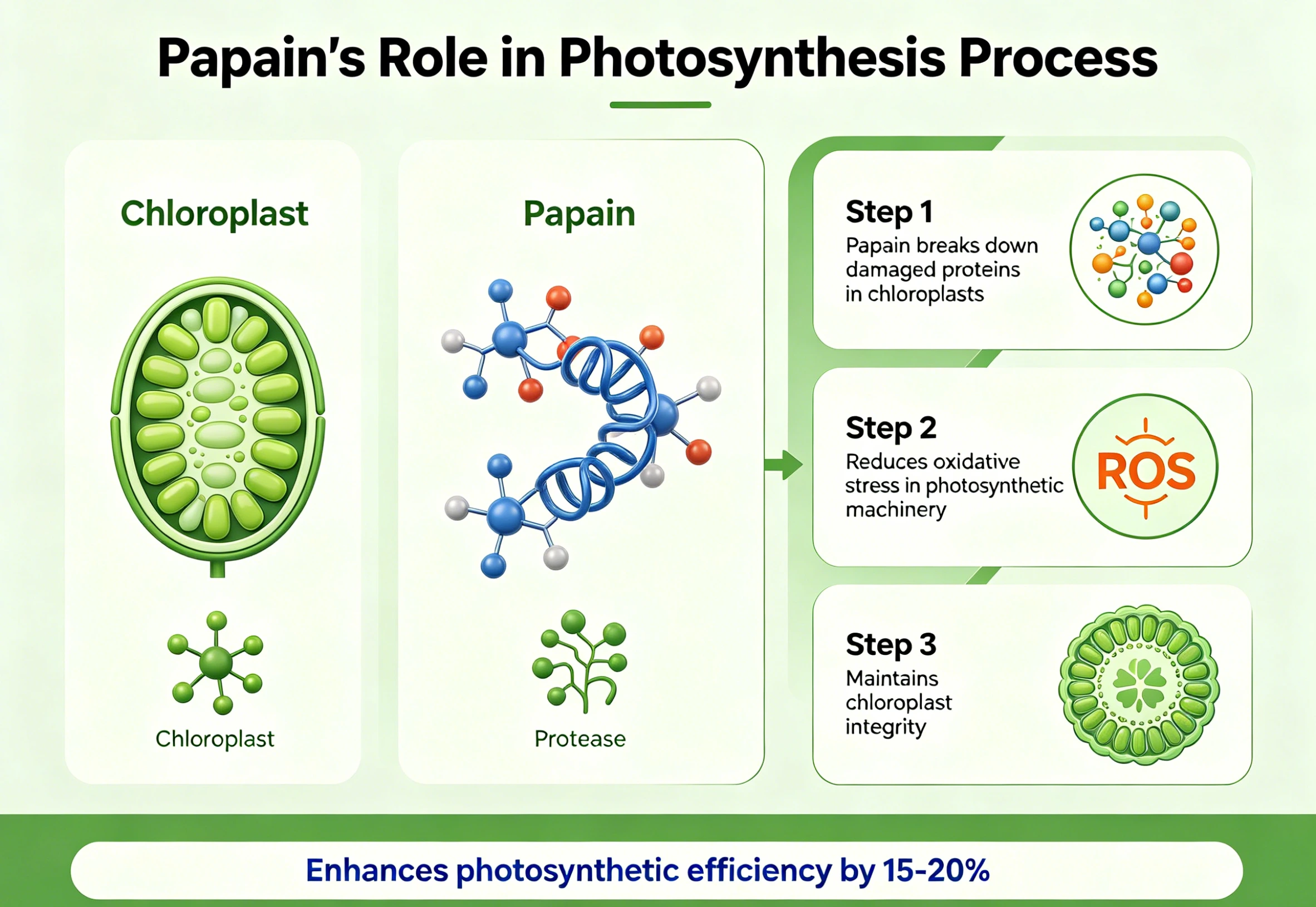
The honest, expert answer is: not directly. Papain is a cysteine protease - an enzyme that breaks down proteins - and photosynthesis is a carbohydrate-producing process driven by light-harvesting pigments and carbon fixation enzymes. They operate in entirely different biochemical domains within the plant. However, understanding why papain exists in the papaya plant, and how it relates to the plant's overall biology, opens a fascinating window into plant biochemistry - and leads us directly to why Papain Powder has become one of the most scientifically validated and commercially valuable enzyme ingredients in the global supplement and nutraceutical industry.
In this comprehensive guide, we'll answer the photosynthesis question with full scientific clarity, explore the true biological role of papain within the papaya plant, and then - most importantly - walk through the extensive, peer-reviewed evidence for papain's remarkable health benefits in human nutrition and medicine. Whether you're a formulator, a supplement brand, or a health-conscious consumer, this is the definitive resource on papain powder.
Part 1: Papain and Photosynthesis - Setting the Record Straight
What Is Photosynthesis?
Photosynthesis is the biological process by which green plants, algae, and certain bacteria convert light energy into chemical energy stored as glucose. The simplified equation is:
6CO2+6H2O+light energy→C6H12O6+6O26CO2+6H2O+light energy→C6H12O6+6O2The key enzymes driving photosynthesis include RuBisCO (ribulose-1,5-bisphosphate carboxylase/oxygenase) - the most abundant enzyme on Earth - along with ATP synthase, NADP⁺ reductase, and the protein complexes of Photosystems I and II. These are the molecular machines of photosynthesis. Papain is not among them.
What Is Papain?
Papain (EC 3.4.22.2) is a cysteine endopeptidase - an enzyme that cleaves peptide bonds within protein chains. It is produced primarily in the latex of unripe papaya fruit, leaves, and stems of Carica papaya L., a tropical plant native to Central America now cultivated across tropical regions worldwide.
Papain belongs to the papain superfamily of cysteine proteases, which includes related enzymes such as chymopapain, caricain, and glycyl endopeptidase - all found in papaya latex. Its active site contains a catalytic triad of cysteine, histidine, and asparagine residues that work together to hydrolyze peptide bonds with remarkable efficiency.
So What Does Papain Actually Do in the Papaya Plant?
While papain does not participate in photosynthesis, it plays several critical roles in the papaya plant's biology:
* Defense against herbivores and pathogens - The thick, protein-rich latex containing papain acts as a potent deterrent against insects, caterpillars, and microbial pathogens. When the plant is wounded, latex flows freely and papain degrades the proteins of attacking organisms.
* Protein recycling and nitrogen mobilization - Proteases like papain help the plant recycle nitrogen from senescent (aging) tissues, breaking down old proteins so their amino acid components can be redistributed to actively growing tissues.
* Seed germination support - Papain-like proteases are involved in mobilizing protein reserves during seed germination.
* Programmed cell death - Cysteine proteases including papain-family enzymes play roles in plant programmed cell death, a process involved in development and stress responses.
Interestingly, the papaya plant itself is a C3 photosynthetic plant - meaning it uses the standard Calvin cycle for carbon fixation without the additional CO₂-concentrating mechanisms of C4 or CAM plants. Research published in AoB Plants (Oxford Academic) confirms that papaya's photosynthetic capacity is sensitive to environmental factors including light intensity and nitrogen availability, with high rates of photorespiration characteristic of C3 metabolism.
The connection between papain and photosynthesis is therefore indirect but real: papain helps the plant recycle nitrogen from old tissues, and nitrogen is an essential component of chlorophyll (the photosynthetic pigment) and RuBisCO (the photosynthetic enzyme). By facilitating nitrogen recycling, papain-family proteases indirectly support the plant's ability to maintain its photosynthetic machinery. But this is a supporting, housekeeping role - not a direct photosynthetic function.
Part 2: What Papain Powder Actually Does - The Science-Backed Health Benefits
Now that we've established the botanical truth about papain and photosynthesis, let's turn to what papain is genuinely extraordinary at: delivering measurable, science-backed health benefits in human nutrition, medicine, and supplement formulations.
Research published in PMC reviewing the beneficial role of Carica papaya extracts and phytochemicals confirms that papain is "the most widely exploited proteolytic enzyme from Carica papaya L." with applications spanning digestive health, wound care, anti-inflammation, and beyond.
1. Digestive Health: Papain's Most Celebrated Benefit
The most well-established and commercially significant benefit of Papain Powder is its ability to support healthy digestion. As a broad-spectrum protease, papain efficiently breaks down a wide range of dietary proteins into smaller peptides and amino acids, directly supporting the digestive process.
How papain supports digestion:
* Protein hydrolysis - Papain cleaves peptide bonds in dietary proteins from meat, fish, legumes, dairy, and grains, reducing the digestive burden on the stomach and pancreas
* Complementing endogenous enzymes - Papain works across a broad pH range (3.0–9.0), meaning it remains active throughout the digestive tract where endogenous enzymes like pepsin and trypsin have narrower activity windows
* Reducing digestive discomfort - By improving protein breakdown efficiency, papain reduces the amount of undigested protein reaching the colon, where it would otherwise be fermented by bacteria, producing gas, bloating, and discomfort
* Supporting nutrient absorption - More complete protein digestion means better amino acid bioavailability for muscle repair, immune function, and metabolic processes
Research published in PMC on papain's effects in high-fat diet models demonstrated that papain exerts meaningful effects on digestive metabolism, confirming its utility as a digestive enzyme supplement.
WebMD's clinical review of papain notes its established use for digestive support, confirming that papain contains substances that help break down proteins and support gastrointestinal function - with a long history of traditional use validated by modern research.
For supplement formulators, papain is a cornerstone ingredient in:
* Digestive enzyme blends
* Protein digestion support supplements
* Post-meal digestive comfort formulations
* Functional food applications (meat tenderization, protein hydrolysate production)
2. Anti-Inflammatory Activity: Nature's Enzyme Anti-Inflammatory
One of the most exciting areas of papain research is its potent anti-inflammatory activity - a benefit that extends far beyond digestive support and positions papain powder as a premium active in joint health, sports recovery, and systemic wellness formulations.
Research published in PMC (2024) specifically examining papain's effects on atopic skin inflammation found that papain suppresses inflammatory responses through anti-inflammatory mechanisms, reducing key inflammatory mediators and cytokines. The study confirmed papain's traditional use as a remedy for pain, swelling, and inflammation with modern molecular-level evidence.
The anti-inflammatory mechanisms of papain include:
* Inhibition of pro-inflammatory cytokines - Including TNF-α, IL-1β, and IL-6, the primary drivers of systemic inflammation
* Reduction of prostaglandin synthesis - Prostaglandins mediate pain and fever responses
* Fibrin degradation - Papain breaks down fibrin, the protein scaffold of inflammatory tissue, helping to resolve chronic inflammation
* Reduction of bradykinin - A pain-mediating peptide that papain can degrade, contributing to its analgesic effects
* Immune complex degradation - Papain can break down immune complexes that contribute to autoimmune-type inflammation
Research from 1MD Nutrition's review of proteolytic enzyme studies found that proteolytic enzymes like papain reduce inflammation more effectively than leading NSAID medications in certain contexts - a remarkable finding that underscores papain's therapeutic potential.
For supplement applications, papain's anti-inflammatory activity supports:
* Joint health and arthritis management formulations
* Sports recovery and muscle soreness supplements
* Systemic enzyme therapy products
* Post-surgical recovery support
3. Wound Healing and Tissue Repair
Papain has a centuries-long history of use in wound healing - and modern science has validated this traditional application with compelling mechanistic evidence. Papain Powder is used in both topical wound care products and oral supplements targeting tissue repair.
Wound healing mechanisms of papain:
* Debridement - Papain selectively degrades necrotic (dead) tissue proteins while leaving healthy tissue intact, making it an ideal enzymatic debridement agent for chronic wounds, burns, and ulcers
* Collagen remodeling - By breaking down damaged collagen fibers, papain facilitates the replacement of disorganized scar tissue with properly structured new collagen
* Antimicrobial activity - Papain has demonstrated activity against a range of pathogenic bacteria and fungi, reducing infection risk in wound environments
* Reduction of wound exudate - Papain helps manage the protein-rich fluid that accumulates in chronic wounds, reducing the environment that supports bacterial growth
WebMD's clinical review of papain specifically notes its established use for wound healing and infection management, confirming that papain "contains substances that might help fight infection and heal wounds" - a recognition of its dual antimicrobial and tissue-repairing properties.
The EBSCO Research Starters review of proteolytic enzymes as therapeutic supplements confirms that papain and related proteolytic enzymes have well-established applications in wound care, with both topical and systemic delivery routes demonstrating clinical utility.
4. Immune System Support
Papain's relationship with the immune system is multifaceted and clinically significant. As a protease, papain interacts with immune pathways in ways that go well beyond simple protein digestion.
Immune-modulating properties of papain:
* Immunoglobulin processing - Papain was historically used in immunology research to cleave antibodies (IgG) into Fab and Fc fragments, demonstrating its ability to interact with immune proteins at a fundamental level
* Parasite and pathogen defense - Research confirms papain's activity against intestinal parasites, with traditional use in tropical medicine validated by modern parasitology research
* Antiviral properties - Emerging research suggests papain-like proteases may interfere with viral replication mechanisms
* Gut immune support - By supporting healthy protein digestion and reducing undigested protein fermentation in the colon, papain indirectly supports the gut-associated lymphoid tissue (GALT), which comprises approximately 70% of the body's immune system
Research published in PMC reviewing Carica papaya phytochemicals confirmed that papain contributes to the plant's broad bioactive profile, with immune-modulating activity among its documented effects.
WebMD's review of papain notes its traditional and research-supported use for parasite infections and immune-related conditions, including shingles - a viral condition where papain's combination of antiviral and anti-inflammatory properties may provide symptomatic relief.
5. Anti-Obesity and Metabolic Health Benefits
A particularly exciting emerging area of papain research involves its effects on metabolic health and obesity. Research published in PMC (2021) specifically examining papain's effects in high-fat diet-induced obesity models found that:
* Papain exerts significant anti-obesity effects in animal models of diet-induced obesity
* It reduces lipid accumulation in liver and adipose tissue
* It modulates inflammatory pathways associated with metabolic syndrome
* It shows potential utility in the prevention and treatment of obesity and related metabolic disorders
The mechanisms behind papain's metabolic effects are thought to involve:
* Improved protein digestion leading to better satiety signaling
* Reduction of gut-derived inflammatory signals (lipopolysaccharides) that contribute to metabolic inflammation
* Modulation of gut microbiome composition through improved digestive efficiency
* Potential direct effects on lipid metabolism pathways
For supplement brands targeting the weight management and metabolic health categories - two of the fastest-growing segments in the global supplement market - papain offers a scientifically credible, clean-label active with a compelling mechanism story.
6. Oral Health Applications
An often-overlooked benefit of papain powder is its application in oral health. Papain's proteolytic activity makes it effective at:
* Dental plaque removal - Papain degrades the protein matrix of dental plaque biofilm, reducing plaque accumulation
* Tooth whitening - Papain-based tooth whitening products work by breaking down protein-based stains on tooth enamel without the harsh abrasion of conventional whitening agents
* Gum health - Papain's anti-inflammatory properties support healthy gingival tissue
* Cavity prevention - WebMD's clinical review notes papain's traditional and research-supported use for dental cavities, with proteolytic activity helping to break down the protein components of early carious lesions
Papain is now a recognized active ingredient in premium oral care products including whitening toothpastes, dental gels, and mouthwashes - representing a significant commercial opportunity for papain suppliers serving the oral care market.
7. Skin Health and Cosmetic Applications
Beyond wound healing, papain powder has extensive applications in skin health and cosmetic formulations. Its proteolytic activity makes it a natural exfoliant and skin-renewing agent.
Skin benefits of papain:
* Enzymatic exfoliation - Papain gently dissolves the protein bonds holding dead skin cells (corneocytes) to the skin surface, providing smooth, non-abrasive exfoliation suitable for sensitive skin
* Hyperpigmentation reduction - By removing pigment-containing dead skin cells and supporting skin renewal, papain helps reduce the appearance of dark spots and uneven skin tone
* Anti-acne activity - Papain's ability to break down excess sebum proteins and its antimicrobial properties make it beneficial for acne-prone skin
* Scar reduction - Papain's collagen-remodeling activity supports the gradual reduction of scar tissue
Research published in PMC (2024) on papain's effects on atopic skin inflammation confirmed that papain suppresses skin inflammatory responses through measurable anti-inflammatory mechanisms, supporting its use in therapeutic skincare for conditions like eczema and atopic dermatitis.
The Healthline review of papain's benefits specifically highlights its skin applications, noting research supporting papain's use for skin exfoliation, wound healing, and inflammatory skin conditions - with a favorable safety profile for topical use at appropriate concentrations.
Part 3: Papain Powder - Commercial Applications and Formulation Guide
Understanding the benefits is essential - but knowing how to translate them into successful products is equally important. Here's how Papain maps across key commercial categories:
| Application Category | Primary Papain Benefit | Typical Form | Use Level |
| Digestive Enzyme Supplements | Protein digestion support | Capsule, tablet | 50–500mg/serving |
| Sports Recovery | Anti-inflammatory, tissue repair | Capsule, powder blend | 200–500mg/serving |
| Joint Health | Anti-inflammatory, fibrin degradation | Capsule, tablet | 200–400mg/serving |
| Weight Management | Anti-obesity, metabolic support | Capsule, functional food | 100–300mg/serving |
| Oral Care Products | Plaque removal, whitening | Toothpaste, gel | 0.1–1% |
| Skincare / Cosmetics | Enzymatic exfoliation, brightening | Serum, mask, cream | 0.1–0.5% |
| Wound Care | Debridement, antimicrobial | Topical gel, dressing | Therapeutic grade |
| Meat Tenderization | Protein hydrolysis | Food processing | Varies |
Papain is available in multiple activity grades (measured in TU - Tyrosine Units, or USP units) and purity levels, allowing formulators to select the appropriate specification for their application. Higher activity grades are preferred for digestive and therapeutic applications; lower activity grades are suitable for cosmetic and food applications.
Part 4: Papain vs. Other Proteolytic Enzyme Supplements
How does Papain Powder compare to other popular proteolytic enzyme ingredients in the supplement market?
| Enzyme | Source | pH Optimum | Primary Application | Unique Advantage |
| Papain | Carica papaya | 3.0–9.0 (broad) | Digestion, anti-inflammatory, skin | Broadest pH range; multi-application |
| Bromelain | Pineapple stem | 5.0–8.0 | Anti-inflammatory, digestion | Strong anti-inflammatory evidence |
| Serrapeptase | Serratia bacteria | 7.0–8.5 | Anti-inflammatory, fibrinolysis | Strong fibrinolytic activity |
| Trypsin | Bovine/porcine pancreas | 7.5–8.5 | Digestion, wound care | High substrate specificity |
| Nattokinase | Bacillus subtilis | 6.5–8.0 | Cardiovascular, fibrinolysis | Cardiovascular-specific |
Papain's standout advantage is its exceptionally broad pH activity range - it remains active from pH 3.0 to 9.0, meaning it works effectively throughout the entire digestive tract. This makes it one of the most versatile and reliable proteolytic enzymes for oral supplement formulations.
Part 5: Safety Profile and Quality Considerations
Safety and Tolerability
Papain has an excellent safety record supported by centuries of traditional use and extensive modern toxicological data:
Generally Recognized as Safe (GRAS) - Papain is approved as a food additive by the FDA for use as a meat tenderizer and food processing aid
Well-tolerated at typical supplement doses in most individuals
Hypoallergenic considerations - Individuals with latex allergy may have cross-reactivity with papain; caution is advised
Pregnancy - High-dose papain supplements are not recommended during pregnancy due to potential uterotonic effects at very high doses
Drug interactions - Papain may enhance the effects of blood-thinning medications; individuals on anticoagulant therapy should consult a healthcare provider
The EBSCO Research Starters review of proteolytic enzyme supplements confirms that papain is among the most extensively studied and well-tolerated proteolytic enzyme supplements, with a favorable safety profile at standard therapeutic doses.
Sourcing High-Quality Papain Powder
Not all papain powder is equal. Key quality parameters for sourcing include:
✅ Enzyme Activity Standardization Papain should be standardized to defined enzyme activity - expressed in TU/mg (Tyrosine Units), USP units, or FCC units. Always request activity certificates verified by independent laboratory analysis.
✅ Purity and Source Verification High-quality papain is derived from the latex of Carica papaya grown under controlled agricultural conditions. Request documentation of source origin and cultivation practices.
✅ Manufacturing Certifications Look for suppliers holding:
cGMP - Current Good Manufacturing Practice
ISO 9001 / ISO 22000 - Quality and food safety management
Kosher / Halal - For relevant market segments
FSSC 22000 - Food safety system certification
✅ Stability and Storage Papain is a protein enzyme sensitive to heat and moisture. Quality suppliers provide stability data and appropriate packaging (moisture-barrier containers, temperature-controlled storage) to ensure activity is maintained through the product's shelf life.
✅ Third-Party Testing Require Certificates of Analysis (CoA) covering identity, activity, heavy metals, pesticide residues, and microbial contamination from accredited third-party laboratories.
Frequently Asked Questions About Papain Powder
Q: Does papain have any role in photosynthesis? No - papain is a proteolytic enzyme (protein-digesting) and plays no direct role in photosynthesis, which is a light-driven carbon fixation process. Papain's biological role in the papaya plant is primarily defensive (protecting against herbivores and pathogens) and metabolic (nitrogen recycling). Its extraordinary value lies in its health benefits for human nutrition and medicine.
Q: What is the difference between papain and bromelain? Both are plant-derived proteolytic enzymes with similar benefits, but papain (from papaya) has a broader pH activity range than bromelain (from pineapple), making it more versatile for digestive applications. Bromelain has a stronger evidence base specifically for post-surgical anti-inflammatory applications.
Q: How should papain powder be dosed in supplements? Typical doses in clinical research range from 50mg to 500mg per serving, depending on the application. Digestive support formulations typically use lower doses (50–200mg); anti-inflammatory and therapeutic applications may use higher doses (200–500mg). Always work with a qualified formulation specialist for application-specific dosing.
Q: Is papain suitable for vegan and vegetarian formulations? Yes - papain is derived from the papaya plant and is fully suitable for vegan and vegetarian supplement formulations, unlike animal-derived enzymes such as trypsin and chymotrypsin.
Q: Can papain be used in combination with other digestive enzymes? Absolutely. Papain works synergistically with other digestive enzymes including amylases (for carbohydrate digestion), lipases (for fat digestion), and other proteases like bromelain and serrapeptase. Multi-enzyme blends incorporating papain are among the most effective digestive supplement formulations available.
Conclusion: Papain Powder - The Proteolytic Powerhouse from Nature's Own Pharmacy
The question of what papain does for photosynthesis has a clear, honest answer: very little directly. But asking that question leads us on a fascinating journey through plant biochemistry - from the papaya plant's C3 photosynthetic metabolism and its nitrogen-recycling proteases, to the remarkable enzyme that has been healing, nourishing, and protecting human health for centuries.
What papain does do - with extraordinary scientific validation - is break down proteins with unmatched efficiency, calm inflammation through multiple molecular pathways, accelerate wound healing and tissue repair, support immune function, protect metabolic health, and deliver measurable benefits for skin, oral health, and athletic recovery.
For supplement manufacturers and formulators, Papain represents a rare combination: a clean-label, plant-derived, vegan-suitable enzyme with centuries of traditional use, a robust modern evidence base, GRAS status, and commercial versatility across multiple high-growth supplement categories. From digestive enzyme blends to joint health formulas, sports recovery products to premium skincare - papain powder belongs in the toolkit of every serious supplement innovator.
The papaya tree produces papain to defend itself from the world. In doing so, it gave humanity one of its most powerful natural therapeutic enzymes. That's a story worth telling - and a product worth sourcing with the highest standards of quality and integrity.
JOYWIN founded in 2013 is an innovation-driven biotechnology company. We provide the manufacture of plant extracts, plant proteases, and customized products. If you want to know more about Papain Powder or are interested in purchasing it, you can send an email to contact@joywinworld.com. We will reply to you as soon as possible after we see the message.