

Papain powder and Bromelain Powder are two remarkable proteolytic enzymes that have garnered significant attention in various fields. They both possess unique properties and functions, yet they also exhibit distinct characteristics. Understanding the differences between papain and bromelain is crucial as it can open doors to more efficient applications in food processing, medicine, and biotechnology. In this blog, we will embark on a journey to explore and dissect the disparities between these two enzymes, shedding light on their sources, structures, activities, and the factors that influence them.
Different sources
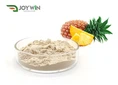
● Bromelain is a pure natural plant protease extracted from the stems, leaves and skin of pineapples. The best quality bromelain is processed from the middle stems of pineapples, concentrated by ultrafiltration, and freeze-dried at low temperature. It looks like a light gray powder with a slightly specific odor.
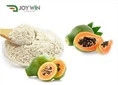
● Papain is a cysteinyl protease extracted from the roots, stems, leaves and fruits of papaya. Papain is a white to light brown powder or liquid, widely present in the roots, stems, leaves and fruits of papaya, with the highest content in the latex of immature fruits. More than 30 countries in the world produce papaya, and it is produced in Guangdong, Hainan, Guangxi, Fujian and Taiwan in China.
Different extraction methods
● Bromelain Powder is obtained by squeezing and extracting pineapple fruits and stems, salting out (or acetone, ethanol precipitation), separating, and drying. The preparation processes include kaolin adsorption, tannin precipitation, salting out, and ultrafiltration. For example, the production method is to take fresh and clean pineapple peel, thorns, core and other scraps, squeeze the juice to filter out the fruit debris, add benzoic acid to the filtrate, add kaolin for adsorption, adjust the pH of the kaolin adsorbent with saturated sodium carbonate solution, add sodium chloride, stir and filter, take the filtrate and adjust the pH with hydrochloric acid, add ammonium sulfate, let it stand and precipitate, take the precipitate and dry it under reduced pressure, which is bromelain. In addition, the ultrafiltration method can effectively separate and extract bromelain, with simple operation steps, no phase change, low temperature, low energy consumption, small loss of activity, simple operation and other characteristics, and the separated bromelain is of good quality and high purity. Another preparation method is to pass the pineapple pretreated juice through an anion exchange resin column at a flow rate of 2-5BV/h to obtain an effluent, filter the effluent through a microporous filter membrane to obtain a filtrate, mix the filtrate with a precipitant, and let it stand at 4-15℃ for 1-5h to obtain a bromelain paste, and finally centrifuge the bromelain paste at a temperature of 0-10℃ and a speed of 10000-18000rpm to obtain a bromelain paste, and then freeze-dry to obtain a powdered bromelain.
● Papain is extracted from the roots, stems, leaves, and fruits of papaya. Currently, papain is produced in the form of a crude product, and the main source is a dry product made from the latex extracted from the fruit of the papaya tree. If it needs to be further purified to remove impurities, the crude product must first be dissolved and purified using a standard process. The purified papain can be made into a dry powder or liquid. Common extraction methods include tannin precipitation, which has a relatively simple process, consumes less raw materials, and requires simple equipment, but the enzyme recovery rate is relatively low and the enzyme purity is not high enough; papain with higher purity can be obtained after salting out, crystallization and recrystallization; the above methods are combined with shaving elution method, organic solvent precipitation method or ultrafiltration concentration method to obtain enzymes with higher purity for scientific experiments and medical health, but these methods are relatively complicated, require high quality of workers, and have a large one-time investment in equipment.

Different scopes of application
1. Food processing industry
● Bromelain Powder: can be used for tenderizing baked goods, cheese, meat, increasing the PDI value and NSI value of bean cake and bean powder, etc. For instance, in the realm of baked goods, the incorporation of bromelain into the dough leads to the degradation of gluten. This, in turn, softens the dough, facilitating the processing procedures and enhancing the flavor and quality of biscuits and bread. In the production of cheese, it plays a role in the coagulation of casein. During the elaborate processing of meat products, bromelain hydrolyzes the macromolecular proteins within meat into small molecular amino acids and proteins that are more readily absorbable by the body.
● Papain: It is widely used as meat tenderizer. During the dough processing process, it can change the rheological properties of the dough. Its applications in food processing mainly include meat processing, baked food processing, beer processing and tea beverage processing. In meat processing, as the main component of meat tenderizer, it can degrade collagen fibers and connective tissue proteins, degrade actomyosin and collagen into small molecular polypeptides or even amino acids, break muscle myofilaments and tendon waist fibers, and make meat tender and smooth; in baked food processing, adding an appropriate amount of protease can change the properties of gluten, obtain dough with moderate viscosity, and shorten the dough preparation time; in the brewing industry, papain is often used to remove protein from beer to reduce beer turbidity; in tea beverages, papain can decompose soluble protein in tea leaves, increase the content of amino nitrogen, and enhance the umami taste of tea juice.
2. Pharmaceutical and health care products industry
● Bromelain: It has anti-inflammatory properties and can inhibit the release of inflammatory mediators. During the inflammatory response, inflammatory mediators such as histamine and bradykinin are produced. Bromelain can reduce inflammation by breaking down these mediators. For example, in the treatment of sinusitis, it can reduce inflammation of the nasal mucosa and relieve symptoms such as nasal congestion and runny nose. Bromelain helps to break down fibrin and necrotic tissue at the wound. In the process of wound healing, the removal of necrotic tissue is a key step. Bromelain can break down these substances that hinder wound healing so that the wound can be repaired better. For example, in the treatment of wounds such as burns and chronic ulcers, it can improve the wound environment. It can help break down protein in the digestive system and assist digestion. For some patients with indigestion, insufficient gastric acid secretion or pancreatic insufficiency, oral bromelain preparations can improve protein digestion and absorption. It can also relieve gastrointestinal inflammation. For example, in diseases such as gastritis and enteritis, bromelain can reduce inflammation and improve gastrointestinal function. This is because it can break down some protein components that cause inflammation and regulate the immune response of the gastrointestinal tract.
After surgery, bromelain can reduce swelling at the surgical site. For example, after eye surgery, oral surgery or other surgical procedures, bromelain can reduce tissue edema through its anti-inflammatory and tissue repair functions. It also has a certain effect on preventing postoperative adhesions. In abdominal surgery, pelvic surgery and other surgeries where tissue adhesions are prone to occur, bromelain can break down adhesion substances such as fibrin, reduce the incidence of adhesions, and reduce complications caused by adhesions.
● Papain: Papain can decompose fibrin at the site of inflammation, reduce the release of inflammatory mediators, and thus reduce the inflammatory response. For example, in some local inflammations caused by trauma, it can help relieve redness, swelling, and pain.
Papain has the ability to decompose protein and can effectively remove necrotic tissue from wounds. In the treatment of wounds such as burns and bedsores, the use of debridement agents containing papain can decompose necrotic tissue into small fragments, making it easy to remove from the wound and accelerating wound healing. For chronic ulcer wounds, papain can decompose fibrin and inactivated tissue on the surface of the wound, improve the wound environment, and create favorable conditions for the growth of new tissue. Papain can help decompose protein and is used as a digestive enzyme in the digestive system. For some patients with insufficient protease secretion, such as pancreatic insufficiency, oral papain preparations can assist in protein digestion and reduce the burden on the gastrointestinal tract. It can also be used to improve the symptoms of indigestion. In some cases of indigestion such as abdominal distension and belching caused by excessive protein intake in the diet, papain helps to decompose protein in food and promote digestion and absorption.
Different activities and influencing factors between Bromelain & Papain
I. Significant differences in protein hydrolysis activity
Bromelain Powder shows excellent activity in protein hydrolysis. In comparison, its activity far exceeds that of papain, reaching more than 10 times. The unique structural composition of bromelain is the source of its high activity. It is a complex enzyme system, which is composed of a variety of enzymes with different molecular weights and molecular structures. It contains at least 5 proteolytic enzymes, which cut and decompose proteins from different sites and methods, greatly enhancing the overall hydrolysis ability. In addition, it is accompanied by phosphatases, peroxidases, cellulases, other glycosidases and non-protein substances. This diverse combination enables it to not only efficiently hydrolyze proteins, but also has a decomposition effect on substances such as peptides, lipids and amides. Its catalytic core group is the thiol group in the peptide chain, which plays a key role in maintaining the activity of the enzyme and the catalytic process, making bromelain's catalytic activity strong and outstanding in the "battlefield" of protein hydrolysis.
2. Analysis of factors affecting bromelain activity
(I) Its own structural characteristics lay the foundation for activity
The various enzyme components of bromelain are intertwined to form a precise and efficient catalytic network. Various proteolytic enzymes cooperate and complement each other. Some are responsible for the initial cleavage of the long-chain structure of proteins, while others are precisely cut for specific amino acid sequences, thereby achieving deep hydrolysis of proteins. Other related enzymes and non-protein substances are not "supporting roles" either. They may participate in the modification of enzyme molecules, the pretreatment of substrates, or the regulation of the reaction environment, and together build a powerful hydrolysis function system for bromelain. The nature of its glycoprotein also gives it unique biochemical properties. For example, in the process of recognizing and binding with substrates, the sugar part may enhance its affinity with substrates through specific spatial conformations and charge distribution, further improving the hydrolysis efficiency.
(II) Multifaceted influence of environmental factors
a. pH value: activity regulation in acid-base balance
The pH value is like a "double-edged sword" and has extremely precise regulation on the activity of bromelain. Its optimum pH is 7.1. At this delicate acid-base balance point, the active center structure of the enzyme molecule is optimized. The amino acid residues in the enzyme molecule present a suitable ionized state under a specific pH environment, which allows the substrate to bind smoothly to the active center and the catalytic reaction to proceed efficiently. Just like on a carefully adjusted stage, the actors (substrate) and the director (enzyme) cooperate seamlessly to perform a wonderful chemical reaction "play". In the pH range of 3.9-4.2, the enzyme molecule is in the most stable state. At this time, the chemical bonds and groups inside the enzyme molecule are minimally disturbed by acid and base, and can maintain their inherent structure, reduce the risk of inactivation due to conformational changes, and provide favorable conditions for the long-term preservation of the enzyme. Once the pH value deviates from this suitable range, whether it shifts in the acidic or alkaline direction, this delicate balance will be broken. The chemical environment of the enzyme activity center is destroyed, the "tacit understanding" between the substrate and the enzyme is broken, the affinity between the two decreases, the process of the catalytic reaction is like falling into a quagmire, becoming slow or even stagnant, and ultimately leading to a significant decrease in enzyme activity.
b. Temperature: The activity balance between cold and heat
The effect of temperature on the activity of Bromelain Powder is full of "dialectics". Its optimal reaction temperature is 55℃. At this temperature "golden point", the enzyme molecules seem to be injected with infinite vitality. Moderate thermal motion enables enzyme molecules to collide with substrate molecules at just the right frequency and energy. Each collision is like a hopeful "encounter", creating an excellent opportunity for the occurrence of catalytic reactions, so that the reaction rate reaches a peak. However, the relationship between temperature and bromelain is not such a simple linear correlation. In a low temperature environment above zero degrees Celsius, although the thermal motion of enzyme molecules becomes slow and the reaction rate decreases accordingly, it is like putting a layer of "protective clothing" on the enzyme molecules.
Low temperature effectively inhibits the thermal denaturation process of enzyme molecules, enabling them to maintain structural integrity and activity for a long time, which is conducive to the long-term preservation of enzymes. When the enzyme participates in the reaction, if the reaction time is set to 10 minutes, the optimal reaction temperature will fluctuate between 55-60℃. This is because as the reaction time increases, the "endurance" of the enzyme molecules at high temperatures is tested, and the risk of thermal denaturation and inactivation gradually increases. In order to ensure that a sufficient number of active enzyme molecules stick to their "posts" throughout the reaction process, it is necessary to appropriately lower the temperature and find a delicate balance between the reaction rate and the stability of the enzyme, just like in a high-speed car, it is necessary to ensure both the speed and the safety and stability of the vehicle.
c. Metal ions: active "switch" between high and low concentrations
Metal ions play a "double-sided role" on the activity of bromelain, and their impact depends on the concentration. High concentrations of Mg²⁺ and Ca²⁺ are like "troublemakers" that inhibit the activity of bromelain. This may be because excessive metal ions, like "invaders", non-specifically bind to the active center or other key parts of the enzyme molecule. This abnormal binding disrupts the originally harmonious and orderly "interaction order" between the substrate and the enzyme, hindering the normal progress of the catalytic reaction. However, when the concentration of metal ions is at a low level, they suddenly become "helpers". For example, when Ca²⁺ acts on the enzyme for 1 hour, 5-10mmol/L of Ca²⁺ can significantly promote the activity of the enzyme, and the promotion effect is most prominent when the Ca²⁺ concentration is 2mmol/L. In this suitable concentration range, metal ions may be like a "craftsman", participating in the conformational stabilization of the active center of the enzyme molecule, or playing an auxiliary role in the substrate binding process, just like strengthening the "binding bridge" between the enzyme molecule and the substrate, thereby enhancing the catalytic performance of the enzyme and allowing the reaction to proceed more smoothly.
d. EDTA: Activity "crisis" caused by metal ion chelation
EDTA is undoubtedly a "destroyer" for the activity of Bromelain Powder. Due to its strong metal ion chelating ability, it can specifically capture the metal ions necessary for the bromelain reaction. These metal ions are like "core engine components" in the catalytic mechanism of the enzyme. They participate in the structural stabilization of the active center or play an indispensable role in the activation process of the substrate. Once chelated by EDTA, the enzyme molecule is like a machine that has lost its key "parts" and cannot operate normally. Its catalytic activity will inevitably be significantly reduced, and the entire enzymatic reaction system will fall into a "paralyzed" state.
e. Reducing agent: an activity "regulator" under concentration gradient
Reducing agents such as cysteine hydrochloride have a unique "regulatory effect" on the enzyme reaction rate of bromelain, and this effect is closely related to the concentration. Within a certain concentration range, it is like a "vitality stimulator" that can promote the enzyme reaction rate. This is because it can effectively maintain the reduction state of key active groups such as sulfhydryl groups in enzyme molecules, ensuring that these groups are in an "active ready" state, just like injecting a steady stream of energy into the "power source" of the enzyme molecule, thereby ensuring that the enzyme activity is at a high level. However, when the concentration is too low, its promotion effect is like an "incapable assistant", unable to fully exert the protection and activation efficiency of the active groups; when the concentration is too high, it will become an "overzealous troublemaker", causing the chemical environment around the enzyme molecules to be over-reduced. This abnormal environment will interfere with the normal structure and function of the enzyme molecules, making the enzyme molecules like walkers lost in the "chemical fog", unable to play a normal catalytic role, and then show an inhibitory effect.
f. Environmental humidity: the "test" of activity in alternating dry and wet
Environmental humidity poses a special "test" to the activity and stability of bromelain. In a dry environment, the enzyme molecules are like a "quiet harbor", with a relatively stable structure and activity that can remain relatively constant for a long time. However, as the environmental humidity increases, the influx of water molecules is like a "storm", breaking the original calm. The intervention of water molecules increases the flexibility of the enzyme structure, making the originally stable chemical bonds inside the enzyme molecules fragile and changeable, like a bridge swaying in the wind and rain. At the same time, high humidity environment will also induce the autohydrolysis process of protease, which is like an "internal strife" inside the enzyme molecule, causing the enzyme molecule to gradually degrade and inactivate, thereby accelerating the inactivation rate of the enzyme, and causing the enzyme activity to gradually lose under the "erosion" of humidity.
g. Light: Activity "attenuation" under light radiation
Light is a "threat" that cannot be underestimated for the activity of bromelain. Storage experiments conducted at 25℃ and 25% humidity conditions showed that the dark environment is like a "safe haven" that can provide better protection for bromelain. Bromelain was stored in a dark and non-dark environment for 10 days, and the retention rate of enzyme activity in the dark condition was 9.8% higher than that in the non-dark condition. This is because the sulfhydryl, amino, tryptophan residues and the only histidine residue in bromelain are the "key fortresses" to maintain its activity, while the ultraviolet rays and other light components in the sun are like "siege weapons" with high energy, which can launch a fierce "attack" on these groups and destroy their chemical structure, resulting in the enzyme activity like a castle without the protection of the wall, gradually losing its defense ability and decreasing. When Co60-γ was used for irradiation, as the irradiation dose gradually increased from 4kGy to 8kGy and 12kGy, the loss rate of bromelain activity reached 10.6%, 11.0% and 15.5% respectively, which further proved that radiation had a serious destructive effect on its activity, like a "light radiation disaster" befalling the enzyme molecule.
h. Protective agent and organic solvent: "Guardian angel" and "Demon killer" of activity
Various substances have completely different effects on the activity of bromelain, like the opposition between "angel" and "demon". On the one hand, sugar substances such as 50% glucose, 40% galactose, sucrose, maltose, raffinose and melezitose, as well as glycerol, ethylene glycol and mannitol are like "guardian angels" of bromelain. They can form an invisible "protective film" around the enzyme molecule, which can reduce the impact and damage of external factors such as temperature fluctuations and chemical interference on the enzyme molecule. Sugar substances may stabilize the structure of enzyme molecules by interacting with them, or change the solvent environment around enzyme molecules to make them more suitable for the existence and function of enzymes; polyol substances such as glycerol may enhance the stability of enzyme molecules by forming hydrogen bonds and other interactions with enzyme molecules, thereby extending the half-life of enzymes. For example, 50% glucose can extend the half-life of Bromelain Powder by 10 times, 40% galactose can also play a certain protective role, extending the half-life by 3 times, and 50% glycerol can extend the half-life of bromelain by 8 times. On the other hand, organic solvents such as methanol, ethanol and ethylene glycol are like "demon killers" and have a strong inhibitory effect on the activity of bromelain. As the concentration of these organic solvents increases, the activity of bromelain shows a downward trend. When their concentrations reach 25.5%, 20.5% and 24.0% respectively, the enzyme activity will lose half; when the concentration reaches 50%, the enzyme activity disappears completely. This is because organic solvents can change the chemical environment of enzyme molecules and destroy the integrity of their structure and function, just like forcibly dragging enzyme molecules from their suitable "home" into a hostile "chemical battlefield", making them unable to function normally and eventually "die".
3. Extraction process: the key "battlefield" for active protection
During the extraction, separation and drying process of bromelain, the sulfhydryl group at the active center of the enzyme faces severe "survival challenges" and is extremely susceptible to oxidation. Since the sulfhydryl group is the "core lifeline" of its catalytic activity, once oxidized, the activity of the enzyme will rapidly decrease like an engine that loses power. Therefore, in this critical process, adding suitable antioxidants becomes a "key battle" to protect enzyme activity. For example, the combination of sodium thiosulfate and cysteine is like an "elite guard" that can effectively prevent the oxidative inactivation of the enzyme. Sodium thiosulfate can react with oxidants to "neutralize" them, thereby reducing the attack of oxidants on sulfhydryl groups; cysteine can form a stable disulfide bond with the sulfhydryl groups in the enzyme molecules to protect the sulfhydryl groups from being easily oxidized, just like putting on a layer of solid "protective armor" for the sulfhydryl groups, ensuring that the enzyme can retain its activity to the greatest extent during the extraction process, and providing high-quality enzyme preparations for subsequent applications.
These differences are like the ravines between two peaks, deep and significant, and have extremely important guiding significance for their application in many fields such as food processing, medicine and health care. For example, in food processing, the processing conditions are ever-changing, involving different pH values, temperatures, raw material components and other factors. After understanding the differences between the two proteases, it is possible to accurately select the appropriate protease according to specific processing requirements. If it is necessary to quickly hydrolyze protein under specific pH and temperature conditions, bromelain may be the first choice due to its high activity under these conditions; if the processing environment is more special and sensitive to certain metal ions or other factors, papain may have more advantages due to its relatively stable characteristics. This will enable the optimization of the processing process and improve product quality and production efficiency, just like finding the right path in a complex maze, leading the food processing industry towards a more scientific and efficient development path.
In conclusion, the differences between papain and Bromelain Powder are multi-faceted and far-reaching. From their origins in different plants to their molecular structures and the wide range of influences on their activities, these enzymes offer a diverse palette of possibilities and limitations. Whether you are a food scientist looking to optimize a recipe, a medical researcher seeking new therapeutic agents, or simply a curious mind interested in the wonders of biochemistry, the knowledge of these differences equips you with the power to make informed decisions. As we continue to unlock the secrets of papain and bromelain, we can anticipate even more innovative uses and discoveries that will shape the future of numerous industries and enhance our understanding of the natural world's enzymatic marvels.
JOYWIN founded in 2013 is an innovation-driven biotechnology company. The JOYWIN Bromelain factory located in Thailand makes use of local abundant resources to provide customers with various specifications of bromelain products. From 200GDU/g to 2400GDU/g. Holding bromelain workshops, plant protease workshops, and warehouses also own cutting-edge facilities and strict quality control systems. As one of four global bromelain manufacturers, we are FSSC22000, ISO9001, ISO14001, ISO22000, BRC, and Cgmp-certified factory. If you want to know more about Bromelain Powder,Papain powder or are interested in purchasing it, you can email at contact@joywinworld.com. We will reply to you as soon as possible after we see the message.