

When procurement teams sit down to evaluate bulk ingredient suppliers, the conversation almost always starts with price. But for a functional ingredient like inulin prebiotic powder, price is arguably the least important number on the table.
Inulin has earned its place as one of the most researched and commercially significant prebiotic fibers in the global dietary supplement and functional food industry. Backed by decades of clinical literature, it selectively stimulates the growth of beneficial gut bacteria - particularly Bifidobacterium and Lactobacillus - making it a cornerstone ingredient in gut health formulations, fiber-enriched foods, and weight management products.
But here's the challenge: inulin is not a monolithic commodity. The term "inulin" covers a wide spectrum of molecular structures, purity grades, and processing methods - and the difference between a high-quality inulin prebiotic powder and a substandard one can be invisible to the naked eye while being devastatingly apparent in your final product's performance, regulatory compliance, and customer satisfaction.
This guide is written for ingredient buyers, R&D formulators, brand owners, and procurement managers who need a rigorous, practical framework for evaluating inulin suppliers before committing to bulk orders. We'll walk through the three pillars of smart bulk inulin purchasing: technical specifications, Certificate of Analysis (COA) verification, and supply chain stability - with clear guidance on what to look for, what red flags to avoid, and what questions to ask every supplier.
Part 1: Understanding Inulin Prebiotic Powder - What You're Actually Buying
Before you can evaluate a supplier, you need to understand exactly what inulin is at a molecular level - because the specs that matter most are rooted in its chemistry.
The Chemistry Behind the Ingredient
Inulin is a naturally occurring polysaccharide - specifically a fructan - composed of linear chains of fructose units linked by β(2→1) glycosidic bonds, typically terminated by a glucose unit. This unique bond structure is what makes inulin resistant to human digestive enzymes, allowing it to pass intact into the colon where it acts as a prebiotic substrate for beneficial microbiota.
The most important structural variable is the Degree of Polymerization (DP) - the number of fructose units in the chain. Standard inulin has a DP range of 2 to 60. When shorter-chain fractions (DP < 10) are removed during manufacturing, the resulting product is called high-performance inulin (HP inulin), which has a higher average DP (typically 23+), better functional properties, and enhanced prebiotic efficacy.
Understanding DP is not academic - it directly determines:
* Solubility: Lower DP = more soluble; higher DP = less soluble but better for fiber enrichment
* Sweetness: Short-chain inulin (FOS) has mild sweetness; long-chain HP inulin is essentially tasteless
* Fermentation rate: Lower DP ferments faster (more gas production); higher DP ferments more slowly and evenly
* Gel-forming capacity: HP inulin can form gels and replace fat in food applications
* Prebiotic potency: Higher DP inulin tends to have more selective bifidogenic effects
Common Raw Material Sources
Inulin prebiotic powder is commercially extracted from two primary sources:
|
Source |
Typical DP Range |
Key Characteristics |
|
Chicory Root (Cichorium intybus) |
2–60 (standard); 10–60 (HP) |
Most common globally; well-studied; consistent quality |
|
Jerusalem Artichoke (Helianthus tuberosus) |
3–35 |
Higher fructose content; suitable for organic certification |
|
Agave |
3–29 |
Less common; used in specialty markets |
|
Dahlia Tuber |
2–60 |
Primarily used in research |
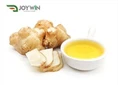
For bulk commercial sourcing, chicory-derived inulin dominates the global market due to its consistency and scalability. However, Jerusalem artichoke inulin is gaining significant traction in the organic and clean-label segment - particularly in markets like North America, Europe, and Japan - because it can be more readily certified organic under NOP and JAS standards.
Part 2: Technical Specifications - The Numbers That Define Quality
This is where most buyers make their first critical mistake: accepting a supplier's specification sheet at face value without understanding what each parameter means and what acceptable ranges look like.
Here is a comprehensive breakdown of the key technical specifications for inulin prebiotic powder:
Core Specification Parameters
1. Inulin Assay (Purity)
This is the most fundamental specification - the percentage of actual inulin content in the product on a dry basis.
* Standard inulin: ≥ 90% inulin on dry basis
* High-purity inulin: ≥ 95% inulin on dry basis
* HP inulin: ≥ 99% inulin on dry basis (some grades)
Any supplier offering "inulin" at below 90% purity should be questioned carefully about what constitutes the remaining fraction.
2. Degree of Polymerization (DP)
As discussed, DP is arguably the most functionally important specification. Always request the average DP and the DP distribution profile:
* Standard inulin: Average DP 10–12
* HP inulin: Average DP 23–25
* FOS (short-chain): Average DP 3–5
If a supplier cannot provide a DP distribution profile - not just an average - that is a significant red flag.
3. Moisture Content
Inulin is hygroscopic and will absorb moisture from the environment. Moisture content directly affects:
* Shelf life and caking behavior
* Microbial risk
* Actual active content per gram
Acceptable range: ≤ 5% (most high-quality grades target ≤ 3%)
4. Ash Content
Ash content reflects the mineral residue after incineration and is an indicator of processing cleanliness.
Acceptable range: ≤ 0.5% for food/supplement grade
5. pH
Inulin solutions should be mildly acidic to neutral.
Acceptable range: 5.0–7.0 (10% aqueous solution)
6. Residual Sugars (Mono- and Disaccharides)
This includes free fructose, glucose, and sucrose that remain after extraction. High residual sugar content:
* Reduces functional fiber value
* Can affect labeling (net carbs, sugar content)
* May indicate incomplete processing
Acceptable range: ≤ 10% for standard inulin; ≤ 5% for HP inulin
7. Heavy Metals
This is non-negotiable for any ingredient entering the dietary supplement supply chain. Required testing typically includes:
|
Metal |
Acceptable Limit |
|
Lead (Pb) |
≤ 0.5 ppm |
|
Arsenic (As) |
≤ 1.0 ppm |
|
Cadmium (Cd) |
≤ 0.3 ppm |
|
Mercury (Hg) |
≤ 0.1 ppm |
These limits align with USP <232> and California Prop 65 standards, which are increasingly used as global benchmarks.
8. Microbiological Parameters
|
Test |
Acceptable Limit |
|
Total Plate Count (TPC) |
≤ 1,000 CFU/g |
|
Yeast & Mold |
≤ 100 CFU/g |
|
E. coli |
Absent/g |
|
Salmonella |
Absent/25g |
9. Particle Size
Particle size affects dispersibility, texture, and processing behavior. Common grades include:
* Fine powder: D90 ≤ 200 μm (better for beverage applications)
* Granular: D90 200–500 μm (better for tableting and capsule filling)
Always specify your application when requesting a particle size recommendation.
Specification Summary Table
|
Parameter |
Standard Inulin |
HP Inulin (≥95%) |
Test Method |
|
Assay (dry basis) |
≥ 90% |
≥ 95% |
HPLC |
|
Average DP |
10–12 |
23–25 |
GPC/HPLC |
|
Moisture |
≤ 5% |
≤ 3% |
Karl Fischer |
|
Ash |
≤ 0.5% |
≤ 0.3% |
Gravimetric |
|
pH (10% solution) |
5.0–7.0 |
5.5–7.0 |
pH meter |
|
Residual sugars |
≤ 10% |
≤ 5% |
HPLC |
|
Heavy metals |
Per USP <232> |
Per USP <232> |
ICP-MS |
|
TPC |
≤ 1,000 CFU/g |
≤ 1,000 CFU/g |
USP <61> |

Part 3: Reading and Verifying the Certificate of Analysis (COA)
The COA is the single most important document in any bulk ingredient transaction. It is the supplier's formal declaration that a specific batch of product meets defined quality criteria - and it is your primary tool for quality gatekeeping. _chpa
What a Legitimate COA Must Contain
According to industry guidelines from organizations like CHPA (Consumer Healthcare Products Association), a complete and compliant COA for a dietary supplement ingredient should include: _chpa
Identification Information:
* Product name and INCI/common name
* Supplier name and contact information
* Lot/batch number
* Manufacturing date and expiration/retest date
* Quantity of the batch
Test Results:
* Each specification parameter tested
* The test method used (e.g., HPLC, ICP-MS, USP <61>)
* The specification limit (what the product should be)
* The actual result (what this batch actually tested as)
* Pass/Fail designation for each parameter
Authorization:
* Signature of authorized quality control personnel
* Date of release
* Laboratory name (in-house or third-party)
Red Flags in a COA
Not all COAs are created equal. Here are the warning signs that should trigger deeper scrutiny:
Generic or Undated COAs
A COA without a specific lot number and manufacturing date is essentially a marketing document, not a quality record. Every batch should have its own COA. _ctla
Missing Test Methods
If the COA lists results without specifying the analytical method used, you cannot verify whether the testing was appropriate or reproducible. "Assay: 95% - Method: Internal" is not acceptable for regulated markets.
Round Numbers Across All Parameters
Real analytical results are rarely perfectly round numbers. A COA showing "Moisture: 3.0%, Ash: 0.5%, pH: 6.0" for every single batch may indicate that results are being fabricated or copied from a template.
No Third-Party Verification
For high-volume or high-risk purchases, always request that the supplier provide COA results from an accredited third-party laboratory (ISO 17025 accredited), not just in-house testing.
Inability to Provide Historical COAs
Ask for COAs from 3–5 previous batches. This allows you to assess batch-to-batch consistency. High variability in results - even if all batches "pass" - can indicate process instability.
COA Verification Best Practices
* Cross-reference the lot number with the physical label on the shipment
* Conduct incoming quality control (IQC) testing on every new supplier's first 3 shipments
* Use accredited third-party labs for independent verification of heavy metals and microbiological parameters
* Request Certificates of Conformance (COC) in addition to COAs for regulated markets
* Archive COAs for a minimum of 3 years (or per your local regulatory requirement)
Part 4: Supply Chain Stability - The Factor Most Buyers Overlook
You can have the best specifications and the most beautiful COA in the world - but if your supplier can't deliver consistently, on time, and at scale, your production line stops. Supply chain stability is the third pillar of smart bulk inulin sourcing, and it's the one most frequently underweighted during supplier evaluation.
Understanding the Inulin Supply Landscape
The global inulin market is heavily concentrated. The majority of commercial inulin prebiotic powder production is centered in:
* Europe (primarily Belgium and the Netherlands) - chicory-based, dominated by a few large multinationals
* China - both chicory-based and Jerusalem artichoke-based; growing rapidly in organic segment
* South America - emerging agave-based production
This geographic concentration means that weather events, crop failures, regulatory changes, or geopolitical disruptions in key producing regions can cause significant supply shocks. The COVID-19 pandemic exposed the fragility of single-source ingredient supply chains across the entire nutraceutical industry - inulin included
Key Supply Stability Indicators to Evaluate
1. Vertical Integration
Does the supplier own or control their raw material supply? A manufacturer that owns its own planting base has dramatically more control over:
* Raw material quality consistency
* Supply volume reliability
* Seasonal price volatility
* Organic certification integrity (no third-party contamination risk)
A supplier who sources raw chicory or Jerusalem artichoke from open markets is inherently more vulnerable to supply disruptions.
2. Production Capacity vs. Your Volume
Always ask for the supplier's annual production capacity and compare it to your projected annual volume. A good rule of thumb: your volume should represent no more than 20–30% of a supplier's capacity. If you represent a higher percentage, you have leverage - but you also carry more risk if the supplier has production issues.
3. Certifications as Proxy for Process Stability
Certifications are not just marketing badges - they are evidence of systematic quality management. For inulin prebiotic powder, the most meaningful certifications include:
|
Certification |
What It Signals |
|
ISO 22000 / FSSC 22000 |
Food safety management system in place |
|
cGMP (FDA 21 CFR Part 111) |
Compliance with US dietary supplement manufacturing standards |
|
BRC Global Standard |
High-level food safety and quality management |
|
NOP Organic (USDA) |
Verified organic production chain |
|
JAS Organic |
Japanese organic standard compliance |
|
Kosher / Halal |
Religious dietary compliance; also signals ingredient traceability |
|
ISO 9001 |
General quality management system |
A supplier holding multiple internationally recognized certifications has demonstrated the organizational discipline to maintain consistent processes - which directly correlates with supply reliability.
4. Regulatory Compliance Track Record
Ask suppliers directly:
* Have you ever received an FDA Warning Letter or equivalent regulatory action?
* Have you had any product recalls in the past 5 years?
* Are you registered with the FDA as a food facility (required for US market)?
For suppliers exporting to the EU, ask about Novel Food status compliance and EFSA documentation.
5. Lead Times and Minimum Order Quantities (MOQs)
Understanding realistic lead times is critical for production planning:
* Standard lead time for bulk inulin: 2–4 weeks (ex-works)
* Custom specifications or organic grades: 4–8 weeks
* During peak demand (Q3–Q4): add 2–4 weeks buffer
Always negotiate safety stock agreements or blanket purchase orders with your primary supplier to protect against lead time variability.
6. Dual Sourcing Strategy
No matter how reliable your primary supplier is, best practice in ingredient procurement is to qualify at least two suppliers for any critical ingredient. This provides:
* Negotiating leverage on price
* Protection against single-source supply disruption
* Continuity during supplier audits or regulatory holds
Part 5: Additional Due Diligence - Questions Every Buyer Should Ask
Beyond specs, COAs, and supply stability, here are the additional due diligence questions that separate sophisticated buyers from reactive ones:
Supplier Qualification Checklist
Technical Questions:
* What is your extraction and purification process?
* How do you control DP distribution batch-to-batch?
* What is your moisture control protocol during storage and shipping?
* Do you offer custom specifications (e.g., specific DP range, particle size)?
* What packaging options are available for bulk shipment? (25kg bags, 500kg supersacks, etc.)
Quality Questions:
* Can you provide your full quality manual or relevant SOPs?
* What is your out-of-specification (OOS) investigation procedure?
* Do you conduct annual product reviews?
* What is your stability data for the claimed shelf life?
* Can I conduct a facility audit (in-person or virtual)?
Commercial Questions:
* What are your payment terms for first orders vs. established accounts?
* What is your policy on batch rejections and returns?
* Do you offer technical support for formulation questions?
* Can you provide references from current customers in my market?
The Importance of Requesting Samples Before Bulk Orders
Never skip the sample evaluation stage. For inulin prebiotic powder, a proper sample evaluation should include:
1. Sensory evaluation: Color (white to off-white), odor (neutral to slightly sweet), texture (free-flowing powder)
2. In-house solubility test: Dissolve in water at 25°C and 50°C to assess dispersibility
3. Third-party COA verification: Send sample to your own accredited lab and compare results to supplier's COA
4. Formulation trial: Test in your actual product matrix before committing to bulk
Part 6: Regulatory Considerations for Global Markets
If you're sourcing inulin prebiotic powder for products sold in multiple markets, regulatory compliance adds another layer of complexity to your supplier evaluation.
Key Regulatory Frameworks
United States (FDA)
* Inulin is classified as Generally Recognized as Safe (GRAS) under 21 CFR
* Qualifies as dietary fiber under FDA's updated nutrition labeling rules (21 CFR 101.9)
* Suppliers must be registered as food facilities under the Bioterrorism Act
* cGMP compliance (21 CFR Part 111) is mandatory for supplement ingredients
European Union (EFSA)
* Chicory inulin has an approved health claim related to maintaining normal bowel function (Regulation EC 1924/2006)
* Must comply with EU food additive regulations and contaminant limits
* Organic inulin must comply with EU Organic Regulation (2018/848)
China (NMPA/GB Standards)
* Inulin is approved as a food ingredient under GB 2760
* Increasing regulatory scrutiny on health claims - ensure supplier can provide Chinese regulatory documentation
Japan
* JAS organic certification is the gold standard for organic inulin in the Japanese market
* FOSHU (Food for Specified Health Uses) claims require specific clinical substantiation _prebiotic
Part 7: Why Source Matters - The Case for Vertically Integrated Suppliers
One of the most important - and most underappreciated - aspects of bulk inulin sourcing is understanding where the raw material comes from and who controls it.
The inulin prebiotic powder supply chain typically looks like this:
Raw Material Farming → Harvesting → Extraction & Purification
→ Drying & Milling → Quality Testing → Packaging → Export
At each stage, there are opportunities for quality degradation, contamination, or adulteration. A supplier who controls multiple stages of this chain - particularly the farming and extraction stages - has inherently more quality control leverage than one who purchases raw material on the open market and simply processes it.
Key advantages of vertically integrated inulin suppliers:
* Organic integrity: When a supplier owns the planting base, there is no risk of cross-contamination from neighboring non-organic farms
* Traceability: Full farm-to-finished-product traceability is achievable and documentable
* Consistency: Raw material quality is controlled from the ground up, reducing batch-to-batch variability
* Responsiveness: Faster response to custom specification requests because the supplier controls the entire process
* Price stability: Less exposure to open-market raw material price volatility
For buyers sourcing organic inulin powder specifically, vertical integration is not just a preference - it is a prerequisite for maintaining the integrity of your organic supply chain.
Conclusion: Build Your Inulin Sourcing Framework Around These Three Pillars
Buying inulin prebiotic powder in bulk is not a transaction - it is a partnership decision that will affect your product quality, regulatory compliance, and business continuity for years. The buyers who get it right are the ones who treat supplier evaluation as a systematic process, not a one-time price negotiation.
Here's a final summary of the three-pillar framework:
|
Pillar |
Key Actions |
|
Technical Specifications |
Understand DP, purity, moisture, heavy metals, and microbiology; request full spec sheets with test methods |
|
COA Verification |
Verify lot-specific COAs, check for third-party testing, conduct IQC on arrival, archive all records |
|
Supply Chain Stability |
Evaluate vertical integration, certifications, capacity, lead times, and dual-source strategy |
The global inulin market is growing rapidly, driven by surging consumer interest in gut health, prebiotic supplementation, and clean-label fiber enrichment. That growth is attracting both excellent suppliers and opportunistic ones. Your ability to distinguish between them - using the framework outlined in this guide - is your most valuable procurement skill.
At Joywin https://www.joywinnatural.com/, we are the world's largest manufacturer of organic inulin and Jerusalem artichoke inulin, with our own certified planting bases, full vertical integration, and certifications including NOP/JAS Organic, BRC, FSSC 22000, cGMP, Kosher, Halal, ISO 9001, ISO 14001, and ISO 22000. Our inulin powder is available in 90% and 95% purity grades with full COA documentation and dedicated technical support for every order. If you want to know more about inulin prebiotic powder or are interested in purchasing it, you can send an email to contact@joywinworld.com.