

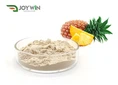
Bromelain powder represents a complex mixture of proteolytic enzymes derived primarily from the pineapple plant (Ananas comosus), with centuries of traditional use and decades of scientific validation behind it. This versatile enzyme complex has evolved from a folk remedy to a globally traded nutraceutical ingredient, with applications spanning dietary supplements, pharmaceuticals, and functional foods. For B2B decision-makers in the health ingredients sector, understanding bromelain's origins, production methods, and quality parameters is essential for selecting the right ingredient for specific product applications.
The global bromelain market continues to experience steady growth, driven by increasing consumer awareness of digestive health, natural anti-inflammatory solutions, and plant-based enzymes. This comprehensive guide traces bromelain's journey from its discovery in pineapple to modern standardized extracts, providing crucial insights for ingredient buyers, product formulators, and supplement brands seeking to incorporate this powerful enzyme into their product portfolios.
Historical Origins and Traditional Use
1. Indigenous Discovery and Traditional Applications
Long before bromelain was scientifically identified, indigenous populations across Central and South America had recognized the unique properties of pineapple. Traditional healers utilized pineapple preparations for various purposes:
* Topical applications: Pineapple pulp and juice were applied to wounds, burns, and inflammatory skin conditions to promote healing and reduce swelling.
* Digestive aid: Fresh pineapple was consumed with protein-rich meals to improve digestion, particularly in regions where meat constituted a significant portion of the diet.
* Folk medicine: Various pineapple plant parts were used in traditional remedies for respiratory conditions, menstrual discomfort, and reduction of inflammation.
These traditional applications, passed down through generations, provided the initial clues that would eventually lead to the scientific discovery and isolation of bromelain as the active component responsible for these therapeutic effects.
2. Scientific Discovery and Isolation
The formal scientific journey of bromelain began in the late 19th century:
1891: Venezuelan chemist Juan B. Losa first documented the proteolytic activity of pineapple, noting its ability to break down protein structures.
1892: Brazilian researcher Marcano provided additional characterization of pineapple's digestive properties.
1905: German scientist R.H. Chittenden conducted more systematic investigations into pineapple's protein-digesting capabilities.
1957: The term "bromelain" was officially coined by researchers Ralph Heinicke and Morton Gortner, who successfully isolated and concentrated the enzyme complex from pineapple stems.
Heinicke's research, conducted at the University of Minnesota and later at the Pineapple Research Institute in Hawaii, revealed that bromelain was not a single enzyme but rather a complex mixture of several proteolytic enzymes and other components. This discovery marked the transition from traditional use to standardized commercial production of bromelain for therapeutic applications.
Botanical Source: The Pineapple Plant
1 .Ananas comosus: Botanical Characteristics
Bromelain powder is derived exclusively from the pineapple plant, Ananas comosus, a member of the Bromeliaceae family. Key botanical characteristics include:
* Growth habit: A herbaceous perennial plant with a short, stout stem and a rosette of waxy, sword-shaped leaves.
* Fruit development: The pineapple fruit develops from the fusion of 100-200 individual flowers into a collective (multiple) fruit, with the inflorescence becoming fleshy and merging together.
* Geographical distribution: Native to South America, particularly the region between Brazil and Paraguay, now cultivated throughout tropical and subtropical regions worldwide.
* Cultivation requirements: Thrives in well-drained, sandy loam soils with consistent temperatures between 18-35°C and annual rainfall of 1000-1500 mm.
The Bromeliaceae family comprises over 3,000 species, but Ananas comosus remains the primary commercial source for bromelain production, with specific cultivars selected for optimal enzyme yield and activity.
2.Bromelain powder Distribution Within the Plant
Contrary to popular belief, bromelain is not uniformly distributed throughout the pineapple plant. Significant variations exist in enzyme concentration and composition across different plant parts:
* Stem bromelain: The highest concentration and specific activity of bromelain is found in the pineapple stem, which serves as the primary commercial source for high-potency extracts. Stem-derived bromelain typically demonstrates superior proteolytic activity and stability compared to fruit-derived enzyme.
* Fruit bromelain: The pineapple fruit contains lower concentrations of proteolytic enzymes, primarily concentrated in the core and peel rather than the fleshy fruit portions. Fruit bromelain exhibits different enzymatic ratios and is often considered a byproduct of pineapple processing.
* Other plant parts: Trace amounts of proteolytic enzymes can be found in pineapple leaves, roots, and peel, though these sources are not commercially viable for bromelain extraction.
The differential distribution of bromelain throughout the plant has significant implications for sourcing, with stem-derived bromelain commanding premium prices due to its higher specific activity and more consistent enzymatic profile.

Modern Extraction and Production Methods
Raw Material Sourcing and Preparation
Modern bromelain production begins with careful selection and preparation of pineapple plant material:
* Stem material: Pineapple stems are typically obtained as byproducts from commercial pineapple cultivation for fruit production. Following fruit harvest, the vegetative portion of the plant containing the stem is collected, cleaned, and processed for bromelain extraction.
* Quality considerations: The bromelain content and activity in source material vary based on pineapple cultivar, growing conditions, plant maturity, and post-harvest handling. Premium suppliers implement strict specifications for raw material acceptance, including visual inspection, moisture content, and preliminary activity testing.
* Preparation steps: Selected plant material undergoes washing, shredding, and pressing to extract the crude juice containing bromelain. Temperature control during these preliminary steps is critical to prevent enzyme denaturation and activity loss.
The shift toward utilizing pineapple stems rather than fruit represents a sustainable approach to bromelain production, transforming agricultural waste into valuable nutraceutical ingredients while reducing environmental impact.
2. Extraction and Purification Technologies
Advanced extraction methods ensure maximum bromelain yield while preserving enzymatic activity:
* Juice extraction: Fresh pineapple stems are crushed or pressed to release the crude juice containing bromelain, along with various other plant components including sugars, fibers, and phenolic compounds.
* Ultrafiltration: Tangential flow ultrafiltration systems with molecular weight cut-off membranes selectively concentrate bromelain while removing smaller molecular weight impurities, including sugars and pigments that could interfere with final product quality.
* Precipitation techniques: Food-grade solvents, typically ethanol or acetone, are employed to precipitate bromelain from the concentrated solution. The ratio, temperature, and mixing conditions are carefully controlled to maximize yield while maintaining enzyme activity.
* Drying methods: The precipitated bromelain is typically dried using spray drying or lyophilization (freeze-drying) to produce a stable powder. Drying parameters are optimized to prevent activity loss while achieving appropriate moisture content for stability.
Different extraction methodologies yield bromelain products with varying enzymatic profiles, purity levels, and functional characteristics, allowing B2B partners to select the most appropriate grade for their specific application requirements.
3. Standardization and Quality Control
Consistent bromelain activity is achieved through rigorous standardization protocols:
* Activity measurement: Bromelain potency is quantified using standardized enzymatic assays, most commonly expressed in Gelatin Digestion Units (GDU), Milk Clotting Units (MCU), or Food Chemical Codex (FCC) units. These measurements ensure batch-to-batch consistency and accurate dosing in final products.
* Specific activity: Premium bromelain suppliers provide documentation of specific activity (units per milligram of protein), which serves as an indicator of purity and quality beyond total enzymatic activity.
* Additional specifications: Comprehensive quality assessment includes determination of microbial limits, heavy metal content, pesticide residues, and other potential contaminants according to relevant pharmacopoeial standards.
Reputable bromelain manufacturers adhere to current Good Manufacturing Practices (cGMP) and employ Hazard Analysis Critical Control Point (HACCP) systems to ensure product safety, quality, and traceability throughout the production process.
Quality Standards and Analytical Methods
1. Global Regulatory Frameworks
Bromelain powder quality and safety are governed by various international standards and pharmacopoeias:
* United States Pharmacopeia (USP): Provides monographs for enzyme preparations including identity, strength, quality, purity, and packaging standards.
* European Pharmacopoeia (Ph. Eur.): Contains detailed monographs for enzyme substances with specific testing requirements and acceptance criteria.
* Food Chemicals Codex (FCC): Establishes purity criteria for food-grade enzymes, including bromelain.
* Food and Drug Administration (FDA) regulations: In the United States, bromelain is regulated as a dietary ingredient under the Dietary Supplement Health and Education Act (DSHEA) of 1994, with manufacturing compliance to 21 CFR Part 111.
Adherence to these established standards ensures that commercial bromelain meets safety, quality, and efficacy requirements for use in dietary supplements, functional foods, and pharmaceutical applications across global markets.
2. Analytical Testing and Verification
Comprehensive quality assurance for Bromelain powder includes multiple analytical parameters:
* Enzymatic activity assays: Standardized methods (GDU, MCU) to verify proteolytic potency, the primary functional attribute of bromelain.
* Protein quantification: Verification of total protein content through methods such as Bradford, Lowry, or Kjeldahl analysis.
* Microbiological testing: Comprehensive microbial limits testing compliant with USP <61> and <62> or equivalent standards, including total aerobic microbial count, total combined yeasts and molds, and absence of specified microorganisms.
* Heavy metal analysis: Screening for arsenic, cadmium, lead, and mercury using ICP-MS methodology to ensure compliance with regulatory limits.
* Residual solvent testing: Critical when extraction processes utilize organic solvents, with limits established according to ICH guidelines.
Third-party verification through organizations such as NSF International, USP Verification Program, or Informed-Choice provides additional quality assurance for B2B partners sourcing bromelain ingredients, particularly for products targeting regulated markets or specific consumer segments such as athletes.
Global Supply Chain Considerations
1. Geographical Production Hubs
The global bromelain supply chain is concentrated in regions with significant pineapple production:
* Southeast Asia: Thailand, Philippines, and Indonesia have emerged as major bromelain producers, leveraging their established pineapple processing industries and infrastructure.
* Central and South America: Costa Rica, Brazil, and Ecuador contribute significantly to global bromelain production, often utilizing stems from premium pineapple varieties grown for export.
* Africa: Kenya, Nigeria, and Ghana are developing bromelain production capabilities alongside expanding pineapple cultivation for European and Middle Eastern markets.
Regional variations in pineapple varieties, cultivation practices, and extraction technologies contribute to differences in bromelain characteristics, necessitating careful supplier evaluation and qualification by B2B partners.
2. Supply Chain Transparency and Traceability
For B2B partners, Bromelain powder supply chain transparency is increasingly important:
* Documentation requirements: Comprehensive Certificate of Analysis (COA), Technical Data Sheet (TDS), and Material Safety Data Sheet (MSDS) provide crucial information for quality assessment and regulatory compliance.
* Traceability systems: Advanced bromelain suppliers implement batch-level traceability from raw material sourcing through final product distribution, enabling rapid response to quality issues and supporting marketing claims regarding sourcing and production methods.
* Sustainability verification: Documentation of sustainable sourcing practices, including water management, energy efficiency, and waste reduction, aligns with consumer and brand owner preferences for environmentally responsible ingredients.
As a B2B ingredient supplier, Joywin Natural prioritizes supply chain transparency, providing partners with comprehensive documentation and traceability for our bromelain products. Our vertically integrated approach from cultivated raw material to finished extract ensures consistency and reliability for our global customers.
Bromelain powder in B2B Decision-Making
1. Key Sourcing Considerations
B2B partners should evaluate multiple factors when selecting a bromelain supplier:
* Standardization and potency: Verified enzymatic activity (typically 1,200-2,400 GDU/g for commercial extracts) with batch-to-batch consistency.
* Source material: Clear specification of stem versus fruit-derived bromelain, with understanding of the implications for activity, consistency, and pricing.
* Quality documentation: Comprehensive Certificate of Analysis including enzymatic activity, microbial limits, heavy metal content, and other relevant specifications.
* Manufacturing certifications: Evidence of cGMP compliance, HACCP implementation, and relevant third-party audits or certifications.
* Technical support: Supplier capability to provide formulation guidance, stability data, and application-specific recommendations.
Table: Bromelain Technical Specifications for B2B Evaluation
|
Parameter |
Standard Specification |
Testing Method |
|
Proteolytic Activity |
1,200-2,400 GDU/g |
Gelatin Digestion |
|
Appearance |
Tan to light brown fine powder |
Visual |
|
Particle Size |
95% through 80 mesh |
Sieve analysis |
|
Loss on Drying |
≤6.0% |
Gravimetric |
|
Heavy Metals |
≤10ppm |
ICP-MS |
|
Total Plate Count |
≤10,000 cfu/g |
USP <61> |
|
Salmonella |
Absent in 10g |
USP <62> |
|
E. coli |
Absent in 10g |
USP <62> |
2. Industry Challenges and Mitigation Strategies
The bromelain market faces several challenges that B2B partners should recognize:
* Quality variability: Inconsistent enzymatic activity and purity among different suppliers necessitates rigorous quality verification and supplier qualification processes.
* Adulteration risk: Unscrupulous suppliers may dilute high-potency bromelain with inactive fillers or incorporate fruit-derived material without proper disclosure. Mitigation strategies include third-party verification and comprehensive analytical testing.
* Supply chain disruptions: Climate events, agricultural practices, and geopolitical factors can impact pineapple availability and bromelain production. Diversified sourcing and strategic inventory management help mitigate these risks.
* Regulatory compliance: Varying global regulations regarding enzyme classification, labeling requirements, and health claims require careful navigation. Partnering with suppliers possessing robust regulatory expertise ensures market access and compliance.
By acknowledging these challenges and implementing appropriate mitigation strategies, B2B partners can secure reliable supplies of high-quality bromelain while minimizing business risk and ensuring consistent product quality for their end customers.
Scientific Validation and Mechanisms
1. Biochemical Composition and Mechanism
Bromelain powder comprises a complex mixture of components that contribute to its diverse biological activities:
* Proteolytic enzymes: Multiple cysteine proteases including stem bromelain, fruit bromelain, and ananain, which collectively demonstrate broad substrate specificity for protein digestion.
* Peroxidases: Enzymes that contribute to bromelain's antioxidant properties and potential anti-inflammatory effects.
* Phosphatases: Enzymes that may influence cellular signaling pathways and contribute to bromelain's biological activities.
* Glucosidases: Carbohydrate-digesting enzymes present in smaller quantities in bromelain preparations.
* Protease inhibitors: Naturally occurring compounds that help stabilize the proteolytic enzymes and regulate their activity.
This diverse enzymatic profile enables bromelain to interact with multiple biological targets, explaining its traditional use for various health applications and supporting its continued relevance in modern dietary supplements and functional foods.
2. Clinical Applications and Evidence
Scientific research has validated several traditional uses of bromelain while revealing new potential applications:
* Digestive health: Multiple human studies confirm bromelain's efficacy in supporting protein digestion, particularly when taken with meals. The enzyme complex remains active across a broad pH range, allowing function in both stomach and intestinal environments.
* Inflammatory response: Clinical trials demonstrate bromelain's ability to modulate inflammatory pathways, including reduction of prostaglandins and cytokines, supporting its traditional use for inflammatory conditions.
* Surgical recovery: Research indicates that bromelain supplementation can reduce swelling, bruising, and pain following surgical procedures, potentially through modulation of inflammatory mediators and reduction of edema.
* Respiratory health: Emerging evidence suggests bromelain may support respiratory function through modulation of mucus viscosity and inflammatory response in respiratory tissues.
The breadth of clinical evidence supporting bromelain's biological activities continues to expand, driving increased incorporation into dietary supplements, medical foods, and cosmeceutical products across global markets.
Future Trends and Innovations
1. Emerging Applications and Market Expansion
The Bromelain powder market continues to evolve with several emerging trends:
* Personalized nutrition: Development of targeted bromelain formulations for specific consumer segments based on genetic profiles, lifestyle factors, and health status.
* Clean label movement: Growing consumer preference for natural, plant-based ingredients positions bromelain favorably compared to synthetic alternatives in digestive health and protein supplementation categories.
* Cosmeceutical applications: Increasing incorporation of bromelain in skincare products for its gentle exfoliating properties and potential anti-inflammatory effects on skin.
* Animal nutrition: Expanding applications of bromelain in livestock and companion animal nutrition for digestive support and overall health.
These emerging applications represent significant growth opportunities for B2B partners capable of developing innovative bromelain formulations targeting evolving consumer needs and market trends.
2. Production Innovations and Sustainability
Advancements in bromelain production methodologies focus on efficiency, sustainability, and quality:
* Green extraction technologies: Implementation of environmentally friendly extraction methods utilizing reduced solvent consumption, lower energy inputs, and biodegradable processing aids.
* Precision fermentation: Emerging research explores production of specific bromelain enzymes through controlled fermentation processes, potentially offering more consistent composition and reduced agricultural footprint.
* Circular economy approaches: Enhanced utilization of pineapple byproducts from multiple processing streams, contributing to waste reduction and improved sustainability metrics.
* Advanced stabilization techniques: Novel approaches to enhance bromelain stability in final products, including microencapsulation, enteric coating technologies, and compatible formulation systems.
These production innovations promise to enhance bromelain quality, consistency, and sustainability while potentially expanding applications through improved functionality in various product formats.
Conclusion
From its traditional use in pineapple-growing regions to modern standardized extracts, bromelain has maintained its relevance as a versatile, plant-based enzyme with diverse applications in dietary supplements, functional foods, and beyond. The journey of bromelain from pineapple stem to finished ingredient involves sophisticated extraction, purification, and standardization processes to ensure consistent quality, potency, and efficacy.
For B2B decision-makers, understanding bromelain's origins, production methods, and quality parameters is essential for selecting the right ingredient for specific applications and market requirements. By partnering with suppliers who prioritize quality, transparency, and technical expertise, brands can confidently incorporate bromelain into innovative products that meet evolving consumer needs for natural, effective health solutions.
As research continues to uncover new applications and production innovations enhance quality and sustainability, bromelain is poised to maintain its position as a valuable ingredient in the formulator's toolkit, bridging traditional wisdom with modern science to deliver health benefits across global markets.
JOYWIN founded in 2013 is an innovation-driven biotechnology company. We provide the manufacture of plant extracts, plant proteases, and customized products. If you want to know more about Bromelain Powder or are interested in purchasing it, you can send an email to contact@joywinworld.com. We will reply to you as soon as possible after we see the message.