

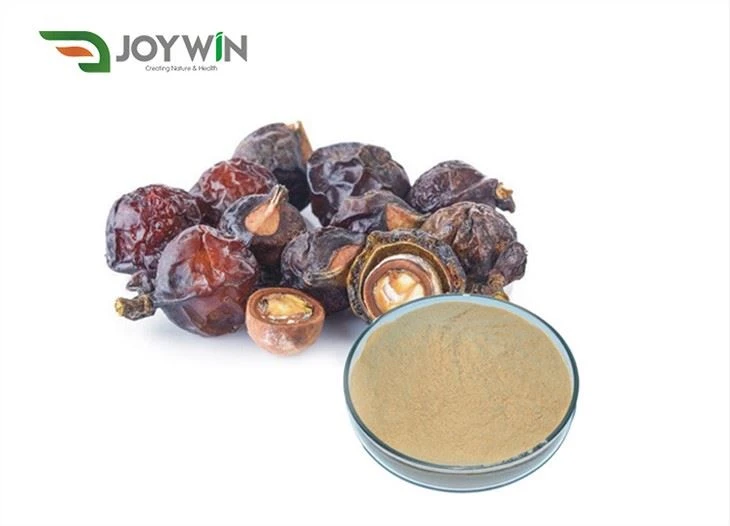
What Is Chinese Soapberry Seed Extract?
Sapindus mukorossi Gaertn. - known in English as the Chinese soapberry, Indian soapnut, or washnut tree - is a deciduous tree native to the warm temperate and subtropical regions of China, India, Nepal, and Southeast Asia. It has been used in traditional Chinese medicine (TCM) and Ayurvedic practice for over a thousand years, primarily for its remarkable natural cleansing, antimicrobial, and skin-conditioning properties.
The extract derived from its seeds and pericarp (fruit shell) is one of the most saponin-rich botanical materials known to science. Saponins - the primary bioactive class in this extract - are amphiphilic glycosides with a hydrophobic triterpenoid core and hydrophilic sugar chains. This dual hydrophilic-lipophilic structure gives them their characteristic surfactant behavior: they lower surface tension, form stable foams, and emulsify oils in water - all without the synthetic chemistry that increasingly concerns formulators, regulators, and consumers alike.
What makes Chinese Soapberry Seed Extract commercially interesting right now is a convergence of three market forces:
1.The clean beauty movement - driving demand for natural, biodegradable surfactants and actives in personal care
2.The green chemistry trend - pushing industrial and household cleaning formulations toward bio-based ingredients
3.Growing nutraceutical interest - as research documents the antimicrobial, anti-inflammatory, and metabolic activities of soapberry saponins beyond their surfactant function
For B2B buyers, this is an ingredient with genuine cross-category versatility - and one where supply chain quality, standardization rigor, and documentation depth vary enormously between suppliers.
Source & Origin - Traceability From Tree to Extract
Botanical Identity: Sapindus mukorossi Gaertn.
The genus Sapindus contains approximately 13 species distributed across tropical and subtropical regions worldwide. Sapindus mukorossi is the primary commercial species for extract production, distinguished by its exceptionally high saponin content - particularly in the pericarp, which can contain 15–20% saponins by dry weight, among the highest natural saponin concentrations of any commercially cultivated plant.
|
Species |
Common Name |
Origin |
Saponin Content |
Commercial Status |
|
S. mukorossi |
Chinese/Indian Soapberry |
China, India, Nepal |
15–20% (pericarp) |
✅ Primary commercial species |
|
S. trifoliatus |
South Indian Soapnut |
South India, Sri Lanka |
10–15% |
⚠️ Regional commercial use |
|
S. saponaria |
Wingleaf Soapberry |
Americas |
8–12% |
⚠️ Limited commercial extraction |
|
S. rarak |
Lerak |
Southeast Asia |
10–14% |
⚠️ Emerging commercial interest |
Our Sourcing Geography
Our Chinese Soapberry Seed Extract is produced from Sapindus mukorossi trees cultivated and wild-harvested in Sichuan, Guizhou, and Hunan provinces - the traditional heartland of soapberry cultivation in China, where the species has been used commercially for centuries. These regions offer the subtropical climate, adequate rainfall, and well-drained hillside terrain that S. mukorossi requires for optimal saponin accumulation.
Why this geography matters:
* Trees in these regions have been cultivated for multiple generations, with established harvesting practices that ensure sustainable yield without depleting wild populations
* The cooler winters of Sichuan and Guizhou produce fruit with characteristically high saponin concentrations compared to lowland tropical sources
* Proximity to our extraction facility minimizes post-harvest degradation of saponin content
Each incoming lot of raw material is documented with origin province, harvest season, and preliminary saponin content screening before entering our extraction process.

Phytochemical Profile - What's Actually in This Extract
Understanding the full chemical composition - not just the headline saponin number - is essential for formulators evaluating this ingredient seriously.
Primary Bioactives: Triterpenoid Saponins
The saponins of Sapindus mukorossi are predominantly hederagenin-type and oleanolic acid-type triterpenoid saponins, including:
* Mukorozisaponin E1, E2, E3 - the primary saponin series unique to S. mukorossi
* Sapindoside A and B - bidesmosidic saponins with documented surface-active and biological activity
* Hederagenin glycosides - contributing antifungal and anti-inflammatory activity
* Oleanolic acid glycosides - with documented hepatoprotective and anti-inflammatory properties
These saponins are bidesmosidic (sugar chains attached at both ends of the aglycone) - a structural feature that contributes to their exceptional foaming stability and surface-active performance compared to monodesmosidic saponins.
Secondary Phytochemicals
Beyond saponins, the extract contains a supporting matrix of bioactive compounds:
* Fatty acids (from seed oil fraction): oleic acid (C18:1), linoleic acid (C18:2), palmitic acid (C16:0) - relevant for skin-conditioning applications
* Polyphenols: Gallic acid, ellagic acid, quercetin glycosides - contributing antioxidant and anti-inflammatory activity
* Sterols: β-sitosterol, stigmasterol - with documented skin-barrier supporting properties
* Alkaloids: Minor alkaloid fraction with antimicrobial contribution
* Tannins: Hydrolyzable tannins contributing astringent and antimicrobial properties
Standardization Options
|
Grade |
Saponin Content |
Method |
Primary Application |
|
Standard Extract |
≥ 40% Saponins |
UV-Vis |
Personal care, household cleaning |
|
High-Potency Extract |
≥ 60% Saponins |
HPLC |
Premium cosmetics, nutraceuticals |
|
Seed Oil |
Cold-pressed, refined |
GC-FID (fatty acid profile) |
Skincare, wound healing |
|
Water-Soluble Powder |
≥ 40% Saponins |
UV-Vis |
Beverage applications, surfactant systems |
|
Standardized Supplement Grade |
≥ 40% Saponins, full COA |
HPLC |
Dietary supplements |
Product Specifications & COA Parameters
Standard Grade: Chinese Soapberry Seed Extract 40% Saponins
|
Parameter |
Specification |
|
Product Name |
Chinese Soapberry Seed Extract |
|
Botanical Name |
Sapindus mukorossi Gaertn. |
|
Plant Part |
Seed / Pericarp |
|
CAS Number |
8047-15-2 (Soapberry Extract) |
|
Appearance |
Light yellow to tan-brown fine powder |
|
Odor |
Characteristic, mild earthy-herbal |
|
Saponin Content (UV-Vis) |
≥ 40% |
|
Saponin Content (HPLC) |
≥ 38% (confirmatory) |
|
Moisture Content |
≤ 5.0% |
|
Total Ash |
≤ 5.0% |
|
Acid-Insoluble Ash |
≤ 1.0% |
|
Foam Index |
≥ 1:1000 (dilution producing stable foam) |
|
pH (1% aqueous solution) |
5.0–7.0 |
|
Heavy Metals (Total) |
≤ 10 ppm |
|
Lead (Pb) |
≤ 2 ppm |
|
Arsenic (As) |
≤ 1 ppm |
|
Mercury (Hg) |
≤ 0.1 ppm |
|
Cadmium (Cd) |
≤ 1 ppm |
|
Pesticide Residues |
Compliant with EU Reg. 396/2005 |
|
Microbial: Total Plate Count |
≤ 1000 CFU/g |
|
Yeast & Mold |
≤ 100 CFU/g |
|
E. coli |
Negative |
|
Salmonella |
Negative |
|
Particle Size |
80 mesh (customizable) |
|
Bulk Density |
0.35–0.55 g/mL |
|
Solubility |
Freely soluble in water; forms stable foam |
|
Extraction Solvent |
Water / Ethanol-Water |
|
Residual Solvent |
Compliant with ICH Q3C |
|
Shelf Life |
24 months from manufacturing date |
|
Storage |
Cool (≤25°C), dry, away from light; sealed |
Additional parameters available on request: HPLC fingerprint chromatogram, individual saponin quantification (mukorozisaponin series), polyphenol content (Folin-Ciocalteu), antifungal activity (MIC values against Candida albicans).
Manufacturing Process - From Soapberry to Standardized Extract
The quality of Chinese Soapberry Seed Extract is determined by decisions made at every stage of production - from raw material selection through extraction chemistry to final standardization. Here's our process in full:
Step 1 - Raw Material Procurement & Incoming QC
Dried Sapindus mukorossi pericarp and seeds are sourced from contracted farms and wild-harvest cooperatives. Each incoming lot is tested for: botanical identity (macroscopic and microscopic examination, TLC), moisture content, preliminary saponin content (foam index test), and microbiological pre-screening. Lots failing minimum saponin content thresholds are rejected regardless of price.
Step 2 - Cleaning & Size Reduction
The dried raw material is cleaned to remove foreign matter (soil, stones, plant debris) and milled to a controlled particle size to maximize extraction surface area and solvent penetration efficiency.
Step 3 - Extraction
We use an optimized aqueous-ethanol extraction system - the solvent system that most effectively solubilizes the bidesmosidic triterpenoid saponins of S. mukorossi while minimizing co-extraction of undesirable compounds such as chlorophylls and waxes. Extraction parameters (solvent ratio, temperature, time, solid-to-liquid ratio) are validated and locked to ensure consistent saponin yield.
Step 4 - Filtration & Clarification
The crude extract undergoes multi-stage filtration - coarse filtration to remove plant fiber, followed by fine membrane filtration to achieve a clear, concentrated liquid extract suitable for downstream processing.
Step 5 - Concentration
The filtered extract is concentrated under reduced pressure (vacuum evaporation) at controlled temperatures to preserve saponin integrity and minimize thermal degradation of heat-sensitive polyphenol co-compounds.
Step 6 - Adsorption Chromatography (High-Potency Grades)
For our ≥60% saponin grade, the concentrated extract undergoes macroporous resin adsorption chromatography - a purification step that selectively retains saponins while allowing sugars, organic acids, and other non-saponin compounds to pass through. This step is what enables consistent high-potency standardization that is not achievable by simple evaporation alone.
Step 7 - Spray Drying
The standardized liquid extract is spray-dried to produce a free-flowing powder with controlled moisture content, bulk density, and particle size. Spray-drying parameters are optimized to preserve the foaming activity and biological potency of the saponin fraction.
Step 8 - Standardization Blending
The spray-dried powder is HPLC and UV-Vis tested, then precision-blended to achieve the target saponin specification within a defined tolerance window. This step guarantees the number on your COA.
Step 9 - Final QC, Packaging & Release
Every batch is tested against the full COA parameter list - including foam index (a functional test of saponin activity, not just a chemical measurement) - before release. No batch ships without a passing QC report.
Quality Control - Why the Foam Index Matters as Much as the HPLC Number
Most botanical extract suppliers focus exclusively on chemical purity metrics. For Chinese Soapberry Seed Extract, we add a functional performance test - the Foam Index - to every batch release protocol.
The Foam Index measures the maximum dilution at which the extract still produces a stable foam column of defined height under standardized conditions. It is a direct measure of surface-active performance - the property that matters most for personal care and cleaning applications. A batch can test at 40% saponins by UV-Vis but perform poorly in a shampoo formulation if the saponin profile is skewed toward less surface-active fractions. The Foam Index catches this.
Facility Certifications:
✅ cGMP - Current Good Manufacturing Practice
✅ ISO 9001:2015 - Quality Management System
✅ ISO 22000 - Food Safety Management System
✅ FSSC 22000 - Food Safety System Certification
✅ BRC - British Retail Consortium Global Standard
✅ Kosher Certified
✅ HALAL Certified
✅ ISO 14001 - Environmental Management System
On-Site Testing Capabilities:
* HPLC - Saponin quantification and fingerprinting
* UV-Vis Spectrophotometry - Total saponin content (vanillin-sulfuric acid method)
* Foam Index Apparatus - Functional surface-active performance
* ICP-MS - Heavy metals
* GC-MS/MS - Pesticide residues and residual solvents
* Karl Fischer Titration - Moisture content
* pH Meter - Solution pH
* Microbiological Testing Suite - Full panel per ISO methods
Third-party testing through SGS, Eurofins, or Intertek is available and actively encouraged for new customer qualification.
The Science Behind Chinese Soapberry Seed Extract - Documented, Not Marketed
1. Antimicrobial Activity - Broad Spectrum, Well Documented
The antimicrobial properties of Sapindus mukorossi saponins are among the most consistently documented in the literature. A comprehensive investigation published in PMC confirmed that the saponin-rich pericarp extract demonstrates significant antimicrobial activity against a panel of clinically relevant pathogens, including both Gram-positive bacteria (Staphylococcus aureus, Bacillus subtilis) and Gram-negative bacteria (Escherichia coli, Pseudomonas aeruginosa).
The antimicrobial mechanism operates through membrane disruption: saponins intercalate into microbial cell membranes, disrupting membrane integrity and causing leakage of intracellular contents. This mechanism is distinct from most antibiotic classes, which is why soapberry saponins show activity against some antibiotic-resistant strains.
2. Antifungal Activity - Particularly Against Candida
Research published in ScienceDirect specifically documents the antifungal activity of Sapindus saponins against Candida species - the pathogenic yeasts responsible for oral thrush, vaginal candidiasis, and systemic fungal infections in immunocompromised individuals. The study confirmed minimum inhibitory concentrations (MIC) in ranges comparable to pharmaceutical antifungal agents for several Candida strains.
For personal care formulators, this translates into a compelling active ingredient for:
* Anti-dandruff shampoos (dandruff is primarily caused by Malassezia fungi)
* Intimate hygiene products targeting Candida overgrowth
* Foot care products addressing athlete's foot (Trichophyton species)
3. Skin Wound Healing - Seed Oil Research
A study published in MDPI International Journal of Molecular Sciences investigated the effects of Sapindus mukorossi seed oil on skin wound healing and found that seed oil-treated wounds showed accelerated healing across multiple sequential wound healing events - including enhanced re-epithelialization, collagen deposition, and angiogenesis - compared to untreated controls.
The researchers attributed these effects to the seed oil's unique fatty acid composition (rich in oleic and linoleic acids) combined with its sterol and polyphenol content. This positions soapberry seed oil - and by extension, full-spectrum seed extract - as a functional ingredient for wound care, scar management, and skin repair formulations.
4. Natural Surfactant Performance - The Green Chemistry Case
Beyond biological activity, the surface chemistry of soapberry saponins deserves serious technical attention. Research and commercial testing have established that Sapindus mukorossi saponins:
* Reduce water surface tension to approximately 28–32 mN/m at concentrations of 0.1–0.5% - comparable to many synthetic surfactants
* Form stable foam with good lather quality, though typically less dense than SLS-based systems
* Are biodegradable - breaking down rapidly in aquatic environments without the persistence concerns associated with synthetic surfactants
* Are effective across a wide pH range (pH 4–9), making them compatible with both acidic and alkaline formulation systems
* Show compatibility with hard water - a significant practical advantage over some natural soap-based systems that form insoluble calcium soaps
This performance profile makes soapberry extract a technically credible - not just marketing-credible - replacement for synthetic surfactants in personal care and cleaning formulations.
5. Anti-Inflammatory Properties
The triterpenoid saponin aglycones - particularly hederagenin and oleanolic acid - have well-documented anti-inflammatory activity. Research confirms inhibition of NF-κB signaling, reduction of COX-2 expression, and suppression of pro-inflammatory cytokines (TNF-α, IL-6, IL-1β) in multiple cell models.
For cosmetic formulators, this anti-inflammatory activity complements the antimicrobial properties - making soapberry extract particularly suitable for sensitive skin, acne-prone skin, and scalp health formulations where both microbial control and inflammation reduction are relevant.
6. Antioxidant Activity
The polyphenol co-matrix in Chinese Soapberry Seed Extract - including gallic acid, ellagic acid, and quercetin glycosides - contributes meaningful antioxidant activity via radical scavenging and metal chelation mechanisms. This antioxidant capacity adds a protective dimension to personal care formulations, helping to defend skin against oxidative stress from UV exposure and environmental pollutants.
Application Scenarios - A Genuinely Cross-Category Ingredient
Chinese Soapberry Seed Extract's combination of surfactant performance, antimicrobial activity, and skin bioactivity makes it one of the most versatile botanical ingredients available to formulators across multiple industries.
|
Application Category |
Product Format |
Use Level |
Key Function |
|
Natural Shampoos |
Liquid / solid shampoo bar |
2–8% |
Natural surfactant, anti-dandruff |
|
Body Wash / Shower Gel |
Liquid cleanser |
2–6% |
Gentle surfactant, antimicrobial |
|
Facial Cleansers |
Gel, foam cleanser |
1–4% |
Gentle cleansing, anti-acne |
|
Anti-Dandruff Products |
Shampoo, scalp serum |
2–5% |
Antifungal (Malassezia), cleansing |
|
Intimate Hygiene |
Wash, wipe |
1–3% |
Antifungal, gentle pH-compatible |
|
Wound Care / Scar Products |
Cream, gel |
0.5–2% |
Wound healing, antimicrobial |
|
Natural Household Cleaners |
Liquid cleaner, powder |
5–15% |
Biodegradable surfactant |
|
Laundry Detergents |
Liquid / powder |
5–20% |
Natural surfactant, eco-positioning |
|
Dietary Supplements |
Capsules, tablets |
200–500 mg/day |
Antimicrobial, anti-inflammatory |
|
Oral Care |
Toothpaste, mouthwash |
0.5–2% |
Antimicrobial, foaming agent |
|
Pet Care |
Shampoo, flea repellent |
2–6% |
Natural surfactant, antimicrobial |
|
Agricultural / Biopesticide |
Spray formulation |
0.5–2% |
Natural pesticide adjuvant |
Formulation Synergies Our Customers Use:
Soapberry Extract + Tea Tree Oil + Zinc PCA → Comprehensive anti-dandruff shampoo targeting both fungal and sebum-related dandruff mechanisms
Soapberry Extract + Aloe Vera + Panthenol → Gentle natural facial cleanser for sensitive and acne-prone skin - cleansing without stripping
Soapberry Extract + Coconut-derived Surfactants (CAPB) → Hybrid natural/mild synthetic system that delivers improved foam density while maintaining clean-label positioning
Soapberry Extract + Neem Oil + Rosemary Extract → Natural scalp treatment targeting seborrheic dermatitis with multi-mechanism approach
Soapberry Extract + Calendula + Centella asiatica → Wound care and scar management formula combining soapberry's wound-healing activity with established skin repair botanicals
The Clean Beauty Positioning Opportunity
This deserves its own mention. In the current personal care market, "free from SLS/SLES" is one of the most searched consumer claims in shampoo and body wash categories. Chinese Soapberry Seed Extract is one of the few natural alternatives that can deliver genuinely competitive surfactant performance - not just a marketing story - while enabling authentic "naturally derived," "biodegradable," and "plant-based" claims. For brands building clean beauty product lines, this ingredient is worth serious formulation investment.
packaging & shipping
Standard Packaging Options:
|
Pack Size |
Packaging Type |
Best For |
|
10–50g |
Double-sealed aluminum foil bag |
Samples / R&D evaluation |
|
1 kg |
Aluminum foil bag, sealed |
Small batch / pilot formulation |
|
25 kg |
Fiber drum with double PE inner liner |
Standard commercial orders |
|
Custom |
Private label, nitrogen-flushed, custom sizes |
OEM / brand customers |
Shipping & Lead Times:
Samples (10–50g): Free of charge; dispatched within 2–3 business days via DHL / FedEx / UPS
Commercial orders (1–25 kg): 7–14 business days production lead time
Large orders (>25 kg): 10–20 business days; sea freight available
Export markets served: USA, EU (Germany, France, Netherlands, UK, Italy, Spain), Canada, Australia, Japan, South Korea, Southeast Asia

JOYWIN Manufacturing Facilities
JOYWIN founded in 2013 is an innovation-driven biotechnology company. we provide the manufacture of plant extracts, plant proteases, and customized products. We believe Good produce= Integrity+ Technology+Quality Control.

JOYWIN Technical Support
● R&D team of 40 members to provide full technical support.
● Years of successful experience with top food companies in the world.
● Dedicate on build long-term relationships with our clients and developing deeps partnership.

fAQ
Q1: What is the difference between Chinese Soapberry Seed Extract and Soapnut/Soapberry Fruit Extract? These terms are often used interchangeably in the market, which creates confusion. Technically: soapberry fruit extract (or soapnut extract) is derived from the entire fruit - primarily the pericarp (shell), which is the highest-saponin part of the fruit. Seed extract specifically refers to extraction from the seed kernel, which contains a different phytochemical profile - higher in fatty acids, sterols, and polyphenols, with lower saponin content than the pericarp. Our standard commercial extract is derived from the pericarp and seed combined - the whole fruit minus the inner seed kernel - which delivers the optimal balance of saponin content and bioactive co-matrix. We specify the exact plant part on every COA.
Q2: Is Chinese Soapberry Extract safe for use in rinse-off cosmetic products? Yes. Sapindus mukorossi extract has a long history of safe use in personal care applications across Asia. In the EU, it is listed in the CosIng database (INCI name: Sapindus Mukorossi Peel Extract / Fruit Extract) and is not subject to restriction under the EU Cosmetics Regulation (EC 1223/2009). In the US, it is used in cosmetics under the general safety provisions of 21 CFR. Standard patch testing and stability testing in the finished formulation are recommended, as with any active botanical ingredient.
Q3: Can soapberry extract completely replace SLS/SLES in shampoo formulations? Technically yes - but with formulation adjustments. Soapberry saponins deliver genuine surfactant performance, but the foam density and viscosity profile differ from SLS-based systems. Most formulators achieve best results by using soapberry extract as the primary natural surfactant in combination with mild co-surfactants (cocamidopropyl betaine, decyl glucoside) to optimize foam quality and viscosity. A full SLS replacement is achievable and commercially viable - it requires formulation investment but delivers a genuinely differentiated clean-label product.
Q4: What is the recommended use level in shampoo formulations? For shampoo applications, typical use levels are 3–8% w/w of the standardized extract (40% saponins). The effective saponin concentration in the finished formula is therefore approximately 1.2–3.2% - within the range that delivers functional cleansing and foam performance. Higher concentrations can be used but may increase cost without proportional performance benefit. We recommend starting at 5% and adjusting based on formulation performance in your specific system.
Q5: Is this ingredient suitable for natural and organic certified cosmetics? Chinese Soapberry Seed Extract is a naturally derived botanical extract compatible with natural cosmetic standards including COSMOS (COSMOS Natural and COSMOS Organic), NATRUE, and NSF/ANSI 305. The specific certification eligibility depends on the extraction solvent used - our water-extracted grade is fully COSMOS-compatible. Our ethanol-water extracted grade is compatible with COSMOS Natural. Documentation to support your certification application is available on request.
Q6: Does soapberry extract have any known skin sensitization concerns? At recommended use levels (1–8%), soapberry extract is generally well-tolerated. However, saponins at high concentrations can be irritating to mucous membranes - a relevant consideration for intimate hygiene and eye-area products. We recommend standard HRIPT (Human Repeat Insult Patch Test) and ocular irritation testing for any new finished product formulation, as is standard practice for any cosmetic active.
Q7: Can this extract be used in dietary supplement applications? Yes. Sapindus mukorossi has a documented history of use in TCM and Ayurveda for internal applications. In supplement contexts, the extract is used primarily for its antimicrobial (particularly antifungal) and anti-inflammatory properties. Typical supplement dosages in the literature range from 200–500 mg of standardized extract per day. Regulatory status varies by market - buyers should verify Novel Food status in the EU and applicable regulations in their target market before commercializing.
Q8: How do I request a sample for formulation trials? Contact us via the form on our website or email us directly. Samples of 10–50g are provided free of charge for qualified buyers. We ask only that you cover international courier costs. We typically dispatch within 2–3 business days of confirming your shipping details. For larger formulation trials requiring 500g–1 kg, contact our sales team for pricing.
Q9:Where & how can I place an order on Chinese Soapberry Seed Extract?
A:You can click the inquiry or send us an e-mail to contact@joywinworld.com
Hot Tags: chinese soapberry seed extract, manufacturers, suppliers, factory, wholesale, buy, price, bulk, high quality, for sale, free sample, Aloin Aloe Vera Extract Powder, Black Cohosh Root Powder, Plant Extract, Broccoli Extract Powder, Chia Seed Extract Powder, Motherwort Herb Extract Powder


