
What Is Bromelain , and Why it's One of the Most Commercially Valuable Botanical Enzymes?
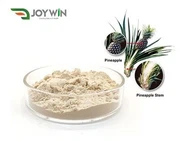
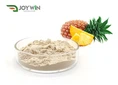
Bromelain is a naturally occurring complex of proteolytic (protein-digesting) enzymes extracted from the stem and fruit of the pineapple plant (Ananas comosus, family Bromeliaceae). Unlike most single-molecule botanical extracts, bromelain is a multi-enzyme system - a mixture of cysteine proteases, peroxidases, and accessory proteins that work synergistically to deliver effects no isolated enzyme can replicate alone.
It has been commercially used for decades across dietary supplements, pharmaceutical preparations, food processing, and clinical nutrition. But what's driving renewed interest among formulators today is the expanding body of peer-reviewed clinical evidence confirming bromelain's mechanisms beyond simple protein digestion - including anti-inflammatory, immunomodulatory, antiedematous, and fibrinolytic activity that positions it as a genuinely functional ingredient, not just a digestive aid.
For B2B buyers, the central challenge with bromelain is not finding a supplier - it's finding a supplier whose product actually performs as labeled. The bromelain market has a well-documented adulteration problem, a potency consistency problem, and a storage-handling problem that together mean a significant proportion of commercially available bulk bromelain underperforms against its stated specification. This page explains exactly how Joywin addresses each of these issues - with process transparency, not just marketing language.
Product Origin & Raw Material Sourcing
From Pineapple Stem to Finished Powder: Why Origin Control Is Non-Negotiable
Commercial bromelain is derived almost exclusively from the stem of Ananas comosus - the fibrous core structure that remains after pineapple fruit processing. Stem-derived bromelain consistently delivers higher enzyme activity and better batch-to-batch stability than fruit-derived material, which is why every reputable bulk manufacturer specifies stem origin.
Joywin sources fresh pineapple stems from established agricultural partners in tropical cultivation regions with year-round growing seasons. Our raw material procurement protocol is rigorous by design:
Incoming Raw Material Controls:
* Botanical identity verification - macroscopic examination and microscopic analysis confirming Ananas comosus stem tissue
* Initial enzyme activity pre-screening - every incoming batch is assayed for proteolytic activity (GDU/g) before acceptance into the facility
* Pesticide residue screening - multi-residue panel aligned with EU MRL standards
* Heavy metals pre-check - Pb, As, Cd, Hg screening prior to processing
* Microbial load assessment - TPC, yeast & mold, and pathogen pre-screen
The Freshness Factor:
Bromelain is a living protein catalyst. Enzyme activity begins degrading from the moment pineapple stem tissue is cut. Temperature, moisture, and time are all enemies of potency. Our processing facilities are positioned to receive and begin extraction within a defined post-harvest window - a logistical commitment that directly protects the GDU/g activity you see on the final COA.
The Adulteration Issue - Addressed Directly:
The American Botanical Council's Botanical Adulterants Prevention Program has formally identified widespread adulteration of commercial bromelain with cheaper proteolytic enzymes - including papain (from papaya), ficin (from fig), and fungal-derived proteases. These adulterants can mimic bromelain's activity in standard GDU assays while lacking its specific biological mechanisms, safety data, and regulatory status.
Standard activity testing alone cannot detect this adulteration. Joywin applies PCR-based molecular authentication on every production lot to confirm genuine Ananas comosus origin - a step most bulk suppliers skip entirely because it adds cost and complexity. For buyers supplying regulated markets (FDA, EFSA, MHLW), this documentation is increasingly expected during audits.

Product Composition & Enzyme Chemistry
Understanding bromelain's molecular composition helps formulators make better sourcing and formulation decisions. Here's what the research tells us:
Primary Enzymatic Components:
|
Component |
Type |
Primary Role |
|
Stem bromelain (EC 3.4.22.32) |
Cysteine protease |
Main proteolytic activity - dominant in commercial stem extract |
|
Fruit bromelain (EC 3.4.22.33) |
Cysteine protease |
Present in fruit-derived material |
|
Ananain |
Cysteine protease |
Secondary proteolytic activity |
|
Comosain |
Cysteine protease |
Contributes to overall enzyme complex |
|
Peroxidases |
Oxidoreductase |
Minor component; contributes to non-proteolytic bioactivity |
The cysteine protease mechanism - where a cysteine residue at the enzyme's active site performs nucleophilic cleavage of peptide bonds - gives bromelain a substrate specificity distinct from serine proteases (like trypsin or chymotrypsin) and metalloproteinases. This specificity is what underpins bromelain's unique biological activity profile in inflammation modulation and immune signaling.
Understanding Activity Units - The Number That Defines Value:
In the enzyme industry, weight means nothing without activity. A kilogram of 600 GDU/g bromelain delivers one-quarter the enzymatic work of a kilogram at 2400 GDU/g. This is the "cheap buy, expensive use" trap that catches buyers who compare price-per-kg without normalizing for activity.
|
Unit |
Full Name |
Industry Usage |
|
GDU/g |
Gelatin Digesting Units per gram |
Primary standard - North American & global supplement industry |
|
MCU/g |
Milk Clotting Units per gram |
Food processing & legacy pharmacopeial specs |
|
TU/mg |
Tyrosine Units per milligram |
Some pharmaceutical applications |
|
FIP |
Fédération Internationale Pharmaceutique |
European pharmacopeial standard |
Approximate conversion: 1 GDU ≈ 1.5 MCU (note: actual conversion varies by assay conditions; always request standardized lab data from your supplier)
Joywin reports activity in GDU/g as primary with MCU/g as secondary - the format most familiar to North American and European supplement buyers. FIP and TU reporting available on request for pharmaceutical clients.
Product Specifications & COA Parameters
Standard activity grades: 1200 GDU/g, 1600 GDU/g, 2000 GDU/g, 2400 GDU/g
|
Parameter |
Specification |
Test Method |
|
Appearance |
Off-white to light tan free-flowing powder |
Visual |
|
Enzyme Activity |
1200 / 1600 / 2000 / 2400 GDU/g (per grade) |
Spectrophotometric (gelatin substrate) |
|
Activity (MCU equivalent) |
1800 / 2400 / 3000 / 3600 MCU/g |
Milk clotting assay |
|
Protein Content |
≥80% |
Kjeldahl / Bradford |
|
Moisture |
≤6% |
Karl Fischer |
|
Ash |
≤8% |
Gravimetric |
|
pH (1% solution) |
4.5–7.0 |
pH meter |
|
Particle Size (d90) |
≤250 μm |
Laser diffraction |
|
Heavy Metals (Pb) |
≤0.5 ppm |
ICP-MS |
|
Arsenic |
≤0.3 ppm |
ICP-MS |
|
Cadmium |
≤0.1 ppm |
ICP-MS |
|
Mercury |
≤0.1 ppm |
ICP-MS |
|
Total Plate Count |
≤10,000 CFU/g |
USP <61> |
|
Yeast & Mold |
≤1,000 CFU/g |
USP <62> |
|
E. coli |
Negative / 10g |
USP <62> |
|
Salmonella |
Negative / 25g |
USP <62> |
|
Staphylococcus aureus |
Negative / 10g |
USP <62> |
|
Allergens |
Contains pineapple (tree fruit) |
Declaration |
|
GMO Status |
Non-GMO |
PCR |
|
Botanical Origin |
Ananas comosus stem |
PCR molecular authentication |
|
Adulteration Screen |
Negative for papain, ficin, fungal proteases |
PCR + HPLC |
|
Solvent Residues |
None (aqueous extraction only) |
GC-MS |
|
Shelf Life |
24 months from manufacture date |
Stability study |
|
Storage Conditions |
2–8°C preferred; ≤25°C, dry, sealed |
- |
Full COA, MSDS, allergen declaration, adulteration test report, and botanical identity certificate available upon request. Custom activity grades available with minimum order commitment.
Manufacturing Process
How We Produce Bromelain Powder: A Transparent Process Overview
Most enzyme suppliers treat their manufacturing process as a black box. We don't. Here's exactly how Joywin produces bulk bromelain powder - because process transparency is the foundation of supply chain trust.
① Raw Material Reception & Pre-Screening Fresh pineapple stems arrive from contracted growing partners. Each incoming batch undergoes botanical identity verification, initial enzyme activity screening, pesticide residue pre-check, and microbial assessment before entering the production facility. Batches that don't meet incoming specifications are rejected - not blended down.
② Washing & Mechanical Preparation Stems are thoroughly washed in food-grade water systems to remove surface contaminants, soil residues, and extraneous plant material. Mechanical size reduction maximizes surface area for extraction efficiency while minimizing heat generation that could denature enzyme proteins.
③ Cold Aqueous Extraction Bromelain is extracted using a controlled low-temperature aqueous extraction process - no organic solvents, no harsh chemical treatments. Temperature is maintained within a defined range that maximizes enzyme yield while protecting the tertiary protein structure responsible for catalytic activity. This is the most critical step in the entire process: extraction temperature directly determines final GDU/g.
④ Clarification & Filtration The raw extract undergoes multi-stage clarification including centrifugation and depth filtration to remove cellular debris, fiber fragments, and particulate matter. This step significantly impacts the color, clarity, and microbiological profile of the final product.
⑤ Ultrafiltration & Concentration Membrane ultrafiltration selectively concentrates the enzyme fraction while removing low-molecular-weight impurities, residual sugars, and color compounds. This is where purity and activity concentration are primarily established.
⑥ Stabilization Concentrated bromelain solution is stabilized with food-grade excipients (typically maltodextrin or lactose, declared on COA) to protect enzyme activity during the drying process and extend shelf life. Excipient type and loading are declared transparently - no hidden carriers.
⑦ Spray Drying / Freeze Drying The stabilized concentrate is converted to powder via spray drying (standard grades) or freeze drying (premium high-activity grades where maximum activity preservation is required). Inlet and outlet temperatures are precisely controlled to minimize thermal denaturation of the enzyme complex.
⑧ Activity Verification, Blending & Standardization Dried powder lots are tested for actual GDU/g activity. Lots are then precision-blended to achieve the target activity specification within a tight tolerance (±5% of stated GDU/g). This standardization step is what ensures the activity on your COA matches what you receive - and what your finished product delivers.
⑨ Final QC, Packaging & Release Full finished-goods QC panel is run. Product is packaged under nitrogen-flushed conditions, sealed, labeled, and held in quarantine until QC release. No product ships without a signed release COA.
Quality Control & Certifications
Joywin's quality framework is designed to satisfy the documentation requirements of the world's most demanding regulatory environments: FDA (21 CFR Part 111), EU Food Safety (EC 1334/2008), and MHLW Japan.
Certifications:
|
Certification |
Relevance |
|
cGMP (FDA 21 CFR Part 111) |
US dietary supplement manufacturing compliance |
|
ISO 9001:2015 |
Quality management systems |
|
ISO 22000:2018 |
Food safety management systems |
|
FSSC 22000 |
Global food safety - retailer & brand supply chain standard |
|
BRC Food Safety (Grade A) |
EU/UK supply chain compliance |
|
Kosher Certified |
Jewish dietary law compliance |
|
Halal Certified |
Muslim dietary law compliance |
|
Non-GMO Verified |
PCR-confirmed non-GMO status |
Three-Stage Activity Testing Protocol:
Unlike most suppliers who test once at finished goods, Joywin tests enzyme activity at three stages:
1.Incoming raw material - pre-screening before extraction
2.Post-extraction concentrate - before spray drying
3.Finished powder - final lot release testing
This three-point protocol catches activity loss at each processing stage and ensures the GDU/g on your COA reflects what's actually in the bag - not what was in the extract before drying.
Third-Party Verification:
Every production lot is verified by accredited external laboratories before release. Pre-shipment documentation package includes: COA, third-party activity test report, adulteration screen report, botanical identity certificate, heavy metals report, pesticide residue report, microbiological report, allergen declaration, non-GMO declaration, and country of origin certificate.
Product Features & Competitive Advantages
Let's address the actual pain points B2B buyers encounter when sourcing bulk bromelain:
Pain Point #1: "The activity on the COA doesn't match what we measure in-house."
This is the most common complaint in the bromelain category - and it usually traces back to one of three causes: adulteration, activity loss during storage/transit, or inconsistent standardization.
→ Our solution: PCR-based adulteration screening on every lot. Nitrogen-flushed, cold-chain-compatible packaging. Activity re-test guarantee before shipment. We will provide a replacement or full refund if in-house testing by an accredited lab shows activity more than 5% below COA specification.
Pain Point #2: "We've had batches from different lots perform differently in our formulation."
Batch-to-batch inconsistency is an enzyme industry-wide problem caused by variable raw material quality and inconsistent standardization blending.
→ Our solution: Precision standardization blending to ±5% of target GDU/g. Retain samples from every lot stored for 36 months. Full traceability from raw material harvest date to finished lot number.
Pain Point #3: "Our regulatory team needs documentation we can't get from our current supplier."
→ Our solution: Complete regulatory dossier as standard - not as a paid add-on. Includes botanical identity certificate, adulteration screen report, full heavy metals panel, pesticide residue report, and all certifications. Our documentation team is experienced with FDA, EFSA, and MHLW submission requirements.
Pain Point #4: "We need a specific activity grade that's not standard."
→ Our solution: Custom activity grades (e.g., 800, 1000, 3000 GDU/g) available with minimum order commitment. Our R&D team can also develop custom blends combining bromelain with papain, protease, or other digestive enzymes for synbiotic or digestive enzyme complex formulations.
Pain Point #5: "Our supplier can't scale with our volume growth."
→ Our solution: Annual production capacity supports both startup-scale flexible MOQs and multi-ton annual contracts. Supply continuity agreements available for key accounts.
Additional Technical Advantages:
* Solvent-free extraction - no residual solvents; clean label compliant
* Neutral flavor profile - minimal impact on finished product taste
* Compatible with standard encapsulation and tableting processes
* Stable in dry powder form at recommended storage conditions (24-month shelf life)
* Synergistic with other digestive enzymes - papain, amylase, lipase for broad-spectrum enzyme blends
Health Benefits & Scientific Evidence
Bromelain is one of the most studied botanical enzymes in nutritional and pharmaceutical science. The following benefits reflect the current state of peer-reviewed evidence - not promotional claims.
Proteolytic Digestion Support
Bromelain's primary and best-established function is protein digestion. Its cysteine protease activity effectively hydrolyzes a wide range of dietary proteins across the pH range of the gastrointestinal tract - making it particularly valuable in digestive enzyme supplement formulations targeting protein maldigestion, bloating, and post-meal discomfort.
Anti-Inflammatory & Antiedematous Activity
Multiple clinical studies have documented bromelain's ability to reduce tissue inflammation and edema - particularly post-surgical and post-traumatic swelling. The proposed mechanisms include modulation of pro-inflammatory cytokines (TNF-α, IL-1β, IL-6), inhibition of bradykinin formation, and direct fibrinolytic activity. This evidence base supports bromelain's use in sports recovery, post-operative nutrition, and joint health formulations.
Immunomodulatory Effects
Research has identified bromelain's capacity to modulate immune cell activity - including activation of natural killer (NK) cells and modulation of T-cell surface markers. These immunomodulatory properties are an area of active research interest, particularly in oncology support and immune health supplement categories.
Cardiovascular & Fibrinolytic Support
Bromelain exhibits fibrinolytic activity - the ability to break down fibrin, the protein involved in blood clot formation. Preclinical and early clinical evidence suggests potential applications in cardiovascular health formulations, though this remains an area where regulatory claim language requires careful market-specific review.
Sports Recovery & Muscle Repair
The combination of proteolytic, anti-inflammatory, and antiedematous activity makes bromelain a scientifically logical ingredient for sports recovery formulations. Its ability to reduce exercise-induced muscle damage markers and accelerate recovery from soft tissue injury is supported by several controlled trials.
Evidence Summary Table:
|
Benefit Area |
Evidence Level |
Regulatory Claim Status |
|
Digestive enzyme / protein digestion |
Strong (multiple RCTs) |
Established in most markets |
|
Anti-inflammatory / antiedematous |
Moderate–Strong (clinical trials) |
Structure/function claims (US); functional claims (EU, case-by-case) |
|
Sports recovery / muscle repair |
Moderate (controlled trials) |
Structure/function claims (US) |
|
Immunomodulation |
Moderate (preclinical + early clinical) |
Emerging; market-specific review required |
|
Fibrinolytic / cardiovascular |
Preliminary (preclinical dominant) |
Requires careful regulatory review |
|
Wound healing support |
Moderate (clinical) |
Medical device / pharmaceutical in some markets |
Note: Health claim language for finished products must comply with applicable regulations in your target market (FDA 21 CFR, EU Regulation 1924/2006, etc.). Joywin can provide regulatory guidance documentation upon request.
Applications & Use Cases
Where Bulk Bromelain Powder Fits in Your Product Line
Bromelain's combination of digestive, anti-inflammatory, and immunomodulatory activity makes it one of the most versatile enzyme ingredients in the B2B supplement and functional food space.
Dietary Supplements & Nutraceuticals
* Digestive enzyme capsules/tablets - standalone or in multi-enzyme blends (with papain, amylase, lipase, lactase)
* Sports recovery formulas - post-workout capsules, powders, and RTD beverages
* Joint health supplements - combined with glucosamine, chondroitin, or curcumin
* Systemic enzyme formulations - enteric-coated tablets for systemic anti-inflammatory delivery
* Immune support blends - combined with quercetin, vitamin C, or zinc
Food Processing Applications
* Meat tenderization - bromelain's proteolytic activity breaks down tough muscle proteins; widely used in commercial meat processing
* Beer clarification - prevents chill haze by hydrolyzing haze-forming proteins
* Bakery applications - dough conditioning and gluten modification
* Cheese production - milk-clotting activity in specialty cheese manufacturing
* Protein hydrolysate production - partial hydrolysis of plant and animal proteins for improved digestibility
Pharmaceutical & Clinical Nutrition
* Post-surgical recovery formulas - antiedematous and anti-inflammatory support
* Wound care preparations - topical and oral formulations (market-specific regulatory status)
* Enteral nutrition - enzyme supplementation in clinical feeding formulas
OEM / Private Label Development
Joywin's R&D team supports full OEM development - from custom enzyme blend formulation to stability testing, excipient compatibility assessment, and regulatory documentation for your target market. We have experience supporting product launches in the US, EU, UK, Japan, South Korea, and Southeast Asian markets.
Packaging & Logistics
Bromelain is not a stable commodity ingredient. It is a living protein catalyst that degrades under heat, moisture, and oxidative stress. Our packaging and logistics protocols are designed around one goal: ensuring the GDU/g activity on your COA is the GDU/g activity that arrives at your facility.
Standard Packaging Options:
|
Format |
Net Weight |
Inner Liner |
Best For |
|
Fiber drum |
25 kg |
Double PE + aluminum foil |
Standard bulk orders |
|
Kraft paper bag |
25 kg |
PE + aluminum foil inner |
Cost-efficient bulk |
|
Aluminum foil bag |
1 kg / 5 kg |
Vacuum-sealed |
Samples & small orders |
|
Custom packaging |
Per client spec |
Per spec |
OEM / private label |
Packaging Features:
* Nitrogen-flushed inner packaging to displace oxygen and prevent oxidative activity loss
* Moisture barrier aluminum foil inner liner - critical for enzyme stability
* Cold-chain compatible - packaging validated for refrigerated transport (2–8°C)
* Lot number, production date, expiry date, activity grade, and storage instructions on every unit
* Tamper-evident sealing with batch-specific COA enclosed
Logistics:
* Standard lead time: 2–4 weeks from order confirmation
* Sample lead time: 3–5 business days (free samples up to 200g for qualified buyers)
* MOQ: Flexible - contact us for current MOQ by activity grade
* Shipping: FOB Qingdao standard; CIF available; air freight for samples and urgent orders
* Cold chain shipping: Available for premium high-activity grades upon request
* Incoterms: FOB, CIF, DAP, DDP (by arrangement)
* Export markets: 50+ countries including US, Canada, EU, UK, Japan, South Korea, Australia, Middle East, Southeast Asia

JOYWIN Service
As customer focus has never been so important for today's enterprises, we believe that only a customer-focused company will win renewed loyalty and competitive advantage. At JOYWIN, Our team of professionals is committed to providing superior and personalized service to meet all your needs.

Frequently Asked Questions
Q1: What activity grades do you offer, and which is right for my application?
We offer standard grades of 1200, 1600, 2000, and 2400 GDU/g, with custom grades available on request. For general digestive enzyme supplements, 1200–1600 GDU/g is typically sufficient. For sports recovery, systemic enzyme, or clinical nutrition applications where higher per-capsule potency is needed, 2000–2400 GDU/g allows smaller capsule sizes while maintaining therapeutic dosing. The higher the GDU/g, the better the cost-per-activity-unit economics at scale.
Q2: How do I verify that your bromelain hasn't been adulterated with papain or other proteases?
We provide a PCR-based molecular authentication report confirming Ananas comosus origin and a targeted adulteration screen (negative for papain, ficin, and fungal proteases) with every production lot. These reports are issued by accredited third-party laboratories. You can also request that we send a sample to a laboratory of your choosing for independent verification before placing a bulk order.
Q3: What excipients are used as carriers in your bromelain powder?
Our standard grades use food-grade maltodextrin as the primary carrier/stabilizer. Lactose-based carrier grades are available for specific applications. All excipients are declared on the COA and MSDS. We do not use undisclosed fillers or activity-boosting adulterants - a practice that, unfortunately, is not universal in this category.
Q4: How should bulk bromelain powder be stored to maintain activity?
Optimal storage is 2–8°C in a sealed, moisture-proof container. Under these conditions, our products maintain stated activity for 24 months from the manufacture date. Storage at ambient temperature (≤25°C) in a cool, dry location is acceptable for shorter periods, but we strongly recommend refrigerated storage for high-activity grades and for inventory held longer than 6 months. Avoid exposure to temperatures above 40°C, direct sunlight, and humidity above 60% RH.
Q5: Is your bromelain suitable for vegetarian/vegan products?
Yes. Bromelain is a plant-derived enzyme from pineapple stem - inherently vegan and vegetarian. Our standard grades contain no animal-derived ingredients or carriers. We can provide a vegan declaration letter upon request.
Q6: Can you provide enteric-coated or encapsulated bromelain?
We supply bulk powder only. However, our R&D team can advise on enteric coating compatibility and recommend encapsulation parameters for your manufacturing process. We have experience supporting clients through the technical development of enteric-coated bromelain tablets for systemic enzyme delivery applications.
Q7: What documentation do you provide for FDA or EU regulatory submissions?
Our standard documentation package includes: COA (per lot), MSDS, botanical identity certificate (PCR), adulteration screen report, full heavy metals panel, pesticide residue report (multi-residue), microbiological test report, allergen declaration, non-GMO declaration, country of origin certificate, and all applicable certifications (cGMP, ISO, BRC, FSSC). Additional documentation - including stability data, process description, and supplier qualification questionnaire responses - is available for regulatory submissions.
Q8: Do you offer white-label or OEM enzyme blend development?
Yes. We regularly develop custom enzyme blends for OEM clients - combining bromelain with papain, amylase, protease, lipase, lactase, and other digestive enzymes. Our R&D team can assist with formulation design, stability testing, and regulatory documentation. Custom blends require a minimum order commitment and a development timeline of approximately 4–8 weeks for initial samples.
Q9:How can we contact you?
A:You can click the inquiry on Bromelain Powder Bulk or send us an e-mail to contact@joywinworld.com.
Hot Tags: bromelain powder bulk, manufacturers, suppliers, factory, wholesale, buy, price, bulk, high quality, for sale, free sample, Fig Fruit Extract Ficin Enzyme Powder, Papaya Extract Powder Papain Enzyme, Kiwi Fruit Extract Enzyme Actinidin, Enzymes, Pineapple Extract Enzyme Bromelain Powder