



In the world of health and nutrition, two substances have been making waves - Allulose Powder and inulin. As we embark on a journey to explore these fascinating ingredients, let's take a closer look at what makes allulose and inulin stand out and how they compare to each other. Whether you're a health enthusiast looking for new options or simply curious about the latest in nutritional science, this exploration of allulose vs inulin is sure to provide valuable insights.
Understanding Allulose and Inulin
Introduce allulose and inulin as two important substances and set the stage for a detailed comparison.
(1)What is Allulose?
Allulose, also known as D-psicose, is a rare sugar that occurs naturally in small amounts in certain fruits and wheat. It has several unique properties. Allulose is extremely low in calories, with only about 0.4 calories per gram. This makes it an attractive alternative for those looking to reduce calorie intake. It also has a similar taste and texture to regular sugar, but with a lower glycemic index.
Common uses of allulose include being used as a sweetener in various food and beverage products. It can be found in low-calorie soft drinks, baked goods, and desserts. Some companies are also exploring its use in functional foods and supplements due to its potential health benefits.
(2)What is Inulin Prebiotic Powder ?
Inulin is a kind of soluble fiber that can be found in many plants. It possesses distinct characteristics. Inulin is known for its prebiotic properties, which means it promotes the growth of beneficial bacteria in the gut. It is also relatively low in calories and can help increase feelings of fullness.
Inulin has a wide range of applications. In the food industry, it is often added to products like yogurts, cereals, and breads to increase fiber content. It can additionally serve as a thickening agent and stabilizer. Additionally, inulin is sometimes used in the production of functional foods and dietary supplements aimed at improving digestive health.
Both allulose and inulin offer unique benefits and have found their places in the market for health-conscious consumers. While allulose provides a low-calorie sweetening option, inulin supports digestive health and can enhance the nutritional profile of various products.
Comparison of Properties
(1)Chemical Composition
Allulose Powder, also referred to as D-psicose, is a type of monosaccharide sugar. Its chemical formula is C₆H₁₂O₆. In contrast, inulin is a polysaccharide. It is made up of multiple fructose molecules linked together. The chemical composition of these two substances is significantly different. Allulose has a relatively simple molecular structure compared to inulin.
(2)Physical Properties
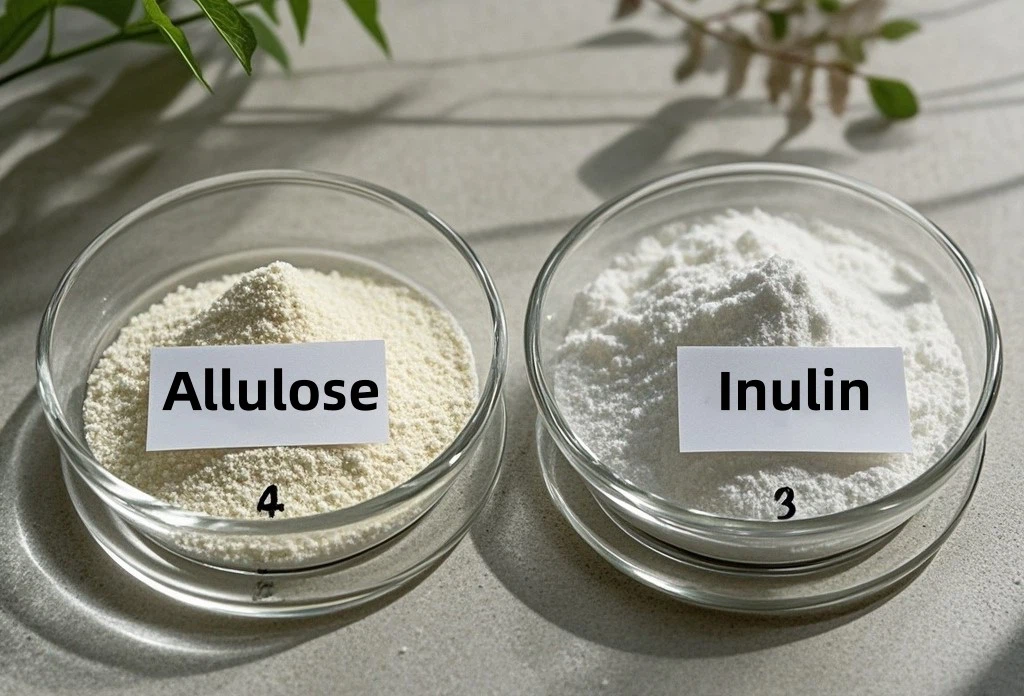
In terms of appearance, allulose is a white crystalline powder. It is highly soluble in water. When dissolved, it provides a sweetness similar to regular sugar without adding a significant amount of calories. On the other hand, inulin can also appear as a white powder. However, its solubility in water varies depending on factors such as temperature and concentration. Generally, inulin is less soluble than allulose. At lower temperatures, inulin may not dissolve as easily as allulose. Additionally, inulin has a tendency to form a gel-like substance when in a certain concentration range. This physical characteristic makes it useful as a thickening agent and stabilizer in food products. In contrast, allulose does not have this gelling property. Overall, while both allulose and inulin are white powders, their solubility and other physical properties differ significantly, which impacts their applications in different food and beverage products.
Uses and Benefits
(1)Uses of Allulose
Allulose Powder is widely used as a sweetener in a variety of food and beverage products. It can be found in low-calorie soft drinks, providing a sweet taste without the excessive calorie intake. In baked goods, it can replace traditional sugar to reduce calorie content while maintaining a similar texture and flavor. Desserts made with allulose are becoming more popular among health-conscious consumers. Additionally, some companies are incorporating allulose into functional foods and supplements, aiming to offer products that are both delicious and beneficial for health.
(2)Benefits of Allulose
One of the main advantages of consuming allulose is its extremely low calorie content. With only about 0.4 calories per gram, it is an ideal choice for those looking to manage their weight. It also has a minimal impact on blood sugar levels due to its low glycemic index. This makes it suitable for individuals with diabetes or those trying to control their blood sugar. Moreover, allulose can provide a sweet indulgence without the guilt associated with traditional sugars.
(3)Uses of Inulin
Inulin is commonly added to yogurts to increase fiber content and promote the growth of beneficial bacteria in the gut. Cereals often contain inulin to enhance their nutritional profile. In breads, it can act as a fiber source and improve texture. Inulin is also used as a thickening agent and stabilizer in food products. For example, it can be found in some sauces and dressings to give them a better consistency. Additionally, inulin is used in the production of functional foods and dietary supplements aimed at improving digestive health.
(4)Benefits of Inulin
Inulin has several positive impacts on health. As a prebiotic, it promotes the growth of beneficial bacteria in the gut, which can improve digestive health. This can result in improved absorption of nutrients and a decreased risk of digestive disorders. Inulin's low calorie content makes it a good choice for those looking to manage their weight. It can also help increase feelings of fullness, which may lead to reduced calorie intake. Moreover, inulin has been shown to have potential benefits for blood sugar control and may help lower cholesterol levels.
Market Trends and Future Outlook
(1)Market Growth
The market for Allulose Powder and inulin has been experiencing significant growth in recent years. Allulose, in particular, has seen a surge in demand due to its unique properties as a low-calorie sweetener. With the increasing focus on health and wellness, consumers are looking for alternatives to traditional sugars that can satisfy their sweet cravings without the negative impacts on health. The approval of allulose by the FDA and its classification as a low-calorie sweetener with a negligible impact on blood sugar levels have further boosted its popularity. According to market research, the global allulose market is expected to grow at a CAGR of around [X]% in the coming years.
Inulin, on the other hand, has been a staple in the food industry for its prebiotic properties and fiber content. As consumers become more aware of the importance of gut health, the demand for inulin-containing products has been on the rise. The market for inulin is also expected to grow steadily, driven by its applications in various food and beverage products, as well as in functional foods and dietary supplements.
(2)Future Developments
Looking ahead, there are several potential future developments for allulose and inulin. In the case of allulose, further research is likely to explore its potential applications in new product categories. For example, it could be used in sports nutrition products to provide a quick source of energy without the spike in blood sugar. Additionally, as technology advances, the production process of allulose may become more efficient and cost-effective, making it more accessible to a wider range of consumers.
For inulin, future developments may focus on enhancing its functionality and stability. Researchers may work on developing new forms of inulin with improved solubility and prebiotic activity. Moreover, the combination of inulin with other functional ingredients could lead to the creation of innovative products that offer multiple health benefits.
In conclusion, both allulose and inulin have bright futures in the market. As consumers continue to prioritize health and wellness, these substances are likely to play an important role in meeting their needs for delicious and nutritious food and beverage products.
Conclusion
Allulose Powder and inulin are two remarkable substances that have made significant contributions to the health-conscious food and beverage market. Allulose, with its low calorie content and minimal impact on blood sugar levels, offers a guilt-free sweetening option for those looking to manage their weight or control their diabetes. Inulin, on the other hand, provides prebiotic benefits and can enhance the fiber content of various products, promoting better digestive health.
The market for both allulose and inulin is on an upward trajectory. As consumers become more informed about the importance of healthy eating, the demand for these substances is likely to continue growing. Allulose's potential for use in new product categories and inulin's possibilities for enhanced functionality suggest that they will remain important players in the food industry.
In conclusion, allulose and inulin offer unique advantages and have carved out their own niches in the market. Whether it's the sweet indulgence of allulose or the digestive health benefits of inulin, consumers have a lot to gain from these substances. As the food industry continues to evolve, we can expect to see even more innovative uses of allulose and inulin in the future.
JOYWIN founded in 2013 is an innovation-driven biotechnology company. We provide the manufacture of plant extracts, plant proteases, and customized products. If you want to know more about Allulose Powder and Inulin Prebiotic Powder or are interested in purchasing it, you can email at contact@joywinworld.com. We will reply as soon as possible after we see the message.