

The global digestive health market is undergoing a seismic shift. As consumers experience "pill fatigue" from probiotics and seek immediate relief for bloating and nausea, botanical interventions are surging in popularity. At the forefront of this movement is Zingiber officinale (Ginger).
However, for the dietary supplement formulator, a critical question arises: Should you formulate with simple Ginger Root Powder or invest in a Standardized Ginger Extract?
The answer determines your product's efficacy, dosage size, and market claim potential. While Ginger Powder offers a cost-effective, whole-food solution, it often lacks the potency required for therapeutic capsules. Conversely, extracts standardized for Gingerols and Shogaols offer precision but come with different sourcing complexities.
This comprehensive guide analyzes the bioavailability, manufacturing implications, and quality control parameters of both forms, helping you make the data-driven decision for your next product launch.
1. The Market Landscape: Why Ginger is Outpacing Probiotics
Before diving into the chemistry, we must understand the commercial imperative. The global ginger market size was valued at USD 2.66 billion in 2022 and is projected to grow at a CAGR of 6.5%.
Why the surge?
1.Immediate Gratification: Unlike probiotics, which require weeks of colonization to show effects, ginger offers rapid relief for gastric motility issues (bloating) and nausea.
2.Clean Label Appeal: Consumers recognize ginger as a kitchen staple, making it a "friendly" ingredient on the label.
3.Versatility: It bridges the gap between traditional herbalism (TCM/Ayurveda) and modern gastroenterology.
For a brand owner, the opportunity is vast. But the risk of "fairy dusting"-using an ingredient at a dosage too low to be effective-is high if the wrong raw material is selected.
2. Defining the Contenders: Powder vs. Extract
To the uninitiated buyer, "Ginger Powder" might seem like a singular commodity. In reality, there is a massive pharmacological divide between the two primary commercial forms.
A. Ginger Root Powder(The Whole Root)
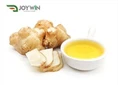
Bulk Ginger Powder is essentially the dried rhizome of Zingiber officinale, ground into a fine mesh (usually 80-100 mesh).
* Production: The root is washed, sliced, dried (sun or air), and pulverized.
* Composition: It contains the full spectrum of the plant: fibers, starches, proteins, essential oils, and a variable amount of active compounds.
* The Variable: The content of active Gingerols in raw powder typically ranges from 0.5% to 1.5%, depending heavily on harvest time, soil quality, and drying temperature.
B. Standardized Ginger Extract (The Precision Tool)
This is a processed ingredient where solvents (Ethanol, Water, or CO2) are used to isolate and concentrate the bioactive compounds.
* Production: Raw root undergoes solvent extraction to remove fiber and starch, concentrating the oleoresins.
* Standardization: The resulting extract is tested and adjusted to guarantee a specific percentage of bioactive markers-most commonly 5% Gingerols (HPLC).
* The Advantage: Consistency. Every batch delivers the exact same potency, regardless of the agricultural season.

3. The Formulation Battle: Dosage, Size, and Stability
This is the most critical section for R&D teams. The choice between Bulk Ginger Powder and extract dictates the physical reality of your finished product.
The "Size 00" Problem
A standard Size 00 capsule holds approximately 500mg to 700mg of powder, depending on density.
Scenario A: Using Bulk Ginger Powder
Clinical studies on ginger for nausea and bloating often cite dosages of 1g to 2g (1000mg - 2000mg) of dried root powder per day.
* The Math: To achieve a 1.5g clinical dose using raw powder, a consumer must swallow 3 to 4 capsules daily.
* Consumer Experience: High pill burden, increased likelihood of "ginger burps," and lower compliance.
Scenario B: Using Standardized Extract (5% Gingerols)
If a 10:1 extract is used (meaning 10kg of root makes 1kg of extract), the potency is concentrated.
* The Math: A 150mg dose of a high-potency extract can deliver the bioactive equivalent of 1500mg of raw root.
* Consumer Experience: 1 small capsule daily.
* Marketing Win: You can claim "High Potency," "One-a-Day," and "Clinical Strength."
Bioavailability and Absorption
Bulk Ginger Powder contains the plant's cellular matrix (cellulose and lignin). While this "whole food" matrix can protect actives during digestion, it can also trap them, preventing full absorption in the small intestine.
Standardized Extracts, particularly those with higher levels of 6-Shogaol (formed when ginger is dried or heated), show superior pharmacokinetics. Shogaols are more potent than Gingerols in their anti-inflammatory and anti-nausea activity. At Joywin Natural, we control the extraction temperature to optimize the Gingerol-to-Shogaol ratio for maximum efficacy.
4. The Science of Efficacy: What Are We Actually Selling?
To sell a product effectively, you must understand its mechanism. When you buy Bulk Ginger Powder or extract from Joywin, you are buying a delivery system for specific phenols.
1. 6-Gingerol: The Gastric Stimulator
This is the primary pungent compound in fresh ginger.
* Mechanism: It acts as an agonist on the 5-HT3 and 5-HT4 receptors in the gut.
* Benefit: It stimulates gastric emptying (antral contractions). This is why ginger helps with bloating-it physically moves food out of the stomach faster, reducing fermentation and gas.
2. 6-Shogaol: The Anti-Inflammatory Powerhouse
Found in higher concentrations in dried and extracted ginger.
* Mechanism: It inhibits the NF-κB pathway and reduces prostaglandins.
* Benefit: It soothes the gut lining and reduces the visceral hypersensitivity associated with IBS (Irritable Bowel Syndrome).
Joywin Insight: A simple Ginger Root Powder might have high Gingerol but low Shogaol if it wasn't dried properly. A standardized extract ensures you get both.
5. Quality Assurance: The Hidden Risks of Ginger Sourcing
Ginger is a root crop (rhizome), meaning it grows underground. This makes it uniquely susceptible to soil contaminants.
A. The Heavy Metal Challenge
Ginger acts as a bio-accumulator. If the soil contains Lead (Pb), Cadmium (Cd), or Arsenic (As), the root will absorb it.
* The Risk: Bulk Ginger Powder is simply the dried root. If the raw material is high in lead, the powder is high in lead. There is no purification step.
* The Extract Advantage: During the extraction process, heavy metals can be significantly reduced or removed, making it easier to meet California Prop 65 limits (<0.5 mcg/day for Lead).
B. Pesticide Residues
Ginger is prone to fungal attacks and nematodes. Conventional farming uses heavy fungicides.
* Joywin Standard: We test for over 500 pesticide residues. For Bulk Ginger Powder, sourcing from organic-certified or strictly managed GAP (Good Agricultural Practices) farms is non-negotiable.
C. Adulteration (The "Sudan Red" Scandal)
In the spice trade, unscrupulous suppliers sometimes add "Sudan Red" (a carcinogenic industrial dye) to poor-quality ginger powder to make it look fresh and vibrant.
* Detection: Joywin Natural employs TLC (Thin Layer Chromatography) and HPLC to verify identity. We ensure that the vibrant yellow color of our powder comes from the plant's natural oleoresins, not synthetic dyes.
6. Application Guide: When to Use Which?
Not every product needs an expensive extract. Sometimes, Bulk Ginger Powder is the superior choice. Here is a decision matrix for formulators:
|
Application |
Recommended Ingredient |
Why? |
|
High-Potency Capsules |
Ginger Extract (5% - 10% Gingerols) |
Requires low volume (100-200mg) for high efficacy. Fits in complex stacks. |
|
Tea Bags / Infusions |
Organic Bulk Ginger Powder (Coarse Cut) |
Needs the "whole root" flavor profile and fiber. Extracts dissolve too fast or taste "chemical." |
|
Functional Beverages |
Water-Soluble Ginger Extract |
Standard powder leaves sediment ("sludge") at the bottom. Extracts offer clarity. |
|
Gummies |
Ginger Oleoresin / High Extract |
Gummies have limited space (3-4g total weight). You cannot fit 1g of powder in a gummy. |
|
Meal Replacement Shakes |
Bulk Ginger Powder |
The fiber content is a bonus here, and the flavor profile masks protein notes. |
|
Cost-Driven Multivitamins |
Bulk Ginger Powder |
Used for "Label Dressing" (e.g., 50mg added just to have it on the label). |
7. The Joywin Natural Sourcing Checklist
If you are a procurement manager, do not just ask for "Ginger Powder." Ask these questions to ensure you are getting a safe, effective ingredient:
1."What is the Mesh Size?"
For capsules, 80 mesh is standard. For tea, 40-60 mesh (Tea Cut) is preferred to prevent dust leaking from bags.
2."Is it Steam Sterilized or Irradiated?"
Ginger grows in dirt; it has a high microbial load naturally. It must be sterilized. Steam sterilization is preferred for "Clean Label" and Organic products. Irradiation is cheaper but rejected by some markets (like the EU Organic sector).
3."Can you provide an HPLC Chromatogram?"
If you are buying extract, demand proof of the Gingerol content. UV testing is not specific enough for high-end formulations.
4."What is the Country of Origin?"
Chinese Ginger (high yield, spicy), Indian Ginger (high essential oil), and African Ginger (very pungent, high camphor) all have different flavor profiles. Joywin sources primarily from specific Chinese provinces known for low heavy metal soil profiles.
Conclusion: Making the Right Choice for Your Brand
The decision between Ginger Root Powder and Standardized Extract is a trade-off between Cost vs. Potency and Whole Food Story vs. Clinical Precision.
* Choose Ginger Root Powder if you are building a lifestyle brand, a tea line, or a cost-competitive general wellness product where the "Whole Food" narrative is key.
* Choose Standardized Ginger Extract if you are building a functional supplement targeting specific symptoms (bloating, nausea, pain) where efficacy and dosage convenience are paramount.
At Joywin Natural, we don't just sell ingredients; we provide solutions. Whether you need tons of organic ginger root powder for a tea blend or kilograms of 20% Gingerol extract for a pharmaceutical-grade supplement, we ensure the supply chain is transparent, safe, and validated.
JOYWIN founded in 2013 is an innovation-driven biotechnology company. We provide the manufacture of plant extracts, plant proteases, and customized products. If you want to know more about Ginger Root Powder or are interested in purchasing it, you can send an email to contact@joywinworld.com. We will reply to you as soon as possible after we see the message.