

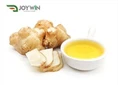
The question echoes through kitchens, supplement formulation labs, and health food stores daily: Can ginger root powder truly stand in for the fresh rhizome? It's a deceptively simple query that opens the door to a fascinating world of food science, chemistry, and nutritional nuance. For centuries, ginger (Zingiber officinale) has been revered both as a culinary spice and a medicinal powerhouse in Traditional Chinese Medicine and Ayurveda . Today, it's available in two primary forms: the gnarled, aromatic fresh root and the convenient, shelf-stable powder.
The common wisdom often dictates that "fresh is best," but when it comes to ginger, this intuition tells only half the story. The truth is far more complex, scientifically rich, and ultimately, more useful for both consumers and manufacturers. The choice between fresh ginger and ginger powder isn't about which is universally "better," but rather which form is ideally suited for a specific application-whether that's calming an upset stomach, combating chronic inflammation, creating the perfect gingerbread, or formulating a high-quality dietary supplement.
This comprehensive guide will serve as your definitive resource. We will delve into the scientific transformation that occurs when ginger is dried, compare the health benefits of fresh versus powdered forms, explore their distinct culinary roles, and provide practical guidance for selection, storage, and substitution. For manufacturers and formulators, understanding these nuances is essential for creating credible, effective, and market-leading products.
1. The Core Science: Gingerol vs. Shogaol – A Chemical Transformation
To understand the difference between fresh ginger and ginger root powder, we must first look at their chemical composition. The fresh ginger root is rich in a class of bioactive compounds called gingerols, particularly 6-gingerol, which is considered the primary pungent ingredient and the main bioactive compound responsible for many of its therapeutic properties . Gingerol is what gives fresh ginger its characteristic sharp, zesty, and pungent kick.
However, when fresh ginger is dried to produce powder, a fascinating chemical transformation occurs. The dehydration process causes the gingerols to undergo a reaction, converting them into compounds called shogaols . The name "shogaol" comes from the Japanese word "shoga," meaning ginger, reflecting its prominence in the dried form.
This conversion is not a degradation; it's a transformation that creates a compound with its own distinct properties. Research has shown that shogaols can be even more potent than gingerols in certain respects. For example, studies published in journals like Bioorganic & Medicinal Chemistry Letters have found that [6]-shogaol exhibits powerful anti-inflammatory effects, in some cases surpassing its fresh counterpart . A quantitative analysis of ginger powder extract confirms this shift, showing significant concentrations of 6-shogaol alongside the remaining gingerols .
Key Takeaway: Think of it not as a loss of nutrients, but as a targeted conversion. Fresh ginger is the "first-response team" with high gingerol content, while ginger powder is the "specialized force" with enhanced shogaols, better suited for different therapeutic goals .
2. Health Benefits: Choosing the Right Form for Your Goal
The differing chemical profiles of fresh and powdered ginger lead to distinct health applications. A 2025 systematic review and meta-analysis published in Inflammopharmacology confirmed that ginger supplementation significantly improves inflammatory and antioxidant biomarkers, including reducing C-reactive protein (CRP), tumor necrosis factor-alpha (TNF-α), and interleukin-6 (IL-6), while increasing total antioxidant capacity . However, the optimal form depends on your objective.
Fresh Ginger: The Choice for Acute Issues
Fresh ginger, with its high gingerol content, is exceptionally effective for immediate, short-term therapeutic needs .
* Nausea and Digestive Upset: This is the most well-documented use for fresh ginger. The Merck Manual, a highly authoritative medical resource, confirms that ginger is effective for pregnancy-related nausea and postoperative nausea and vomiting . Gingerols work gastrically to speed up gastric emptying and soothe the digestive tract . For morning sickness, studies show that 1g of ginger is as effective as vitamin B6 .
* Motion Sickness: Ginger has been shown to be more potent at suppressing seasickness than some pharmaceutical options like Dimenhydrinate .
* Common Cold and Flu: The antimicrobial and antiviral properties of gingerols make fresh ginger ideal for fighting off acute infections. A steaming mug of fresh ginger tea with lemon and honey is a classic remedy for a reason .
Ginger Root Powder: The Powerhouse for Chronic Conditions
Because drying increases the concentration of shogaols, ginger powder is often the superior choice for managing long-term, chronic conditions .
* Reducing Chronic Inflammation and Pain: The enhanced anti-inflammatory properties of shogaols make ginger powder highly effective for conditions like osteoarthritis and rheumatoid arthritis. Studies cited in the Merck Manual show that ginger powder can moderately decrease knee and hip pain due to osteoarthritis . It has also been shown twice to reduce the pain associated with primary dysmenorrhea (menstrual pain) at a dose of 1g daily, performing as effectively as ibuprofen .
* Alleviating Muscle Soreness: The anti-inflammatory effects of shogaols also help reduce delayed onset muscle soreness after exercise .
* Metabolic Health: Emerging evidence, including research on ginger powder, has shown a slight decrease in HbA1C (a key marker for blood sugar control) in people with type 2 diabetes . Ginger's ability to influence serotonin receptors may also play a role in insulin release .
Health Goal Cheat Sheet
|
If Your Goal Is… |
The Better Choice Is… |
Because… |
|
Soothing Nausea or an Upset Stomach |
Fresh Ginger |
High gingerol content provides fast-acting, gastric relief . |
|
Fighting a Cold or Flu |
Fresh Ginger |
Gingerol has potent antimicrobial and antiviral properties . |
|
Reducing Chronic Inflammation (e.g., Arthritis) |
Ginger Powder |
Higher in shogaols, which are powerful anti-inflammatory agents . |
|
Alleviating Menstrual or Muscle Pain |
Ginger Powder |
Shogaols' anti-inflammatory effects are well-documented for pain relief . |
|
Managing Long-Term Blood Sugar |
Ginger Powder |
Evidence supports its role in improving metabolic markers like HbA1C . |

3. Culinary Applications: A Tale of Two Flavors
In the kitchen, the difference between fresh and powdered ginger is not just chemical but experiential. They are two distinct ingredients that excel in different culinary contexts .
The Role of Fresh Ginger: Brightness and Aroma
Fresh ginger provides what chefs call the "high-notes"-a bright, zesty, sharply pungent flavor that cuts through other ingredients. Its high moisture content and volatile oils make it ideal for dishes where ginger should be a distinct, vibrant presence .
* Best For: Stir-fries, marinades, salad dressings, poaching liquids for fish, fresh juices and smoothies, and of course, ginger tea.
* Culinary Function: Adds moisture, freshness, and aromatic lift. It can be grated, minced, sliced, or juiced.
The Role of Ginger Root Powder: Warmth and Depth
Powdered ginger provides the "base-notes." Its flavor is warmer, earthier, sweeter, and more subtle. It doesn't shout; it harmonizes, providing a deep, consistent warmth that blends into the background .
* Best For: Baked goods (gingerbread, cookies, cakes, pumpkin pie), dry spice rubs for meat, spice blends (curry powder, garam masala), and slow-cooked dishes like stews and dals.
* Culinary Function: Its fine, dry texture integrates seamlessly into flour mixtures and dry blends, providing foundational warmth without the fibrous texture or overpowering sharpness of fresh root.
The Golden Rule for Substitution
If you must substitute one for the other, potency is not equal. Powder is significantly more concentrated.
1/4 teaspoon of ginger powder ≈ 1 tablespoon of freshly grated ginger .
Crucial Caveat for Bakers: When substituting fresh ginger for powder in a baking recipe, you are introducing significant moisture. You may need to slightly reduce another liquid in the recipe to maintain the intended texture. Conversely, if using powder in a recipe that calls for fresh, be aware that you will lose the bright, zesty finish and may want to compensate with a touch of lemon zest or a small amount of fresh ginger at the end .
4. The Manufacturing Perspective: Quality, Consistency, and Applications
For B2B buyers and formulators, ginger root powder is not a single, monolithic ingredient. Its quality and characteristics can vary dramatically based on sourcing, processing, and specifications.
The Importance of Raw Material and Processing
* Maturity at Harvest: Academic research shows that the maturity of the ginger rhizome at harvest significantly impacts the quality of the resulting powder. Studies from the University of the Philippines found that half-mature rhizomes (6-9 months) produced the most acceptable powder for food applications in terms of sensory evaluation, while mature rhizomes (10-12 months) had higher fiber content .
* Drying Methods: The method used to dry ginger profoundly affects its final composition. A study in the Taiwanese Journal of Agricultural Chemistry and Food Science found that different drying techniques (hot air, low-humidity, freeze-drying, etc.) result in varying levels of 6-gingerol and 6-shogaol. For example, low-humidity drying at 40°C or hot air drying at 60°C yielded higher 6-shogaol content . The study also noted that during storage, 6-gingerol content decreases while 6-shogaol content increases, particularly at higher temperatures . This has critical implications for product shelf-life and stability.
* Specifications and Standardization: High-quality ginger root powder is defined by clear specifications. These include particle size (e.g., < 250 μm), moisture content (typically < 6% to ensure microbial stability), and water activity (below 0.6) . For extract powders, specifications often include concentration ratios (e.g., 10:1, meaning 10 kg of raw material yields 1 kg of extract) or standardization to a specific percentage of marker compounds like gingerols or shogaols .
Why Partnering with a Certified Supplier Matters
For formulators, sourcing from a reputable, certified manufacturer is not a luxury-it's a necessity. It is the only way to guarantee the consistency, purity, and safety of the final product. This is where Joywin Natural's expertise and commitment to quality become your greatest asset.
As detailed on our website, Joywin is not just a supplier; we are an innovation-driven biotechnology company with a deep specialization in plant extracts. Our manufacturing processes are guided by the principle: Good Product = Integrity + Technology + Quality Control. This is backed by a full portfolio of international certifications, including ISO9001, ISO14001, ISO22000, BRC, FSSC, cGMP, Kosher, and HALAL. These certifications are your assurance that every batch of ginger root powder we supply meets the highest global standards for safety, purity, and potency. By choosing Joywin, you are not just sourcing an ingredient; you are accessing world-class expertise and a commitment to excellence that will elevate your own products.
5. Practical Guidance: Selection, Storage, and Safety
For Consumers
* Selection:
- Fresh Ginger: Look for firm, smooth skin with a spicy, fragrant aroma. Avoid pieces that are wrinkled or moldy.
- Ginger Powder: Choose products from reputable brands. The powder should have a potent, spicy aroma. If it smells faint or dusty, it's stale. Consider organic options, as ginger is a root crop that can absorb pesticides from the soil .
* Storage:
- Fresh Ginger: Store unpeeled in a resealable bag in the refrigerator's crisper drawer for 2-3 weeks. For longer storage, peel, chop, and freeze it .
- Ginger Powder: Store in a tightly sealed glass jar in a cool, dark, dry place (like a spice cabinet). Properly stored, it will retain potency for 1-2 years .
- Safety and Side Effects: Ginger is generally recognized as safe. However, some people may experience mild heartburn or digestive discomfort . Ginger may also increase the risk of bleeding, so individuals taking anticoagulant medications (blood thinners) should consult their healthcare provider before consuming large amounts .
For Manufacturers
* Define Your Application: Determine the primary goal of your product. Is it for digestive support, inflammation management, or culinary use? This will guide your choice between a standard powder and a standardized extract.
* Prioritize Quality and Certifications: Insist on suppliers with robust quality management systems and third-party certifications (ISO, BRC, FSSC, cGMP, etc.). This is non-negotiable for ensuring product safety and efficacy.
* Request Detailed Specifications: Don't just buy "ginger powder." Ask for Certificates of Analysis (COAs) that detail:
- Active Marker Compounds: Levels of 6-gingerol, 8-gingerol, 6-shogaol, etc. .
- Physical Characteristics: Particle size, moisture content, bulk density.
- Microbiological Purity: Confirmation that the product is free from harmful pathogens .
- Heavy Metal and Pesticide Residue Testing.
Conclusion: Embracing Both for a Complete Strategy
So, can ginger root powder replace fresh ginger? The definitive answer is: it depends. They are not identical substitutes but rather two complementary forms of the same remarkable plant, each with its own unique strengths.
Fresh ginger, with its high gingerol content, is the undisputed champion for acute issues like nausea and colds, and for providing a bright, zesty flavor in quick-cooked dishes . Ginger powder, transformed by drying into a shogaol-rich ingredient, is the powerhouse for managing chronic inflammation and pain, and the essential foundation for baking and spice blends .
For the consumer, the savvy approach is to keep both on hand: fresh for when you need that vibrant kick and immediate therapeutic action, and high-quality powder for your pantry staple, ready to provide its deep, warming benefits at a moment's notice .
For the formulator and manufacturer, the choice is equally nuanced and critical. Creating an effective, credible product requires a deep understanding of these differences and a commitment to sourcing ingredients that meet the highest standards of quality and consistency. By partnering with an expert, certified supplier like Joywin Natural, you ensure that your ginger root powder is not just an ingredient, but a precisely crafted component of a superior product, built on a foundation of integrity, advanced technology, and rigorous quality control. The future of botanical-based health and wellness lies in this kind of sophisticated, evidence-based approach-a future we are proud to help you build. If you want to know more about it or are interested in purchasing it, you can send an email to contact@joywinworld.com. We will reply to you as soon as possible after we see the message.