


At Joywin Natural, we understand that navigating the world of functional ingredients requires a deep dive into the science that supports them. As a supplier of high-quality Inulin Prebiotic Powder we are committed to providing not only superior raw materials but also the evidence-based insights our clients need to formulate effective products. One of the most pressing questions in the nutraceutical space today is the role of dietary fiber in metabolic health. Specifically, does inulin help with diabetes?
This is a critical question for formulators and brands looking to address the global diabetes epidemic. With an estimated 537 million adults living with diabetes worldwide , the demand for natural, supportive interventions has never been higher. In this comprehensive guide, we will analyze the latest scientific research, including systematic reviews and meta-analyses, to answer this question with authority. We will explore the mechanisms of action, review clinical evidence, and provide practical insights into the use of inulin powder as a complementary strategy for diabetes management.
Understanding Inulin: More Than Just a Fiber
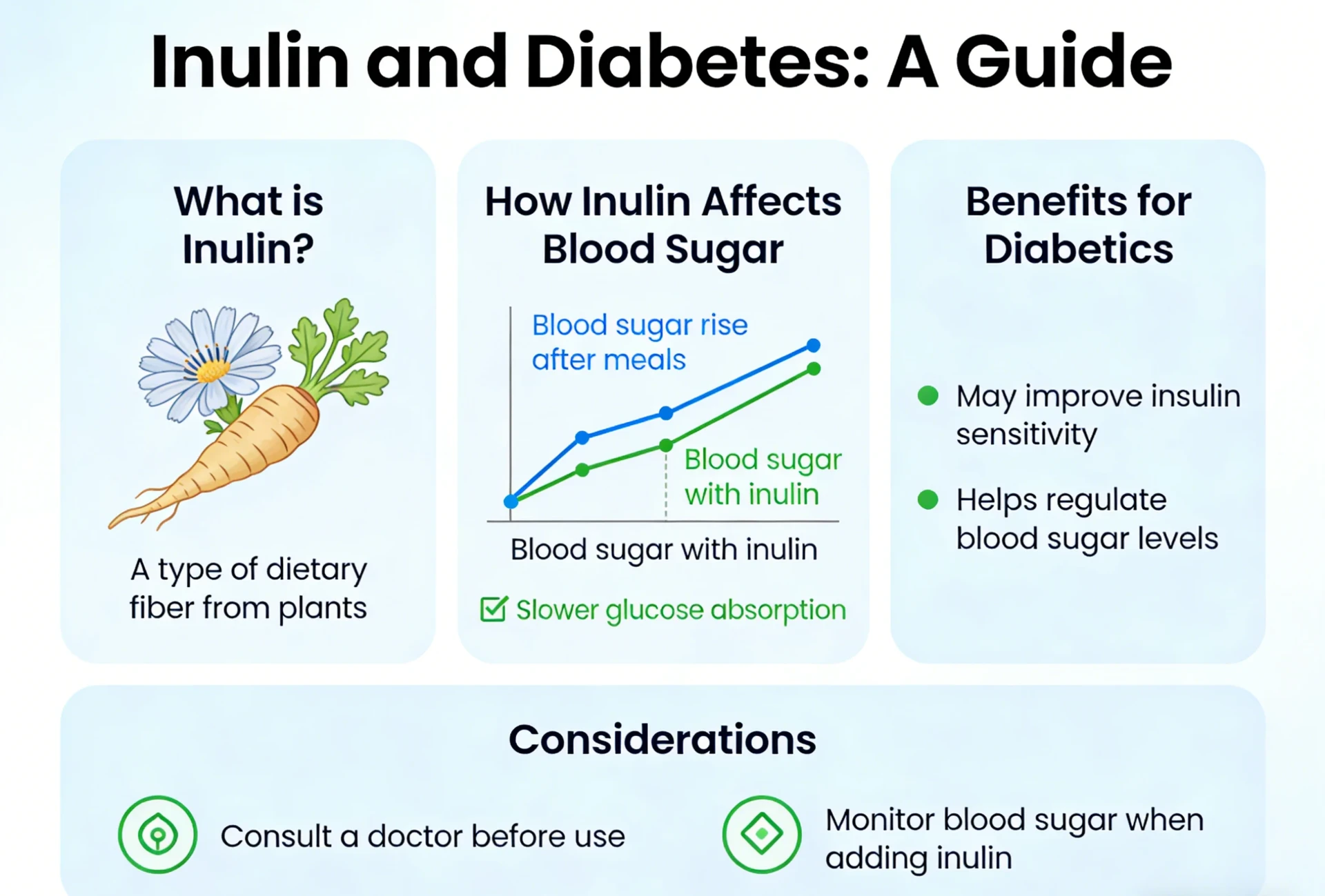
Before examining its antidiabetic effects, it is essential to understand what inulin is and why it behaves uniquely in the human body. Inulin powder is a group of naturally occurring polysaccharides produced by many plants, belonging to a class of fibers known as inulin-type fructans (ITF) .
The Structural Uniqueness of Inulin
Chemically, inulin is a linear chain of fructose units linked by β (2→1) bonds, typically terminating in a glucose molecule . This β-configuration is the key to its function as a prebiotic. Human digestive enzymes (like amylase) are specialized to break down alpha bonds, such as those found in starch. Because our enzymes cannot hydrolyze the beta bonds of inulin, it passes through the upper gastrointestinal tract intact, reaching the colon undigested .
Sources and Variability
The primary commercial sources of inulin powder are chicory root (Cichorium intybus) and Jerusalem artichoke (Helianthus tuberosus) . The degree of polymerization (DP)-the length of the fructose chain-can vary significantly, ranging from 2 to 60 units . This affects its functionality:
* Short-chain inulin (DP 2-10): Ferments more quickly and is sweeter.
* Long-chain inulin (DP 10-60): Ferments more slowly and is often used as a fat replacer for texture.
As we will see, the DP can also influence its physiological effects, a factor that sophisticated formulators should consider .
The Pathophysiology of Diabetes: A Target for Inulin
To understand how Inulin Prebiotic Powder can help, we must look at the underlying issues in diabetes, particularly Type 2 Diabetes Mellitus (T2DM), which accounts for over 90% of cases . T2DM is characterized by two primary defects:
1.Insulin Resistance: Cells in muscles, fat, and the liver become resistant to insulin, meaning they cannot take up glucose from the blood efficiently.
2.β-cell Dysfunction: The pancreatic beta cells eventually cannot produce enough insulin to overcome this resistance, leading to chronic hyperglycemia .
Chronic hyperglycemia leads to the overproduction of Reactive Oxygen Species (ROS), causing oxidative stress. This, in turn, leads to microvascular complications (retinopathy, neuropathy) and macrovascular issues (cardiovascular disease) . Inulin powder does not act like pharmaceutical insulin, but it targets these pathways indirectly through the gut.
The Core Question: Does Inulin Help with Diabetes?
Yes, according to a growing body of high-quality evidence, inulin supplementation significantly improves multiple markers of glycemic control in individuals with diabetes.
We will substantiate this claim by examining the highest level of scientific evidence: systematic reviews and meta-analyses of randomized controlled trials (RCTs).
Meta-Analysis Evidence: The Numbers Speak
Several meta-analyses have consolidated data from dozens of human trials. One of the most definitive, a 2019 systematic review and meta-analysis of 33 RCTs involving 1346 participants, was published in the Journal of Translational Medicine. The researchers found that inulin-type fructan supplementation had a statistically significant impact on the diabetic population .
The results for diabetics and prediabetics were particularly compelling:
* Fasting Blood Glucose (FBG): Reduced by an average of 0.60 mmol/L.
* Glycosylated Hemoglobin (HbA1c): Reduced by an average of 0.58% . This is clinically significant, as HbA1c reflects average blood sugar control over 2-3 months.
* Fasting Insulin: Reduced by 1.75 µU/ml.
* Insulin Resistance (HOMA-IR): Reduced by 0.69 .
Another meta-analysis confirmed these findings, noting that the glucose-lowering effect of inulin was specifically significant in people with diabetes, whereas the effects in healthy or merely overweight populations were less pronounced . This suggests that inulin powder helps correct dysregulation rather than pushing normal glucose levels too low (hypoglycemia), making it a safe
adjunct therapy.
The Mechanisms of Action: How Inulin Prebiotic Powder Works
The glycemic benefits of inulin powder are multifaceted. They stem not from direct absorption, but from its interaction with the gut microbiome and host metabolism. Here are the primary mechanisms, supported by recent 2024-2025 research.
1. Modulation of the Gut Microbiota (The Prebiotic Effect)
This is the primary mechanism. Inulin serves as a food source for beneficial bacteria. A 2024 study in the Journal of Leukocyte Biology demonstrated that inulin supplementation enriches the gut microbiota with species like Bifidobacterium, Clostridium cluster IV, and Akkermansia muciniphila .
* Production of Short-Chain Fatty Acids (SCFAs): When gut bacteria ferment inulin, they produce SCFAs, primarily acetate, propionate, and butyrate .
* Butyrate and Gut Health: Butyrate is the primary energy source for colonocytes, strengthening the gut barrier and preventing "leaky gut." This reduces the translocation of inflammatory endotoxins (like lipopolysaccharides) into the bloodstream .
2. Improving Insulin Sensitivity via SCFAs
The SCFAs produced from inulin fermentation are not just fuel for the colon; they enter the circulation and act as signaling molecules.
* GLP-1 Secretion: SCFAs stimulate the release of Glucagon-Like Peptide-1 (GLP-1) from L-cells in the gut. GLP-1 is an incretin hormone that enhances insulin secretion from the pancreas in response to meals and slows gastric emptying, leading to better post-meal glucose control .
* Reducing Hepatic Lipogenesis: Propionate is transported to the liver, where it can suppress cholesterol synthesis and reduce fat accumulation, which is closely linked to insulin resistance .
3. Immune Regulation and Reduction of Inflammation
T2DM is increasingly recognized as a disease with a significant inflammatory component. Inulin appears to modulate the immune system directly.
* Regulatory T Cells (Tregs): A groundbreaking 2024 study on Type 1 Diabetes (an autoimmune model) revealed that inulin helps recruit regulatory T cells (CD4+Foxp3+) to the pancreatic islets. These Tregs express a receptor called CCR4, which allows them to home in on the pancreas and calm the autoimmune attack that destroys insulin-producing cells . While this research is in a T1D model, it highlights the potent immunomodulatory capacity of inulin.
* Lowering Inflammatory Markers: By improving gut barrier function and promoting beneficial bacteria, inulin reduces systemic low-grade inflammation, lowering markers like IL-6 and CRP, which are known to interfere with insulin signaling .
4. Targeting Diabetic Complications
Emerging research suggests that the benefits of inulin powder extend beyond glucose control to mitigating the complications of diabetes.
* Diabetic Encephalopathy: A 2025 study published in Food & Function investigated the effects of inulin on diabetic mice with neuroinflammation. The results showed that inulin, particularly the higher molecular weight fraction (5-10 kDa), significantly reduced inflammatory factors (IL-1β) and Aβ protein deposition in the brain. It achieved this by blocking the formation of Advanced Glycation End products (AGEs) and deactivating the RAGE-mediated inflammatory pathway in the brain .
* Oxidative Stress: Inulin has demonstrated the ability to alleviate oxidative stress, a key driver of diabetic complications like nephropathy and retinopathy .
|
Mechanism of Action |
Effect on Diabetic Pathology |
Supporting Research |
|
Gut Microbiota Modulation |
Increases beneficial bacteria (e.g., Bifidobacterium), strengthens gut barrier |
|
|
SCFA Production |
Stimulates GLP-1 (increases insulin), lowers hepatic lipid synthesis |
|
|
Immune Regulation |
Recruits regulatory T cells (Tregs) to reduce pancreatic inflammation |
|
|
Anti-inflammatory & Anti-AGE |
Reduces neuroinflammation, blocks formation of inflammatory AGEs |
Practical Applications: Dosage and Formulation Insights
For our B2B clients at Joywin Natural, translating this science into viable products is key. The clinical data provides clear guidance on how to formulate with inulin powder.
Recommended Dosage
The meta-analyses provide a clear dosage window for efficacy. The previously mentioned 2019 review utilized a dose-response model and recommended:
* Daily Dose: 10 grams per day of inulin-type fructans.
* Duration: Supplementation should last for 6 weeks or longer to achieve significant improvements in glycemic markers .
This dose is high enough to induce a meaningful shift in the microbiome but is generally well-tolerated when introduced gradually.
Formulation Considerations
1.Type Matters: Recent research highlights that the degree of polymerization (DP) influences outcomes. One 2025 study found that while both inulin (DP3-60) and FOS (DP3-10) were beneficial, FOS was superior for improving glucose metabolism, while longer-chain inulin was more potent for alleviating oxidative stress . For products targeting comprehensive metabolic health, a blend of short and long-chain inulin powder may be optimal.
2.Synergy with Other Compounds: Inulin can serve as an excellent base fiber in combination formulas. For instance, the Helianthus genus (sunflowers and Jerusalem artichokes) contains both inulin and chlorogenic acid (CGA), which have synergistic hypoglycemic effects .
3.Supplier Transparency: As a supplier, we ensure our Inulin Prebiotic Powder is tested for purity and DP consistency. The variability in plant sources (chicory vs. artichoke) and harvest times can affect the product's functionality . Partnering with a reliable supplier like Joywin Natural guarantees batch-to-batch consistency, which is crucial for maintaining the efficacy of your finished product.
Safety, Tolerability, and Regulatory Compliance
When formulating for a diabetic population, safety is paramount.
Gastrointestinal Tolerance
As a fermentable fiber, inulin can cause gastrointestinal side effects such as bloating, flatulence, and abdominal discomfort, particularly at high doses or when introduced too quickly .
* Industry Best Practice: We recommend that brands advise end consumers to start with a lower dose (e.g., 3-5 grams) and gradually increase to the 10-gram target over several weeks. This allows the gut microbiota to adapt.
Impact on Mineral Absorption
It is worth noting that the production of SCFAs from inulin fermentation acidifies the colon, which can increase the solubility and absorption of minerals like calcium and magnesium. While primarily a bone health benefit, this is a positive secondary effect for overall metabolic wellness .
GRAS Status
For our U.S. clients, inulin is Generally Recognized as Safe (GRAS). It is a well-established ingredient in foods, beverages, and dietary supplements.
Conclusion
So, does inulin help with diabetes? The evidence is unequivocal: Yes. High-quality Inulin Prebiotic Powder is a powerful, evidence-based dietary ingredient for supporting glycemic control. Through its prebiotic action, it modulates the gut microbiome, reduces inflammation, improves insulin sensitivity, and even helps mitigate diabetic complications.
For the diabetes population, incorporating 10 grams of inulin daily, as part of a healthy diet and under medical supervision, offers a safe and effective strategy to improve fasting glucose and HbA1c. As the scientific community continues to explore the gut-health axis, the role of prebiotic fibers like inulin will only become more central to metabolic health management.
For manufacturers and brands looking to develop next-generation supplements for diabetes support, Inulin Prebiotic Powder is not just an option; it is a scientifically validated foundation. Contact Joywin Natural today to learn how our premium inulin can elevate your product line and meet the growing demand for effective, natural health solutions.
JOYWIN founded in 2013 is the largest organic inulin and Jerusalem artichoke inulin manufacturer in the world. We supply products with high quality, strict quality control, and independent testing to guarantee the high specification of our products. Holding inulin workshops, plant protease workshops, and warehouses also own cutting-edge facilities and strict quality control systems. As leading inulin manufacturers in China, we are FSSC22000, ISO9001, ISO14001, ISO22000, BRC, and Cgmp-certified factory. If you want to know more about Inulin Prebiotic Powder or are interested in purchasing it, you can send an email to contact@joywinworld.com. We will reply to you as soon as possible after we see the message.