

In the ongoing global quest for healthier dietary alternatives, the food and supplement industries face a persistent challenge: how to reduce sugar and calorie content without sacrificing taste, texture, or consumer satisfaction. Amidst a landscape of artificial sweeteners and novel compounds, one natural, multifunctional ingredient stands out for its elegance and efficacy-Inulin.
Derived from plants like chicory root, agave, and Jerusalem artichoke, inulin is a unique dietary fiber that delivers a mild, sweet taste while providing only 1.5 calories per gram-a fraction of sugar's 4 calories per gram. But to label it merely a "sweetener" is to underestimate its profound potential. Inulin is a prebiotic powerhouse, a texture modifier, and a blood sugar manager, making it a cornerstone for innovative product development in functional foods, beverages, and dietary supplements.
As the world's largest manufacturer of organic inulin powder and Jerusalem artichoke inulin powder, Joywin Natural operates at the epicenter of this nutritional revolution. Our expertise, built on integrity, advanced technology, and stringent quality control (evidenced by our BRC, FSSC, cGMP, Kosher, and HALAL certifications), provides a unique vantage point. This comprehensive guide will explore the science, benefits, applications, and quality considerations of inulin powder as a premier low-calorie sweetener and functional fiber, offering authoritative insights for formulators, brands, and health-conscious industry professionals.
Part 1: The Fundamental Science of Inulin
1.1 What is Inulin? Chemical Structure and Natural Sources
Inulin is a type of soluble dietary fiber classified as a fructan or fructooligosaccharide (FOS). Its chemical structure consists of chains of fructose molecules linked by beta-(2,1) bonds, typically terminating with a glucose molecule. This specific linkage is crucial-it renders inulin indigestible by human enzymes in the upper gastrointestinal tract, allowing it to pass intact to the colon where it serves as food for beneficial bacteria.
Primary Natural Sources:
* Chicory Root: The most common and commercially significant source, offering high inulin concentration (typically 15-20% of the root's dry weight).
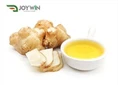
* Jerusalem Artichoke: Also known as sunchoke, this tuber is another rich source and a specialty of Joywin Natural's production.
* Agave: Contains inulin that is often processed into agave syrup, though this processing differs from pure inulin powder extraction.
* Other Sources: Found in smaller amounts in bananas, garlic, onions, and asparagus.
1.2 The Manufacturing Process: From Root to Refined Powder
The journey from plant to pure Inulin Prebiotic Powder is a testament to modern food engineering. The standard process involves:
1.Harvesting and Washing: Roots (chiefly chicory) are harvested, thoroughly cleaned, and sliced.
2.Diffusion/Hot Water Extraction: Slices are placed in hot water, which diffuses inulin out of the plant cells.
3.Purification: The raw extract undergoes filtration and ion-exchange processes to remove sugars, minerals, and other impurities.
4.Spray-Drying: The purified inulin liquor is concentrated and spray-dried into a fine, white, neutral-tasting powder.
The Joywin Standard: Our manufacturing emphasizes vertical integration and traceability, from selecting premium, non-GMO Jerusalem artichoke and chicory crops to employing state-of-the-art, low-temperature extraction techniques that preserve the native structure and prebiotic efficacy of the inulin fiber.

Part 2: Inulin as a Low-Calorie Sweetener: The Core Mechanisms
2.1 The Calorie Math: Why Inulin is "Low-Calorie"
The human body lacks the enzyme inulinase needed to hydrolyze the beta-(2,1) bonds in the inulin chain. Therefore, it passes through the stomach and small intestine largely undigested and unabsorbed. While it is fermented by colonic bacteria, the resulting energy yield is minimal.
* Sugar (Sucrose): Provides 4 kcal/gram and causes a rapid spike in blood glucose.
* Inulin: Provides only 1-1.5 kcal/gram (as recognized by many regulatory bodies worldwide, including the European Food Safety Authority - EFSA) and has a negligible effect on blood sugar.
2.2 Sweetness Profile and Synergy
Inulin powder possesses a clean, sweet taste, approximately 10% the sweetness of sucrose (table sugar). While not intensely sweet on its own, its true sweetening power lies in synergy:
* Sweetness Potentiation: Inulin can enhance and round out the sweetness profile of other sweeteners (both natural and high-intensity). This allows formulators to achieve a desired sweetness level while reducing the total amount of sweeteners required, thereby lowering the overall calorie count and potentially mitigating off-notes from high-intensity sweeteners like stevia or monk fruit.
2.3 The Glycemic Advantage
With a glycemic index (GI) of approximately 1, inulin does not provoke a meaningful insulin response. This makes it an ideal sweetening and bulking agent for products targeting consumers managing diabetes, prediabetes, or those following low-carb and ketogenic diets. A 2015 meta-analysis in The American Journal of Clinical Nutrition confirmed that dietary inulin-type fructans have neutral effects on short-term postprandial blood glucose and insulin levels.
Part 3: Beyond Sweetening: The Multifunctional Health Benefits
Inulin's value proposition extends far beyond calorie reduction, embodying the concept of "food as medicine."
3.1 Prebiotic Effects and Gut Health
This is inulin's most celebrated function. As a prebiotic, it selectively stimulates the growth and activity of beneficial bacteria in the colon, primarily Bifidobacteria and Lactobacilli.
* Mechanism: Upon reaching the colon, gut bacteria ferment inulin, producing short-chain fatty acids (SCFAs) like butyrate, acetate, and propionate.
* Health Outcomes: These SCFAs are associated with a multitude of benefits:
- Improved Bowel Regularity and Consistency: SCFAs increase stool bulk and frequency, alleviating constipation (EFSA has approved a health claim stating "chicory inulin contributes to normal bowel function by increasing stool frequency").
- Enhanced Gut Barrier Function: Butyrate serves as the primary energy source for colonocytes, strengthening the gut lining.
- Modulation of Immune Function: An estimated 70% of the immune system resides in the gut. A healthy, balanced microbiome supported by prebiotics is crucial for systemic immune health.
3.2 Enhanced Mineral Absorption
Research indicates that inulin fermentation improves the absorption of essential minerals, particularly calcium and magnesium. The resulting acidic environment in the colon from SCFA production enhances the solubility and passive diffusion of these minerals. A study published in the Journal of Nutrition found that adolescents who consumed inulin-fortified foods showed significantly improved calcium absorption, which is critical for peak bone mass development.
3.3 Weight Management Support
Inulin contributes to satiety and weight management through several pathways:
1.Bulking Agent: It adds volume to food and beverages without adding significant calories, creating a sense of fullness.
2.Hormonal Modulation: Fermentation products may influence the release of gut hormones like GLP-1 and PYY, which promote feelings of satiety.
3.Reduced Energy Density: By directly replacing higher-calorie sugars and fats in formulations, inulin lowers the overall energy density of the final product.
Part 4: Technical Applications in Food & Supplement Formulations
Inulin Prebiotic Powder is a versatile tool for food scientists, offering both nutritional and functional textural benefits.
4.1 Fat and Sugar Replacement: The Formulator's Tool
* Fat Replacer: In gel form (when mixed with water), inulin can mimic the mouthfeel, creaminess, and short texture of fat. It is successfully used to reduce fat content in dairy products (yogurt, cream cheese), spreads, dressings, and baked goods by 25-50%.
* Sugar Replacer: It provides bulk and body lost when sugar is removed. This is critical in applications like protein bars, meal replacements, and sugar-free confections, where it prevents a chalky or thin texture. Its mild sweetness also helps balance flavor profiles.
4.2 Texture and Stability Modifier
* Foam and Emulsion Stabilizer: It improves the stability and volume of foams in whipped desserts and mousses.
* Ice Crystal Control: In frozen desserts, it helps control ice crystal size, resulting in a smoother, creamier texture.
* Moisture Retention: In baked goods, it helps retain moisture, extending shelf life and improving crumb structure.
4.3 Supplement Delivery and Synbiotics
In the supplement industry, inulin powder is a preferred carrier and excipient for probiotics, creating powerful synbiotic blends. The prebiotic (inulin) acts as a dedicated food source for the co-delivered probiotic bacteria, enhancing their survival through gastric transit and improving their implantation and efficacy in the colon.
Part 5: Sourcing, Quality, and Regulatory Considerations
For manufacturers, not all Inulin Prebiotic Powder is created equal. Discerning quality is paramount for product success.
5.1 Key Quality Indicators for Inulin Powder
* Degree of Polymerization (DP): This refers to the average chain length of the fructose molecules.
- Standard/Short-Chain Inulin (DP 2-10): More soluble, slightly sweeter, ferments faster.
- High-Performance/Long-Chain Inulin (DP 10-60): Less soluble, more gel-forming, less sweet, ferments more slowly for better GI tolerance.
* Purity and Composition: High-quality inulin powder should have a purity of >90%. The profile of residual sugars (glucose, fructose, sucrose) should be minimal.
* Solubility and Flow Characteristics: These physical properties are critical for specific manufacturing processes (e.g., dry blending vs. liquid incorporation).
The Joywin Assurance: Our inulin products, available in standard and organic grades (95% and 90% purity), are backed by a comprehensive suite of international certifications (BRC, FSSC, cGMP, Kosher, HALAL, ISO). Every batch is supported by a Certificate of Analysis (CoA) verifying DP profile, purity, microbiological safety, and absence of heavy metals and pesticides, ensuring consistency and reliability for global clients.
5.2 Regulatory Status and Labeling
Inulin is universally recognized as safe.
* GRAS Status: In the United States, inulin is Generally Recognized As Safe (GRAS) by the FDA.
* Dietary Fiber: In the U.S. (FDA), EU, Canada, and most other regions, inulin is officially classified as a dietary fiber and can be counted as such on the Nutrition Facts panel.
* Clean Label: It is perceived as a natural, plant-based, clean-label ingredient, listed simply as "inulin" or "chicory root fiber."
5.3 Dosage and Tolerance
While beneficial, inulin is a fermentable fiber, and introducing it too quickly can cause transient GI discomfort (gas, bloating) in some individuals. The typical effective prebiotic dose ranges from 5 to 15 grams per day. Formulators often start with 3-5 grams per serving. Tolerance improves with regular consumption as the gut microbiome adapts.
Conclusion: The Future is Sweet and Functional
Inulin Prebiotic Powder represents a paradigm shift in food technology, moving from ingredients that only sweeten or only texturize to those that deliver foundational health benefits. It is more than a low-calorie sweetener; it is a strategic, multifunctional component that allows product developers to address multiple consumer demands simultaneously: sugar reduction, calorie control, fiber fortification, and gut health support.
The market trajectory is clear. As consumers become increasingly proactive about metabolic health and microbiome science, the demand for scientifically-validated, functional ingredients like inulin will only accelerate. Its ability to seamlessly integrate into a vast array of products-from baked goods and dairy to beverages, supplements, and even meat products-ensures its enduring relevance.
JOYWIN founded in 2013 is the largest organic inulin and Jerusalem artichoke inulin manufacturer in the world. We supply products with high quality, strict quality control, and independent testing to guarantee the high specification of our products. Holding inulin workshops, plant protease workshops, and warehouses also own cutting-edge facilities and strict quality control systems. As leading inulin manufacturers in China, we are FSSC22000, ISO9001, ISO14001, ISO22000, BRC, and Cgmp-certified factory. If you want to know more about Inulin Prebiotic Powder or are interested in purchasing it, you can send an email to contact@joywinworld.com. We will reply to you as soon as possible after we see the message.