

As a manufacturer in the dietary supplement and functional food space, choosing the right prebiotic fiber is a critical decision. It influences your product's gut health efficacy, digestive tolerance, labeling claims, and overall consumer appeal. Two ingredients that frequently come up in R&D discussions are Jerusalem Artichoke Inulin Powder and oligofructose. While both belong to the inulin-type fructan family and offer prebiotic benefits, their differences in molecular structure, fermentation profile, and functional application are substantial. Understanding these nuances can mean the difference between a blockbuster product and one that struggles with consumer compliance due to unexpected digestive discomfort.
At Joywin Natural, we've spent years supplying high-quality plant-based ingredients to global manufacturers, and time and again, formulators ask us to clarify the distinction between these two fibers. This article will provide a scientifically grounded, manufacturer-focused comparison of Jerusalem Artichoke Inulin and oligofructose, helping you make an informed sourcing and formulation decision.
What is Jerusalem Artichoke Inulin Powder?
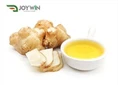
Jerusalem Artichoke Inulin is a natural, plant-derived storage carbohydrate extracted from the tubers of the Jerusalem artichoke plant (Helianthus tuberosus). It is a polydisperse mixture of linear fructose polymers, predominantly linked by β(2→1) fructosyl-fructose bonds, with a terminal glucose unit. This structural configuration is what makes it a non-digestible, fermentable dietary fiber.
What truly sets Jerusalem Artichoke Inulin apart is its naturally high degree of polymerization (DP). Unlike many standard chicory root inulins, high-quality Jerusalem artichoke inulin typically possesses an average DP ranging from 10 to over 30, with a significant portion of long-chain molecules. This natural long-chain characteristic means less hydrolyzation is required during production, preserving a unique and robust prebiotic profile. Our Jerusalem Artichoke Inulin is produced through a gentle hot-water extraction and spray-drying process, free from harsh organic solvents, ensuring a clean-label ingredient with an inulin content typically exceeding 90% purity. It appears as a fine, white to off-white powder with a neutral, slightly sweet taste.
What is Oligofructose?
Oligofructose, often referred to interchangeably with fructo-oligosaccharides (FOS) in common parlance, is a subgroup of inulin-type fructans with a much shorter chain length. It is formally defined as a mixture of fructose oligomers with a DP ranging between 2 and 10, with an average DP of approximately 4. Oligofructose can be produced in two primary ways: through the controlled partial enzymatic hydrolysis of native inulin (typically from chicory root) or through the transfructosylation of sucrose by the fungal enzyme β-fructosyltransferase.
The resulting product is notably different from its long-chain parent molecule. Oligofructose contains a much higher proportion of shorter chains, including free sugars like glucose, fructose, and sucrose, which naturally give it a distinctly sweet taste profile-approximately 30 to 50 percent as sweet as sucrose. While it still qualifies as a dietary fiber, its functional behavior and physiological impact are tuned for different applications.

Key Differences at a Glance
To give you a quick reference, here is a comparative summary:
|
Feature |
Jerusalem Artichoke Inulin Powder |
Oligofructose |
|
Source |
Jerusalem artichoke tuber (Helianthus tuberosus) |
Chicory root inulin hydrolysis or sucrose transfructosylation |
|
Degree of Polymerization (DP) |
Average DP 10–30+ (Long-chain) |
Average DP 2–10 (Short-chain) |
|
Sweetness |
~10% sweetness of sucrose (Neutral/mild) |
~30–50% sweetness of sucrose (Noticeably sweet) |
|
Solubility |
Moderate; forms a stable gel-cream at high concentrations |
High solubility; clear solutions, does not gel |
|
Primary Fermentation Site |
Throughout the whole colon, distal emphasis |
Proximal colon (rapid fermentation) |
|
Bifidogenic Dose |
5–8 g/day (sustained release) |
2.5–5 g/day (rapid peak) |
|
Digestive Tolerance |
Very gentle; lower gas production; well tolerated up to 20–30 g |
Can cause flatulence and bloating at >10 g due to rapid fermentation |
|
Key Functional Role |
Fat replacement, sugar-free fiber fortification, creamy mouthfeel, sustained prebiosis |
Sugar reduction, binding agent, quick prebiotic source in synbiotics |
|
Caloric Value |
Typically 1.5–2.0 kcal/g (EU/US) |
Typically 2.0 kcal/g |
Deep Dive into Molecular Structure and Physicochemical Properties
The functional divergence between a long-chain Jerusalem Artichoke Inulin Powder and short-chain oligofructose is rooted in their chemical architecture. Inulin with a high DP is a polymer that, when dissolved in warm water, can form a particle gel network. This microcrystalline, tri-dimensional network entraps water and creates a smooth, fat-like mouthfeel. It is this property that has made long-chain inulin the gold standard for fat replacement in dairy products, spreads, and plant-based meat alternatives. The gel strength is positively correlated with chain length, meaning Jerusalem artichoke inulin, with its native high-DP distribution, is inherently an excellent fat mimetic and texturizer.
Oligofructose, with its short chains, does not form gels. It dissolves rapidly into a clear solution and contributes humectancy and body without significantly altering texture. Its hygroscopic nature also makes it a useful binding agent in low-moisture products like cereal bars, preventing drying and crumbliness. However, its pronounced sweetness-a result of those free sugar moieties-can be a double-edged sword. For manufacturers seeking a sugar profile reduction but not a sugary aftertaste, the neutral, mild character of long-chain inulin is often preferable to the more confectionery-like note of oligofructose.
Prebiotic Mechanisms and Gut Fermentation Profile
From a gut health perspective, chain length dictates the speed and location of bacterial fermentation, which in turn governs both efficacy and side effects. A definitive consensus statement published in Nature Reviews Gastroenterology & Hepatology by the International Scientific Association for Probiotics and Prebiotics (ISAPP) confirms that prebiotic fibers must be selectively utilized by host microorganisms to confer a health benefit (Gibson et al., 2017). Both inulin and oligofructose unquestionably meet this definition, stimulating Bifidobacterium and Lactobacillus species, but they do so with different geographic precision within the colon.
Oligofructose is rapidly metabolized in the proximal colon. While this generates a quick burst of short-chain fatty acids (SCFAs) like butyrate, a critical colonocyte fuel, the rapid fermentation also produces a surge of gas. A seminal review by Roberfroid (1993) highlighted that the longer the chain, the slower the fermentation, allowing the prebiotic to reach the distal colon-the site where most colorectal cancers and chronic bowel diseases originate. Jerusalem Artichoke Inulin, with its higher DP, provides precisely this "sustained-release" prebiotic effect. Clinical research by Kleessen et al. (2007) specifically on Jerusalem artichoke inulin baked into products demonstrated a significant increase in bifidobacteria and a more balanced, prolonged SCFA production profile compared to lower-DP controls, confirming a true whole-colon prebiotic effect.
Digestive Tolerance: The Clinically Significant Advantage
For manufacturers, the most commercially critical difference is digestive tolerance. The rapid fermentation kinetics of oligofructose mean that its threshold for causing excessive flatulence, borborygmi, and bloating is relatively low. The consensus document from the ENDO project (van Loo et al., 1999) noted that while doses of 10 g/day of short-chain FOS often induce noticeable gastrointestinal symptoms, participants could comfortably consume up to 20–30 g of long-chain inulin daily with minimal discomfort.
This tolerance threshold directly impacts label claims and consumer perception. A supplement containing 5 grams of Jerusalem Artichoke Inulin per serving can be positioned as an effective, gentle daily prebiotic, while the same dose of oligofructose might generate negative reviews from sensitive users. When formulating for sensitive demographics-like individuals following a low-FODMAP diet-long-chain inulin is the far superior choice, as its slow fermentation typically avoids the osmotic and gas-related triggers associated with short-chain fructans. This positions Jerusalem Artichoke Inulin as a premium, universally tolerable fiber for mass-market functional foods and supplements.
Functional Roles in Food and Supplement Manufacturing
Your choice between these two ingredients should be driven by your target product matrix:
* Beverages and Clear Drinks: Here, oligofructose shines. Its high solubility, clarity, and sweetness allow it to replace sugar and add fiber in waters, juices, and shots without sedimentation. However, a finely milled, high-dispersibility Jerusalem Artichoke Inulin Powder can now also be successfully applied in opaque, creamy beverages like meal replacements and protein shakes, where it adds a desirable, smooth body.
* Dairy and Plant-Based Alternatives: Long-chain Jerusalem Artichoke Inulin is unparalleled. In yogurt, it prevents syneresis, adds creaminess, and improves mouthfeel without masking the delicate tangy flavor. In plant-based cheese and butter alternatives, it mimics the melt and spreadability of fat, allowing a clean "made with real plants" label.
* Bars and Bakery: Oligofructose acts as a humectant and binder, retaining softness in cereal bars. Jerusalem Artichoke Inulin, while also contributing fiber, can partially replace shortening in cookies and pastries, creating a crumb-tenderizing effect. It also enables "no added sugar" and "high fiber" front-of-pack claims.
* Dietary Supplement Capsules and Powders: For a standalone prebiotic powder or a synbiotic capsule (paired with probiotics), a long-chain Jerusalem Artichoke Inulin offers the advantage of providing a sustained food source for the probiotic strains all the way through the intestinal tract, enhancing their engraftment and survival. It is also less hygroscopic than oligofructose in powder form, meaning better stability and less caking in capsules and stick packs over the product's shelf life.
Regulatory and Labeling Considerations
In the European Union, all inulin-type fructans carry a caloric value of 2 kcal/g. The US FDA, after extensive review, included both inulin and oligofructose in its official definition of dietary fiber (FDA 21 CFR 101), recognizing their physiological benefits for laxation and mineral absorption. This means both can be declared as dietary fiber on a Nutrition Facts panel, directly contributing to the "Fiber" daily value-a powerful driver of consumer purchase intent.
However, there is a nuance with oligofructose. Due to its higher content of free sugars and its sweet taste, some manufacturers have historically categorized it functionally as a bulk sweetener, which could create labeling confusion. Long-chain Jerusalem Artichoke Inulin Powder neatly sidesteps this ambiguity. Its negligible sweetness and non-glycemic impact make it a pure, uncompromising dietary fiber in the eyes of both regulators and consumers. For a clean-label product with "Chicory Root Fiber" or "Jerusalem Artichoke Fiber" on the ingredient list, there is no substitute for the authentic, long-chain root fiber.
Why Manufacturers are Choosing Jerusalem Artichoke Inulin Powder
The market is shifting. Consumers are becoming knowledgeable about gut health and increasingly seek out prebiotics that are effective without the painful side effects. The demand for gentle, "FODMAP-friendly" fiber options is no longer a niche trend. Jerusalem artichoke, an ancient tuber, delivers a compelling narrative of traditional wellness, non-GMO heritage, and sustainable agriculture-it grows vigorously with relatively low water and pesticide inputs.
Formulators are choosing Jerusalem Artichoke Powder because it solves multiple problems with a single ingredient: it provides a substantive fiber claim, improves texture, extends prebiotic activity to the distal colon, and ensures a far higher digestive comfort threshold compared to oligofructose. It is the ingredient that allows a product to genuinely deliver on the promise of "nourishing your gut health" without the fine print.
Sourcing Quality Jerusalem Artichoke Inulin Powder from Joywin Natural
When sourcing an ingredient that will define your product's functional and sensory profile, partner expertise is non-negotiable. At Joywin Natural, we bring deep, hands-on experience in the botanical extract and dietary fiber sector. Our Jerusalem Artichoke Inulin is not a commodity; it is a traceable, identity-preserved ingredient crafted with quality at its core.
We control the supply chain from the selection of premium, non-GMO Jerusalem artichoke tubers to the final spray-dried powder. Our manufacturing process adheres to rigorous international standards, with in-house quality control labs conducting thorough analysis for purity (HPLC), microbial safety, heavy metals, and DP distribution. We understand that a specification sheet is a promise, and we help our manufacturing partners confidently build their products around our consistent, high-DP inulin profile. With flexible documentation, from Certificate of Analysis to organic certifications, we ensure full transparency and regulatory support. We invite you to experience the functional difference that a naturally long-chain, well-characterized inulin can make. Explore our Jerusalem Artichoke Inulin here and contact our team for a sample and tailored formulation support.
Frequently Asked Questions (FAQ)
Q: Can Jerusalem Artichoke Inulin be used in synbiotic formulations effectively?
A: Yes, it is often the preferred fiber for synbiotics. Its slow, sustained fermentation provides a prolonged food source for probiotic bacteria across the entire large intestine, supporting their survival and colonization better than a rapidly fermented short-chain FOS.
Q: Is Jerusalem Artichoke Inulin suitable for a low-FODMAP diet?
A: Pure, long-chain inulin is generally well-tolerated by individuals sensitive to FODMAPs because it is fermented very slowly, avoiding the rapid gas and water shifts that trigger symptoms. Oligofructose (FOS), being short-chain, is typically restricted on a low-FODMAP diet. Always advise consumers to assess personal tolerance.
Q: Which option works best for a 'sugar-free' powder drink mix?
A: For a clear, sweet-tasting drink, oligofructose may be suitable. For a creamier, meal-replacement-style powder where a neutral taste and a high fiber claim without sweetness are key, Jerusalem Artichoke Inulin is the superior choice.
Conclusion
The distinction between Jerusalem Artichoke Inulin powder and oligofructose is one of the most important yet frequently overlooked decisions in prebiotic product development. Oligofructose offers rapid bifidogenicity and sweetness; long-chain Jerusalem Artichoke Inulin offers the full package-sustained gut-nourishing prebiosis, clinically proven digestive gentleness, potent fat-mimetic texturizing, and a pure, clean-label fiber identity. For manufacturers aiming to lead the next wave of functional food and supplement innovation, building products on the foundation of a reliable, high-quality long-chain inulin is a strategic choice that your consumers will feel, and appreciate, every day.
JOYWIN offers the combination of world-class production capacity, comprehensive certifications, and deep technical expertise that global food brands require. As the world's largest organic inulin and Jerusalem artichoke inulin manufacturer, JOYWIN is uniquely positioned to support your formulation goals - from initial trials to full commercial scale. If you want to know more about Jerusalem Artichoke Inulin Powder or are interested in purchasing it, you can send an email to contact@joywinworld.com.