

When exploring natural dietary fibers, two prominent options often come into consideration: Organic Jerusalem Artichoke Inulin and Organic Agave Inulin. Both of these inulins are derived from plants and are praised for their prebiotic benefits, which support gut health and overall digestion. However, they differ in their sources, extraction methods, and specific health benefits. Understanding these differences can help consumers make informed choices about which inulin supplement best aligns with their dietary needs and wellness goals.For medical and nutritional research, in-depth exploration of the effects of these two inulins on human physiological functions can help provide new ideas and methods for the prevention and treatment of related diseases. The research on Organic Inulin not only has theoretical value, but also has broad practical application significance, which will help promote the development of the health industry and provide more beneficial choices for people's healthy life.
Overview of two organic inulins
1. Organic Jerusalem Artichoke Inulin
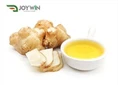
The organicJerusalem Artichoke inulin is primarily derived from the roots of Jerusalem artichoke. Chemically, it consists of multiple fructose units linked by β-(2→1) glycosidic bonds, with the degree of polymerization typically falling within a specific range. Physically, it appears as a white amorphous powder and exhibits hygroscopic properties. In terms of solubility, its water solubility increases with rising temperature. Owing to its unique molecular structure, this inulin can form a gel system under certain conditions.
2. Organic Agave Inulin
Organic Agave Inulin is mainly derived from agave. Its chemical structure is also composed of fructose molecules, but there may be differences in the degree of polymerization and the connection mode of glycosidic bonds with Jerusalem Artichoke Inulin. In terms of physical properties, it is also a white powder with relatively weak hygroscopicity. In terms of solubility characteristics, its solubility is also affected by temperature, and the solubility increases with increasing temperature. Compared with the former, its gel formation conditions and gel characteristics may be different.

Comparison of chemical properties
1. Solubility differences
The two types of organic inulin exhibit distinct solubility profiles, primarily attributable to differences in their molecular composition. Jerusalem Artichoke Inulin demonstrates high solubility in water, dissolving rapidly to form a clear solution, but shows poor solubility in organic solvents like ethanol. In contrast, while also highly water-soluble, Organic Agave Inulin displays marginally greater solubility in less polar organic solvents, such as acetone. This differential behavior is likely influenced by variations in their average chain length (degree of polymerization) and the presence of minor non-inulin components.
2. Comparative Stability
The stability profiles of Jerusalem Artichoke Inulin and Organic Agave Inulin differ under various environmental conditions. Temperature is a critical factor: Jerusalem Artichoke Inulin exhibits superior thermal stability, maintaining its chemical structure and functionality at elevated temperatures. In contrast, Organic Agave Inulin is more susceptible to degradation under prolonged heat stress. Regarding pH, Jerusalem Artichoke Inulin remains stable across a broad range, while Organic Agave Inulin demonstrates lower tolerance, particularly in acidic conditions. Furthermore, Jerusalem Artichoke Inulin shows greater stability upon light exposure, whereas Organic Agave Inulin may undergo discoloration or property alterations.
3. Comparative Reactivity
The two inulins also display distinct chemical reactivities, governed by their unique molecular structures. Jerusalem Artichoke Inulin, often characterized by a higher degree of polymerization, shows higher reactivity with oxidizing agents. Conversely, Organic Agave Inulin, which may feature more terminal fructose/glucose units, can exhibit greater activity in reactions with reducing agents. Their performance in esterification reactions also differs, leading to variations in reaction rates and product profiles. Additionally, their chelating capabilities with metal ions differ in both strength and the stability of the complexes formed. These differences in reactivity are critically important for tailoring their applications in food, pharmaceutical, and other industrial sectors.
Differences in health benefits
1. Impact on intestinal health
Organic Jerusalem Artichoke Inulin has a significant regulatory effect on intestinal flora. It can promote the growth of beneficial bacteria such as bifidobacteria and lactobacilli, increase the diversity of intestinal flora, thereby improving the intestinal microecological balance and enhancing intestinal barrier function. In addition, it can promote intestinal peristalsis and prevent intestinal problems such as constipation.
In contrast, Organic Agave Inulin also helps balance your gut flora, but may be slightly less effective at promoting the growth of specific beneficial bacteria. Its effect in enhancing intestinal motility may be relatively weak.
2. Regulation of blood sugar and blood lipids
In terms of blood sugar control, Organic Jerusalem Artichoke Inulin can delay the digestion and absorption of carbohydrates and reduce the rise in blood sugar after meals, thereby helping to stabilize blood sugar levels. For blood lipid regulation, it can reduce serum cholesterol and triglyceride levels and reduce the risk of cardiovascular disease.
Organic Agave Inulin also has certain hypoglycemic effects, but its effect may be slightly less than Jerusalem Artichoke Inulin. In terms of blood lipid regulation, its effect on lowering cholesterol may be relatively weak.
3. Other differences in health effects
When it comes to weight management, Organic Jerusalem Artichoke Inulin can help with weight management by increasing feelings of fullness and reducing food intake. At the same time, it may also affect fat metabolism by regulating the secretion of intestinal hormones.
Organic Agave Inulin may not be as effective in weight management as the former.
In terms of immune regulation, Jerusalem Artichoke Inulin can stimulate the immune system, enhance the body's resistance, and reduce the occurrence of infections and diseases.
Organic Agave Inulin has a relatively weak effect on immune modulation, but may also play a positive role to some extent.
To sum up, although both Organic Jerusalem Artichoke and Agave Inulin have certain health effects, there are differences in their specific effects and can be selected and applied according to different needs.
Market application and prospect analysis
1. Existing market application areas
In the food field, Organic Inulin are widely used in the development of various functional foods. For example, they are often added to yogurt, beverages and baked goods to increase dietary fiber content and improve taste and texture. In the pharmaceutical field, these two inulins also play an important role. Organic Jerusalem Artichoke Inulin is often used to treat intestinal diseases such as irritable bowel syndrome and inflammatory bowel disease, and relieves symptoms by regulating intestinal flora and improving intestinal function. Organic Agave Inulin is used in some blood sugar control drugs to assist in lowering blood sugar levels.
2. Future market development trends
As people's health awareness continues to improve, the demand for natural, organic and functional food ingredients will continue to grow. It is expected that in the future, the application of both Organic Inulins in the food field will be further expanded, not only limited to traditional food categories, but may also appear in more emerging health foods. In the field of medicine, as research deepens, their therapeutic effects will be more fully explored, and it is expected that more innovative drugs for specific diseases will be developed.
In addition, with the advancement of technology, the optimization of extraction and processing technology will reduce production costs, improve product quality and stability, and further promote the growth of market demand. At the same time, the global market will also have stricter supervision on organic and healthy products, which will prompt companies to improve production standards, ensure product quality and safety, and provide consumers with more reliable choices.
In general, Organic Inulin have broad market prospects and huge development potential.
Conclusion
Through in-depth research on Organic Inulin, it became clear that they each have unique characteristics and differences.
Organic Jerusalem Artichoke Inulin has high water solubility and good temperature stability in terms of chemical properties. It has a significant role in regulating intestinal health in terms of health effects. It can effectively control blood sugar and blood lipids, and is used in weight management and immune regulation. Excellent performance.
Organic Agave Inulin also shows certain advantages, such as better solubility in certain organic solvents, which helps balance intestinal flora and plays a certain role in blood sugar control.
However, there are differences between the two in many aspects, and these differences provide a basis for selection for their applications in different fields.
Looking to the future, there is still broad space for research on these two organic inulins. On the one hand, we can further explore their mechanism of action at the molecular level and gain a deeper understanding of their complex interactions with intestinal flora, human metabolism, and other aspects. On the other hand, more clinical trials could be conducted to more precisely assess their effectiveness in preventing and treating specific diseases.
In addition, with the continuous development of food and pharmaceutical technology, the extraction and processing technology of these two inulins are also expected to be further optimized to improve their purity and activity and reduce production costs, so that they can be more widely used in public health field.
JOYWIN, founded in 2013, is the world's largest organic Jerusalem artichoke inulin and Jerusalem artichoke inulin manufacturer. We supply products with high quality, strict quality control, and independent testing to guarantee the high specification of our products. Holding inulin workshops, plant protease workshops, and warehouses also own cutting-edge facilities and strict quality control systems. As leading inulin manufacturers in China, we are FSSC22000, ISO9001, ISO14001, ISO22000, BRC, and Cgmp-certified factory. If you want to know more about Organic Jerusalem Artichoke Inulin or are interested in purchasing it, you can email at contact@joywinworld.com. We will reply as soon as possible after we see the message.