

We know Organic Inulin Powder is a natural dietary fiber extracted from Jerusalem Artichoke root and known for its ability to improve gut health, boost digestion, and increase absorption of essential minerals. It has been used in food products for centuries, but only recently has it received attention as an effective dietary supplement. This blog post will explore the science behind Organic Inulin and explain why many nutrition experts are recommending organicsourced Inulin over other forms of fiber supplements. So if you're curious about this unique superfood, read on to learn more!
Organic Inulin Overview
Organic inulin usually refers to inulin extracted from organic Jerusalem Artichoke roots. Jerusalem Artichoke inulin can be divided into organic Jerusalem Artichoke inulin and ordinary Jerusalem Artichoke inulin according to whether it is an organic product. Organic inulin needs to pass relevant organic certification to ensure that its production process meets the standards and requirements of organic agriculture. These standards may include not using chemically synthesized pesticides, fertilizers, genetically modified technology, etc., and following the principles of sustainable agriculture.
Generally speaking, to become organic inulin, the following conditions need to be met:
1.Raw material requirements: The Jerusalem Artichoke planting process needs to follow the principles of organic agriculture, and does not use chemically synthesized pesticides, fertilizers, genetically modified technology, etc.
2. Production process requirements: In the process of inulin extraction, processing and packaging, it is necessary to follow the production standards of organic food to ensure that no chemically synthesized additives, preservatives, etc. are used.
3. Certification requirements: Organic inulin needs to be certified by relevant organic certification agencies to prove that it meets the standards and requirements of organic food.
The advantage of Organic Inulin Powder is that its production process is more environmentally friendly and healthy, does not contain harmful substances, and is beneficial to human health. At the same time, the development of organic agriculture also helps to protect the ecological environment and biodiversity.
What are the raw materials of Organic Inulin Powder?
The main raw materials of organic inulin on the market include Jerusalem artichoke and agave.
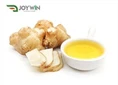
Jerusalem artichoke has an inulin content of 15%-20% in its tubers. Jerusalem artichoke inulin is a natural water-soluble dietary fiber with multiple physiological functions. The choice of Jerusalem artichoke as the main raw material for organic inulin is based on its unique growth characteristics:
1. Strong adaptability: Jerusalem artichoke can adapt to a variety of soil conditions, including barren, drought, saline-alkali land, etc., and has strong stress resistance.
2. Resistance to diseases and pests: Jerusalem artichoke has a strong resistance to diseases and pests, and is less seriously damaged by diseases and pests during growth. In some areas, pesticides are not required to drive insects, and organic growth can be achieved.
3. Cold and drought resistant: It can grow in relatively cold and arid environments, and the underground tubers can safely overwinter in cold winters.
4. Strong reproductive ability: usually propagated by tubers, the tubers can quickly germinate and grow under suitable conditions, and the plants will produce a large number of seeds, which are easy to spread and reproduce naturally.
5. High photosynthetic efficiency: Jerusalem artichoke has large leaves and high photosynthetic efficiency, which can effectively use light energy for photosynthesis and provide sufficient nutrients for plant growth.
6. Deep rooting: The root system is relatively developed and can absorb water and nutrients deep underground.

How to determine whether inulin is an organic product?
To determine whether inulin is an organic product, there are several ways:
1. Check the organic certification mark and the certification body mark: There will be an organic food mark on the product packaging of organic inulin, and the organic mark in different countries may be different; there will also be a certification body mark. Only inulin with both the organic food mark and the organic certification body mark can be a certified organic product.
2. Check the organic certification certificate: Each organically certified inulin product will have a corresponding certification certificate, and the certificate is generally valid for one year. If it exceeds the period, it cannot be considered a certified organic food.
In addition, according to relevant regulations, products that have not obtained organic product certification shall not be marked with "organic product", "organic conversion product" and other textual expressions that are likely to mislead the public, such as "pollution-free" and "pure natural", on the product or product packaging and label.
At the same time, when purchasing organic inulin products, you should also pay attention to the following points:
1. Pay attention to the ingredient list of the product: organic ingredients should be certified as organic products and indicated on the product label. Processed products with an organic ingredient content of 95% or more can be labeled "organic"; processed products with an organic ingredient content of less than 95% and equal to or more than 70% can be labeled "produced with organic ingredients"; processed products with an organic ingredient content of less than 70% can only indicate that a certain ingredient is "organic" in the product ingredient list.
2. Choose a reliable purchasing channel: Due to the higher price of organic products and the complex certification and quality control procedures, their marketing channels are also different from those of ordinary products. It is recommended to purchase organic inulin products in organic product stores, large shopping malls, and supermarkets, and try to avoid purchasing them in farmers' markets, wholesale markets, or untrustworthy websites.
3. Observe the packaging and appearance of the product: The packaging of organic products is usually made of biodegradable and recyclable packaging materials such as natural wood, plant stems and leaves, bamboo and paper. From the appearance, organic foods are usually of different shapes and sizes, and may not be as good-looking and neat as ordinary foods that use fertilizers and pesticides.
4. Judging by taste: For organic vegetables and fruits, they may smell fresher and more fragrant, and the taste will be significantly different when tasted. They may be more fragrant, smoother, and full of natural flavor, and more refreshing and chewy when chewed.
It should be noted that the above methods can help determine whether inulin is an organic product, but it cannot completely guarantee its absolute authenticity. When purchasing, try to choose products and merchants with good reputation and high brand awareness.
What are the requirements for organic food certification in the United States?
In the United States, to obtain organic food certification, the following main requirements are usually met:
1. Production standards:
- Prohibit the use of genetically modified organisms (GMOs), synthetic pesticides, fertilizers and sewage sludge.
- Limit the use of antibiotics and synthetic hormones.
- Follow specific crop rotation, fallow and soil improvement measures.
2. Animal welfare:
- For organically raised animals, provide sufficient space, fresh air and natural light.
- Feed must meet organic standards and certain ingredients in conventional feed are prohibited.
3. Processing and handling:
- Artificial flavors, colors, preservatives and other additives are prohibited during processing.
- The proportion of organic ingredients in the final product must meet certain standards.
4. Record keeping:
- Producers and processors need to keep detailed records of various operations in the production process, including the use of inputs, harvest dates, animal health status, etc.
5. On-site inspections:
- Certification agencies will conduct on-site inspections of production and processing sites regularly to ensure compliance with organic standards.
6. Isolation and prevention of contamination:
- Organic products need to be effectively isolated from non-organic products during storage, transportation and sales to prevent cross contamination.
Different certification agencies may have some subtle differences, but generally they all focus on these core principles and requirements to certify organic food.
What are the application of Organic Inulin Powder?
Organic inulin has many uses, including but not limited to the following aspects:
1. Food field:
- As a dietary fiber supplement: Add to various foods, such as bread, biscuits, beverages, etc., to increase the fiber content of food.
- Improve food texture: It can improve the stability, moisture retention and taste of food, such as increasing the thickness and smoothness in dairy products.
- Sugar substitute: It has a certain sweetness and can be used as a sweetener for low-sugar or sugar-free foods.
2. Health field:
- Regulate intestinal flora: Promote the growth of beneficial bacteria, improve intestinal health, and relieve intestinal problems such as constipation and diarrhea.
- Control blood sugar: Helps to delay the absorption of carbohydrates and reduce the rate of increase in blood sugar after meals.
- Control weight: Increase satiety and reduce food intake.
3. Cosmetic field:
- Moisturizing: Add to skin care products to help keep skin hydrated.
4. Medical field:
- Auxiliary treatment of certain diseases: such as metabolic diseases such as diabetes and hyperlipidemia.
In short, organic inulin has a wide range of applications in food, health care, cosmetics, and medicine due to its unique nutritional and functional properties.
What are the differences in the nutritional value of organic inulin powder and ordinary inulin?
There is usually no significant difference in nutritional value between organic inulin and ordinary inulin.
Inulin is a natural water-soluble dietary fiber. Whether it is organic or not, it has similar nutritional values as follows:
1. Improve intestinal health: promote the growth of beneficial bacteria, inhibit harmful bacteria, maintain the balance of intestinal flora, improve intestinal function, and prevent intestinal problems such as constipation and diarrhea.
2. Regulate blood sugar: It can delay the absorption of carbohydrates and help control the rise in blood sugar after meals.
3. Promote mineral absorption: It can improve the absorption and utilization rate of minerals such as calcium and magnesium.
4. Increase satiety: It helps to reduce food intake and has a certain help in weight control.
However, if organic inulin strictly follows organic standards during planting and production, it may have potential advantages in the following aspects, but this advantage is not reflected in the nutritional value itself:
1. Less pesticide residues: Organic planting methods limit the use of chemical synthetic pesticides and reduce the risk of pesticide residues.
2. More environmentally friendly and sustainable: Organic agriculture is generally more environmentally friendly and conducive to ecological balance and sustainable development.
In general, from a purely nutritional perspective, the nutritional value of organic inulin and ordinary inulin is not much different.
What is the difference between Organic Inulin Powder and regular inulin in terms of appearance and taste?
Usually, there may not be obvious, directly distinguishable differences in the appearance and taste of organic inulin and regular inulin.
In terms of appearance, both may appear as white or off-white powder.
In terms of taste, there is generally no obvious taste, and there may be a slight sweetness, but this sweetness is very weak and it is difficult to clearly distinguish the difference between organic inulin and regular inulin.
However, there may be differences in quality, safety, and environmental friendliness of the production process, which is mainly reflected in the standards and principles followed in their production, rather than appearance and taste.
How to store organic inulin?
You can refer to the following methods to store organic inulin:
1. Sealed storage: Place organic inulin in a well-sealed container to prevent moisture and odor from entering.
2. Avoid light: Choose an opaque or dark container and store it in a dark place to avoid light affecting the quality of inulin.
3. Dry environment: It should be stored in a dry environment to prevent moisture and agglomeration.
4. Suitable temperature: It can usually be stored at room temperature (about 25°C or below) and in a cool place. If it is not used for a long time, you can also choose to refrigerate it, but be careful to prevent moisture.
5. Avoid contamination: When taking inulin, use clean and dry tools to avoid introducing impurities and bacteria.
Organic Inulin is an incredible ingredient that has numerous health benefits and can be used in various recipes. It can provide a major boost to your body's immunity, digestive system and metabolism as well as support weight management, lower sugar levels and cholesterol. If you are looking to add more nutrition and health benefits to your daily diet without relying on processed food, organic inulin proves to be a great alternative. Incorporating organic inulin into your meals with the right amount of mixing and timing will no doubt help add some flavor and goodness to your dishes. Aside from its medium heat stability, it makes an excellent sweetener with tremendous health advantages over traditional sugars. By following the tips for choosing and storing organic inulin correctly, you can ensure the quality of consumption while preserving its amazing nutritional values. Lastly, having a palatable yet healthy option such as organic inulin in your diet goes a long way towards elevating not just your overall physical health but also your confidence.
JOYWIN, founded in 2013, is the world's largest organic inulin and Jerusalem artichoke inulin manufacturer. We supply products with high quality, strict quality control, and independent testing to guarantee the high specification of our products. We own a number of invention patents and certifications including NOP/JAS BRC, FSSC, cGMP, Kosher, HALAL, ISO9001, ISO14001, ISO22000, etc. Holding inulin workshops, plant protease workshops, and warehouses also own cutting-edge facilities and strict quality control systems. As leading inulin manufacturers in China, we are FSSC22000, ISO9001, ISO14001, ISO22000, BRC, and Cgmp-certified factory. If you want to know more about Organic Inulin Powder or are interested in purchasing it, you can send an email to contact@joywinworld.com. We will reply to you as soon as possible after we see the message.