

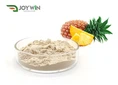
The global Bromelain Powder market continues to demonstrate robust growth, projected to reach $45.2 million by 2028, driven by increasing consumer awareness of its multifaceted health benefits and versatile applications. Derived primarily from pineapple (Ananas comosus) stems and fruit, this complex mixture of sulfhydryl proteases and other components has evolved from a traditional digestive aid to a premium ingredient in pharmaceutical, nutraceutical, and cosmetic formulations.
For B2B decision-makers in the supplement industry, understanding the optimal methods for sourcing high-quality bromelain is crucial for product development and market positioning. The efficacy, stability, and regulatory compliance of finished products depend fundamentally on the extraction methodology, purification standards, and quality verification protocols employed throughout the supply chain. This comprehensive analysis examines bromelain through both scientific and commercial lenses, providing supplement brands with evidence-based insights needed to develop effective, compliant products that meet evolving consumer and regulatory demands.
Understanding Bromelain: Sources, Chemistry, and Bioactive Properties
1. Biochemical Composition and Enzymatic Activity
Bromelain Powder represents not a single enzyme but a complex mixture of proteolytic enzymes derived from pineapple tissues, primarily containing sulfhydryl proteases with additional peroxidase, acid phosphatase, calcium phosphatase, glucosidase, and cellulase activities. The complete bromelain enzyme complex consists of at least eight distinct proteolytic components with molecular weights ranging from 18,000 to 35,000 daltons, each exhibiting specific substrate affinities and optimal activity profiles.
The proteolytic activity of bromelain is measured in various units, with gelatin digestion units (GDU) and milk clotting units (MCU) being the most common standardization methods in commercial applications. Different enzymatic measurements reflect varying aspects of bromelain's functional capabilities:
* Gelatin Digestion Units (GDU): Measures hydrolysis of gelatin substrate at pH 4.5 and 45°C, particularly relevant for protein-digestive applications
* Milk Clotting Units (MCU): Assesses casein hydrolysis capacity at pH 7.0 and 37°C, indicating general proteolytic strength
* FIP Units: Pharmaceutical standard measuring tyrosine liberation from casein substrate
The ratio between these measurement systems typically falls within 1 GDU ≈ 1.5 MCU ≈ 2.5 FIP units, though conversion factors vary between producers and extraction methods.
2. Natural Sources and Extraction Considerations
Bromelain Powder is predominantly extracted from two pineapple sources with distinct compositional profiles:
* Stem Bromelain (EC 3.4.22.32): Comprises approximately 80-90% of the total enzymatic content in pineapple stems, characterized by higher molecular weight (33,000 daltons) and superior stability profile
* Fruit Bromelain (EC 3.4.22.33): Derived from pineapple fruit, exhibiting different substrate specificity and lower thermal stability
The bromelain content in pineapple plants varies significantly based on multiple factors:
* Cultivar Selection: Specific pineapple varieties bred for high enzyme yield versus fruit production
* Agricultural Practices: Soil conditions, fertilization regimes, and harvest timing
* Plant Maturity: Optimal extraction windows corresponding to peak enzymatic concentrations
* Tissue Source: Stem versus fruit extraction with corresponding yield and activity differences
Industrial bromelain production must account for these biological variables through standardized agricultural protocols and rigorous raw material specifications to ensure batch-to-batch consistency in finished ingredients.

Bromelain Extraction Methodologies: Technical Comparison for B2B Decision-Making
1. Conventional Extraction Technologies
Traditional bromelain extraction employs precipitation methods utilizing solvents, salts, or polymers to isolate the enzymatic fraction from pineapple juice or homogenate:
● Ethanol Precipitation
* Process Overview: Crude pineapple extract is treated with food-grade ethanol at controlled temperatures, precipitating bromelain while leaving impurities in solution
* Quality Parameters: Typically yields bromelain with activity ranging from 1,200-2,000 GDU/g
* Advantages: Established technology with relatively low capital investment
* Limitations: Potential enzyme denaturation at higher alcohol concentrations, residual solvent concerns, and broader activity range
● Ammonium Sulfate Fractionation
* Process Overview: Gradual salt addition to crude extract followed by centrifugation and dialysis
* Quality Parameters: Can achieve higher purity levels (up to 2,500 GDU/g) with proper optimization
* Advantages: Avoids organic solvents, making it suitable for certain market segments
* Limitations: High salt removal requirements, potential wastewater challenges, and variable yield
● Ultrafiltration Technology
* Process Overview: Membrane-based separation using molecular weight cut-off filters to concentrate bromelain while removing smaller molecular weight impurities
* Quality Parameters: Can achieve activities of 1,800-2,400 GDU/g with excellent retention of native conformation
* Advantages: Gentle processing conditions preserving enzymatic activity, scalable, and environmentally favorable
* Limitations: Higher initial capital investment and membrane replacement costs
2. Advanced Purification Technologies
For pharmaceutical-grade and high-potency bromelain applications, advanced purification methods deliver superior specificity and purity:
● Chromatographic Purification
* Ion Exchange Chromatography: Utilizes charge differences between bromelain isoforms and contaminating proteins for high-resolution separation
* Affinity Chromatography: Employing specific ligands that bind bromelain with high specificity, though cost may be prohibitive for large-scale nutraceutical production
* Output Quality: Can achieve bromelain concentrations exceeding 3,000 GDU/g with minimal non-enzymatic protein content
● Aqueous Two-Phase Extraction (ATPS)
* Process Overview: Utilizes immiscible aqueous phases (typically polymer-salt or polymer-polymer systems) for selective bromelain partitioning
* Quality Parameters: Yields high-purity enzyme preparations with excellent activity recovery
* Advantages: Biocompatible environment preserving enzymatic function, scalable for industrial application
* Limitations: System optimization complexity and higher operational costs than conventional methods
Quality Verification and Analytical Standards for Bromelain Ingredients
1. Essential Quality Documentation
For B2B partners sourcing Bromelain Powder ingredients, comprehensive quality documentation is non-negotiable for ensuring ingredient integrity, regulatory compliance, and finished product performance. As a cGMP-compliant supplier, Joywin Natural provides complete documentation packages including:
● Certificate of Analysis (CoA)
Each batch of our bromelain ingredients undergoes rigorous third-party verification to confirm:
* Identity and Purity: HPLC fingerprint matching against reference standards, confirming appropriate enzymatic profile
* Potency Standardization: Documented activity in GDU/g or MCU/g with narrow specification ranges
* Heavy Metals Compliance: Meeting USP <232> and Ph. Eur. 2.4.8 requirements (lead <3 ppm, arsenic <3 ppm, cadmium <1 ppm, mercury <1 ppm)
* Microbiological Quality: Conforming to USP <61> and <62> specifications (total aerobic microbial count <1000 CFU/g, yeast and mold <100 CFU/g)
* Residual Solvents: Verification of compliance with USP <467> and ICH guidelines where applicable
● Technical Data Sheet (TDS)
Comprehensive documentation including:
* Particle size distribution (critical for dissolution characteristics and formulation homogeneity)
* Bulk density and tap density (essential for capsule filling and tablet compression)
* Solubility characteristics under various pH and temperature conditions
* Stability data under accelerated ICH conditions (25°C/60% RH, 30°C/65% RH, 40°C/75% RH)
● Material Safety Data Sheet (MSDS)
Essential for workplace safety and regulatory compliance during manufacturing operations, particularly regarding potential allergenic properties and dust explosion parameters.
2. Activity Verification and Stability Monitoring
The enzymatic nature of Bromelain Powder necessitates specialized stability testing beyond conventional ingredient protocols:
● Real-Time Stability Studies
* Regulatory Requirements: Minimum 3-batch data covering recommended shelf life under labeled storage conditions
* Critical Parameters: Activity retention (>90% labeled potency throughout shelf life), physical characteristics, and microbiological stability
* Packaging Validation: Verification that primary and secondary packaging maintains bromelain activity under recommended storage conditions
● Accelerated Stability Protocols
* ICH Guidelines: Stress testing at elevated temperatures and humidity to predict degradation kinetics
* Activity Half-Life Determination: Establishing correlation between accelerated and real-time stability data
* Excipient Compatibility: Pre-formulation screening with common carriers, binders, and other formulation components
B2B Sourcing Considerations for Bromelain Ingredients
1. Supply Chain Transparency and Adulteration Risks
The global supply chain for Bromelain Powder ingredients presents multiple vulnerabilities that B2B partners must actively manage:
● Common Adulteration Practices
* Activity Manipulation: Undisclosed addition of exogenous proteases to elevate measured activity without corresponding bromelain content
* Dilution with Inert Carriers: Incorporation of maltodextrin, silicon dioxide, or other excipients without appropriate labeling
* Source Misrepresentation: Substitution of stem-derived bromelain with less stable fruit-derived material
* Undisclosed Processing Aids: Failure to declare anti-caking agents, flow enhancers, or stabilizers used during manufacturing
● Supply Chain Verification Strategies
* Third-Party Certification: Verification through programs such as NSF International, USP Verification Program, and Informed-Choice provides independent validation of quality and manufacturing controls
* Chain of Custody Documentation: Transparent documentation from agricultural source through extraction, purification, and finishing
* Advanced Analytical Testing: Utilization of proteomic fingerprinting, activity staining, and isoform-specific assays to verify authenticity
* Manufacturing Audit Capabilities: Supplier willingness to permit independent manufacturing facility audits against cGMP standards
2. Regulatory Compliance and Global Market Access
Navigating the regulatory landscape for Bromelain Powder requires careful attention to regional requirements:
● United States Regulatory Framework
* Dietary Supplement Status: Bromelain is permitted as a dietary ingredient under FDA regulation with established monographs
* cGMP Compliance: Mandatory adherence to 21 CFR 111 for dietary supplement manufacturing
* Structure/Function Claims: Permitted claims include protein digestion support, joint comfort, and sinus relief with appropriate substantiation
● European Union Requirements
* Novel Food Status: Bromelain from pineapple stem has traditional use history, though extraction method changes may trigger novel food assessment
* Health Claim Authorization: EFSA has not authorized specific bromelain health claims, requiring careful claim wording
* Labeling Considerations: Allergen labeling requirements due to potential pineapple sensitivity
● Other International Markets
* Japan: Approved as a food ingredient with functional claims possible under Foods with Function Claims system
* Canada: Natural Health Product status requires specific product licensing
* Australia: Therapeutic Goods Administration regulates higher-dose bromelain products as complementary medicines
Formulation Strategies for Bromelain-Containing Products
1. Dosage Considerations and Delivery System Optimization
Effective bromelain formulation requires careful attention to enzymatic activity preservation and targeted delivery:
● Activity-Based Dosing Strategies
* General Protein Digestion: 500-2,000 GDU taken with meals
* Systemic Effects: 1,000-3,000 GDU between meals for anti-inflammatory applications
* Joint Comfort Formulations: Clinical studies typically utilize 1,200-2,400 GDU daily in divided doses
● Delivery System Technologies
* Enteric Coating: Essential for protecting bromelain from gastric acid denaturation when systemic effects are desired
* Controlled-Release Systems: Modulating bromelain release profiles for sustained activity
* Stabilization Matrices: Incorporation of compatible excipients that maintain enzymatic activity throughout shelf life
2. Compatibility and Stability Considerations
The proteolytic nature of bromelain creates specific formulation challenges:
● Documented Incompatibilities
* Direct Combination with Gelatin Capsules: Rapid hydrolysis of conventional gelatin capsules requiring alternative delivery systems
* Certain Excipients: Incompatibility with reducing agents, heavy metal ions, and oxidizing compounds
* pH Sensitivity: Significant activity loss below pH 3.0 and above pH 8.0
● Proven Formulation Approaches
* Hypromellose (HPMC) Capsules: Successful containment of bromelain without significant hydrolysis
* Tableting with Modified Starches: Careful excipient selection to maintain stability while providing necessary technical properties
* Liquid Formulations: Specialized stabilization systems for maintaining activity in solution
Emerging Research and Future Directions for Bromelain Applications
1. Clinical Research Expansion
While bromelain's traditional applications center on digestive health and inflammation management, emerging research continues to investigate novel applications:
● Immunomodulatory Applications
* Mechanistic Insights: Research published in Planta Medica demonstrates bromelain's ability to modulate immune cell function through specific protease-activated receptors
* Clinical Implications: Potential applications in immune support formulations and complementary approaches
● Musculoskeletal Health
* Evidence Base: Multiple clinical trials investigating bromelain's effects on exercise-induced muscle damage and recovery parameters
* Combination Formulas: Synergistic approaches with other proteolytic enzymes and anti-inflammatory compounds
● Dermatological Applications
* Topical Formulations: Bromelain's debridement properties in wound care and skincare products
* Enhancement of Transdermal Delivery: Potential to improve penetration of other active compounds
2. Technological Innovations
Research continues to address fundamental challenges in bromelain production and application:
● Production Efficiency
* Biotechnological Approaches: Recombinant expression systems for consistent isoform production
* Extraction Optimization: Novel methods improving yield while reducing environmental impact
● Formulation Advancements
* Targeted Delivery Systems: Enhanced bioavailability through advanced encapsulation technologies
* Stability Enhancement: Novel approaches to extending bromelain shelf life under challenging conditions
Conclusion: Strategic Implementation for B2B Brands
Successful formulation with Bromelain Powder requires careful attention to sourcing, quality verification, and formulation science. By understanding the optimal methods for obtaining high-quality bromelain and implementing evidence-based formulation strategies, B2B brands can develop effective, commercially successful products that meet growing consumer demand for enzyme-based supplements.
The key considerations for B2B partners include:
* Source Selection: Prioritizing stem-derived bromelain from controlled agricultural sources with documented cultivation practices
* Extraction Methodology: Selecting appropriate purification technologies aligned with target potency, purity, and application requirements
* Quality Verification: Implementing comprehensive testing protocols including activity confirmation, authenticity verification, and stability monitoring
* Formulation Optimization: Designing delivery systems that protect bromelain through manufacturing, storage, and gastrointestinal transit
* Regulatory Compliance: Ensuring formulations and marketing materials align with destination market requirements
* Supply Chain Transparency: Establishing verifiable chain of custody from agricultural source through finished ingredient
As research continues to expand our understanding of bromelain's therapeutic potential and optimal delivery strategies, B2B brands that prioritize scientific rigor and quality excellence will be best positioned to capitalize on market opportunities in the evolving enzyme supplement category.
JOYWIN is one of the four Bromelain manufacturers in the world. We provide various specifications of bromelain products. If you want to know more about Bromelain Powder or are interested in purchasing, you can send an email to contact@joywinworld.com. We will reply to you as soon as possible after you see the message.