

For B2B decision-makers in the dietary supplement, functional food, and beverage industries, ingredient selection is a critical determinant of product success. Among prebiotic fibers, Inulin Prebiotic Powder stands out for its well-researched benefits and versatile applications. However, a common and pivotal question arises: What is the best form of inulin?
The answer, as seasoned suppliers understand, is not singular. The "best" form is intrinsically linked to the specific application, desired nutritional profile, processing requirements, and target market compliance. Selecting the wrong type can lead to formulation challenges, textural issues, and even diminished consumer acceptance.
This comprehensive guide is designed to equip brand owners, product developers, and procurement specialists with the technical knowledge needed to make an informed decision. We will dissect the variables-from chain length and physical form to sourcing and quality assurance-that define inulin's performance in your final product. At JoyWin Natural, we leverage our experience in global ingredient supply to demystify these factors, ensuring you partner with a supplier who provides not just a commodity, but a tailored solution.
Understanding Inulin: A Primer on Sources, Structure, and Function
Inulin is a naturally occurring soluble dietary fiber, classified as a fructan. It is a polymer of fructose molecules linked by β-(2→1) glycosidic bonds, typically terminated by a glucose unit. This unique structure resists digestion in the upper gastrointestinal tract, allowing it to reach the colon intact where it serves as a selective substrate for beneficial Bifidobacteria and Lactobacilli.
Primary Botanical Sources:
* Chicory Root (Cichorium intybus): The most common and commercially prevalent source, offering high inulin content (15-20% of fresh root weight). Chicory-derived inulin is the industry standard due to scalable, cost-effective cultivation and extraction.
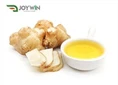
* Jerusalem Artichoke (Helianthus tuberosus): Also known as sunchoke, its tubers contain 14-19% inulin. It can offer a slightly different chain length profile.
* Agave (Agave spp.): Agave inulin, sometimes called agavins, has a more branched structure and different polymerization profile.
* Others: Found in smaller amounts in garlic, onions, leeks, and asparagus.
From a B2B perspective, chicory root inulin is often favored for its consistent supply chain, well-documented regulatory status (GRAS in the US, approved novel food in the EU), and extensive dossier of supporting scientific evidence for health claims.
Deconstructing "Form": Key Variables for B2B Decision-Making
When evaluating inulin, "form" encompasses several interconnected technical specifications.
1. Degree of Polymerization (DP): The Chain Length Spectrum
The DP, or the average number of fructose units per molecule, is the most significant factor influencing inulin's functional properties.
* Native/Standard Inulin (DP 2-60, avg. ~12): Extracted directly from chicory root. It has a mix of shorter and longer chains. It offers a mild sweetness (about 10% of sucrose's sweetness) and moderate solubility. It is excellent for general prebiotic fortification and sugar reduction.
* High-Performance (HP) or Oligofructose (DP 2-10, avg. ~4-8): Produced through partial enzymatic hydrolysis of native inulin. It is highly soluble, significantly sweeter (30-50% of sucrose), and exhibits a higher rate of fermentation in the gut. Ideal for applications requiring high solubility and a sweeter profile without sugar.
* Long-Chain Inulin (DP 10-60, avg. ~25): Produced via physical separation to remove shorter chains. It has low solubility, forms creamy, fat-like gels when shear is applied in water, and is slower fermenting. This is the preferred form for fat replacement and texture modification in dairy, spreads, and low-fat products.
B2B Implication: The choice directly impacts your product's nutritional label (dietary fiber content), sensory attributes (sweetness, mouthfeel), and functional behavior (solubility, gelling). A supplier's ability to provide a consistent, specified DP range is crucial for batch-to-batch product uniformity.
2. Physical Form: Powder vs. Liquid (Syrup)
* Powder: The most common form for dry blending and general use. Advantages include easier storage, lower shipping cost (no water weight), longer shelf life, and flexibility. It requires good handling to prevent dusting. Instantized powders are available, which are agglomerated for dramatically improved wettability and dispersibility, a critical factor for beverage and instant mix applications to avoid clumping.
* Liquid (Syrup): An aqueous solution, typically at 70-75% dry solids. Advantages include dust-free handling, easier pumping in liquid processing systems, and immediate incorporation into liquid matrices. Considerations include higher shipping costs, shorter shelf life, and potential microbial stability requirements.
3. Purity and Standardization
High-quality Inulin Prebiotic Powder should have a purity of >90% dietary fiber on a dry matter basis. Reputable suppliers provide a Technical Data Sheet (TDS) and Certificate of Analysis (CoA) specifying:
* Dietary Fiber Content (as measured by AOAC 997.08, 999.03, or other relevant methods).
* Moisture Content
* DP Profile (e.g., via HPLC analysis)
* Microbiological Specifications (Total Plate Count, Yeast & Mold, E. coli, Salmonella)
* Heavy Metals (Arsenic, Lead, Cadmium, Mercury) complying with USP <232> / Ph. Eur. 2.4.27 standards.
The Core of the Matter: Analyzing "Best For" Scenarios
Let's translate technical specs into practical application guidance.
Best for General Prebiotic Supplement Capsules & Tablets:
* Form: Native or HP Inulin Prebiotic Powder.
* Rationale: Cost-effectiveness, high fiber concentration, and good compressibility for tableting. HP inulin's higher sweetness can be a benefit in chewable tablets. A fine, free-flowing powder is essential for consistent capsule filling. Compliance with cGMP for dietary supplements (21 CFR Part 111) for the entire supply chain is non-negotiable.
Best for Protein Powders & Dry-Mix Beverages:
* Form: Instantized Inulin Powder (Native or HP).
* Rationale: The number one challenge is dispersibility. Standard powders can clump, creating an unacceptable consumer experience. Instantized powders dissolve quickly and completely, ensuring a smooth, lump-free shake. This is a critical value-add from a knowledgeable supplier.
Best for Fiber Gummies & Chewables:
* Form: Liquid Inulin Syrup or HP Powder.
* Rationale: The syrup form can integrate seamlessly into the hot gummy slurry, acting as both a fiber source and a humectant. HP powder can be used for its sweetness and prebiotic effect. The formulation must account for inulin's potential to increase firmness over time.
Best for Dairy Alternatives (Yogurt, Ice Cream) & Fat Replacement:
* Form: Long-Chain Inulin Powder.
* Rationale: Long-chain inulin's ability to form a creamy, fat-like gel upon shearing is unparalleled. It improves mouthfeel, creaminess, and body in low-fat or dairy-free applications, directly enhancing consumer acceptability. It also helps control ice crystal growth in frozen desserts.
Best for Sugar Reduction in Functional Foods & Beverages:
* Form: High-Performance (HP) Inulin / Oligofructose (Powder or Syrup).
* Rationale: Its significant sweetness allows for a reduction of added sugars and calories while simultaneously adding fiber. It works synergistically with high-intensity sweeteners to improve the overall sweetness profile.
Beyond Form: Critical B2B Supplier Evaluation Criteria
The "best" form is meaningless if the ingredient lacks quality, consistency, and regulatory support. Your supplier must be a partner in compliance and innovation.
1. Quality Assurance & Regulatory Compliance
* Certifications: The supplier's manufacturing facility should hold relevant certifications such as ISO 22000, FSSC 22000, or HACCP. cGMP compliance is a baseline. Third-party certifications like NSF Certified for Sport® or Informed-Choice are essential if targeting the athletic nutrition market.
* Pharmacopeial Standards: Does the inulin conform to USP-NF or European Pharmacopoeia (Ph. Eur.) monographs? This is a high standard of purity and identity, often required for pharmaceutical or high-end supplement applications.
* Documentation: Insist on comprehensive documentation: CoA, TDS, Safety Data Sheet (SDS/MSDS), and allergen statements. Traceability back to the field lot is a mark of a superior supplier.
2. Technical Support & Formulation Expertise
A true partner provides more than just a product. They offer:
* Application Support: Guidance on dosage, interaction with other ingredients (e.g., minerals, proteins), and processing parameters (heat, pH stability).
* Regulatory Guidance: Support for health claim substantiation. For example, the European Food Safety Authority (EFSA) has authorized several health claims for chicory inulin related to bowel function and increased calcium absorption.
* Customization: Ability to supply tailored DP blends or specific particle sizes for unique applications.
3. Supply Chain Transparency & Sustainability
* Origin: Know the geographical source of the chicory root. A stable, ethical agricultural base is key to long-term supply security.
* Sustainability Practices: Inquire about water usage, energy-efficient extraction processes, and by-product utilization (e.g., pulp for animal feed). This aligns with the ESG (Environmental, Social, and Governance) goals of many modern brands.
Addressing Industry Challenges with Professional Integrity
A trustworthy supplier acknowledges and helps mitigate common pitfalls:
* Inconsistent DP Profile: Can lead to variable functionality (gelling, sweetness) in your final product. Solution: Partner with a supplier that employs rigorous in-process controls and provides detailed CoAs with DP data.
* Poor Solubility/Dispersibility: A major headache in beverage applications. Solution: Specify instantized inulin powder or consider liquid syrup for liquid formulations.
* Sensory Issues: High doses of inulin, especially shorter chains, can cause a bloated feeling or excessive gas in sensitive individuals (a natural consequence of fermentation). Solution: For consumer comfort, consider a gradual introduction in marketing or blending with other fibers.
* Adulteration Risk: While lower than for some botanicals, economic adulteration with cheaper sugars or maltodextrin is possible. Solution: Rigorous analytical testing via HPLC for DP profile and specific fiber analysis methods are your safeguard. A transparent supplier welcomes audit of their testing protocols.
Conclusion: Defining "Best" as a Strategic Partnership
So, what is the best form of inulin? The answer is a strategic one: It is the form that most precisely aligns with your product's functional, nutritional, and sensory goals, sourced from a supplier whose expertise and reliability de-risk your supply chain.
For high-solubility beverage mixes, it's instantized HP Inulin Prebiotic Powder. For a rich, low-fat ice cream, it's long-chain inulin. For a cost-effective, high-fiber tablet, it's standard native powder.
The journey doesn't end at selection. The true differentiator lies in the partnership with your ingredient supplier. At JoyWin Natural, we embody the E-E-A-T principles:
* Experience: Years of navigating global supply chains for functional ingredients.
* Expertise: Deep technical knowledge in application support and regulatory landscapes.
* Authoritativeness: Sourcing from certified facilities, backed by exhaustive documentation and pharmacopeial standards.
* Trustworthiness: Transparent communication about capabilities, challenges, and consistent, reliable delivery.
We provide more than just inulin; we provide confidence in your formulation.
JOYWIN, founded in 2013, is the world's largest organic inulin and Jerusalem Artichoke Inulin Powder manufacturer. We supply products with high quality, strict quality control, and independent testing to guarantee the high specification of our products. Holding inulin workshops, plant protease workshops, and warehouses also own cutting-edge facilities and strict quality control systems. As leading inulin manufacturers in China, we are FSSC22000, ISO9001, ISO14001, ISO22000, BRC, and Cgmp-certified factory. If you want to know more about Inulin or are interested in purchasing it, you can send an email to contact@joywinworld.com. We will reply to you as soon as possible after we see the message.